

Author: Gwendolyn Hallsmith
Published in Communities Magazine Issue #156
When you think of an ecovillage, the images that come to mind are generally pastoral—small pretty homes amidst gardens overflowing with organic vegetables, flowers blooming, children playing on swings suspended from graceful old maple trees. We focus on the visual and social amenities of living in community, and yet the physical and legal infrastructure are the less visible (but no less critical) components of an ecovillage community’s success.
All too often, people try to form ecovillages without a solid understanding of the legal and technical issues associated with large numbers of people living on the same piece of land together. They find a large lot for sale out in the middle of the countryside, buy it, and start to make plans for communal living without first making sure that what they have in mind is even possible. This is not baseless speculation on my part—as a city planning and development director, I have been contacted by many groups over time that have needed help when they found themselves in a difficult situation.
Before you buy that beautiful property with the spectacular view, there are a number of questions you need to ask. First and foremost are questions about two critical life support systems that no community can be without—potable water and adequate human waste treatment capacity. Beyond that, you want to know what the zoning regulations are in the community where you plan to live, building codes, and any other regulatory issues that might apply to a large development project.
Water Supply
Just because there is a small brook flowing down the hill on the dream property you found does not mean it will be easy to create a community water supply. The EPA water supply regulations require that any system serving more than 15 connections or 25 people for at least 60 days a year be treated as a public water supply. Surface water, in these circumstances, requires treatment systems that eradicate critters like giardia and cryptosporidium, two parasites that make people very sick. These slow filtration treatment systems can be very expensive—it is often much more cost-effective to drill a well. But wells that can serve an ecovillage are also very difficult to permit. They require fairly expensive pump tests to demonstrate that the aquifer has the capacity to withdraw the water needed without robbing nearby properties of their water supply. The easiest way around all of these problems is to find land that has access to an existing public water supply. With a public water supply, the municipality or district takes care of all the regulatory requirements for you.
Human Waste
Second only to water supply are the systems you need to treat human waste. While many ecovillages want to reduce the impact on water by installing composting toilets, this does not eliminate your need to have either permitted septic systems or access to a municipal wastewater treatment facility. In Vermont and other cold climates, greywater is regulated, and composting toilets are not permitted in places where a conventional system or public sewer system is not available. Septic systems require good soils, and there are rules about how far from septic systems wells need to be. As with the water supply, the simplest way to manage human waste is to find land that has access to public sewer pipes and wastewater treatment systems. This way, even if you use composting toilets, there is a backup system.
Composting toilets and greywater management take careful planning and require ongoing attention. It is not advisable to simply throw the contents of a composting toilet into your compost bin. There is not sufficient evidence that even in an ideal composting situation where adequate heat is generated, this is enough to kill all of the viral and bacterial contamination that might be living in the compost. In Vermont, where we live, you are required to bury the composted material for two years before using it anywhere near plants for human consumption.
Greywater from sinks, showers, and laundry has many of the same issues. While it can often contain nutrients that help plants grow, it is advisable to use it on non-edible plants. Simply running a hose from greywater to the garden works in the summertime, but in climates where freezing occurs, this doesn’t work. In Vermont a septic system or sewer treatment of greywater is required.
Zoning and Subdivision Regulations
These are laws passed by the local community about how land is used in town. The zoning typically tells you how many homes can be on an acre of land and what kinds of homes are allowed—usually a single or two family home is allowed without special permits, but as soon as you want to build more than that you need to provide more information. Zoning will also talk about uses allowed, design standards, and application procedures. Subdivision regulations typically deal with road standards for new roads going in to serve more homes and the other amenities needed when new developments are being proposed—sidewalks, curbs, signage, parks, bike paths, etc. Some states, like Vermont, have additional regional or state review of large projects. In Vermont, any intentional community with more than 10 homes would trigger review by the regional Act 250 Commission.
These review and approval processes, while important to maintaining the integrity of the environment and the community where the development is being proposed, can add a lot of time and expense to a project. They also add a layer of uncertainty, because with most land use review the answer at the end of the process can be a simple “no, you can’t do this.” Even if the answer is yes, there are sometimes conditions set on the permission that make it too expensive to complete. Never purchase land before you understand all the permitting requirements—it is not uncommon to condition the purchase on obtaining the permits prior to closing.
Legal Structure
Let me start by saying that I am not a lawyer, and this does not constitute legal advice. You need to get a good lawyer before contemplating any land purchase, subdivision, or other large development project. That said, there are several legal forms your community can take, and the form it takes will have an enormous impact on the life and decision making in the community. There are two forms you need to consider—the legal entity that owns the community and the form of ownership for the housing in the community.
Legal Entity/Owner Choices
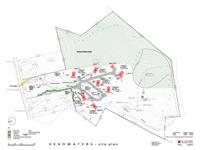
Corporation: For the purpose of this article, this includes LLCs, S-Corps, and other similar entities. As I said, I am not a lawyer, and I’m also not a tax attorney. The advantage of a corporation is that it gives you protection from liability. LLCs and S-Corps behave a bit more like partnerships insofar as the income you derive from the corporate activities (and the loss) passes through to your personal income taxes, so you don’t have to pay taxes twice. Since corporations are a legitimate legal entity, it also gives you a way to pass ownership on in an orderly fashion; it is not dependent on the individuals who establish the community in the first place. The Headwaters Garden and Learning Center (the project I’m involved with) was established as a close corporation under Vermont law, which means that the current owners always need to approve new owners—hostile takeovers are not an option.
Nonprofit Organization: Given people’s overall goodwill when they are setting up an intentional community, this often seems like the logical form to adopt. It allows for grants to be written to help cover the costs, and allows all sorts of good, tax-exempt activities—education, poverty alleviation, community service, health activities, affordable housing, etc. The problem with establishing your community as a nonprofit is that if you want to build and sell homes, or start community businesses, all the proceeds from that activity need to go to the benefit of the nonprofit. While having a nonprofit for the charitable work of the community is a good idea, it’s not necessarily a good idea for the overall structure. Nonprofits will also tend to be corporations, which in turn will offer the liability shield of that structure.
Cooperative: Cooperatives will be structured by state law, but in general they will allocate benefits based on patronage rather than equity. A cooperative is owned and controlled by the people who use its services. For ecovillages, they may be a preferable choice, given their more egalitarian form. In Vermont, a cooperative also must be a corporation, either a for-profit or a nonprofit. So in this case, it also offers the liability shield for the individuals involved.
Options for Homeownership
Fee Simple Lots/Subdivision: Once the community identifies a large piece of land to use for several homes, one of the simplest ways to make home sites available for different people and families is to subdivide the land and sell lots. A homeowners association can be established to discuss and decide on community issues, but each homeowner would own their lot outright. While simple, this does not always offer the same degree of community control over the long run, since fee simple ownership gives the landowners a lot of independence.
Condominium: If you think condominiums are only the large, multifamily developments you tend to find at ski areas and resorts, think again. A condominium is just a form of homeownership—it can include single family dwellings as well. The Headwaters Garden and Learning Center adopted the condominium form of ownership, because we wanted to have a higher level of community control over the different homes, and we also wanted a form of homeownership that was familiar to area banks and insurance companies. With our condominium, individual homeowners own a home site, but all the land is shared in common.
Cooperative: Like its counterpart in the owner entity category, a housing cooperative has a shared benefit for the people who are involved. It also tends to be established when the ownership entity is a nonprofit corporation. In Vermont, housing cooperatives need to be dedicated to the perpetual affordability of all the housing units, although in other places this is not necessarily the case. One of the advantages of an affordable housing cooperative is that the cooperative tends to own the property and its debts and obligations. This means that when units are transferred, the new cooperative member does not necessarily have to go through the mortgage process, but needs instead to come up with the funds for shares in the co-op.
Community Land Trust: Like the cooperative, this homeownership model is dedicated to perpetually affordable housing, and tends to be established as a nonprofit corporation. The difference between a cooperative and a community land trust is that with a cooperative, the members would be the decision-makers and own shares, whereas with a community land trust, the land is leased to the people who live there, while they are allowed to own their homes. Land trusts tend to have a board of directors, like most nonprofits, although there are models out there where communities combine the cooperative and land trust ideas.
Other Ecovillage Bones
Other important structural components of an ecovillage can include farming agreements, business structures, design rules, decision-making rules, conflict resolution processes, membership definitions, joining processes, financial responsibilities, insurance…the list goes on and on. It is better to think through a lot of these issues before you start living there—it’s a lot harder to build an airplane in flight than it is to make sure all the landing gear works while it’s still on the ground.
Go and visit other communities, ask them questions about what has worked and what hasn’t worked. Get them to recommend good lawyers, engineers, and design professionals. It is always easier to work with someone who understands ecovillages than someone who has never heard of the idea before.
But beyond all the advice and assistance you can gather, ultimately what matters is what works for you and your fellow travelers, in your context, on the land you have found. Take it one step at a time, doing the best you can with what you have. Even if the structure feels more conventional than you would like, it is often easier to make change in small steps, rather than to be struggling with unknown forms while building a community at the same time.
Keep the conversation going with these pieces
There are no available blogs
Subscribe to our newsletter for fresh stories and community updates delivered to your inbox.
Get unlimited access to courses, exclusive member events, and a supportive network of community builders
Access all courses, books, and premium content
Member-only workshops and community builders
Member-only workshops and gatherings
We use cookies to improve your experience on our site. By using our site, you consent to cookies.
Manage your cookie preferences below:
Essential cookies enable basic functions and are necessary for the proper function of the website.
These cookies are needed for adding comments on this website.
Statistics cookies collect information anonymously. This information helps us understand how visitors use our website.
Service URL: policies.google.com (opens in a new window)
A residential project: people live here as their primary home.
An institution, business, network, or project that isn’t a residence (e.g. a learning center, farm, or network with no one living there full-time).

{{ item.label }}
{{ item.value ? item.value : currencyFormat( item.amount ) }}
Subtotal
{{ currencyFormat( pricing_summary.total_amount ) }}
There are no results matching your search

We’re introducing new Plus features — including community reviews, Profile Match, and unlimited Needs & Offers posts — while keeping most of FIC free for everyone. Membership costs less than two coffees a month.

