
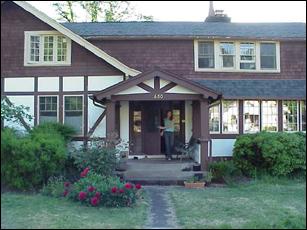
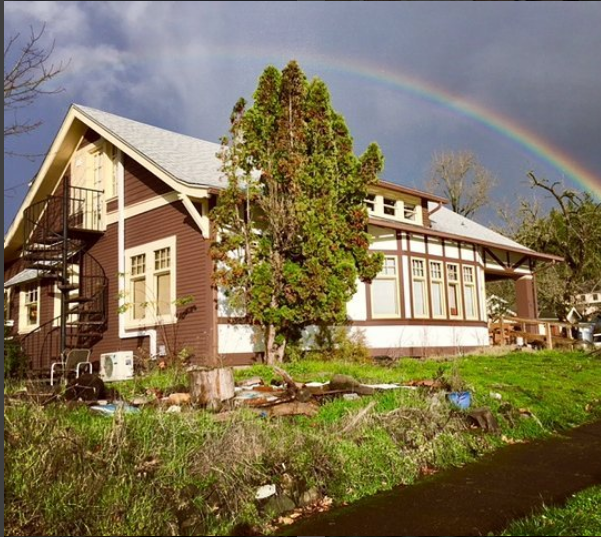
Historic community house with lush garden and welcoming porch.

Walnut Street Co-op

  • Communities

About the Communities

  • Established
  • Home-sharing
  • Urban

Founding year

  • 2000

What we do

Walnut Street Co-op is a social change oriented cooperative household in Eugene, Oregon. In September 2000 we moved into a large, rambling house together, seeking to build community. Three years later we formed a legal co-op, funding the project with many small loans from like-minded individuals. As housemates, we eat dinner together, share chores, attend house meetings and work parties, and have a basic commitment to resolve conflicts. We trust that each person holds a piece of the truth, and we are committed to deep listening with each other. Over time we’re finding that our friendships are deepening and a shared vision is emerging based on creating shifts in society toward dialogue, deliberation, and integration of diverse viewpoints.
https://walnutstcoop.wordpress.com/

Our Mission

We provide affordable shared housing with a strong inclination towards social change & sustainability.

  • Purpose
  • Home-sharing
  • Community type
  • Coliving
  • Sustainability practices
  • Permaculture design

Commemorative dates

  • January 1, 2000
  • Started planning
  • January 1, 2000
  • Started living together

Gallery

  • 9 Total members
  • Not open to new members
  • Open to visitors
Total
9

How to join

The process includes attending three dinners or other co-op events, a house meeting, and an interview – with possible other engagements with certain housemates to get to know each other better. We can accommodate out of town prospects via video chat. For more information, please email us.

Basic expectations or agreements for members

Send us an email ahead of time and we can coordinate a tour or dinner.

Primary decision-making authority

  • Small Leadership Group

A few people (not elected by the broader community) make the major decisions.

Decision-making process

  • Full Consensus

Everyone must agree before moving forward.

Governance structure

  • Collaborative/Horizontal

Power and responsibility are shared relatively equally among members.

Conflict resolution approach

All residents participate equally in day-to-day decisions, including chores, activities, shared foods, and acceptance of new residents, usually in house meetings or through email discussions. The board of the co-op is responsible for the long-term well-being of the community and makes decisions on financing, capital improvements and a few other matters as specified in our bylaws.
Our governing spirit is “feeling our way together” summarized in the term “co-sensing”.
Weekly house meetings

Economic model

  • Independent Finances

Members maintain separate personal finances with minimal sharing.

Economic scenarios for this community

  • Members need to pay fees, dues, or similar to live there on a per month or per year basis
  • There is a labor obligation
  • Members typically need to have their own job or other personal source of income to cover their expenses while living in the community?

Additional economic information

Regular fees: Yes
Labor: Encouraged or suggested (3 hrs/week)
Members with pre-existing debt: allowed
We share food expenses, currently $180/month per person which stocks an extensive, entirely vegetarian, mostly organic and/or local pantry. Rent is currently $525-575 per room, with an additional $55 for double occupancy, this cost included utilities, wifi, and some household products.
Cook/clean for one dinner per week, and participate in house chores, monthly work parties, weekly house meetings, and occasional other projects as needed. (Cooking dinner is expected with some exceptions allowed. Chores are largely self-assigned and reported (and sometimes discussed) at meetings; a wide range of engagement is respected but sincere co-creative participation is expected and offered.

Shared resources and amenities that are accessible to everyone in the community

Common House, Garden(s), Library, Workshop, Fire pit, Internet

Frequency of communal meals

  • 2-5 times per week

Significant food acquisition practices

  • Locally sourced

Dietary type

  • Kosher Only

Dietary restriction

  • People can cook and eat what they want in their own residence

Substance use culture

  • Substance use is frequent and public in the community
  • Substance use appears in public spaces but no pressure

Gender composition

  • Roughly balanced (no group over 60%)

Age demographics

  • Mixed adults (few or no children)

Property status

  • Privately owned

Property owner

  • By a Land Trust, Home Owners Association, or corporation

Setting

  • Urban

Within city limits with access to urban amenities and infrastructure.

Community type

  • Coliving

    Shared living spaces with private bedrooms/bathrooms and communal
    kitchens, dining, and social areas.

Sustainability approach

  • Permaculture design

Land practices in our community

  • The community practices permaculture

Self-produced energy

  • 33 - 66%

Energy sources used

Self-produced food

  • Up to 33%

Local, organic, or fair trade food

  • 33 - 66%

Food systems

  • Community garden
  • Livestock / poultry
  • Land area size
    0.2 acres

Guest Book

Written reviews are available for plus members. Click here to upgrade.

Location

  • Oregon, United States

Walnut Street Co-op

Needs and Offers

Connecting people and communities through an intentional online marketplace

  • Promoted
Offer
  • Real Estate For Sale
2 weeks ago

Beautiful 3+ Bed, 2.5 Bath Townhome in Established West Emerald CoHousing, Seattle

A rare home is available at West Emerald Cohousing, an established all-ages intentional community in West Seattle. For those considering a move to the Pacific Northwest—or hoping to join a mature community rather than one still in the forming stages—West Emerald offers decades of community life, beautiful gardens, shared resources and a peaceful setting within the city in a convenient location since 1999. This unit has a unique floor plan that is ideal for co-buying, co-living, or for one household. The home itself offers a flexible 3+ bedroom, 2.5 bath layout: Garden-level room with a separate exterior entrance and half bath—ideal for a home office, studio, guest space or client-facing business Main-level bedroom and full bath, laundry, making one-level living possible Open great room with large windows overlooking gardens filled with birdsong Well-designed kitchen with generous storage and pantry Two additional light-filled spacious bedrooms and a full bath upstairs Thoughtfully maintained and updated Located at the end of a common pathway for added privacy and garden views, Just feet from parking, which is out of view West Emerald community amenities include: Common House with gathering and activity spaces Community meals and events Mature gardens and shared outdoor spaces Workshop/maker spaces and bike barn Exercise room EV charging opportunity Excellent Metro access to Downtown Seattle just minutes away Nestled into a dell, it’s Seattle’s best-kept secret South Seattle College and lifelong learning, NW Wine Academy, the Seattle Chinese Garden are nearby, with easy access to Alki Beach, Lincoln Park, magnet schools, ferries, and the shops and restaurants of the West Seattle Junction. 6000 17th Ave SW, Seattle, WA Is a wonderful opportunity to have your own comfortable, private home while becoming part of a vibrant and well-established Seattle all-ages cohousing community. For more information contact the friendly Realtor at 206-579-9066, or at ki**********@**********te.com who will be happy to meet you there or do a facetime tour.
  • Promoted
Offer
  • Communities with Openings
4 months ago

Do you feel called to help co-create a small, newly forming eco-spiritual community?

Old structures are crumbling. New ways of living are calling. We are answering that call. Wild Grace is an eco-spiritual community located in the Sierra foothills 30 minutes from Grass Valley, California. We recently completed new homes for those who feel called to our vision. Currently there are four of us living on this sacred 80 acres of land although we are a hub for an expanded neighborhood community. Many join us weekly for potlucks, expressive dance, Qi Gong, monthly musical gatherings, and seasonal celebrations in our temple, as well as tending to our orchard. We are excited to welcome others to join us on the land who are dedicating their lives to spiritual growth and ready to live in a more focused and intimate heart-centered lifestyle. Might that be you or someone you know? The fundamentals are simple. Spirit. We listen personally and collectively together most mornings, usually starting with a musical offering, a prayer, or a short reading, followed by about 40 minutes of what we call “sacred silence.” Heart Circles. About once a week we gather to share and listen. We are informed by authentic and compassionate communication practices. Nature. The land itself—an 80-acre oasis of field and forest perched above the wild and scenic South Yuba River—calls for our stewardship in the gardens, orchard, greenhouses, and general care. In turn, nature feeds us abundantly, both literally and spiritually. Interbeing. We join with others to share inspiration and connection as we host monthly gatherings of song, story and prayer that draws from the larger community in addition to other events we share with our closer neighbors. As we attend to these fundamentals, Grace flows to and through us—often in “Wild” or unexpected ways. Grace catalyzes through us, but is not something we possess. Because we all are connected, we feel that Grace actively transforms n
Need
Offer
Offer
  • Events
3 weeks ago

Coastal Regeneration Immersion: Permaculture Design Certification in Jalisco, Mexico

Tropical Dry Forest Permaculture Design & Regenerative Stewardship Certification (PDC)12-Day Intensive | 120 Hours | Costalegre, Jalisco, Mexico Join us for an immersive Permaculture Design Certificate course set in the tropical dry forest bioregion of coastal Jalisco. This 120-hour intensive blends internationally recognized PDC curriculum with hands-on regenerative practice — combining ecological design, agroforestry, natural building, and community stewardship into one integrated learning experience. Lead Faculty Jorge Luis Gtz. Olarte (Arborescencia RedGenerativa) – Regenerative Design, Soil Biology & Agroforestry Ozzy Lusth (Survior & Xochiraíz) – Wilderness Resilience & Survival Skills Dave Collins (Capacha Coastal Conservation Center) – Bioarchitecture & Ecological Development What You’ll LearnThe course moves through six progressive phases: Permaculture & Ecological Literacy – ethics, principles, and reading the tropical dry forest landscape Water & Soil Systems – keyline design, water harvesting, living soils, and compost systems Horticulture – food garden design, propagation, and biological pest control Regenerative Food Systems – tropical agroforestry, food forest design, and guild planting Ecological Infrastructure – bamboo bioarchitecture, bioclimatic farm design, compost toilets, greywater, and rocket stoves Integrated Design Studio – team-based final design projects covering watershed strategy, agroforestry, food forest layout, infrastructure, and phased implementation Daily RhythmMornings begin with optional surf/yoga and journaling, followed by field practicums and hands-on workshops. Afternoons include design studio and construction lab work, with reflection circles, communal dinners, and evening talks, films, or campfire discussions rounding out the day. Final ProjectParticipants work in teams to produce a full regenerative design package — landscape analysis, water plan, agroforestry design, food forest plan, ecological infrastructure, and bioclimatic farm plan — presented to a faculty review panel on the final day, followed by a closing ceremony, certificate delivery, and community feast. CertificationGraduates receive the Tropical Dry Forest Permaculture Design & Regenerative Stewardship Certification (120 contact hours), hosted by Capacha Coastal Conservation Center and Tierralegre, A.C. Curriculum integrates international PDC standards with tropical ecology, agroforestry, ecological restoration, bamboo bioarchitecture, bioclimatic design, GIS/photogrammetry, and regenerative leadership. Highlights Hands-on bamboo construction (temazcal, bathhouses, sculpture) Tropical dry forest silviculture practicum Community mapping and design project for Ekoa Green Community Talent show and sea turtle release
November 13, 2026 09:00 – November 25, 2026 16:00
Offer

Update to a Public Profile

  • Log in
  • Go to your profile page
  • Toggle on the "Add my profile to the directory"
  • Save your profile

Information

Communities

A residential project: people live here as their primary home.

Organizations

An institution, business, network, or project that isn’t a residence (e.g. a learning center, farm, or network with no one living there full-time).

Plus Community Membership

  • Find people with Profile Match
  • Access to your community listing statistics
  • Create Discussion Groups
  • Access to our affiliate program
  • Member badge on your community profile
I am an official member of this community
Disclaimer
I affirm that my information is accurate and I am authorized to manage this listing
Foundation for Intentional Community FIC Member badge logo.

Free Plan

Free Membership
Free

Intentional Advertising

  • Subtotal

    {{ currencyFormat( pricing_summary.total_amount ) }}

Icon representing community connections and collaboration for intentional communities.

Plus Membership

We’re introducing new Plus features — including community reviews, Profile Match, and unlimited Needs & Offers posts — while keeping most of FIC free for everyone. Membership costs less than two coffees a month. 

  • Find communities with Profile Match
  • View detailed reviews about communities
  • Create free listings in Needs & Offers
  • Plus Member resources in CommUniversity
  • View communities detailed reviews
  • Plus Member badge on your profile
