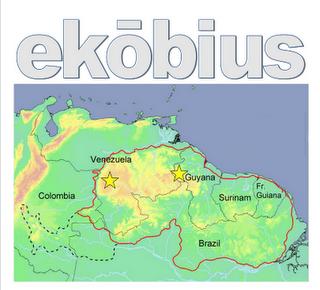
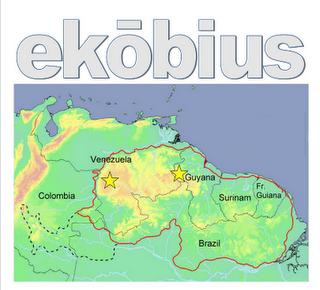
Map of South America highlighting Venezuela, Colombia, Guyana, Suriname, French Guiana, Brazil.

Ekobius International

  • Communities

About the Communities

  • Forming
  • Ecological
  • Rural

Founding year

  • 2011

What we do

Come live in the Northern Amazon in the Orinoco Mountains, on the Guiana Shield where the world began!
It took us several years to find the right property and have overcome the invisible socio political factions that mysteriously exist trying to prevent our Indie-pendent Ideals. “Now our property is finally paid off and we can begin moving in” -David Wright, Project Coordinator.
I said that in 2016, when I returned to Venezuela after being deported in 2014 in a violation of my civil rights and a xenophobic radicalization of the Venezuelan government. Fortunately we had residents at that time until diplomatic relations worsened internationally.
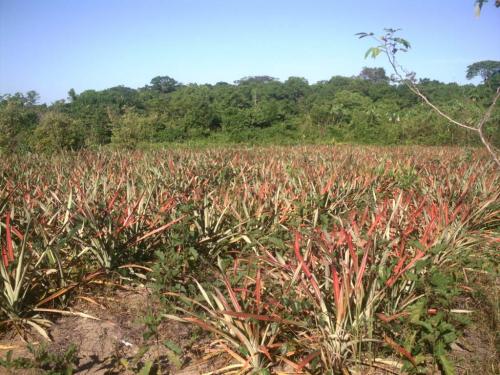
In May 2013 we entered into a contract to purchase property at the frontier edge where the Amazon Rainforest meets the Guiana Highlands, locally they call it Guayana, we call it the Amazon Highlands. We started using Ekobius (Ecology-By-Us) to describe the special niche ecosystem and area where we live and are building a prototype model ecological village based on open-source ideals. This is deep ecology and nature at its best!
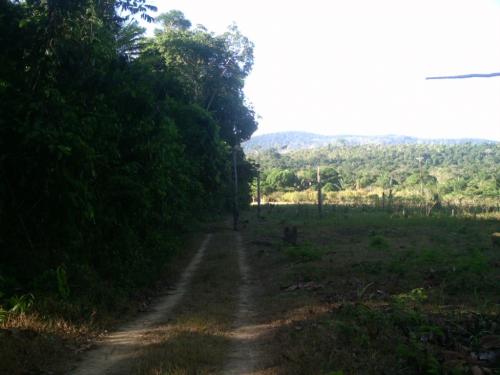
Located in Venezuela’s Northern Amazon; literally, at the ‘End of the Road.’ our property is the absolute last property that can be inhabited permanently by other than traditional indigenous peoples before entering a protected land area of 650,000 square kilometers full of indigenous reservations, natural monuments, national parks and biosphere reserves. Cross the river behind our property and the next contact with civilization you will find is a 100 day hike due south to the Amazon River or due east to Mt. Roraima and the Guyana, Venezuela, Brazil border.
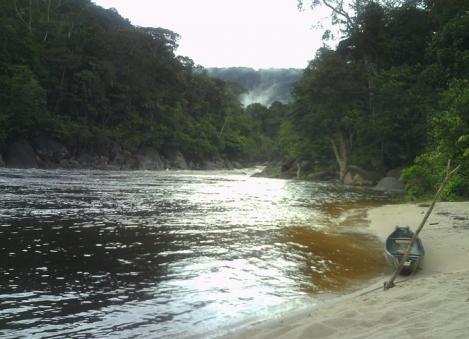
We are 33 kilometers (20 miles) from the capital of the state of Amazonas, Puerto Ayacucho, which is in the Atures municipal district. Our ecovillage is located on an asphalt connector road with the capital, we are located between the local community of La Culebra and the indigenous community called Gavilan at Kilometer 24 on Via Gavilan. Public bus transit is available within 10 kilometers of our property. The front of our property has 200 m of road frontage and nearly 2 km of the Catañiapo River in the rear.
Our project is owned and operated by the Ekobius International (an International Cooperative) who are the member residents of our eco-village (ecovillage) development. The property, its infrastructure, and its buildings are wholly owned and controlled by the cooperative under express indefinite permission with the Ministry of the Environment and the Ministry of Agriculture and Lands for “Agro-Tourism”.
Anyone can become a member of Ekobius by investing in the socio-productive cooperative initiative, anyone can further become a resident of our intentional community (ecovillage) and work in the cooperative by joining the cooperative and visiting us with a backpack or a suitcase.
We are seeking open minded people that consider themselves free and liberated of capitalism and the mainstream society. We are unifying ourselves differently than most communities because our common bond is not religious or political, spiritualist or governmental; our ideals are based on indigenous knowledge, enhancing nature and fostering the earth’s ecology, instead of exploiting it. We are developing as a small ecological community dedicated to sustainable development and the enhancement of our natural environments. Taking care of the planet that takes care of us.
Resident members can work in agroforestry, permaculture, teaching ecology, growing medicinal plants, making artisan products, developing handicrafts and through the social production of ecosystem services and non-wood forest resources through specialized educational development projects sponsored by international patrons in the Guiana Highlands and Northern Amazon regions.
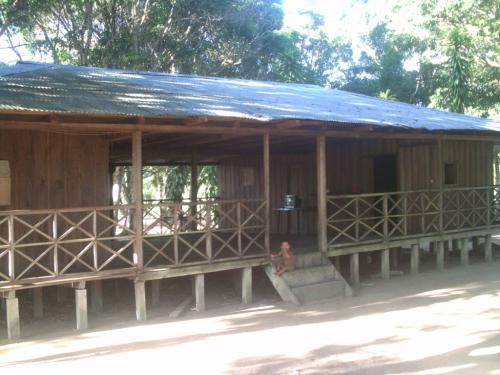
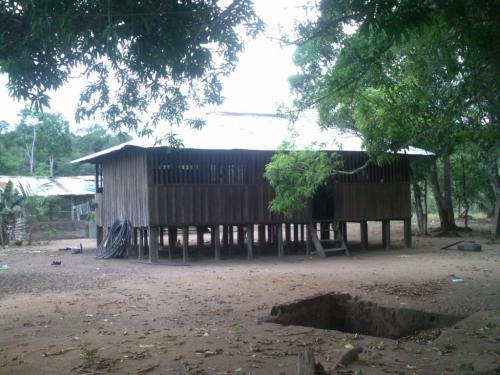
Our project is beginning with a property that has a common kitchen building, a four room lodge, a 5 stall bath house, several concrete foundations and 2 chicken coups. The reformation calls for the development of a crowdfunding project, the sale of memberships, and the organization.

Our Mission

Through cooperation, peace and the natural world we can realize our genuine purpose as the caretakers of the planet. Our community is dedicated to the using appropriate ecological technology, natural materials, harnessing the energy of nature, and benefiting from its gifts. Our focus as a group is on ecosystem services, their protection, development and sharing for ourselves and future generations to come.

  • Purpose
  • Ecological
  • Community type
  • Cohousing
  • Ecovillage
  • Intentional Neighborhoods
  • Sustainability practices
  • Permaculture design
  • Activities
  • Property management
  • Experiences
  • Networking
  • Services Business
  • Others

Commemorative dates

  • January 1, 2011
  • Started planning
  • January 1, 2013
  • Started living together
  • 11 Total members
  • Open to new members
  • Open to visitors
Total
19

How to join

Please see our notices, research us and decide if this is right for you. We are accepting new members that become stakeholders in the cooperative and the coop-owned real estate (ecovillage).

Basic expectations or agreements for members

Visitors must have their own camping equipment, usually a tent or a hammock will do for sleeping, visitors and volunteers are responsible to cover expenses for food and transportation from Puerto Ayacucho 33 kilometers to our ecovillage. Contact us first by email to confirm your arrival 3 days in advance with confirmed details like flight number, etc and help by bringing essentials. We will make every effort to meet you at the international airport and help you with accommodations as necessary at your expense of course..

Primary decision-making authority

  • Small Leadership Group

A few people (not elected by the broader community) make the major decisions.

Decision-making process

  • Modified Consensus

Generally seek agreement, but have backup methods when consensus isn’t reached.

Governance structure

  • Collaborative/Horizontal

Power and responsibility are shared relatively equally among members.

Conflict resolution approach

David Wright is the cooperative coordinator and maintains a perspective horizon and direction for the ideal he founded focused on specific concepts and projects already under development. Aside from that Wright is responsible to the board of the cooperative and active members, as the executive director responsible for management and business of the cooperative.

Economic model

  • Complete Income-Sharing

All member income goes into common pool for community use.

Economic scenarios for this community

  • There is a one-time fee, investment, or share purchase to join the community separate from accessing housing
  • Members need to pay fees, dues, or similar to live there on a per month or per year basis
  • There is a labor obligation

Additional economic information

Join fee: $3750
Regular fees: $33
Labor: Encouraged or suggested (20 hrs/week)
Members with pre-existing debt: allowed
All money earned from cooperative work efforts is paid to active cooperators. All members must be available to perform functions for the betterment and daily routines of the community. The cooperative membership fee is now only $3,750.00, a deposit of 50% is required to affiliate in the cooperative.

Shared resources and amenities that are accessible to everyone in the community

Common House, Garden(s), Greenhouse(s), Library, Workshop, Outbuilding(s), Swimming pond or pool, Outdoor Kitchen, Large Scale Kitchen, Tractor & Farm Equipment, Fire pit, Swingsets & play areas, Recreational vehicles, Waterfront access, Gym or sports area

Frequency of communal meals

  • 2-5 times per week

Significant food acquisition practices

  • Locally sourced

Community activities and engagement

  • Transition Town (post-petroleum and off-grid communities.)
  • Volunteer, Internship, or Apprenticeship, or WWOOF’ing
  • Neighborhood, Community Housing, or Homeowner's Association
  • Ethical Business, Investment Group, or Alternative Currency
  • Organization, Resource, or Network

Substance use culture

  • Substance use occurs primarily at celebrations or ceremonies
  • Religions
  • Native
  • Wiccan, Paganism, or Earth Religions

Gender composition

  • Roughly balanced (no group over 60%)

Age demographics

  • Multi-generational (all ages well represented)

Property status

  • Privately owned

Property owner

  • By several individuals through an LLC or a Tenancy In Common agreement

Setting

  • Rural

Countryside locations with significant distance from urban centers.

Community type

  • Cohousing

    Private homes with shared common facilities, designed for neighborly
    interaction while maintaining independence.

  • Ecovillage

    Integrated communities designed around ecological principles with sustainable living practices.

  • Intentional Neighborhoods

    Geographically close groups of independently-owned homes whose residents actively cultivate community relationships and shared values.

  • Land-Based Communities

    Communities centered around shared land stewardship, sustainable agriculture, or connection to specific natural environments.

Sustainability approach

  • Permaculture design

Land practices in our community

  • The community practices permaculture

Self-produced energy

  • Over 66%

Energy sources used

  • Photovoltaic Solar
  • Hydro
  • Biomass (from wood or other organic materials)

Self-produced food

  • Up to 33%

Local, organic, or fair trade food

  • Over 66%

Food systems

  • Community garden
  • Greenhouse / aquaponics
  • Land area size
    27 acres

Guest Book

Written reviews are available for plus members. Click here to upgrade.

Location

  • Amazonas, Venezuela

Ekobius International

Needs and Offers

Connecting people and communities through an intentional online marketplace

  • Promoted
  • Events
4 weeks ago

Healing Love Healing Money: Trust As The Foundation For A New Culture

Money, love and power are among the hardest things any community works with, and many of us carry the same fears into both: not having enough, losing what we have, and the sense that if someone else gets money or love, we won’t. Healing Love, Healing Money: Trust as the Foundation for a New Culture is taught by two intentional communities. Karen McAllister and Duncan Cryle are from Clear Sky Meditation and Retreat Center, a Buddhist-lineage community in the BC Rockies. Monika Alleweldt and Benjamin von Mendelssohn from Tamera Healing Biotope, a community of about 160 people in southern Portugal that has spent decades studying love, trust and relationship. Clear Sky has spent years working on its relationship with money, and our two communities found surprising parallels in the fears beneath both. Over four sessions we explore the roots of fear around money and belonging, love, possession and power, trust as infrastructure (community as a container for healing), and ethical livelihood. We use short meditations, body-based practices, reflection and small-group conversation. You do not need to be in a romantic relationship or live in community. When: October 27, Nov 3, 10, 17. All four sessions: 12–2pm Vancouver, 1–3pm Alberta, 7–9pm UK and Portugal, 8–10pm Central Europe. Note: US and some Canadian provinces change clocks on November 1, so the US west coast is 12–2pm on October 27, then 11am–1pm for the remaining sessions, and Eastern is 3–5pm on October 27, then 2–4pm for the rest. Cost: sliding scale Details and registration: https://www.clearskycenter.org/event/healing-love-healing-money-online/  
October 27, 2026 13:00 – November 17, 2026 15:00
  • Promoted
Offer
  • Promoted
  • Events
1 day ago

Coastal Regeneration Immersion: Permaculture Design Certification in Jalisco, Mexico

Tropical Dry Forest Permaculture Design & Regenerative Stewardship Certification (PDC)12-Day Intensive | 120 Hours | Costalegre, Jalisco, Mexico APPLY AT XOCHIRAIZ.COM Join us for an immersive Permaculture Design Certificate course set in the tropical dry forest bioregion of coastal Jalisco. This 120-hour intensive blends internationally recognized PDC curriculum with hands-on regenerative practice — combining ecological design, agroforestry, natural building, and community stewardship into one integrated learning experience. Lead Faculty Jorge Luis Gtz. Olarte (Arborescencia RedGenerativa) – Regenerative Design, Soil Biology & Agroforestry Ozzy Lusth (Survior & Xochiraíz) – Wilderness Resilience & Survival Skills Dave Collins (Capacha Coastal Conservation Center) – Bioarchitecture & Ecological Development What You’ll LearnThe course moves through six progressive phases: Permaculture & Ecological Literacy – ethics, principles, and reading the tropical dry forest landscape Water & Soil Systems – keyline design, water harvesting, living soils, and compost systems Horticulture – food garden design, propagation, and biological pest control Regenerative Food Systems – tropical agroforestry, food forest design, and guild planting Ecological Infrastructure – bamboo bioarchitecture, bioclimatic farm design, compost toilets, greywater, and rocket stoves Integrated Design Studio – team-based final design projects covering watershed strategy, agroforestry, food forest layout, infrastructure, and phased implementation Daily RhythmMornings begin with optional surf/yoga and journaling, followed by field practicums and hands-on workshops. Afternoons include design studio and construction lab work, with reflection circles, communal dinners, and evening talks, films, or campfire discussions rounding out the day. Final ProjectParticipants work in teams to produce a full regenerative design package — landscape analysis, water plan, agroforestry design, food forest plan, ecological infrastructure, and bioclimatic farm plan — presented to a faculty review panel on the final day, followed by a closing ceremony, certificate delivery, and community feast. CertificationGraduates receive the Tropical Dry Forest Permaculture Design & Regenerative Stewardship Certification (120 contact hours), hosted by Capacha Coastal Conservation Center and Tierralegre, A.C. Curriculum integrates international PDC standards with tropical ecology, agroforestry, ecological restoration, bamboo bioarchitecture, bioclimatic design, GIS/photogrammetry, and regenerative leadership. Highlights Hands-on bamboo construction (temazcal, bathhouses, sculpture) Tropical dry forest silviculture practicum Community mapping and design project for Ekoa Green Community Talent show and sea turtle release
January 10, 2027 00:00 – January 24, 2027 23:59
Offer
Need

Update to a Public Profile

  • Log in
  • Go to your profile page
  • Toggle on the "Add my profile to the directory"
  • Save your profile

Information

Communities

A residential project: people live here as their primary home.

Organizations

An institution, business, network, or project that isn’t a residence (e.g. a learning center, farm, or network with no one living there full-time).
Plus Community Membership

  • Find people with Profile Match
  • Access to your community listing statistics
  • Create Discussion Groups
  • Access to our affiliate program
  • Member badge on your community profile
I am an official member of this community
Disclaimer
I affirm that my information is accurate and I am authorized to manage this listing
Foundation for Intentional Community FIC Member badge logo.

Free Plan

Free Membership
Free

Intentional Advertising

  • Subtotal

    {{ currencyFormat( pricing_summary.total_amount ) }}

Icon representing community connections and collaboration for intentional communities.

Plus Membership

  • Find communities with Profile Match
  • View detailed reviews about communities
  • Create free listings in Needs & Offers
  • Plus Member resources in CommUniversity
  • View communities detailed reviews
  • Plus Member badge on your profile