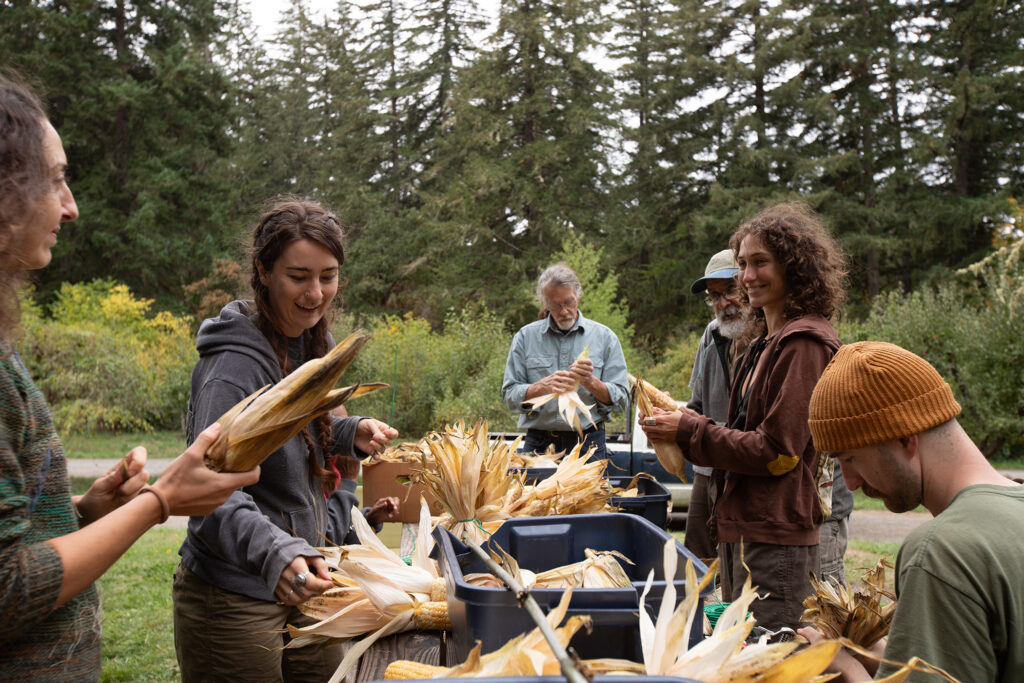
Lost Valley Educational Centre and Intentional Community. Photo credit: Elizabeth Maragioglio
Food is a vital social connector in intergenerational housing communities
By Savannah Fishel
This text was taken from ‘Beyond the White Picket Fence: A companion for intergenerational living’
which is available to download or purchase now at thinkitforward.net
—
Funded by the Churchill Fellowship, I have visited 54 intergenerational communal housing
models across Australia and the US, learning about the benefits (and challenges) of living in an
intentionally social community where individuals or families have separate units, but share a
range of spaces and amenities, contribute to shared decision-making and aim to consciously
develop a more supportive and connected culture.
One of the first things that came up in almost every community I visited was food. Whether I
was speaking to residents of cohousing, tiny home villages, or cooperative housing, people kept
returning to the same idea: food is the glue that holds a community together. It can bring people
into shared spaces, facilitate conversation, and create a sense of belonging.
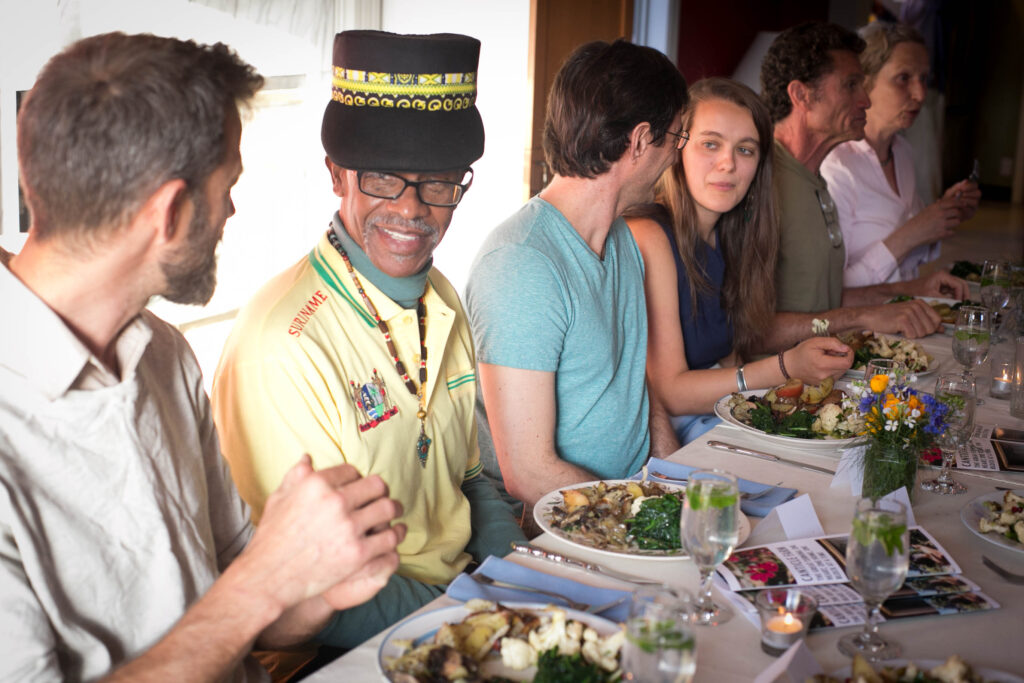
Canticle Farm.
Breaking Down Barriers Through Food
Food naturally lowers social barriers. Sitting down to eat together encourages openness,
whether it’s two neighbours sharing a cup of coffee and cake or a structured meal after a
meeting. Some communities I visited deliberately placed meals after difficult conversations or
decision-making meetings, acknowledging that food can diffuse tension and help people
reconnect.
“I feel closest to people at meals – we can relax and enjoy each other, they’re always low
tension times unlike house meetings which can be stressful” – resident, The Village Cooperative,
San Francisco
Beyond that, food serves as a powerful cultural bridge. In these communities it is commonplace
for people from different backgrounds to share dishes with one another, providing a window into
each other’s histories and traditions in a way that feels organic and celebratory. In Hifi Collective
in Los Angeles, cooking together – or for one another – became a way to break barriers and
spark organic relationships. One staff member at Hifi Collective – a supported independent living
apartment block for people who need stable housing, with a focus on intentionally building
longterm community – said to me, “People here are from a real range of cultures, backgrounds
and speak different languages… It’s food that brings everyone together.”
Cooking also offers a way to teach and learn across generations. In one cohousing community
in California, children and elders came together for an after-school club where baking served as
a fun activity, a means of intergenerational exchange and a form of childcare for young parents.
Of course, food isn’t always simple. Dietary requirements, allergies, and cultural preferences
need to be considered to ensure meals are inclusive. Some communities opted for flexible
models – like providing staple ingredients but encouraging people to bring their own toppings – to
make shared meals more accessible. A resident Temescal Commons, Oakland said, ”Food is
key – you have to make sure meals are inclusive. For instance if you want teens to join, offer
pizza or burritos, not fish soup!”
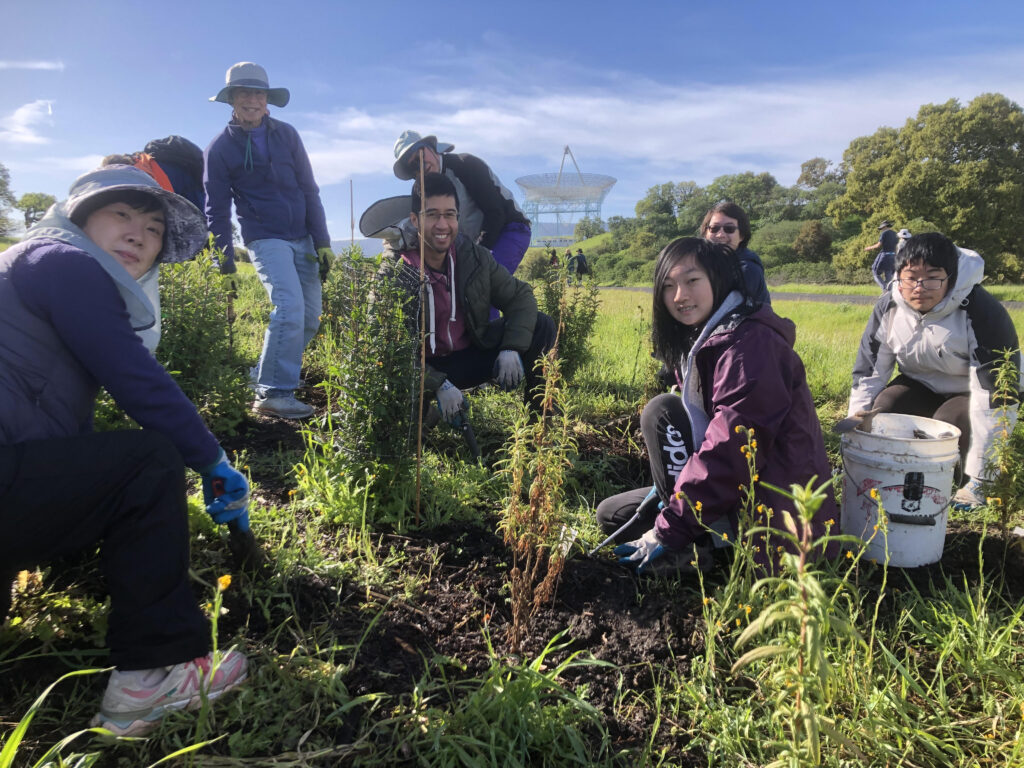
Courtesy of Magic (service organisaiton and intentional community grounded in valuescience).
How Food Features in Communal Living
Each community had its own way of embedding food into everyday life, but some recurring
practices stood out:
● Food exchanges – communal spaces where people leave and swap food items. Often
this would be food which has been grown on the property, for example, fresh produce is
commonplace on LA Ecovillage’s ‘Freebie Table’.
● Growing food together – Many communities had shared gardens, “food forests,” or
individual plots where residents grew and distributed produce, either working together or
side-by-side. Gardening together was often raised as a key moment of interaction for
residents, providing a relaxed and regular moment to connect. Some communities I
visited, such as The Paddock ecovillage and Murundaka rental cooperative in Australia
assign all residents (who want one) their own food plot.
● Regular communal meals – A staple of most communities, shared meals are organised
in a variety of ways. Often residents cook for the community, or a smaller group, on a
rota system. In some communities, every resident joins regularly, and for larger
communities, smaller groups meet. Sometimes people from different units come
together to cook, creating an additional opportunity for connection beyond households
and across the community. In some communities, the challenges of allergies and dietary
requirements has meant that people come together to eat regularly, but bring their own
food instead of using a cooking rota.
● ‘Potlucks’ – Highly popular in communal living spaces, ‘potlucks’ invite attendees to bring
a dish of their choice, resulting in a wide range of dishes to choose from and share
together. A simple yet effective way to bring people together, for some communities as
regular as twice a week, or for others, organised around cultural, seasonal or celebratory
moments.
● Community soup – Some communities, such as Santa Rosa Creek Commons, have a
tradition of residents contributing vegetables or ingredients throughout the week for a
shared soup at their monthly work day.
● Rotating dinners – At Narara Ecovillage in New South Wales, for example, for a period
after moving in, residents took turns hosting meals in their individual units, helping
people see each other’s living spaces and build relationships.
● Happy hours and snack-based socialising – Whether it was a wine and cheese evening
at Fair Oaks EacoHousing, or a weekly coffee and cake morning at The Paddock,
structured but casual moments create consistent touchpoints for connection and food
draws people in.
● Food co-ops and bulk-buying – Many communities ran self-governed food programmes,
allowing residents to access produce sustainably and create deeper relationships
through shared responsibility.
● Acts of care through food – Many communities told stories of kindness which centred
around food, for instance ’meal trains’ (residents taking it in turns to cook meals for
others who were sick or had recently given birth), ‘secret angel’ gifting (people would
give a specific gift regularly, often sweets or baked goods) and
knocking on resident doors to invite them to meals if they have become more socially withdrawn.
At Goodness Village, a ‘tiny home’ community for people exiting chronic
homelessness, some residents took on parental or caregiving roles by cooking or
shopping for others, shifting from survival mode into a more trust-based, communal way
of living. This community also has an annual tradition where local volunteers act as
waiters for residents in a fun and lavish moment of celebration.
● Food as contribution – Not everyone in a community can participate in physically
demanding work days, but cooking a meal or bringing baked goods offers an alternative
way to contribute. Flexibility helps ensure that participation in communal life is
accessible to more residents.
More than just a meal
The role of food in communal living goes far beyond sustenance. It is a way to build trust,
celebrate culture, and help people to feel seen and supported. Whether through a structured
dinner or an informal exchange of homegrown produce, food creates the conditions for
connection in ways that few other rituals can.
Above all, food is an enabler of more connected communities. If we design living arrangements
for connection, care and sustainability, then food will naturally find its place at the centre.