
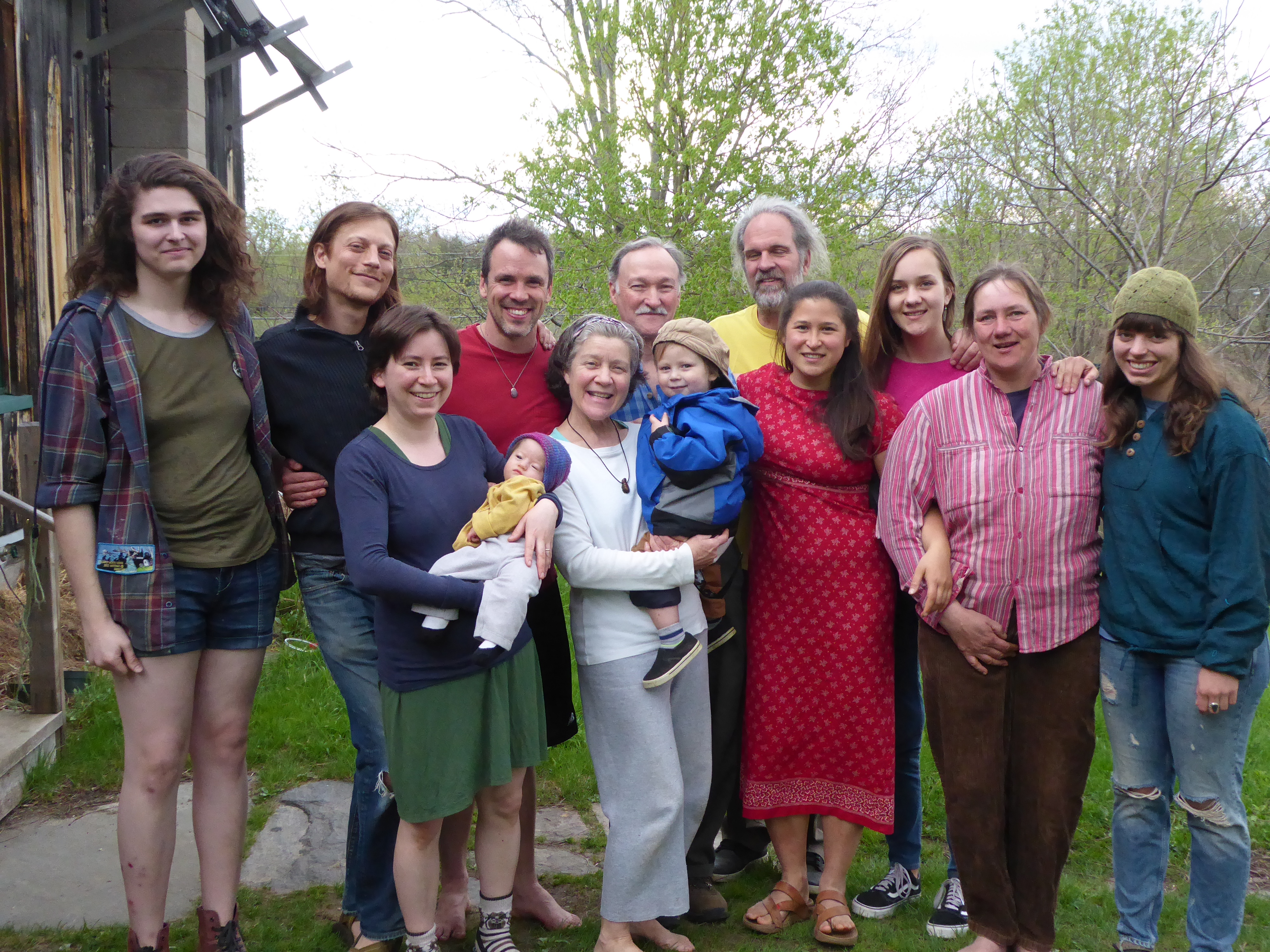
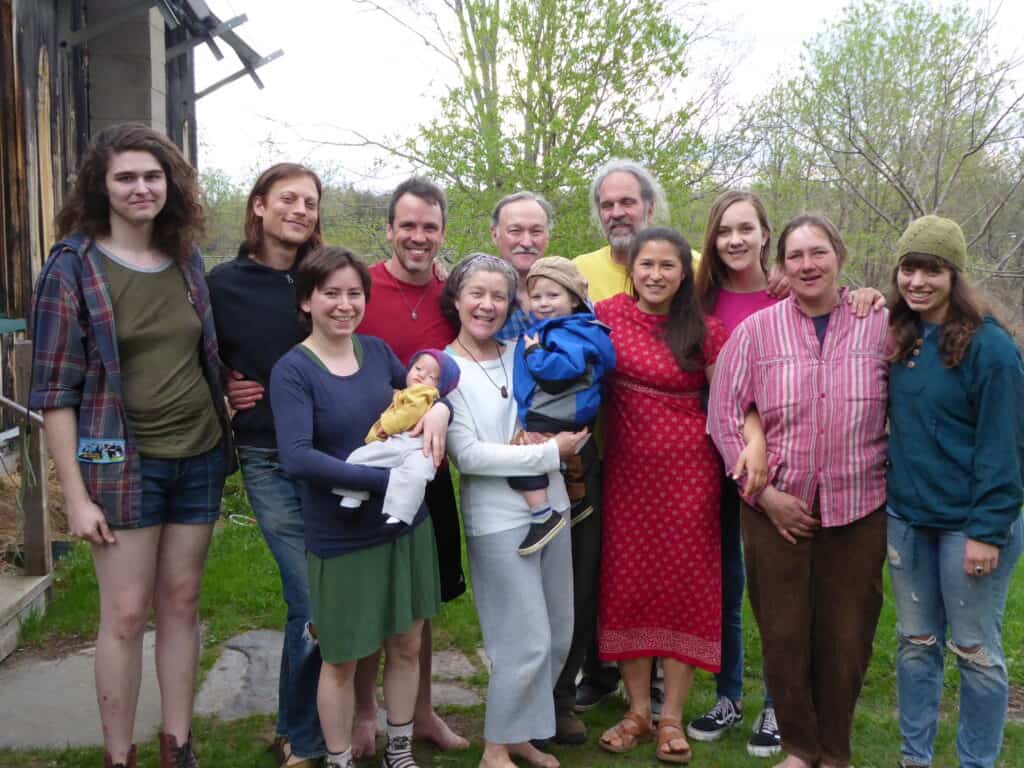
Group of diverse people outdoors at Birdsfoot Farm, smiling and enjoying nature.

Birdsfoot Farm

  • Communities

About the Communities

  • Established
  • Ecological
  • Rural

Founding year

  • 1972

What we do

Birdsfoot Farm is a consensus-based agricultural community founded in 1972. Our farm is located where the St. Lawrence River valley meets the foothills of the Adirondack Mountains. Though the area is quite rural, the presence of four colleges nearby brings cultural diversity we appreciate.
Our 73-acre farm has fertile loam soil, woods, a stream, a large community house, three comfortable homes, a schoolhouse, two barns, and a small cabin. In order to grow we need to build new dwellings. The land and buildings are owned by the community.
Members share monthly living expenses, purchase equity in the property, and participate in community work projects. We care a lot about each other and find time for many kinds of sharing–such as communal meals, rituals, parties, etc. Each person follows his or her own spiritual path. Individuals are active in social and environmental issues. We are accepting short-term sharees and interns.
Our vegetable business grows two acres of certified organic vegetables for the community, wholesale, CSA, and farmers market using low-input techniques, intensive spacing and cover cropping.
Little River Community School was started in 1998. The school now serves 39 students in grades K-12 with four full-time teachers. The school is founded on the belief that children are inherently motivated to learn about their world and should be allowed to proceed at their own rate. See the school on the web at http://www.littleriverschool.org.
The farm and school provide income to some of the community members and others work off the farm. Each year the veggie business and school seek interns.
For more information about our community, or internship programs, please send a letter.

Our Mission

Learn/Grow, good food and friends

  • Purpose
  • Ecological
  • Community type
  • Cohousing
  • Ecovillage
  • Commune
  • Activities
  • Farming
  • Education
  • Experiences
  • Others

Commemorative dates

  • January 1, 1972
  • Started planning
  • January 1, 1972
  • Started living together
  • 5 Total members
  • Not open to new members
  • Open to visitors
Total
13

Basic expectations or agreements for members

Please write a letter to describe yourself and what you would like.

Primary decision-making authority

  • All Community Members Together

The whole membership decides collectively.

Decision-making process

  • Full Consensus

Everyone must agree before moving forward.

Governance structure

  • Collaborative/Horizontal

Power and responsibility are shared relatively equally among members.

Economic model

  • Partial Income-Sharing

Members contribute a percentage of income to community funds.

Economic scenarios for this community

  • Members need to pay fees, dues, or similar to live there on a per month or per year basis
  • There is a labor obligation

Additional economic information

Regular fees: Yes
Labor: Yes
We have a weekly workday, each cook once a week and do household chores.
Members pay approximately $450/ month toward equity and expenses and $170 per month for food.

Shared resources and amenities that are accessible to everyone in the community

Common House, Garden(s), Greenhouse(s), Library, Workshop, Outbuilding(s), Large Scale Kitchen, Tractor & Farm Equipment, Fire pit, Swingsets & play areas, Internet

Frequency of communal meals

  • Approximately 1 meal per day

Dietary restriction

  • People can cook and eat what they want in their own residence

Community activities and engagement

  • Transition Town (post-petroleum and off-grid communities.)
  • School, Educational Institute or Experience
  • Volunteer, Internship, or Apprenticeship, or WWOOF’ing
  • WWOOF'ing, Guest Farming
  • Festivals, Conferences, Events

Substance use culture

  • Substance use appears in public spaces but no pressure
  • Substance use occurs primarily at celebrations or ceremonies

Gender composition

  • Roughly balanced (no group over 60%)

Age demographics

  • Multi-generational (all ages well represented)

Property status

  • Privately owned

Property owner

  • By a Land Trust, Home Owners Association, or corporation

Setting

  • Rural

Countryside locations with significant distance from urban centers.

Community type

  • Cohousing

    Private homes with shared common facilities, designed for neighborly
    interaction while maintaining independence.

  • Ecovillage

    Integrated communities designed around ecological principles with sustainable living practices.

  • Commune

    Communal living with shared resources, property, and often income or work responsibilities

Self-produced energy

  • Over 66%

Energy sources used

  • Photovoltaic Solar

Self-produced food

  • 33 - 66%

Local, organic, or fair trade food

  • 33 - 66%

Food systems

  • Community garden
  • Greenhouse / aquaponics
  • Land area size
    73 acres

Guest Book

Written reviews are available for plus members. Click here to upgrade.

Location

  • New York, United States

Birdsfoot Farm

Needs and Offers

Connecting people and communities through an intentional online marketplace

  • Promoted
Offer
  • Real Estate For Sale
1 week ago

Beautiful 3+ Bed, 2.5 Bath Townhome in Established West Emerald CoHousing, Seattle

A rare home is available at West Emerald Cohousing, an established all-ages intentional community in West Seattle. For those considering a move to the Pacific Northwest—or hoping to join a mature community rather than one still in the forming stages—West Emerald offers decades of community life, beautiful gardens, shared resources and a peaceful setting within the city in a convenient location since 1999. This unit has a unique floor plan that is ideal for co-buying, co-living, or for one household. The home itself offers a flexible 3+ bedroom, 2.5 bath layout: Garden-level room with a separate exterior entrance and half bath—ideal for a home office, studio, guest space or client-facing business Main-level bedroom and full bath, laundry, making one-level living possible Open great room with large windows overlooking gardens filled with birdsong Well-designed kitchen with generous storage and pantry Two additional light-filled spacious bedrooms and a full bath upstairs Thoughtfully maintained and updated Located at the end of a common pathway for added privacy and garden views, Just feet from parking, which is out of view West Emerald community amenities include: Common House with gathering and activity spaces Community meals and events Mature gardens and shared outdoor spaces Workshop/maker spaces and bike barn Exercise room EV charging opportunity Excellent Metro access to Downtown Seattle just minutes away Nestled into a dell, it’s Seattle’s best-kept secret South Seattle College and lifelong learning, NW Wine Academy, the Seattle Chinese Garden are nearby, with easy access to Alki Beach, Lincoln Park, magnet schools, ferries, and the shops and restaurants of the West Seattle Junction. 6000 17th Ave SW, Seattle, WA Is a wonderful opportunity to have your own comfortable, private home while becoming part of a vibrant and well-established Seattle all-ages cohousing community. For more information contact the friendly Realtor at 206-579-9066, or at ki**********@**********te.com who will be happy to meet you there or do a facetime tour.
  • Promoted
Offer
  • Communities with Openings
3 months ago

Do you feel called to help co-create a small, newly forming eco-spiritual community?

Old structures are crumbling. New ways of living are calling. We are answering that call. Wild Grace is an eco-spiritual community located in the Sierra foothills 30 minutes from Grass Valley, California. We recently completed new homes for those who feel called to our vision. Currently there are four of us living on this sacred 80 acres of land although we are a hub for an expanded neighborhood community. Many join us weekly for potlucks, expressive dance, Qi Gong, monthly musical gatherings, and seasonal celebrations in our temple, as well as tending to our orchard. We are excited to welcome others to join us on the land who are dedicating their lives to spiritual growth and ready to live in a more focused and intimate heart-centered lifestyle. Might that be you or someone you know? The fundamentals are simple. Spirit. We listen personally and collectively together most mornings, usually starting with a musical offering, a prayer, or a short reading, followed by about 40 minutes of what we call “sacred silence.” Heart Circles. About once a week we gather to share and listen. We are informed by authentic and compassionate communication practices. Nature. The land itself—an 80-acre oasis of field and forest perched above the wild and scenic South Yuba River—calls for our stewardship in the gardens, orchard, greenhouses, and general care. In turn, nature feeds us abundantly, both literally and spiritually. Interbeing. We join with others to share inspiration and connection as we host monthly gatherings of song, story and prayer that draws from the larger community in addition to other events we share with our closer neighbors. As we attend to these fundamentals, Grace flows to and through us—often in “Wild” or unexpected ways. Grace catalyzes through us, but is not something we possess. Because we all are connected, we feel that Grace actively transforms n
Offer
Offer
  • Events
2 weeks ago

Coastal Regeneration Immersion: Permaculture Design Certification in Jalisco, Mexico

Tropical Dry Forest Permaculture Design & Regenerative Stewardship Certification (PDC)12-Day Intensive | 120 Hours | Costalegre, Jalisco, Mexico Join us for an immersive Permaculture Design Certificate course set in the tropical dry forest bioregion of coastal Jalisco. This 120-hour intensive blends internationally recognized PDC curriculum with hands-on regenerative practice — combining ecological design, agroforestry, natural building, and community stewardship into one integrated learning experience. Lead Faculty Jorge Luis Gtz. Olarte (Arborescencia RedGenerativa) – Regenerative Design, Soil Biology & Agroforestry Ozzy Lusth (Survior & Xochiraíz) – Wilderness Resilience & Survival Skills Dave Collins (Capacha Coastal Conservation Center) – Bioarchitecture & Ecological Development What You’ll LearnThe course moves through six progressive phases: Permaculture & Ecological Literacy – ethics, principles, and reading the tropical dry forest landscape Water & Soil Systems – keyline design, water harvesting, living soils, and compost systems Horticulture – food garden design, propagation, and biological pest control Regenerative Food Systems – tropical agroforestry, food forest design, and guild planting Ecological Infrastructure – bamboo bioarchitecture, bioclimatic farm design, compost toilets, greywater, and rocket stoves Integrated Design Studio – team-based final design projects covering watershed strategy, agroforestry, food forest layout, infrastructure, and phased implementation Daily RhythmMornings begin with optional surf/yoga and journaling, followed by field practicums and hands-on workshops. Afternoons include design studio and construction lab work, with reflection circles, communal dinners, and evening talks, films, or campfire discussions rounding out the day. Final ProjectParticipants work in teams to produce a full regenerative design package — landscape analysis, water plan, agroforestry design, food forest plan, ecological infrastructure, and bioclimatic farm plan — presented to a faculty review panel on the final day, followed by a closing ceremony, certificate delivery, and community feast. CertificationGraduates receive the Tropical Dry Forest Permaculture Design & Regenerative Stewardship Certification (120 contact hours), hosted by Capacha Coastal Conservation Center and Tierralegre, A.C. Curriculum integrates international PDC standards with tropical ecology, agroforestry, ecological restoration, bamboo bioarchitecture, bioclimatic design, GIS/photogrammetry, and regenerative leadership. Highlights Hands-on bamboo construction (temazcal, bathhouses, sculpture) Tropical dry forest silviculture practicum Community mapping and design project for Ekoa Green Community Talent show and sea turtle release
November 13, 2026 09:00 – November 25, 2026 16:00
Offer
  • Real Estate For Sale
3 weeks ago

Co-housing Unit For Sale in Portland Oregon

Light-filled 976 sq ft, 3-bedroom, 1-bath end unit in Columbia Ecovillage, Portland’sestablished cohousing community in the Cully neighborhood. With windows onthree sides, this ground-floor home gets natural light all day, even onPortland’s grey ones. The open living and dining area has warm hardwood floors and flows into akitchen with solid wood cabinets and granite counters. The dining roomwindows look straight into a native vine maple — a wall of green from springthrough fall. There’s good storagein the unit, plus an extra storage space in the community storage building.A ductless mini-split provides efficient heating and air conditioning, andthe plumbing was fully replaced in 2026. The primary bedroom has a full-width closet behind a sliding barn door; thesecond bedroom’s closet sits behind a pair of French doors. The thirdbedroom has no closet, which makes it a flexible room — guest room, office,or playroom. Step out the sliding glass door onto your own covered patio, which opens onto the community grounds: organic gardens, personal garden plots,greenhouses, a grape arbor, a bamboo grove, native plantings throughout, andtrees everywhere — including a truly massive old black walnut. The orchard alone is a reason to live here — to name a few:apples, pears, plums, figs, mulberries, chestnuts, walnuts, grapes,blueberries, raspberries, and blackberries, in several varieties each. A75,000-gallon rainwater catchment system keeps it all watered through thesummer. Kids have a playhouse, sandbox, small soccer field, a favorite climbingtree, and a parking loop where bikes can circle but cars can’t; adults havea workshop, garden shed, fire pit, quiet space and big community porches. The common hall is the heart of the village: a commercial kitchen anyresident can use, a kids’ play area, pool table and ping pong, and asoapstone stove that burns every winter evening. Residents can reserve it forevents for almost nothing. The historic farmhouse has guest rooms owners canbook for visiting family (about 30 nights a year). Shared laundry rooms(three washers and dryers) come with indoor drying racks and outdoorclotheslines, and there’s a craft room and a trade room where things you nolonger need find a new home next door. Potlucks, communitymeals, work parties, and acres of safe space for kids to roam makethis a rare chance to own a home and a neighborhood at the same time. Built in 1973 and fully remodeled in 2008–09 for energy efficiency and healthy indoor air — metal roof, HardiePlank siding, and standard community-built finishes throughout. Nothing to update, nothing deferred. The $522 monthly HOA coverswater, sewer, and garbage, plus the roof, siding, exterior paint, and allstructural maintenance — and it’s what pays for the grounds, the common hall,and everything else described above. And it’s close in: Cully’s cafés andparks are a short walk or bike ride away, the rest of Portland’s food,music, and neighborhoods are minutes beyond that, and the commute downtownor to the airport is easy by car, bus, or bike – 3.7-acre grounds with organic gardens, personal plots, greenhouses, native plantings, and mature trees (huge black walnut)- Orchard: apples, pears, plums, figs, mulberries, chestnuts, walnuts, grapes, blueberries, raspberries, blackberries- 75,000-gallon rainwater catchment feeds the gardens year-round- Workshop, garden shed, fire pit, quiet space, community porches  

Update to a Public Profile

  • Log in
  • Go to your profile page
  • Toggle on the "Add my profile to the directory"
  • Save your profile

Information

Communities

A residential project: people live here as their primary home.

Organizations

An institution, business, network, or project that isn’t a residence (e.g. a learning center, farm, or network with no one living there full-time).

Plus Community Membership

  • Find people with Profile Match
  • Access to your community listing statistics
  • Create Discussion Groups
  • Access to our affiliate program
  • Member badge on your community profile
I am an official member of this community
Disclaimer
I affirm that my information is accurate and I am authorized to manage this listing
Foundation for Intentional Community FIC Member badge logo.

Free Plan

Free Membership
Free

Intentional Advertising

  • Subtotal

    {{ currencyFormat( pricing_summary.total_amount ) }}

Icon representing community connections and collaboration for intentional communities.

Plus Membership

We’re introducing new Plus features — including community reviews, Profile Match, and unlimited Needs & Offers posts — while keeping most of FIC free for everyone. Membership costs less than two coffees a month. 

  • Find communities with Profile Match
  • View detailed reviews about communities
  • Create free listings in Needs & Offers
  • Plus Member resources in CommUniversity
  • View communities detailed reviews
  • Plus Member badge on your profile