Come Live at Heart-Culture Farm





- Category
- Communities with Openings
- Location
- Eugene, Oregon
https://www.youtube.com/watch?v=LbTDwEkW9cM
What we are creating: A village of folks who help each other in many ways. Practical ways like sharing childcare, community meals 4x per week, and sharing expenses to keep all our living costs down. Emotional ways like listening to feelings, caring about our stresses and victories, and trying to understand each other. We are creating social and economic resilience systems that can help us adapt to the big changes happening in the world.
Our community systems are set up to support long-term committed relationships with each other and the land, because so much more is possible in long-term relationships. However, we also value short-term residents who contribute to our community’s well-being–and it’s never possible to know if a long-term relationship is forming until you have spent significant time creating it! The core group of long-term folks have been here for 10-17 years; we’ve learned a few things about sustainable relationships!
How you could contribute: Cook a community meal for 15 people one night each week. Water young fruit trees in the summertime. Take leadership in getting a community chore done–cleaning out the greywater filter, keeping the communal house swept, stacking firewood. Watch someone else’s kids while the parents get something done. Organize a surprise birthday party. Do the chicken chores. Come to meetings once a week (Sundays at 3pm) to stay connected with other residents and find out how you can contribute.
Who are we looking for: The opening housing space is upstairs in the communal house. Upstairs is private, but the entire downstairs is community space: kitchen, laundry and shower, office, kid’s play room, and the spaces where we have communal meals and community meetings. The right applicant will be able to hold a spirit of hospitality for everyone who walks into the downstairs. We’d like you to be gracious and pleased when people use the space (and able to communicate reasonable boundaries around cleaning up after themselves, if needed). You would have a leadership role in organizing help to maintain the cleanliness of the communal space, because you would be the person most often using and observing it.
Who already lives here: A core group of eight committed members with 11-17 years on the land, ranging in age from 10 to 70. Three additional shorter-term residents who hope to stay long-term. We have room to double our occupancy right now.
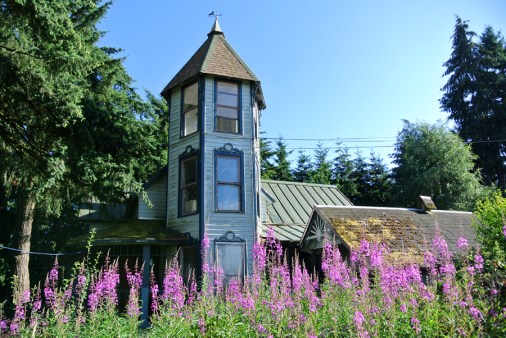
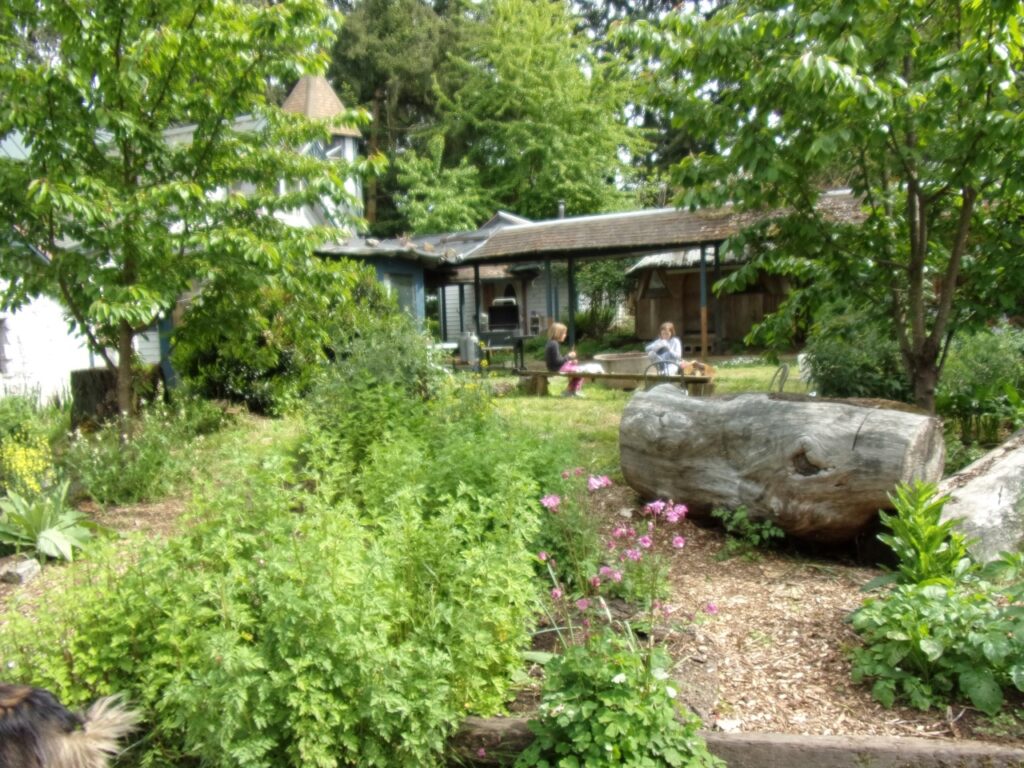
What the housing space is like: The Big House is an 1890s colonial farmhouse with Victorian towers. The upstairs private space is large enough for one or two families with kids, and includes two 2-story tower rooms. You can see all these spaces if you come for a tour.
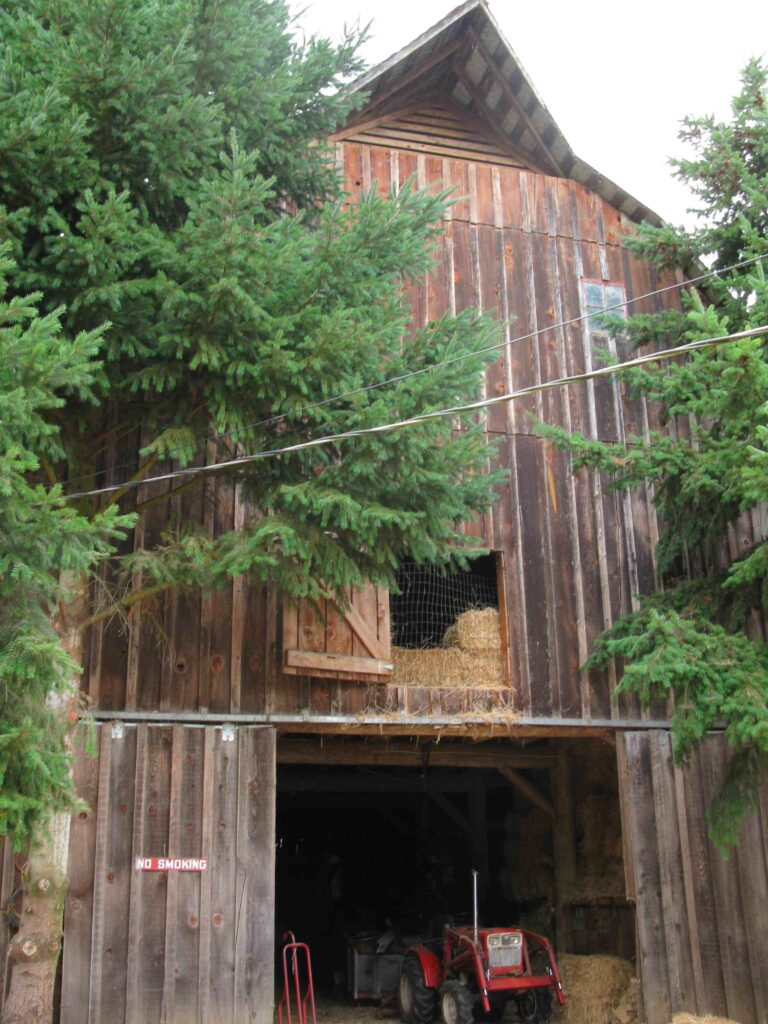
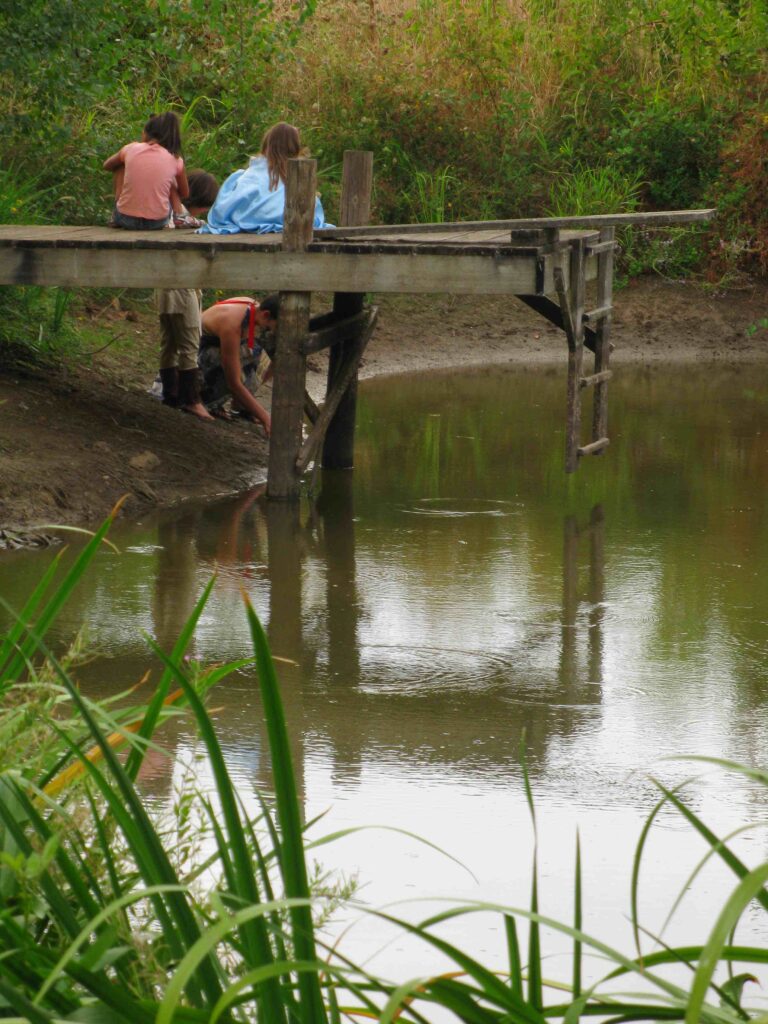
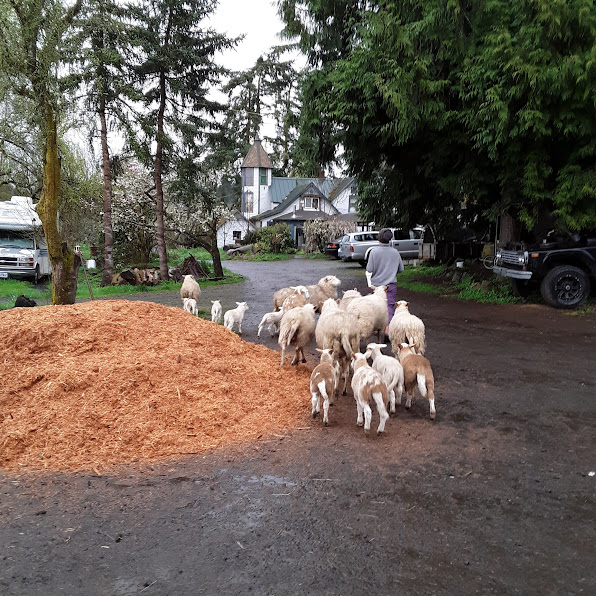
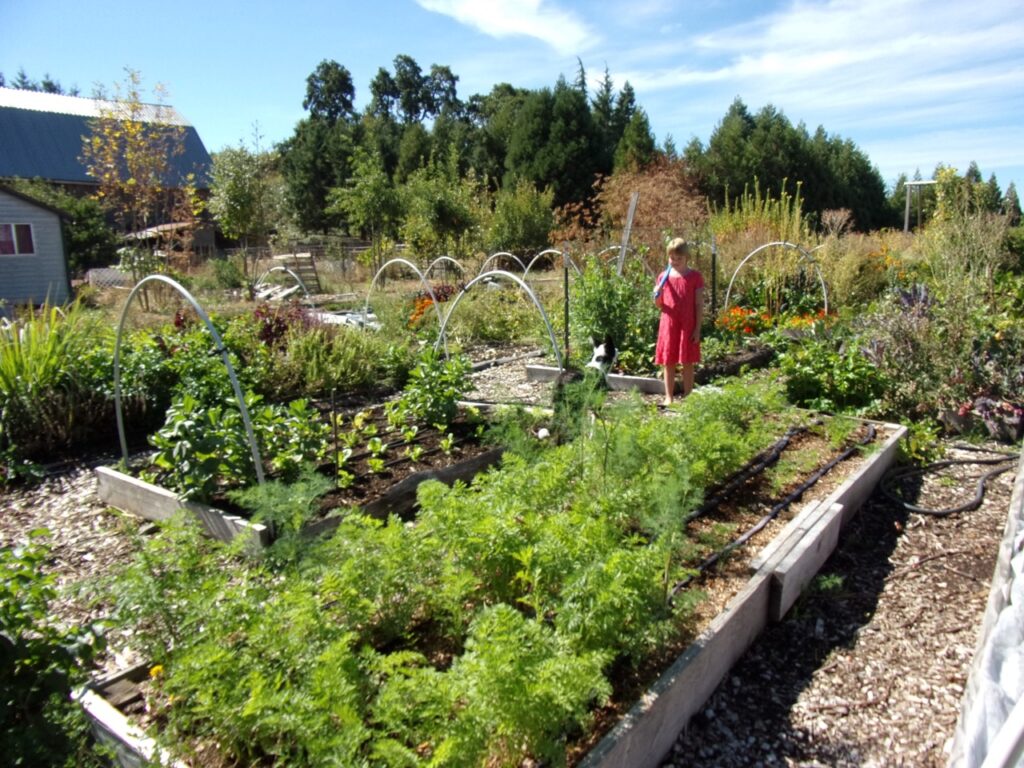
What the land is like: 33 acres of Integrated Permaculture Farm with pastures, pond, orchard, vegetable garden, and clustered housing. Adjacent to 17,000 acres of wetlands wildlife preserve (Fern Ridge), with walking trails, excellent birding habitat, and seasonal hunting. The farm is set up to be reasonably safe and attractive to children, with trampolines, living willow play houses, a tire swing, zip line, climbing trees, and other child-centered activity locations. We have ducks, chickens, sheep, goats, dogs, and cats. You may bring house cats, but we will be picky about adding more dogs to our farm. One of our goals is to grow 90% of our community’s food; if you like harvesting and processing tree fruits, chestnuts, medicinal herbs, and other farm produce, Kara will be excited to partner with you to manage the harvest for community use.
Where we are located: On the Eugene side of the Fern Ridge Reservoir, 10 miles from downtown Eugene. It’s a 15-30 minute drive to anywhere in Eugene. A bus stop and bike trail are nearby.
How much the housing costs: $425-$1200, depending on how the space is divided. These amounts include utilities and community fees.
Specific community rules and expectations that you might be excited by (or you might decide you can’t live with them!): We hold a sobriety culture in this community to support adults in recovery from addiction and to raise our children in a healthy way. That means that we expect you to not be drunk or high in communal spaces, and we expect you to have personal habits that limit your use of mind-altering substances. There will never be alcohol or marijuana use at community gatherings. There is only one place where smoking tobacco is allowed on the property.
We use ethernet connections for internet in order to avoid wireless radiation impacts on sensitive adults and children. We want you to plug your devices into the ethernet to access the internet, and do not set up hotspots or wi-fi. We’d also like you to limit the amount of time you are on your cell phone, and avoid sharing screen media with anyone else’s children.
All toilets at Heart-Culture are bucket-pile composting toilets. You would have your own toilet which you are responsible for emptying into the compost bins.
All drains go to greywater or septic systems. We want you to use greywater-safe soaps and learn to maintain these systems so they function properly.
If you are in conflict with another resident, we will expect you to participate in good faith in mediation or other facilitated conversations to attempt to resolve the conflict.
We have community expectations around child-raising that apply to all adults on the farm, whether or not you have your own children. Among these expectations is that children be safe from physical and sexual violence, and that parenting be based on connection, not on punishment. Parents are the leaders of their own families and the experts on their own children. However, we also expect you to engage in conversations about your kids and accept feedback from other community residents. We help each other with parenting, but that doesn’t mean you can let your kids run wild. We want engaged parents who can tolerate some differences in parenting style while helping build a child-safe community culture.