

Intentional communities can be the perfect testing ground for new sustainability practices – whether it’s an innovative greywater system or an aquaponics garden. At my community in Portland, we use our own composting toilet system, specifically intended to be safe and smell-free in a busy urban environment.
Instead of flushing clean water down the train dozens of times each day, we use a system of buckets and storage bins to collect waste and re-use it as fertilizer for our garden. By mixing in woodchips – and the occasional bucket of coffee chaff – we keep pests from accessing the pile and the neighbors from complaining.
Unfortunately, compost systems like these are illegal in many jurisdictions. Even if regulators don’t crack down on them in your city, it can be awkward having to explain to guests how to properly use the bathroom. (We keep a sign with instructions in ours.)
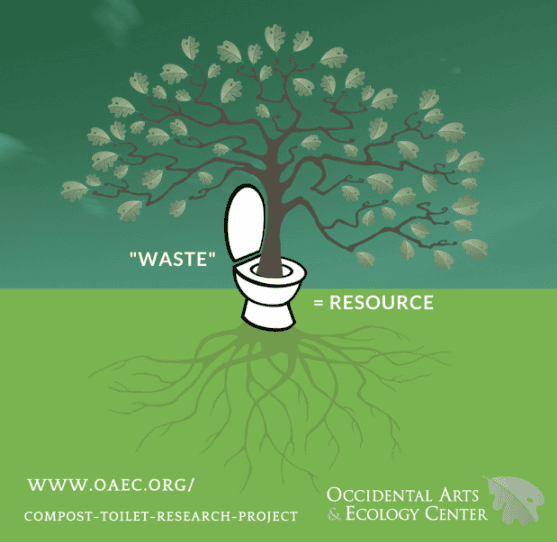
That’s why the Occidental Arts & Ecology Center in California is working with regulators to research and develop a more efficient and user-friendly composting toilet. They plan to “install and trial several different composting toilet systems in our retreat center’s new guest housing accommodations…. Through scientific testing of finished compost for pathogens, we hope to give regulators the hard data they need to facilitate widespread adoption of this technology throughout California and beyond.”
They hope that their research can make it easier – and legal – for hotels, apartment complexes, and more, to choose composting toilets over water-guzzling ones. Plus, the toilet is designed to look just like your average American toilet, so it won’t look out of place in your bathroom when your friends and family visit.
Regular toilets waste up to 20 gallons of water per person per day. In a time of increasing water scarcity, let’s put this outdated invention into the compost heap where it belongs and create a toilet that works for the modern era.
Have you considered installing a composting toilet or simply want to support the cause? Check out the video below to learn more about the project and support it with a Kickstarter pledge here! Supporters can choose from a set of educational posters, a tour of the completed facilities at OAEC, and more.
Learn more about the Occidental Arts and Ecology Center at OAEC.org.
https://www.youtube.com/watch?time_continue=8&v=jjGpY980gbU
Keep the conversation going with these pieces
There are no available blogs
Subscribe to our newsletter for fresh stories and community updates delivered to your inbox.
Get unlimited access to courses, exclusive member events, and a supportive network of community builders
Access all courses, books, and premium content
Member-only workshops and community builders
Member-only workshops and gatherings
We use cookies to improve your experience on our site. By using our site, you consent to cookies.
Manage your cookie preferences below:
Essential cookies enable basic functions and are necessary for the proper function of the website.
These cookies are needed for adding comments on this website.
Statistics cookies collect information anonymously. This information helps us understand how visitors use our website.
Service URL: policies.google.com (opens in a new window)
A residential project: people live here as their primary home.
An institution, business, network, or project that isn’t a residence (e.g. a learning center, farm, or network with no one living there full-time).

{{ item.label }}
{{ item.value ? item.value : currencyFormat( item.amount ) }}
Subtotal
{{ currencyFormat( pricing_summary.total_amount ) }}
There are no results matching your search


