

This is an online-only article associated with the Fall 2019 edition of Communities, “The Shadow Side of Cooperation”—full issue available for download (by voluntary donation) here.
Four-alarm hypocrisy has us believing one thing in the wisdom of our heart, saying another, and then acting in violation of all. It’s impossible to be truly peacefully centered and grounded, while violating your own integrity.Sleepless nights, and needing to double down on the meditations, is a red flag.
It starts as a few strays here and there and then the values violations increase in frequency and scope, until we barely know what’s true, who’s who, and what we really stand for any more.
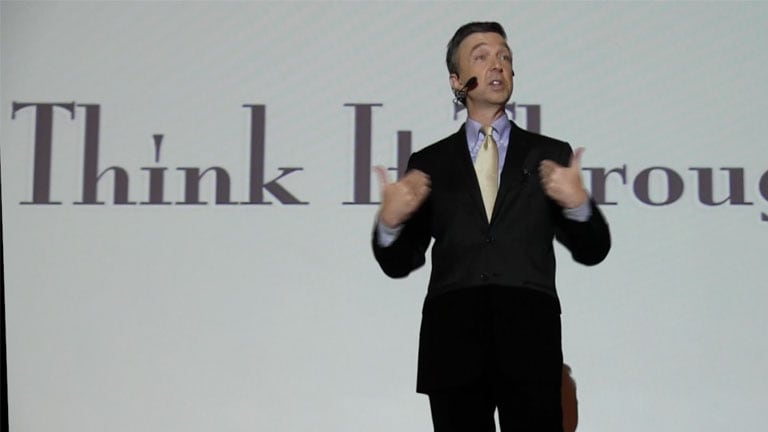
As a speaker and documentary filmmaker, I’ve coproduced film festivals with intentional communities and churches on four continents. My relationship with an organization starts with reading into the brand, values, and public image, and then I enter through the back office door.
I’ve had a few intentional communities make all kinds of promises, convince me to go way out on a financial limb to accommodate their leader by giving and giving, and then, after I’ve jumped through hoops of providing marketing and sales materials, not pay me for a film or event they commissioned.
While the clock was ticking and things needed to be done, I was promised the contract would be signed at the next board meeting, that the charismatic leader is super-stoked about doing this and just can’t get to signing the contract yet. Or they just never pay the percentage of the house, because I’m an expert from afar.
And the most troubling thing about this isn’t that a charismatic leader uses gangster tactics, it’s that the people in his office, who sing the songs of love and community values, are complicit.
That’s what really stings! Out front, they sweetly tout the community’s enlightenment brand while being hypocritical tricksters in the back offices.
“It’s business!” is what we’ve been taught to use as an excuse for playing people. As if needing to take care of the bottom line gives spiritual people a license to have multiple personalities.
Dissociative identity disorder (DID), formerly called multiple personality disorder, is a condition characterized by the presence of two or more clear personality/self states, called alters.
At the alter of “the brand” people have one set of lovely reactions, emotions, and values. And at the alter of money a very different dissociative identity and agenda are in play.
Tricky intentional community members with DID are knowing coconspirators who’ll do what’s required to trick people out of money and other promises made by their leader. They do the dirty work, loyal to the cause that puts a roof over their head.
Too often, in intentional communities, these followers and supporters become extreme hypocrites for their duplicitous leader’s tricky and manipulative ways.
My-way-or-the-highway intentional community leadership takes hold when the earnest villagers first look the other way.
That first time we look the other way, when a charismatic leader or community member gets tricky, opportunistic, or egoic, requires a gathered intervention from the advisory board.
And that requires a community to have clear-thinking board members solid enough to create appropriate push-back interventions, so they don’t start that slippery slide into a black hole of hypocrisy.
Too often I’ve seen a charismatic leader erode the effectiveness of their board by dumbing down trustees so they just show up for the meetings, accept the leader’s agenda, and stay pleasingly agreeable.
A board of trustees is intended to be just that, the dependable clear-thinking community representatives entrusted to do their homework and question authority. That means keeping wayward leaders within the parameters of group goodness.
And hello! That means trustees and board members have a responsibility to lift their heads, look outside the box, research, gather evidence, connect the dots, and influence agendas!
Yes, a trustee is supposed to prepare for a board meeting. They’re entrusted to see, listen, and learn and to bring research, evidence, and clear thinking.
They’re not entrusted to be put to sleep, stay dumbed down, intimidated, lazy, or weak. That’s a toxic board!
At the first sick-to-our-stomach, heart-stabbing signs that we’re being hypocritical, that we’re violating our best values, we need to pause, reconsider, and catch our fall.
I spent 11 days at a globally famous community and I was stunned. They don’t have a garden, their food arrives in the same corporate trucks that supply school cafeterias. And the community’s leadership team was an egoic viper pit.
The brand shingle they hang out to attract people is completely hypocritical to the back of the house.
And when I asked some community elders to help me understand the truth versus the image, they needed a couple of sips of tepid tea to mumble some inexcusable excuses.
When I asked why these good people were still involved at all they said, “What else is there?”
It was a tragic moment for me, because I so needed to believe.
If your community still has solid clear thinkers who know and hold the community’s democratic identity strong, it’s not too late to raise the red flag of hypocrisy, and create an intervention that’s a wake-up call for all.
Actually carrying a red flag into a meeting, with the clear thinkers behind it, gets people’s attention and wakes the group up. Interventions need to start with something visually strong that holds attention.
It’s human nature that it has to get bad enough for people to stop, wake up, get organized, and save themselves. So how bad does it have to be to get there?
Power-hungry charismatic leaders too often make back-room alliances and threaten board members when they don’t follow the leader.
Leaders who keep secrets, surround themselves and the community’s finances with weak people, and put under-experienced incompetents into key positions are up to something shady. And if you haven’t noticed, this seems to be a season for the decline of meritocracies on the global stage.
Meritocracies put the best, most qualified and experienced person into a job. Authoritarians promote the weak and most loyal people to important positions, and everything goes to pot. The chaos empowers the charismatic leader.
Authoritarians pretend they’re trying to build up someone’s confidence and self-esteem by giving the weak an important position. But the opposite happens when someone is blunderingly incompetent at what they’re assigned to do.
If getting a decision out of your intentional community’s leaders is frustratingly slow, or impossible, please reflect on the word intentional. What exactly is the clarity of the intention of your community, versus what’s really happening there these days?
I started working with a European community that had a fantastically creative and visionary leader who accomplished remarkable, historically significant things. And since his death it’s now utter confusion.
Their attractive new charismatic leader runs an office that’s complete chaos, and that’s running the whole place into the ground. Too commonly, intentional communities have only a vague path for important new information and opportunities to efficiently flow to the decisions makers.
The people responding to today’s telephone and email inquiries need to know the ropes and how to run something up the flagpole. Too often receptionists aren’t efficiently receptive.
For board members who hear murmurings about managerial chaos, seeing, hearing, and speaking of no evil is not why they’re called trustees.
In truth, each and every member of a community is entrusted to keep the visionary builder-leader’s values real, clear, and healthy after the visionary is gone.
Charismatic leaders, with no substance or real talent, get communities into the soup of look-the-other-way-hypocrisy too often.
When the core goodness and purity of a high-consciousness organization is first threatened, there needs to be quick, targeted pushback because power does corrupt. Like a child with new-found freedoms, any of us elevated to positions of power will test the limits.
Without checks and balances, the core ethics and principals of the clear-thinking people who first built it will erode. And that’s what we’re now seeing happening in the politics of so many declining democracies.
Until the villagers get mad enough to not take it anymore, the decline of global democracies will continue. As I write this only four percent of the world’s population live in a true democracy. And with Putin’s ongoing campaigns to undermine democracies, by mystifying the truth and getting gangster-style leaders elected, we see a macro example of what I’ve seen happen too many times within beautiful micro-communities.
For anyone who senses it’s becoming time to raise the red flag of hypocrisy, start by following the money, examining the maneuvers for status and power, and reviewing the damage already done to your community’s clarity of cause and confidence in the communications.
If the board is weak (authoritarians create weak boards), your intervention may need to be researched and facilitated by someone with a vantage point to see the patterns, call the game, and help the community get back to the principles of the healthy identity that made it thrive happily. A clear-thinking outsider doesn’t fear being disfavored or exiled and they might be an experienced consultant coming from the board of a community much healthier than yours is.
A healthy democracy’s top leader has no more decision-making power than any other board member. Most newly elected leaders violate that rule rather quickly and when violations go unchecked, it goes downhill from there. When an emergency decision is needed, a majority of the board always needs to be consulted, so they can ask the important questions and come to a long-term, best-for-all decision.
I’ve seen too many promising communities lose their way, their freedoms, and their cause.
We’re seeing too many corrupt greed addicts at the helm of communities, and that crisis needs all of us to get woke, get active, and get clear about the ultimate cost of staying meek when we’re face two-faced by our own hypocrisy.
Peter McGugan is a bestselling author. His new website Grief To Gratitude is an uplifting resource center for people suffering from losses. See grieftogratitude.net.
This is an online-only article associated with the Fall 2019 edition of Communities, “The Shadow Side of Cooperation”—full issue available for download (by voluntary donation) here.
Keep the conversation going with these pieces
There are no available blogs
Subscribe to our newsletter for fresh stories and community updates delivered to your inbox.
Get unlimited access to courses, exclusive member events, and a supportive network of community builders
Access all courses, books, and premium content
Member-only workshops and community builders
Member-only workshops and gatherings
We use cookies to improve your experience on our site. By using our site, you consent to cookies.
Manage your cookie preferences below:
Essential cookies enable basic functions and are necessary for the proper function of the website.
These cookies are needed for adding comments on this website.
Statistics cookies collect information anonymously. This information helps us understand how visitors use our website.
Service URL: policies.google.com (opens in a new window)
A residential project: people live here as their primary home.
An institution, business, network, or project that isn’t a residence (e.g. a learning center, farm, or network with no one living there full-time).

{{ item.label }}
{{ item.value ? item.value : currencyFormat( item.amount ) }}
Subtotal
{{ currencyFormat( pricing_summary.total_amount ) }}
There are no results matching your search


