
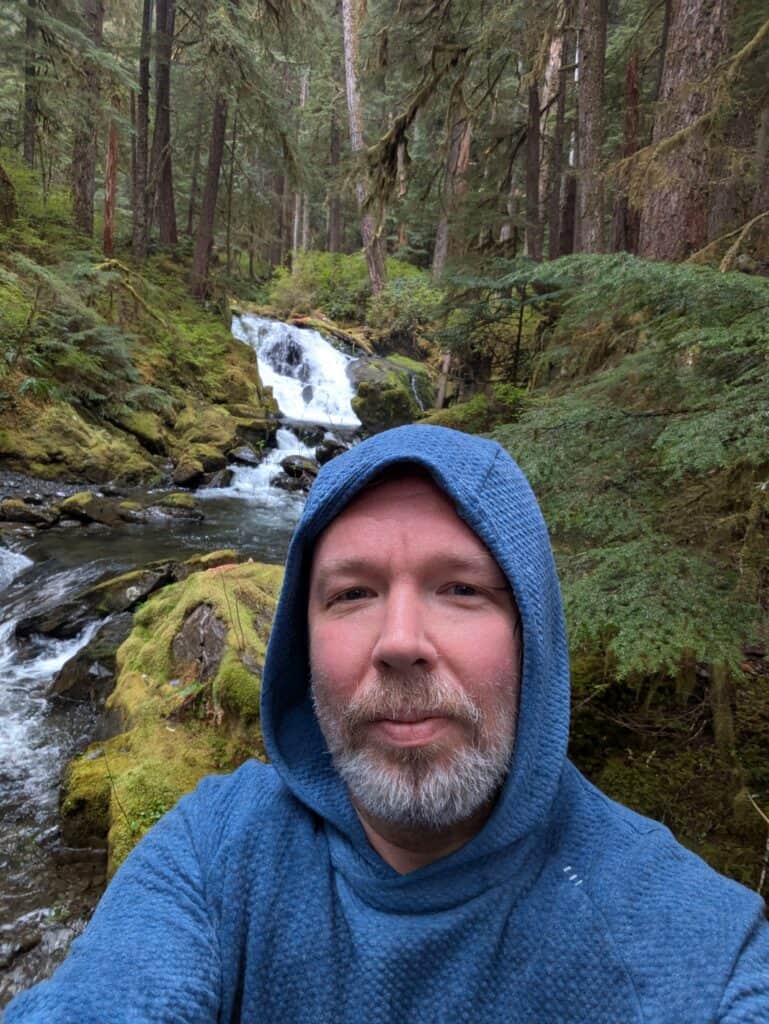
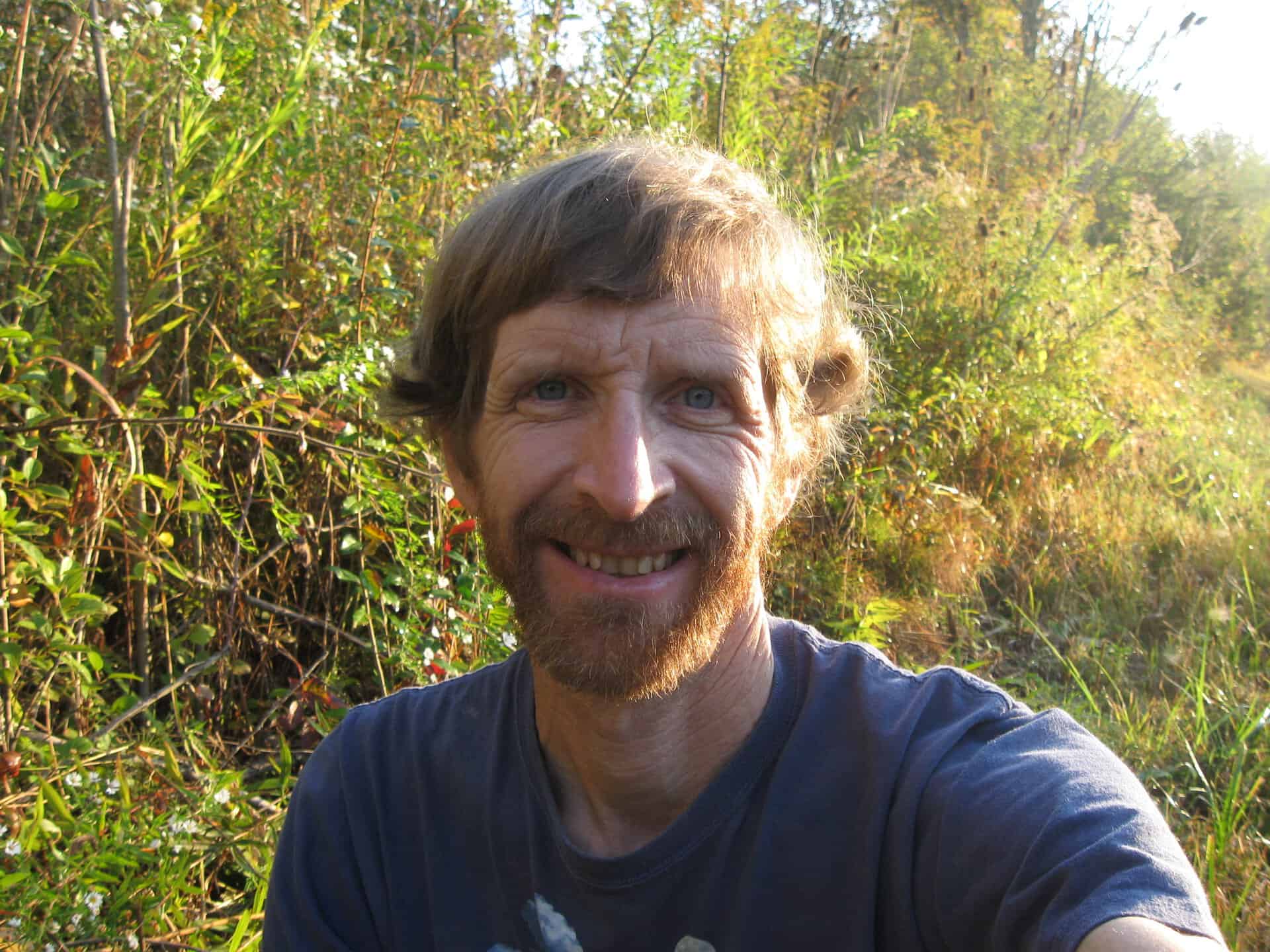
Chris Roth is the Editor of Communities magazine, which the FIC began publishing in 1992. Full bio below. For more 30th blog posts click here.
My interaction with the Foundation for Intentional Community started informally, when I was a member at End of the Road House/Aprovecho Research Center outside Cottage Grove, Oregon in 1986. On a visit to Appletree, a nearby intentional community in Saginaw, I met Laird Sandhill (a.k.a. Schaub) and Geoph Kozeny, who invited me to play volleyball. I remember their friendly encouragement. I was coming from a community that had converted all its potential game-playing areas to food-growing, upon which we were rather stoically focused, so both the game itself and the encouragement struck me as novel.
Little did I know that both Laird and Geoph would soon become instrumental in hatching a much more impactful yet equally novel project, with implications far beyond my reintroduction to volleyball.
I encountered both again when I moved to Sandhill Farm a couple years later. Laird had become the Executive Secretary of the nascent FIC and Geoph had taken on the creation of the FIC’s first Communities Directory. He spent a number of months living at Sandhill out of his truck, working all night seemingly every night compiling community information on his computer (another novelty in Sandhill’s back-to-the-land culture). I had ended up at Sandhill because of research I’d done in the previous version of that Directory, published in the pages of Communities, which I’d read off and on since high school; FIC would take the magazine itself under its wings a few years later. That earlier Directory had also led me to visit nearly a dozen other communities in my search for a new home after realizing that although volleyball was not a life necessity, some kind of fun (or at least some more multi-dimensional approach to community-building than I’d been experiencing) probably was.
I got inspired by the idea of accompanying the Directory listings with maps—and armed with tracing paper, pen, and an atlas, huddling near Sandhill’s woodstove, managed to create the hand-drawn maps that appear in that original FIC Directory. (The maps have since become more sophisticated—not surprisingly, the Directory team soon discovered that computers could do a faster, more accurate, less white-out-dependent job than I had.)
Diana Leafe Christian became editor of the reborn, FIC-published Communities, and some years later, started teaching occasional workshops at my eventual home community, Lost Valley Educational Center. On her visits she encouraged me to write for Communities, and I encouraged her to write for Talking Leaves, Lost Valley’s own publication of which I’d become editor. We traded not only articles but ideas, and I ended up on Communities’ Call for Articles email list.
When, a couple years after Talking Leaves folded, one of those Call for Articles emails was signed not but by Diana but by Alyson Ewald, “Interim Editor,” my curiosity was impossible to contain. I wrote immediately to Laird, who was still Executive Secretary, and he put me in touch with Marty Klaif, who was heading the Communities editor search committee. The rest, as possibly too many people have said, is history.
Being editor of Communities has enriched my life in countless ways. It allows me to do work I enjoy; connects me with communities, communitarians, and people passionate or curious about community in its many forms all around the world; involves me in a collective project where cooperation, dedication, love of the work, and belief in the mission are key ingredients; and helps me feel, despite geographical distance, very much part of a team, a group effort, comprised of FIC staff as well as all those who help create the content of the magazine or support it in other ways.
I don’t think I’ve played volleyball even once since that game at Appletree. Yet it still reverberates in my memory—a good note, it seems, on which to both start and end my adult volleyball career, and this blog post.
—
Chris Roth first encountered Communities magazine in his high school library, and it inspired his eventual community search. He has lived in intentional communities for most of the past three-plus decades, writing for and editing three community-based publications along the way: News from Aprovecho for five years, Talking Leaves: A Journal of Our Evolving Ecological Culture for eight years, and Communities since 2008. During his years as an organic vegetable garden coordinator and teacher, he wrote and published The Beetless’ Gardening Book: An Organic Gardening Songbook/Guidebook, and later edited the books Grounded in Love and Together Resilient. He joined Lost Valley community outside Dexter, Oregon in 1997 and has lived there (with the exception of one year away) ever since. His extended community now includes a substantial network of friends with whom he once shared intentional community, many of whom still live in the Eugene, Oregon area. His home-away-from-home is Oberlin, Ohio, where his mother and brother attended college and where his parents still reside. During sporadic periods of travel, he has visited dozens of different intentional communities; and through his work on the magazine, he’s sampled hundreds vicariously. Yours could be one of them. One of his favorite activities is helping communitarians and community seekers and activists share their stories through Communities.
Keep the conversation going with these pieces
There are no available blogs
Subscribe to our newsletter for fresh stories and community updates delivered to your inbox.
Get unlimited access to courses, exclusive member events, and a supportive network of community builders
Access all courses, books, and premium content
Member-only workshops and community builders
Member-only workshops and gatherings
We use cookies to improve your experience on our site. By using our site, you consent to cookies.
Manage your cookie preferences below:
Essential cookies enable basic functions and are necessary for the proper function of the website.
These cookies are needed for adding comments on this website.
Statistics cookies collect information anonymously. This information helps us understand how visitors use our website.
Service URL: policies.google.com (opens in a new window)
A residential project: people live here as their primary home.
An institution, business, network, or project that isn’t a residence (e.g. a learning center, farm, or network with no one living there full-time).

{{ item.label }}
{{ item.value ? item.value : currencyFormat( item.amount ) }}
Subtotal
{{ currencyFormat( pricing_summary.total_amount ) }}
There are no results matching your search


