

Social Permaculture: Applying the Principles

Placeholder image for Foundation for Intentional Community website.
Cedar Moon
  • December 11, 2016
  • Relationships
  • Sustainability
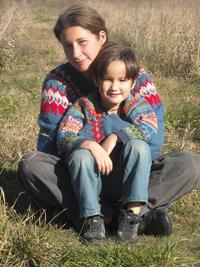
Woman and child sitting outdoors in a grassy field, smiling at the camera.

Permaculture’s 12 principles apply to human groups just as much as to any other ecological system. Here are some ways we can implement them in the social sphere:

  1. Observe and interact. No matter how much you’re “starting” something, there’s an existing network of patterns. See what’s already happening. Participate in similar groups or processes, or ones from which you’ll be drawing participants. Write down observations day after day, and take the time to trace out patterns. You want to “nudge” the existing systems, not create new ones from whole cloth!
  1. Catch and store energy. Sometimes, energy is high: celebrations, successes, summertime! Energy in social systems is stored when healthy, positive relations are fed with joy, supportiveness, and pleasure. It can be more deeply rooted with rituals and formalized events that memorialize the experience. Later, when times are harder, these positive resonances can be drawn on to heal and sustain the social weave.
  1. Obtain a yield. People need to feel compensated for their participation. This can be money—$$ or local currency—but it can also be many other things. Food, services, or simple affirmation and appreciation. Observe what people currently consider a “yield” in their lives (a necessity that they do work to obtain), and find ways for your system to obtain it for them—and you.
  1. Apply self-regulation and accept feedback. Figure out how each part of your system can have tight, well-functioning feedback cycles: each individual looking at their own actions; each group evaluating its progress; groups interacting with each other. Giving and receiving feedback well is an art: cultivate it, recognizing that each person has their own preferred ways. Mantra: “Trust <=> Accountability.”
  1. Use and value renewable resources and services. Build recharge and renewal into your social fabric. Watch out for patterns of stress and burnout, and make everyone as accountable for them as for work product. Rely on long-lasting relationships (usually local) rather than fly-by-night cheapest deals. Fair trade! Living wage! Joyful gifts!
  1. Produce no waste. People can be wasted, too: when they’re treated as unworthy of respect, when they’re discarded because no longer useful or interesting or cool. Choose your relationships wisely, and then invest in them heartily. Have a clear process for determining when it’s time to separate, and do so cleanly and gently. Support people with direct feedback about what worked and what didn’t, and help them (within reason) find a new place to plug-in. The whole system is interdependent: there is no “away”! It’s best for everyone to find the best fit.
  1. Design from patterns to details. Every group and close formation of groups should take regular time to explore the “bigger picture.” Rather than simply extrapolating the past into the future, really step back, observe your patterns again, look at what’s really going on in the world around you and how best your network can support the sustainable momenta and relations. Then, having clearly identified the patterns to work with, design back towards the specific.
  1. Integrate rather than segregate. Make space for different kinds of work, groups, and functions to interact (formally and informally). Bring diverse work processes into physical proximity. Create pathways and spaces for communication to flow about what different people/groups are doing. (Skits? Videos?) Have liaisons between all different groups that go to each other’s meetings. Etc.
  1. Use small and slow solutions. Don’t try to create big, tech-heavy, shock-inducing changes to the social system! It will revolt! Look for small tools and practices that will accomplish what’s needed with a minimum of bureaucracy and hassle. Build on these once the system has adjusted.
  1. Use and value diversity. There are many different ways people influence and learn, think, and feel. We need all of them in our world systems! Valuing diversity can mean including a variety of cultures, perspectives, and attitudes in a group in order to improve its internal robustness and resilience. At the same time, true diversity requires that particular skills and perspectives be honed for their unique values: this often means a group that is very specific in at least some of its attributes. Diversity is ensured when both kinds of groups thrive, and all of them are strongly interconnected in “a world where many worlds fit”!
  1. Use edges and value the marginal. Bring different groups together, and explore the boundaries between them. This is where exciting conflict and synergy can happen! Support isolated, unpopular perspectives in your group: they’re often bringing key wisdom to the center
  1. Creatively use and respond to change. Change creates openings for new growth. Whether this is the departure of key participants, success or defeat at some major goal, or dislocations in the social environment: notice when change is imminent, prepare the ground, and use the space proactively to build energy from new and unexpected places.

Brush is a longtime radical organizer, writer, parent, orchardist, facilitator, mediator, and legal worker; a person who walks the land in prayer and a heartfelt participant in Cedar Moon, an intentional community sharing the land with Tryon Life Community Farm in Portland, Oregon (cedarmoon.us, tryonfarm.org).

Comments

Featured Blogs

Keep the conversation going with these pieces

Foundation for Intentional Community
Tue Nov 2019
  • Living in community
  • Life Transitions
Raising children in community has different impacts than in a single family home. Alicia J. George from Takoma Village shares the most significant ways our three adopted boys’ behavior affected our cohousing community and how we worked jointly to deal with the impact.
Codicts Team
Thu Jun 2012
  • New to community
  • Governance
Want a “problem” person to behave differently? Give a different response.
Codicts Team
Mon Mar 2011
  • Living in community
  • Relationships
The author recounts his personal history with the “mentally ill”—social misfits who can show us the way to a better world, if they are allowed to make the journey.
Codicts Team
Wed Sep 2011
  • New to community
  • Economics & Law
In Brixton, South London, and Edinburgh, Scotland, right livelihood finds a home in innovative, resource-conserving, grassroots projects.
Christopher Roth
Fri Feb 2015
  • New to community
What role can baby boomers (born 1946-1964) play in a new resurgence of intentional community living? Where can they find and offer support to meet their and others’ needs over their final decades of life? How can aging baby boomers regain the sense of community that defined much of their generation…
Codicts Team
Mon Jun 2009
  • New to community
  • Sustainability
A simple solution could drastically reduce the energy consumption and carbon emissions of the modern citizen, and it does not require new technology or a drastic reduction in quality of life. We all learned about it in Kindergarten, and statistics from Twin Oaks prove its effectiveness.
Foundation for Intentional Community
Wed Jun 2025
  • Living in community
  • Economics & Law
Meet the young people opting out of society and building utopia for themselves. Read an excerpt from the full article published by Teen Vogue.
Codicts Team
Sun Jan 2018
  • New to community
  • Sustainability
Urban cohousing offers a unique alternative that still allows access to the amenities, conveniences, and vibrancy of city life.
Foundation for Intentional Community
Tue Sep 2025
  • Living in community
  • Health & Well-Being
Savannah Fishel has visited 54 intergenerational communal housing models across Australia and the US, and she found one important social glue in every community is food.
Codicts Team
Thu Mar 2010
  • New to community
  • Sustainability
This week an article in the Boston Globe examines the growing momentum of the cohousing movement in Massachusetts, and discusses the importance of community and environmental consciousness to Boston residents. Carbon footprints and tight household budgets weigh on a lot of city dwellers’ minds, i…

Insights & Stories from the Communities Movement

Subscribe to our newsletter for fresh stories and community updates delivered to your inbox.

Join the Communiversity Community

Get unlimited access to courses, exclusive member events, and a supportive network of community builders

Unlimited Learning

Access all courses, books, and premium content

Community Network

Member-only workshops and community builders

Exclusive Events

Member-only workshops and gatherings

Update to a Public Profile

  • Go to your profile page
  • Toggle on the "Add my profile to the directory"
  • Save your profile

Information

Communities

A residential project: people live here as their primary home.

Organizations

An institution, business, network, or project that isn’t a residence (e.g. a learning center, farm, or network with no one living there full-time).

Plus Community Membership

  • Find people with Profile Match
  • Access to your community listing statistics
  • Create Discussion Groups
  • Access to our affiliate program
  • Member badge on your community profile
I am an official member of this community
Disclaimer
I affirm that my information is accurate and I am authorized to manage this listing
Foundation for Intentional Community FIC Member badge logo.

Free Plan

Free Membership
Free

Intentional Advertising

  • Subtotal

    {{ currencyFormat( pricing_summary.total_amount ) }}

Icon representing community connections and collaboration for intentional communities.

Plus Membership

We’re introducing new Plus features — including community reviews, Profile Match, and unlimited Needs & Offers posts — while keeping most of FIC free for everyone. Membership costs less than two coffees a month. 

  • Find communities with Profile Match
  • View detailed reviews about communities
  • Create free listings in Needs & Offers
  • Plus Member resources in CommUniversity
  • View communities detailed reviews
  • Plus Member badge on your profile
