

It was the first of its kind in the United States.
For twenty years, Hope Meadows, located on a former US Air Force base in Rantoul, Illinois, had offered free housing, a stipend, and benefits to foster and adoptive parents, as well as low-market rent to seniors who volunteered six hours a week in the community. Fran Biederman and her husband were the first seniors to move into Hope Meadows, in 1994. Now widowed and in her nineties, Fran has found that living in the neighborhood among the forty families, twenty-five kids, and thirty seniors is still ideal. And yet, even as the Hope Meadows model has led to the development of similar communities across the country, it hasn’t been without difficulties.
When Hank, now in his sixties, took over as executive director, Hope Meadows had been struggling financially for much of its second decade. A retired police officer, Hank was active in developing alternate models of policing during his time on the force and sought to bring his experience to the community. Its board of directors had to make hard choices, charging rent to families who had previously lived for free and pivoting to include a broader range of residents. There aren’t as many community programs as there once were in the past, there was bicycle repair, after-school education, a community garden, potlucks, and museum field trips—but residents still have access to a food bank, weekly bingo, and service projects. Through it all, Hank and Fran believe Hope Meadows has retained its original spirit, with neighbors going out of their way to help one another even in the absence of more formal community programming, and they shared what we can learn from its successes and challenges.
HG: When Hope Meadows began, there were fifty-one thousand kids every year going into foster care in Illinois, and they spent nearly three years there before adoption. The goal of Hope Meadows was permanent adoption for children in foster care. The idea of adding seniors to the community came up because of the footprint of the property, which was three times more than they were originally seeking. I think what propelled it to get so much attention in that first decade was that it really mirrored the African proverb “It takes a village to raise a child, because every child that lived there had a neighborhood of surrogate grandparents.
One of my first meetings as a board member in the year before I became executive director was a community meeting where the board explained that they could no longer provide free housing or healthcare and IRA benefits for foster parents. The original state grants that provided the majority of the funds were foster care grants, but in the 1990s, several federal acts were passed to reduce the timeline for kids in foster care. By 2013, the numbers had gone down to fifteen thousand kids a year going into foster care in Illinois and the timeline went from almost three years to approximately one year before adoption. And that progress, while wonderful for timely, permanent adoptions, meant less funding for Hope Meadows.
It was proposed that we gradually implement a stair-step increase of rent and also close the foster care license. The intent was to still accept and offer a supportive community to foster and adoptive families and to charge a reduced rent but not to be the provider of future adoption services, which was the largest cost. It was hard to say we’re going to have to do something that nobody wants or likes, which is why it took a decade to address it, but it passed, although I regret not verbalizing my concerns about what struck me as a rather drastic change. We had a few foster and adoptive families move in after that, but the masses never really followed. It wasn’t the same without the allure of free housing.
But we found new ways to make use of the space. It was always an intergenerational neighborhood, and we’ve accommodated several three- and four-generation families within the houses that have six or eight bedrooms. We also have duplexes, and there are some families where Mom and Grandma live on one side and the adult
children live on the other side with their kids.
FB: My husband, Bill, was on disability, and he was just hanging around the house doing nothing. I saw an ad in the paper about Hope, and the house we were living in was going to be sold. I applied, and we were accepted. I was still working full-time as a secretary for the National Council of Teachers of English. Bill loved kids and it got him out of the house. It was mainly for him, because he needed it, and it worked very well.
It was a fabulous program, as far as I’m concerned—one of the best programs I could see around helping kids and parents. I went to some of the kids’ adoptions, and they were so pleased that someone was going to be their mom and dad. All the kids called us Grandma and Grandpa. You had to be here to really appreciate what we had.
HG: We’ve had a few people who grew up here as adoptees choose to come back and live here as adults for the familiar and supportive community. There’s a lot of natural neighbor interactions that always happened, and they’re still happening. During the height of the pandemic, one of the seniors who used to do after-school education tutored their neighbor’s two boys. Then there’s one lady in her eighties whose neighbor watched out for her and picked up her mail. The older woman recently had to go to a skilled living facility and her next of kin are holding garage sales to get rid of items from her house. Her next-door neighbor has been out there every day with the family trying to help them sell things. Nobody asked her to do that. She just cares about her neighbor. And then there’s Fran and Chari.
FB: My neighbor Chari, who lives on the other side of my duplex, does most things by herself, unless she thinks she can be helpful in some way to another person. She’s single and she has three adult children, but they all live far away. She doesn’t like cloudy days, and I know when she doesn’t want to be bothered; I can just tell. But she’s right there to do anything for me, and I will do the same for her. Since she’s on a fixed income, I send her notices of when they have food drives and I told her where she could apply for help with utilities. She always wants to take me to the doctor. We say good morning and good night, and she’ll either call me or text me every day. I’ll let her know everything’s okay, and she’ll do the same. Our bathrooms connect, and we can open our medicine cabinets and have a conversation. She’s a very good neighbor and a very good person. In fact, we just came back from going out to breakfast this morning. Chari loves to drive, and we’ve been North, South, East, and West. Just wake up one morning, decide to go to breakfast, and end up thirty miles away. It’s good for me and it’s good for her be- cause we both get out.
HG: It can be pretty stressful raising a family of foster kids, and I’ve heard from more than one parent that it was so nice to have so many people willing to help. It was easy to call a neighbor at 8 p.m. and say you needed a hand. They would say, “Send the kids over here,” and the kids would walk next door and spend the night there. There was one lady who used to have kids over to her place to make pancakes on Saturday mornings.
For the seniors, it was and is very supportive. Someone is always taking someone to a doctor’s appointment, which is important be- cause not everyone drives. And the people who drive are happy to do this for their neighbor. In the past, many of the older kids would do things for their senior neighbors, like mow their lawn or help them carry their grocery bags. There was a regular, consistent behavior of neighbors helping neighbors and we’re continuing to see that.
When new people move in now, they’re not required to do service hours, but they hear about the history of the place, and they see everyone being nice and helpful, and they start doing it themselves. That’s what people tend to appreciate about the community, as well as a sense of belonging or acceptance.
FB: My husband was the one who spent most of the time with the kids, outside of my volunteer hours, since I worked full-time. The kids helped Bill just by being there. Everybody thought he was healthy, but he had heart disease and some other problems. He had a chance to get acquainted with the kids, and they felt comfortable enough to ask about his health.
He’d be sitting in the carport with another neighbor, and kids would just come up and talk to him. He loved when they came over and he played games with them. There was this one little girl who lived across the street, and she used to do cartwheels from her house to our house. Then she’d want ramen noodles, so he’d go in the house and cook her ramen noodles. He repaired all of the tricycles and bikes for the kids too, and one boy would come by every day wanting something else done to his bike. Hope Meadows was the best medicine for Bill. And even though the kids spent more time with him, I did get something out of it. I attended all their events, and I always told them they were welcome at my house anytime.
It was great for the kids too. My neighbor and I used to take walks, and one time this little Black boy came up and said, “Hi Grandma Fran, hi Grandma Irene.” He had a biological cousin visiting him who said, “They’re not your grandmas.” And he looked at her and answered, “They’re my Hope grandmas!” That’s just how it worked.
HG: Long-term planning. I learned years ago that when you make a purchase of something new, that’s a good time to ask what the life cycle is and how you’re going to replace it at the end of its life cycle. In the beginning of Hope Meadows, I think they were so eager and committed to doing something different, and it was so successful initially, that I’m not sure anyone thought about what’s going to happen twenty to thirty years from now. We know the roofs aren’t going to last forever and we have to be putting money aside for that, but we have no capital budget and not many opportunities for the type of assistance that we really need. With seniors, they should have been asking what kind of help people are going to require in the future because the majority of our structures have two flights of stairs. What are we going to do as people have more falls and assistive care becomes a necessity? I’m pursuing a model where we could have somebody come out periodically and offer in-home services, especially to those who are low income, but we have no funding to contract such services.
HG: Grants are one essential thing, as well as donations. We could also always use help from tradespeople. For a few years, we had a grant in partnership with our local high school and Habitat for Humanity, in which high school students would do repairs to the units at Hope Meadows. The kids were taught home repair and similar trades courses-this is how you put up drywall, this is how you put a light in the ceiling-and then got credit for receiving training in an environment that ultimately benefited others, rather than just in a makeshift shop. It lasted for more than three years.
We would also be happy to host models, demonstrations, and pilot projects. We have twenty-two acres of grass and we’d love to have a solar field or something like that if an organization wanted to do it for a demonstration. It’s just that start-up, that capital, that we’re lacking. Finally, we have had some mutually beneficial collaborations with organizations providing on-site youth services, as well as elder services, although the lack of public transit in our region complicates such partnerships.
You hear almost every day in the national news about the housing shortage, particularly for people who are not high income. We are basically a provider of affordable housing, and we could use some funding to continue our work and upgrade to provide better housing. My hope is that as the need and the dialogue eventually come to fruition, we might be able to do much more with some kind of funding mechanism.
HG: Multipurpose housing that could accommodate a changing society could solve a lot of problems. I’ve always wanted to think creatively to tie Hope Meadows to what our contemporary societal problems are and to be adaptable to whatever they become. Our seniors at Hope Meadows have never wanted to be segregated. As people age, they perk up when younger people come around. Also, more young adults are still living with their parents because of economic inequality and the cost of housing, and it would be great to have more housing structures that accommodate them.
Maybe the whole lesson is we need to challenge ourselves more in terms of our thought process and embrace doing things differently, with research and long-term planning. When I think back to 1994, it was a pretty unconventional idea to build a big neighborhood foster home on an old air force base. It raised some eyebrows. But it was worth taking a chance.
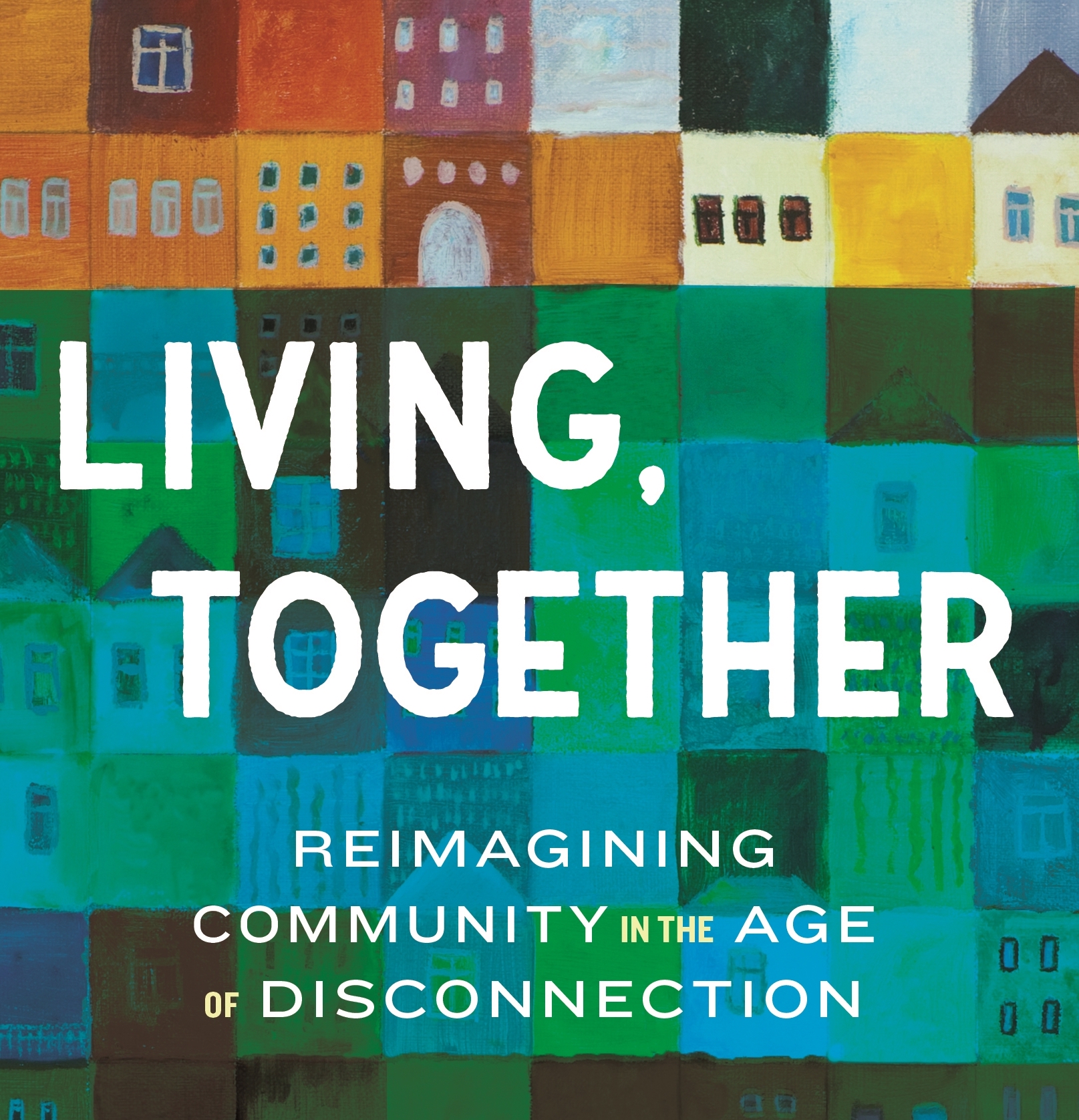
This article is excerpted from Living, Together: Reimagining Community in the Age of Disconnection edited by Samantha Paige Rosen (Beacon Press, 2026). Reprinted with permission from Beacon Press.
Samantha Paige Rosen’s writing on identity, culture, and the arts has appeared in the Washington Post, Harper’s Bazaar, ELLE, Slate, Them, Literary Hub, and elsewhere. She earned her MFA from Sarah Lawrence College and lives outside of Philadelphia, where she is a freelance writer and editor, a writing tutor and coach, and an amateur potter. Living, Together: Reimagining Community in the Age of Disconnection is her first book.
Living, Together is an indie press bestseller. It’s also been named best/notable new nonfiction by Book Riot, Daily Kos, and Debutiful, and was “most anticipated” by Electric Literature, Debutiful, The Millions, and Autostraddle.
Keep the conversation going with these pieces
There are no available blogs
Subscribe to our newsletter for fresh stories and community updates delivered to your inbox.
Get unlimited access to courses, exclusive member events, and a supportive network of community builders
Access all courses, books, and premium content
Member-only workshops and community builders
Member-only workshops and gatherings
We use cookies to improve your experience on our site. By using our site, you consent to cookies.
Manage your cookie preferences below:
Essential cookies enable basic functions and are necessary for the proper function of the website.
These cookies are needed for adding comments on this website.
Statistics cookies collect information anonymously. This information helps us understand how visitors use our website.
Service URL: policies.google.com (opens in a new window)
A residential project: people live here as their primary home.
An institution, business, network, or project that isn’t a residence (e.g. a learning center, farm, or network with no one living there full-time).

{{ item.label }}
{{ item.value ? item.value : currencyFormat( item.amount ) }}
Subtotal
{{ currencyFormat( pricing_summary.total_amount ) }}
There are no results matching your search


