

Airbnb and other “sharing economy” sites have been getting some bad press lately, with many cities arguing that the platforms are driving up rent, contributing to housing scarcity, and turning residential neighborhoods into tourist districts. Some cities, like Berlin, have begun to regulate room- and home-sharing, while San Francisco and New York are struggling to update tax and residency codes to the new peer-to-peer economy.
Some of us who got used to traveling via Airbnb don’t want to go back to back to staying in cheap motels or couchsurfing. But we don’t want to support the corporate sharing economy either.
Here are some niche alternatives to Airbnb that cater to specific markets – from elderly travelers, to campers, to LGBT guests, and more. While I haven’t tried them personally and can’t vouch that they have listings in the part of the world you’re traveling, they may be worth exploring! Check them out here:
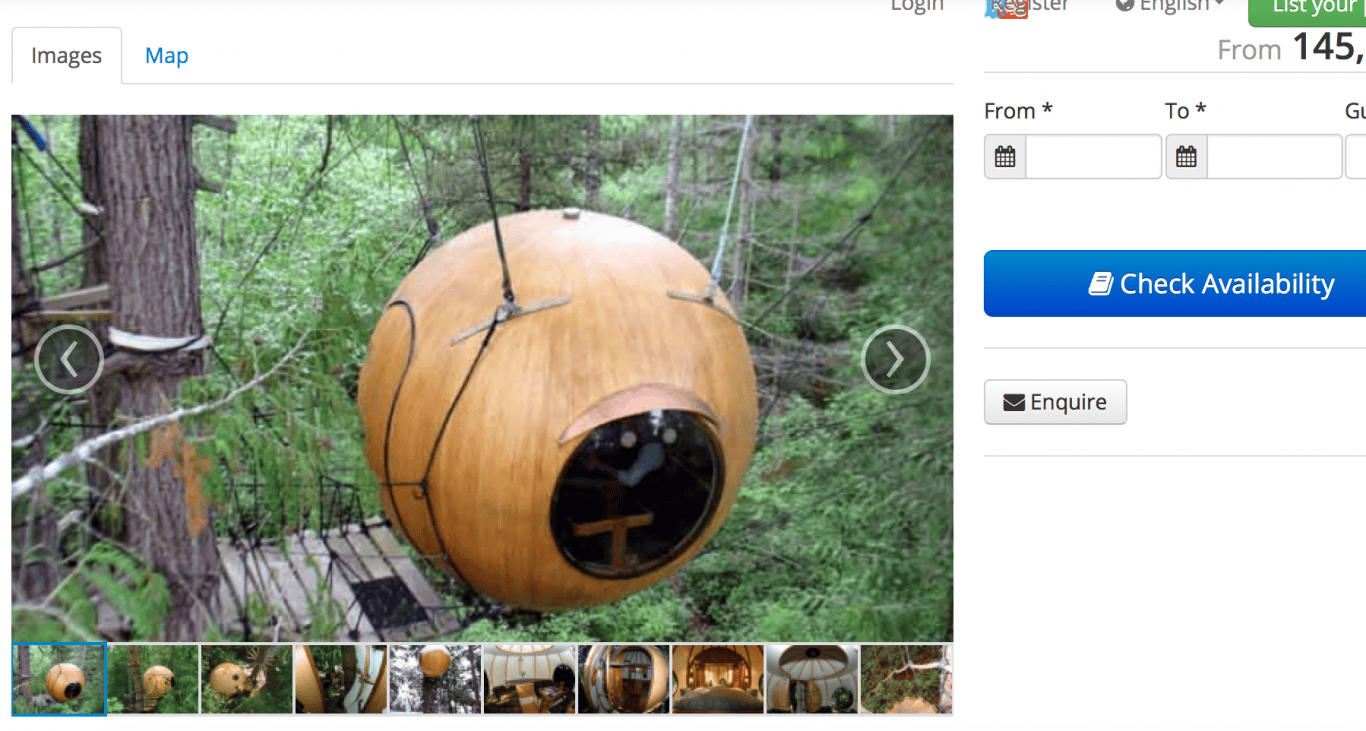
Ecobnb: Ecobnb promises to help you “find your sustainable accommodation” so you can “discover the authenticity of travelling with nature at heart.” Many of its listings are in Europe, but it appears to be growing in North America, with options such as these “spherical treehouses” on Vancouver Island, BC. Each listing comes with a checklist of sustainability features, so you can see whether a location offers car-free access, recycling, local food options, and more.
Nightswapping: This site functions like a kind of cash-free Airbnb. Guests can book a stay in a host’s home by exchanging credits instead of money, and earn credits by hosting their own guests. If you don’t feel comfortable hosting before trying it out, you can purchase your first set of nights for 7 – 49 Euros. Although based out of Europe, the site says that it already has “180,000 members in 160 countries.”
Misterb&b: This site offers gay-friendly accommodations in over 130 countries, including popular LGBT destinations like The Castro in San Francisco and South Beach, Miami. It functions similarly to Airbnb, but hopes to create a sense of community by connecting gay travelers and hosts. Guests can book a room knowing that they won’t have to deal with homophobic hosts when they arrive.
The Freebird Club: This platform calls itself a “peer-to-peer social travel & homestay club for older adults.” It hopes to make traveling easier for the elderly, since many sites cater to a younger demographic. It would also address loneliness faced by older adults in big cities by enabling them to host guests. According to CityLab, the club is considering “the idea of a buddy system, which would grant family members access to a club member’s profile.”
HipCamp: HipCamp is an Airbnb for outdoor enthusiasts, with nearly 300,000 campsites – on public and private property – available in the U.S. HipCamp let property owners list their land on the site, with a team of volunteer “stewards” helping with upkeep of some of the campsites. For campers, the website lets you know if you’ll be sharing the land, if there are structures or amenities available, and even the current weather.
These are just a few of the latest Airbnb alternatives. There’s also BudAndBreakfast for “cannabis friendly lodging” and KinkBnb for sex-positive accomodations.
Do you know of any others we should add to the list? Let us know what kind of experiences you have using these platforms!
Keep the conversation going with these pieces
There are no available blogs
Subscribe to our newsletter for fresh stories and community updates delivered to your inbox.
Get unlimited access to courses, exclusive member events, and a supportive network of community builders
Access all courses, books, and premium content
Member-only workshops and community builders
Member-only workshops and gatherings
We use cookies to improve your experience on our site. By using our site, you consent to cookies.
Manage your cookie preferences below:
Essential cookies enable basic functions and are necessary for the proper function of the website.
These cookies are needed for adding comments on this website.
Statistics cookies collect information anonymously. This information helps us understand how visitors use our website.
Service URL: policies.google.com (opens in a new window)
A residential project: people live here as their primary home.
An institution, business, network, or project that isn’t a residence (e.g. a learning center, farm, or network with no one living there full-time).

{{ item.label }}
{{ item.value ? item.value : currencyFormat( item.amount ) }}
Subtotal
{{ currencyFormat( pricing_summary.total_amount ) }}
There are no results matching your search