
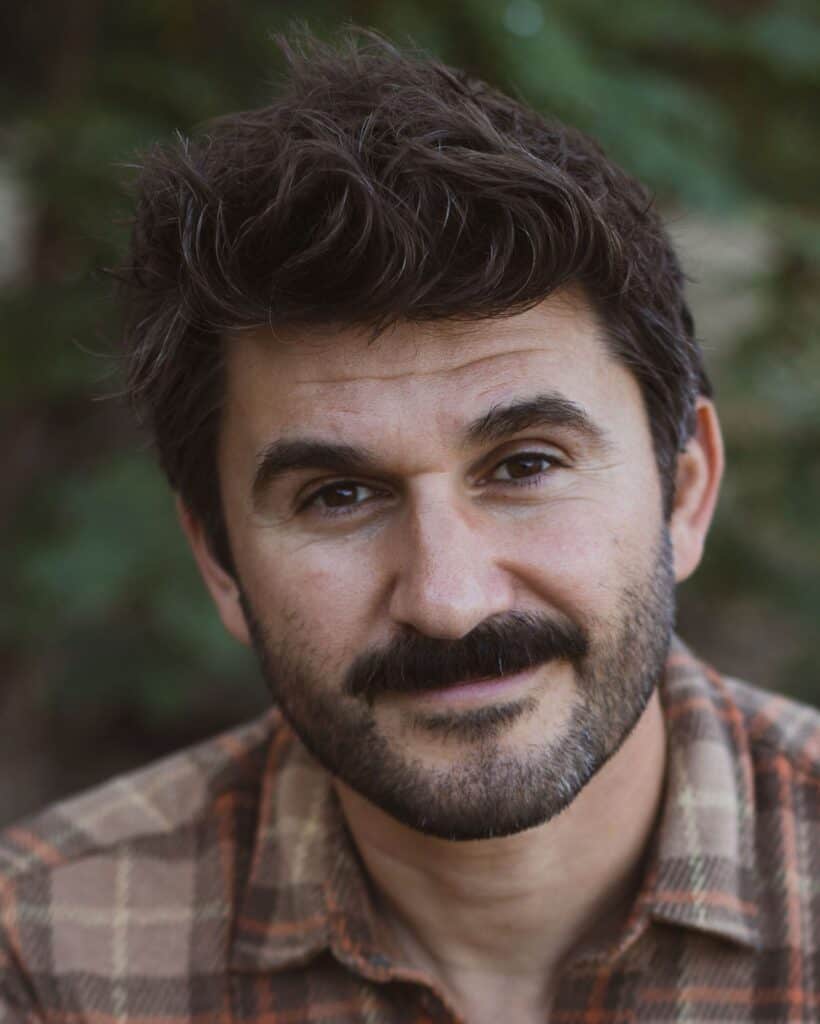
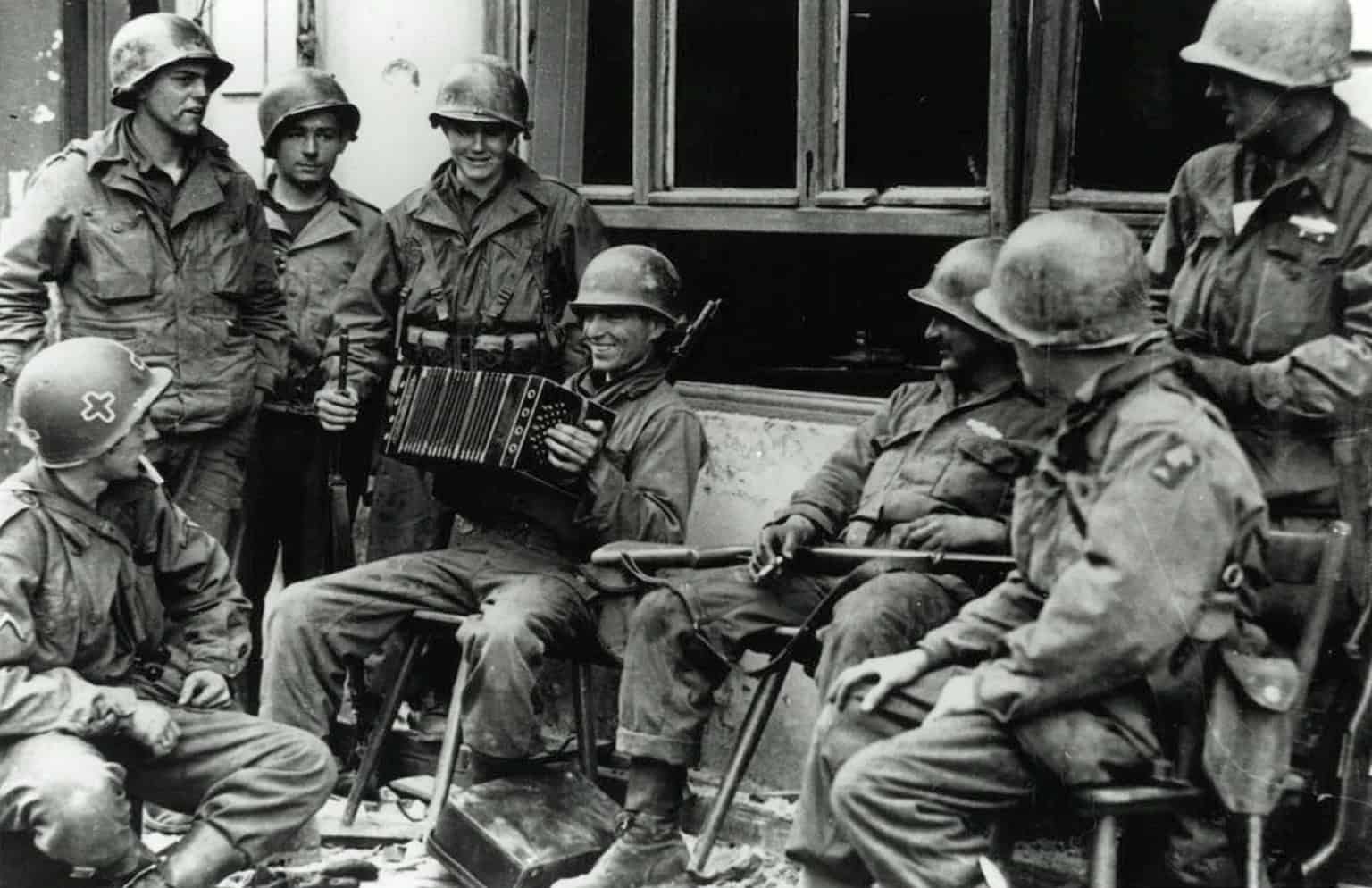
Long before I grew out my hair and became a professional musician, long before I hosted snuggle parties and went to Burning Man, and long before I found myself living in intentional communities — I was an officer in the United States Navy.
For a while, I thought I joined the Navy because of my rebellious spirit. I grew up in suburbia Massachusetts, where every parent’s wet dream was for their kid to go to an Ivy League school, so the military was my way of differentiating myself.
But that wasn’t it.
Then I thought, maybe it was a desire to be financially free from my parents. They would have been willing to support me through civilian college, so by attending the Naval Academy (where I ended up going to college), I’d have no need for their support, and would be free from their expectations (mostly internalized at this point). But that wasn’t really it either.
It actually took me until my mid-thirties to realize the real reason I joined the military — it was because I absolutely adore living in community.
To be clear, I didn’t join the Navy because I was seeking community, I didn’t even have a concept for it. There was just something about the military, and especially the Naval Academy, that drew me in and excited me.
It turns out the military is a wonderful example of intentional community. Now that I have a few years of experience living in one, I can see that many of the same things I loved about being in the military, are the same things I love now about living in community.
I also walked away from nine years in the military with a lot of great tools and skills that helped me integrate more easily into intentional communities.
Here are five things I learned in the military, that helped prepare me for living in community.
Note: For those who aren’t familiar with the concept of “intentional community”, it’s a group of people who have decided to co-create their lives in a shared space. That space can be land with separate houses or co-housing, and systems of governance can vary as well.
Folks in the Navy love to remind new people of how much they don’t know, and it’s important part of the culture. I once had a Navy Chief tell me “I’ve spent more time taking a shit than you’ve spent in the Navy”.
While most people would pass off that comment as crude old-man talk, what’s also true is he was saving me from the potential embarrassment of me opening my mouth when it should’ve stayed closed. He was inviting me to see that despite what I may think I know, I actually had very little experience, so I should consider that when it came time to share my opinion. This is especially important for new officers to understand.
A typical Navy ship is comprised of 90-95% enlisted sailors with only 5-10% officers. The officers outrank any enlisted folks (no matter how long they’ve been in) so as you can imagine, officers can quickly earn a bad reputation if they mistake their rank for authority. Humility, and waiting your turn to speak has been (and continues to be) an important community skill that helps people maintain good relations in any group, but especially in intentional communities.
Everyone in the military goes through some kind of boot camp. If you ask what the purpose of boot camp is, most people would say it has something to do with teaching discipline. That’s partially true, but there’s something else going on that’s just as important.
Boot camp roots out excess individualism and kills it.1
You can’t win a war with one soldier, despite what Rambo teaches us. The most effective unit is one where people put the needs of the unit above the needs of the individual.

At the Naval Academy, we had a saying — “ship, shipmate, self” and it got drilled into our heads from day one. Selfless behavior is rewarded, selfish behavior is punished. No one got a Medal of Honor for saving their own ass.
This lesson is also important because it reminds us to lean on each other. When we come from an individualistic culture of “get yours first” we assume that we’re going to have to pick ourselves up by our bootstraps if anything gets hard.
Needing each other is the glue that holds a group together, so when we can’t ask for help because we think we have to be a superstar, the group gets weaker. Conversely, when we remember that we’re not just an individual, but are part of a group that can’t succeed without us succeeding, we naturally lean on others when we need it.
We succeed together, or we fail together.
Another piece of advice I heard as a young officer was “don’t talk about religion or politics”. Group cohesion is essential in the military, as it is in community, so there’s wisdom in not engaging with topics that can divide us.
Yes, it’s important for each of us to have personal beliefs and convictions, but when those convictions become more important than connection, we end up selfishly taking up space at the cost of potential group synergy.
There is a deeper wisdom here as well, which is that we don’t have to agree to get along. If you dig deep enough with two people, there’s always some topic that will have them disagree and even hate each other. Instead of needing everyone to believe the same thing on every topic (or pretend they do), we can simply accept that people are different and diversity of belief and opinion is normal and expected amongst any group of humans.
Just as folks in the military are encouraged to put aside their differences for the sake of cohesion, they are also encouraged to focus on the mission. This makes a group stronger, because our differences, disagreements and squabbles become irrelevant when there is a bigger cause worth caring about.
This is most obvious in times of war. When the most relevant thing is an enemy soldier that wants to kill you, no one is haggling about haircut regulations, overdue paperwork or what color to paint the admin office. A critical mission sharpens our focus.
This is why communities with a shared purpose often do better than ones without. When we don’t have a common goal, we end up with antsy energy, and might create problems just so we can feel engaged.
What do we do about this? We need to start by accepting it, and redirecting the energy versus trying to suppress it. Team Rubicon is a great example of folks redirecting the “purpose” energy from the military, and they do it by sending veterans overseas to be first responders in health crisis situations.
I learned quickly that there were two ways to get things done on my ship.
The first was to fill out request forms and go through the proper channels and chain of command. The second was to go to a vending machine and buy a few Monster energy drinks. Then, take those drinks to the people who can help you, offer them as a gift and ask politely if they could help you out.
Guess which method got better results?
Paperwork has it’s place, but at the end of the day, the military and intentional communities are made up of people and relationships. That’s what gets things done. If you really want to be effective, try relying less on rules, emails and meetings. Instead go shoot the shit, grease some palms and treat people as the emotional, not-so-rational beings that they are.
If you have a group of ten people that all have each other’s back, they will be more resilient, more skill diverse and more adaptable than any one person could ever be (sorry Rambo).
This is the power of community, but to actualize that we must be willing to put the needs of the group before our own. We need to implement a culture of “service before self”, as we used to say in the military.
Overemphasis on individualism, unhealthy competition and zero-sum mindsets will erode the cohesion of any group that hopes to work together — yet that often takes years, sometimes generations of hard work, because it’s counter to the beliefs many people hold, especially if they grew up in an affluent, capitalist, western culture.2
Humans can be selfish, yes — but we’re also tribal animals. When no one is hoarding resources, we relax and become generous. When the group rewards people who help others, we feel a natural desire to be of service to our neighbor.
Conversely, when the group is playing into a “keeping up with the Joneses” and “quid pro quo” culture, things like score keeping, resources feeling scarce, and in-group fighting will occur.
The military understands this, and puts a huge emphasis on maintaining their culture. Participation is not optional — you either assimilate, or you’re out.
Should intentional communities take that kind of hard-line approach? I don’t know, certainly for some communities it would be uncomfortable, but there’s a tangible benefit in everyone being on the same page, even if that means uniformity at the cost of imposing strict standards.
If we can learn anything from the military, it’s that you can’t have it all.
You can’t have a high degree of group cohesion if everything is allowed and nothing is required. We’re always exchanging conformity for togetherness, even if we aren’t doing it consciously. For a group to band together, there needs to be a degree of people being on the same page.
The military is strict, unwavering and polarizing, and it has clear values that have been around for hundreds of years. It also enjoys a high level of group cohesion. Soldiers are literally willing to die for each other. Isn’t that the kind of love we all want?
Can the kind of forced sameness found in the military be taken too far? Of course, it can become fascism. Does this whole idea make for a slippery slope toward cult-ville? Yes, which is why we need to understand the concept of informed consent, and ensure people “opt-in” to anything before we require it of them.
This is one of the trickiest things about intentional communities. To have a high quality of life, we must walk the thin line between the cold loneliness of individualism, and the cozy assimilation of a cult.
The good news is that folks living in intentional communities are actively solving this problem, and the solution looks different for everyone. For some, following a rigid religious doctrine is the answer. For others it’s a Burning Man ethos, and for some it’s easier to allow everyone a high degree of autonomy, even if it means sacrificing some unity and intimacy.
You can’t have it all, but maybe if we do the work to understand what our best life really looks like, we can consciously trade some of our freedoms for the prizes of fulfillment, joy and chosen family.
Dave Booda is a writer, musician and social entrepreneur currently serving on the board of directors for the Foundation for Intentional Community. He has published over 200 essays for boodaism.com and played over 1000 shows as a touring singer/songwriter.



