
Author: Maril Crabtree
Published in Communities Magazine Issue #146
Community Past: Hearthaven
Tears came as I watched Volume II of Geoph Kozeny’s insightful documentary, Visions of Utopia: Experiments in Sustainable Culture. Geoph devoted the last years of his life to filming and then editing hundreds of hours of footage from 17 intentional communities. He died of pancreatic cancer before he could complete the editing of Volume II, which features 10 of those communities (the other seven were showcased in Volume I, released in 2002). Friends of Geoph from all around the world contributed more than $20,000 to see that the project was completed.
More tears flowed as I watched younger versions of myself and my former housemates discuss community living, what our original intentions had been, and how we evolved as we worked through the challenges and joys of sharing the same household.
For 16 years four of us, along with others for varying lengths of time, had lived together as a community-based household known as Hearthaven, one of the communities featured in the DVD. By the time the film was released, however, Hearthaven was no longer an intentional community.
Although the four of us remain loving friends and actually still spend every February together in Mexico, we had to let go of the dream known as Hearthaven. Changing life situations and goals created an ending we didn’t envision when we first began.
Yet, when I saw us speak of our hopes and dreams and intentions on film, I realized how deeply ingrained our vision had become, and how many ways it had flowered in the world at large, even though we parted ways as housemates.
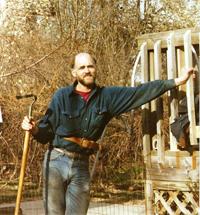
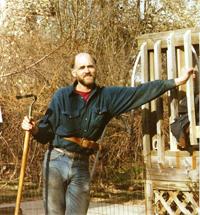
Geoph’s spirit permeates the film—that spirit of loving curiosity that motivated him to crisscross the country as the “peripatetic communitarian,” sharing at each place lessons learned. Sometimes those lessons were pragmatic. He taught us how to make a concrete pad for our hot tub and made the best tofu stir-fry in the land. Other times the lessons were more subtle, such as when he offered a different perspective on the conflicts of the day.
Seeing Geoph’s video made me realize that the years spent developing community values as an intentional community resulted in an even greater sense that the whole world is our community.
Community Present: Shadowcliff, Core Star, Writing Classes, and Visions Discussion Group
Bob Mann and Judith Christy now create community five months of the year in a nonprofit eco-lodge known as Shadowcliff, where they gently guide guests to consider making simple yet permanent environmental changes. They live the rest of the year (except for February, when we share a condo in Mexico) at River Rock Cohousing in Ft. Collins, Colorado.
My husband Jim created Core Star, a three-year school of energy healing which became a spiritual community, bringing together people from all walks of life who yearned to make a contribution to the healing and well-being of others.
I have been guided to create community by leading informal writing classes for older adults, where we encourage each other to explore our creativity.
Thanks to Geoph and his work, we saw in Visions of Utopia many other examples besides our own of intentional community living. His video inspired Jim and me to offer it to our local spiritual group as a springboard for discussion on how to bring more community into our lives.
We titled the evening “The Many Faces of Community.” In addition to Hearthaven, we chose three other featured groups, all with a different history, different living configurations, and different goals. I was especially interested in the story of Goodenough, a Seattle group which does not live together, yet nevertheless offers a model for community-oriented living.
After viewing the video segments, we asked those present to reflect on what they had seen and heard, and to answer the questions: Where do you currently find community in your life? How does community enrich your life? How can we as individuals or our spiritual group as a whole create more community?
Feedback was thoughtful and enthusiastic. “I can see how I could do more to help create community in my workplace,” said Jeannine. Paula, who lives in a subdivision of attached homes, wondered how to create a more cooperative spirit among neighboring homeowners, and we offered suggestions. From stories in the morning newspaper to what happened at work or at school, people offered comments on how conversation about “community” could change their “same old same old” routines and expectations.
At the end of the evening, we had a sense that this discussion honored Geoph’s original intent: to use his work as a learning tool, an inspiring yet honest portrayal of people coming together to deepen their commitment to options for living in ways other than what mainstream culture offers.
Community Future: An Intentional Family Venture
Not long after that, Jim and I entered into conversations with our son, daughter-in-law, and teenage grandkids about living together as a three-generation intentional living community. Although the two of us had lived in community with friends, we had never before considered living with our own family members. Now, it seemed natural to entertain the notion, due to health changes and a variety of other reasons—and in part due to the powerful reminder of the advantages of community living that Geoph’s video gave us. Synchronistically, or perhaps miraculously, the first house we looked at fit all our “must haves.” By the time you read this, we will have embarked on our next grand intentional community living venture.
I’m looking forward to finding other opportunities to share Geoph’s work and pose those fascinating questions: Where do you find community? How does community enrich your life? How can you create more community?
I have a feeling that Geoph’s playful spirit will pave the way.
Keep the conversation going with these pieces
There are no available blogs
Subscribe to our newsletter for fresh stories and community updates delivered to your inbox.
Get unlimited access to courses, exclusive member events, and a supportive network of community builders
Access all courses, books, and premium content
Member-only workshops and community builders
Member-only workshops and gatherings
We use cookies to improve your experience on our site. By using our site, you consent to cookies.
Manage your cookie preferences below:
Essential cookies enable basic functions and are necessary for the proper function of the website.
These cookies are needed for adding comments on this website.
Statistics cookies collect information anonymously. This information helps us understand how visitors use our website.
Service URL: policies.google.com (opens in a new window)
A residential project: people live here as their primary home.
An institution, business, network, or project that isn’t a residence (e.g. a learning center, farm, or network with no one living there full-time).

{{ item.label }}
{{ item.value ? item.value : currencyFormat( item.amount ) }}
Subtotal
{{ currencyFormat( pricing_summary.total_amount ) }}
There are no results matching your search