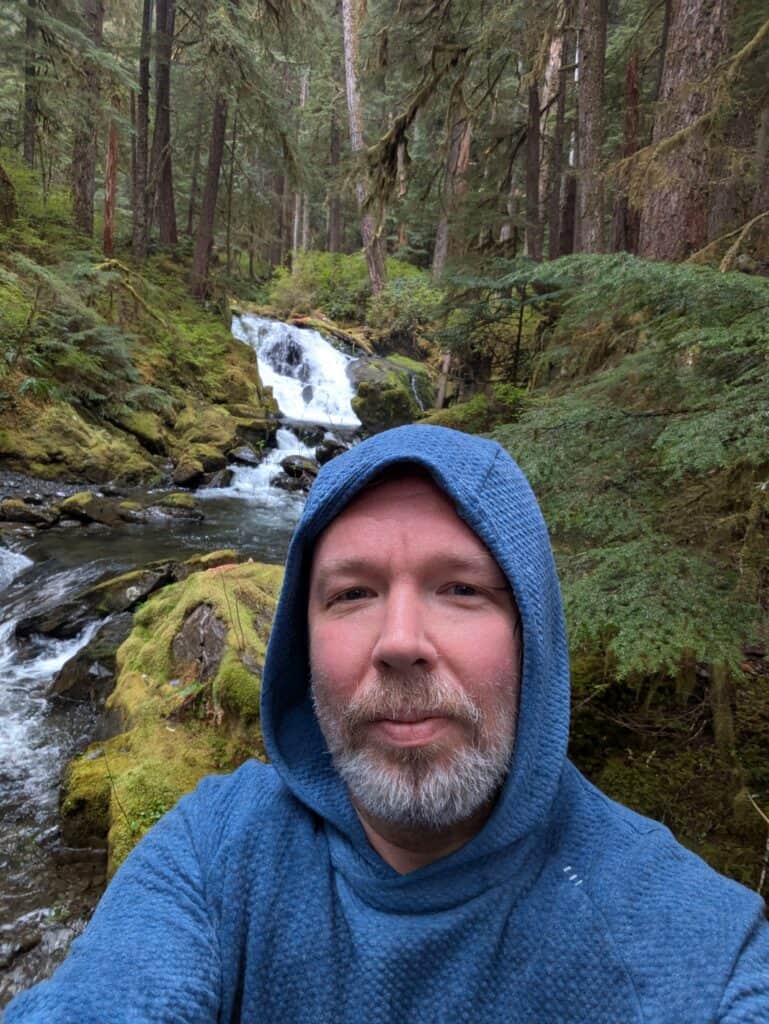
Ma’ikwe Ludwig has played various roles with the FIC over the last 20 years. Full bio below.
The FIC celebrated it’s 30th anniversary this year. A lot has happened in the last 30 years. What about the next 30?
It is generally way more fun for me to contemplate the future than dwell on the past. But I am compelled to start this by saying something less than fun: We are at a serious crossroads right now, friends. What America looks like in 2047 seems to me to be one of two likely things. The first is seriously apocalyptic. If climate disruption, massive wealth inequalities and racism are allowed to continue the way they’ve been going, then this story will be set in a truly grim, disjointed and unjust place.
However, if we manage to stop feeding the beast that is climate disruption and do some very serious cultural work around racism and classism, then the set is… a somewhat less grim place, albeit one with a lot more potential for community to be a real tool of solidarity and survivability. So option one is horrific and option two is survivable, if we really do get together soon.
The truth is, I don’t hold out a lot of hopefulness at this point for us to have a rosy future, at least not in the relatively short term of 30 years. Ask me to write about the world in 1,000 years and I could give you a possible scenario that would better align with my basically sunny take on things. But 30 years? That would just be the start of deep adaptation to a world of tremendous upheaval.
Hollywood has done a solid job of giving us pictures of the more apocalyptic world. One of my favorite authors, Starhawk, has played out the scenario of apocalypse in her book the Fifth Sacred thing (highly recommended), imagining a pocket of deep community preserving the values all of us at FIC want to see promoted.
But I can offer you a more general picture of what could be if we start doing our best to deal with the most serious problems of our time, leaning into relationships and community as fundamental building blocks of the future.
I see a network of diverse organizations that are dedicated to tangible mutual support. This means sustainability and justice-oriented intentional communities, worker owned cooperatives, community-scale sustainable farms, front-line activists, lawyers, and educators in cooperative culture and anti-oppression work, mass-scale tree planting and care brigades, regionally-based nomads, etc.
This network would be explicitly anti-capitalist (if such a thing even exists at that point) and would function much more based on barter, local currencies meaningfully empowered by actual labor and care, and a massive re-education effort to reduce consumption and creatively remove us from the over-consumption mill (thus making solar, wind and tide power perfectly viable replacements for fossil fuels). I see very little long distance travel and shipping, but rather strong regional networks to get needs met seasonally and through locally available resources. (Note: yep that likely means many of us will be relocating to places where we can feed ourselves without relying on imported produce from Mexico.)
One of the keys to this reality is that quality of life will be far more about relationships and people, and far less about material acquisition and easy access to things like out of season produce. It also means that we may well be entering a period where Mother Earth is unable to easily give us abundance and we need to put more work into feeding Her than exploiting Her: planting a huge number of trees and taking care of them, producing food under less easy conditions (my apologies to my farmer friends– I know it already isn’t easy!) that require us to up our observation and careful cultivation skills ala permaculture.
So what can we do to bridge from here to 2047? Here’s a handful of ways that you can help us all transform our culture and systems starting today.
1) Really listen to indigenous voices. Not as artifacts or people who used to have a deep connection with the Earth, but as savvy people who know how to survive, have never fully lost their wisdom as beings on the Earth and have found modern ways to apply it, and are willing to do what it takes to protect the Earth. Their perspectives are invaluable right now.
2) Support the work of the New Economy Coalition (of which FIC is a member). NEC is actively working on many aspects of the transition to a just and sustainable economy that works for all people. You can find groups doing work on everything from alternative currencies, to fisherpeople collectives, and storytellers designing the new narratives for peace and justice, from anti-oppression work to worker cooperatives of all sorts, and of course intentional community development.
3) If you’ve been wanting to start or join a community, but have hesitated… stop waiting. Think of mature communities as part of the skeletal system of that world I describe above. The sooner we get those communities in development, the better off we will all be in 2047. And for those already living in community, have serious discussions about what climate disruption, race and class oppression, and the potential loss of governmental social support systems mean for your group.
4) Plant a bunch of trees. This is the third time I’ve mentioned this in this blog post because it is one of the single most important things we can do to help mitigate climate disruption. Along with that, learn about carbon sequestration methods of all sorts and do whatever you can wherever you are. And if talk about radical politics freaks the neighbors out, perhaps you can create community by organizing tree planting together.
5) Do your part in anti-oppression work. The solutions that make the future livable are not going to be ones based on the exploitation of others, and we all have significant work to do in dismantling those systems.
6) Find joy where you can. This may seem incongruent with the rest of the post, but your ability to access joy (whether that is in your friendships, family, connection to the planet, work you love that is helping change the world, etc) is what keeps you going. If you aren’t connected to what you love, it’s hard to know what we are working for.
7) Finally, reach out for support when you need it. Community takes many forms, and one of the most important things we do for each other is to validate that the pain you feel looking at the reality of the world right now is real and valid, and that the solutions that make your heart sing are viable. Adopt the attitude that we are really in this together and both give and receive that support with as much grace as you can manage.
—
Ma’ikwe is the former Executive Director of both the Center for Sustainable and Cooperative Culture at Dancing Rabbit Ecovillage, and Commonomics USA, an economic justice organization. She is in the process of founding Cooperative Revolution, a new group focused on cooperative economics and culture development. Her work integrates ecological, economic, social, political and personal approaches and technologies for a strongly holistic view of what real cooperation and sustainability take. Ma’ikwe is a dynamic, compassionate and thoughtful speaker and teacher, and a minister committed to creating a world that supports the well-being and vibrancy of all beings. Her 2013 TEDx kicked off a new era for her as public speaker and advocate for communities. She lives in Laramie, WY where a group of fellow economic radicals are working on starting an income-sharing ecovillage in the belly of the fossil fuel beast.
Keep the conversation going with these pieces
There are no available blogs
Subscribe to our newsletter for fresh stories and community updates delivered to your inbox.
Get unlimited access to courses, exclusive member events, and a supportive network of community builders
Access all courses, books, and premium content
Member-only workshops and community builders
Member-only workshops and gatherings
We use cookies to improve your experience on our site. By using our site, you consent to cookies.
Manage your cookie preferences below:
Essential cookies enable basic functions and are necessary for the proper function of the website.
These cookies are needed for adding comments on this website.
Statistics cookies collect information anonymously. This information helps us understand how visitors use our website.
Service URL: policies.google.com (opens in a new window)
A residential project: people live here as their primary home.
An institution, business, network, or project that isn’t a residence (e.g. a learning center, farm, or network with no one living there full-time).
{{ item.label }}
{{ item.value ? item.value : currencyFormat( item.amount ) }}
Subtotal
{{ currencyFormat( pricing_summary.total_amount ) }}
There are no results matching your search