

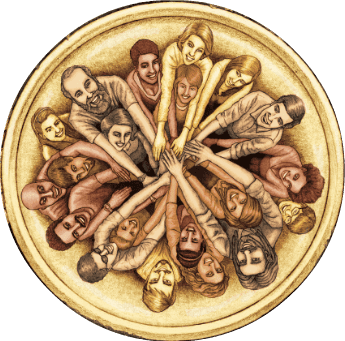
Intentional communities are intrinsically idealistic. They’re based on a radical analysis of social problems and are an attempt to address them. They represent a personal desire to live in a way that feels more satisfying, but also the desire for a better society for all people. They are a recognition that some of the essentials that make community what it is–mutual support, love, and caring, sharing lives and livelihood in a meaningful and satisfying way–are lacking in the world. Not all intentional communities share the same political or social views. Some mirror the trend towards isolationism and protectionism we see in politics today. But most value, at least in theory, diversity, equality, and sustainability, and want to help create a world that works for everyone.
We live in a world fraught with injustice and inequality. In the US in particular, we live with a legacy of slavery and genocide that affects the opportunities we have regardless of when our ancestors came to this land. We all live with the effects of a racialized and classist society. These are core issues that need to be addressed if intentional communities are to fulfill their potential as models for better ways of living.
If we want to create models for how to live that address the problems in society, it’s crucial that we hold central the perspectives and issues of those most affected by those problems. Certain people are more likely to have access to the resources to buy land, build buildings, and start businesses. Unfortunately, when they do, they’re going to create communities with cultures that are less comfortable for people who are not like them. In other words we’re talking about systemic economic and cultural barriers to living in and starting intentional communities, as unintentional as this may be.
If we think about racism and classism not as personal failings but as a system in which we are privileged or disadvantaged, then those of us who benefit from this system have a responsibility to work to change it. Intentional communities are a means to the end of making a better world, but they’re also an end in themselves, of creating a way to live right now that’s better than what the mainstream has to offer. It’s a privilege to live in and start intentional communities, and we have a responsibility to help extend the opportunity to everyone who wants it.
The FIC is recommitting to our organizational value of social justice, particularly in the realm of racial and economic justice. At our Spring Board meetings, the Board went through an anti-racism training with the AORTA Collective, and began identifying how to bring this into what we do, both internally as an organization and externally in our work as servants of this movement. FIC has often showcased ICs that are pioneers in addressing gender dynamics, ecological responsibility, and cooperative economics. Racism and economic inequality have not been a core focus, and we would like to more directly address the reality of how these factors affect who participates in this movement and how this movement can be a real force for change in the world. There are lots of different ways this can look. For example:
FIC has also recognized that our staff has almost always been made up of white people, and we believe this has limited our ability to fully understand our own movement. Thus, in recent hirings, we have made a point of being especially diligent to avoid racial biases and we are committed to this being our new normal.
Intentional communities have a unique opportunity to address oppression and privilege. And while most value diversity, they often struggle to achieve it. Why? There’s no easy answer, and we need to be asking ourselves some tough questions and be open to courageous conversations. How do racism, classism, hetero-cis-sexism, and other forms of oppression play out within intentional communities? How can ICs become truly accessible and inclusive spaces? How can people with privilege, especially white people, men, and straight people, let go of their privilege or put it in the service of others? How can intentional communities help address oppression in the larger society, both directly and by providing accessible and relevant alternatives?
We each have our own internal work to do here, and we also need to come together to do this work. Let’s make this movement a profound source of healing, reconciliation, and empowerment for the world to draw from.
Keep the conversation going with these pieces
There are no available blogs
Subscribe to our newsletter for fresh stories and community updates delivered to your inbox.
Get unlimited access to courses, exclusive member events, and a supportive network of community builders
Access all courses, books, and premium content
Member-only workshops and community builders
Member-only workshops and gatherings
We use cookies to improve your experience on our site. By using our site, you consent to cookies.
Manage your cookie preferences below:
Essential cookies enable basic functions and are necessary for the proper function of the website.
These cookies are needed for adding comments on this website.
Statistics cookies collect information anonymously. This information helps us understand how visitors use our website.
Service URL: policies.google.com (opens in a new window)
A residential project: people live here as their primary home.
An institution, business, network, or project that isn’t a residence (e.g. a learning center, farm, or network with no one living there full-time).

{{ item.label }}
{{ item.value ? item.value : currencyFormat( item.amount ) }}
Subtotal
{{ currencyFormat( pricing_summary.total_amount ) }}
There are no results matching your search

We’re introducing new Plus features — including community reviews, Profile Match, and unlimited Needs & Offers posts — while keeping most of FIC free for everyone. Membership costs less than two coffees a month.

