

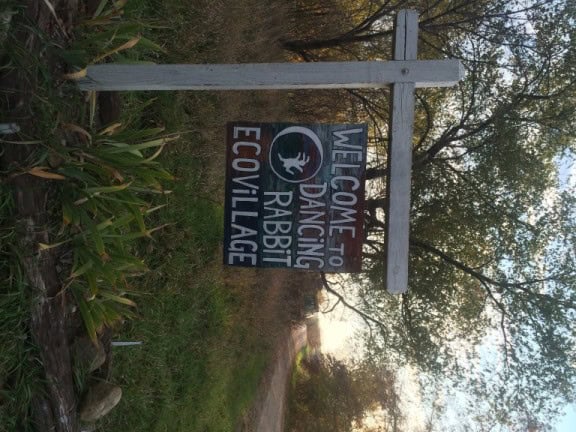
It is often taken for granted that the United States consumes and wastes 5 times more than the rest of the planet.
At the same time it is well known and highly advised that dramatic reductions in carbon pollution is needed to address climate change.
We also know that having practical skills, strong community ties, and smart local food systems and economies, are fundamental recommendations for those concerned with resiliency in an a climate changed world in transition.
What if you could create and live together in an ecological and resilient society, while it also being… Fun?
Dancing Rabbit Ecovillage is built on a commitment to both – environmentally conscious decision making and making a great place to live.
The results of their ecological efforts account for a 90% reduction in pollution and resource use compared to the average American. This puts a person at Dancing Rabbit’s environmental footprint at only 1/2 of the average around the rest of the planet!
Some of the ways they are able to do this includes ecological and recycled building materials, producing renewal energy from wind and solar, a waterless waste compost system, and a car sharing cooperative.
While professions vary, and it is not an income sharing community, on average people are able to thrive with total annual living costs of under $10,000. This is near half of their local average cost of living, and even less when compared to the national average.
Transition US has written an article about Dancing Rabbit’s vibrant example of ecological covenants and creative cooperative culture.
“In 1996, attracted to the low cost of land and the lenient zoning restrictions, a group of young Stanford graduates raised money
from friend and family and headed to northeastern Missouri to set up what is now known as Dancing Rabbit Ecovillage, a successful intentional community and 270-acre community land trust. Their idea was to “move beyond protesting ecological destruction towards finding a positive alternative for ecological living.” Sound familiar?
Almost 20 years later, Dancing Rabbit (DR) is a fully functioning ecovillage with around 60 full-time mem
bers who live happily on just 10% of the resources the average American consumes.”
To read the complete article: http://www.transitionus.org/blog/dancing-rabbit-ecovillage-living-abundantly-10
For a deeper look into how they do it, and to hear some insights learned along the way, here is Dancing Rabbit’s Executive Director, and FIC Board Member, Ma’ikwe Ludwig giving a TEDx talk, ‘Sustainable is Possible’ aka, “how living sustainably doesn’t suck!”:
Keep the conversation going with these pieces
There are no available blogs
Subscribe to our newsletter for fresh stories and community updates delivered to your inbox.
Get unlimited access to courses, exclusive member events, and a supportive network of community builders
Access all courses, books, and premium content
Member-only workshops and community builders
Member-only workshops and gatherings
We use cookies to improve your experience on our site. By using our site, you consent to cookies.
Manage your cookie preferences below:
Essential cookies enable basic functions and are necessary for the proper function of the website.
These cookies are needed for adding comments on this website.
Statistics cookies collect information anonymously. This information helps us understand how visitors use our website.
Service URL: policies.google.com (opens in a new window)
A residential project: people live here as their primary home.
An institution, business, network, or project that isn’t a residence (e.g. a learning center, farm, or network with no one living there full-time).

{{ item.label }}
{{ item.value ? item.value : currencyFormat( item.amount ) }}
Subtotal
{{ currencyFormat( pricing_summary.total_amount ) }}
There are no results matching your search


