
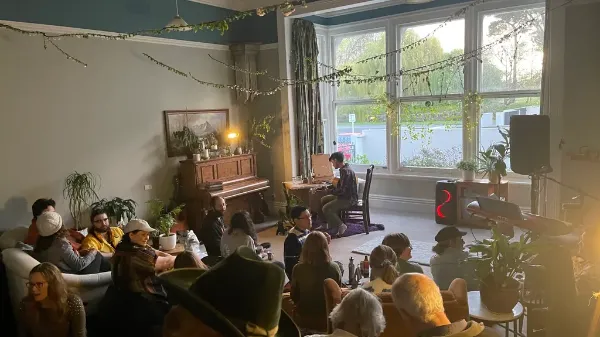
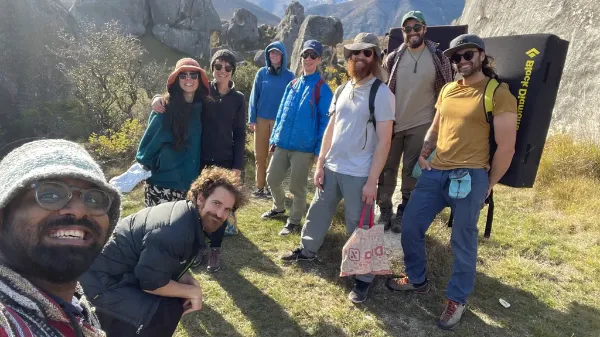
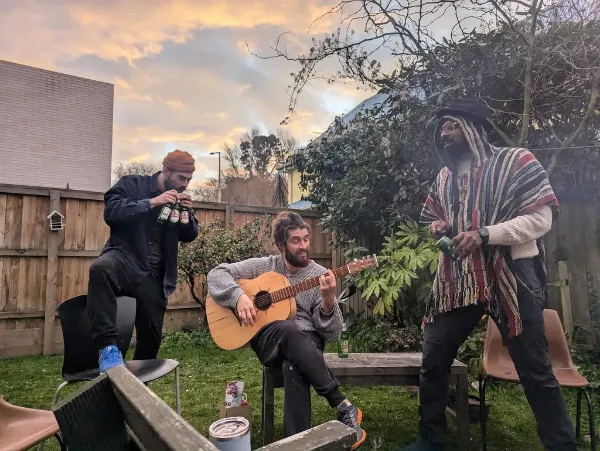
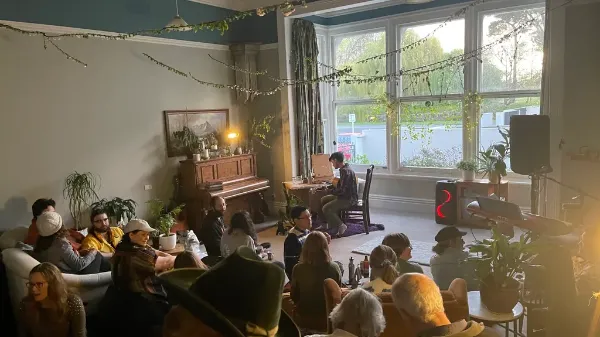
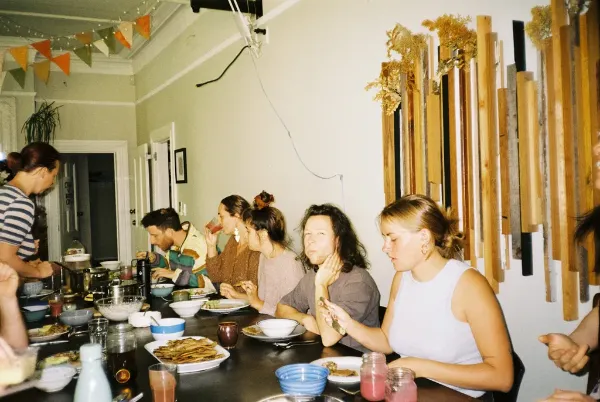
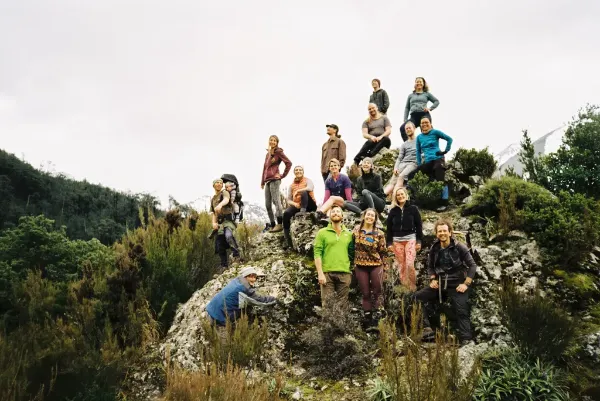
Community gathering at Windrose House with live music and socializing.

Windrose House

  • Communities

About the Communities

  • Established
  • Home-sharing
  • Urban

Founding year

  • 2020

What we do

Windrose House is an intentional co-living community based in Otautahi Christchurch, Aotearoa New Zealand. We are rooted in six shared values: love, joy, communication, sustainability, growth, and community stewardship.
Our home has a long history. The house was originally built in 1871 by J.B. Way and his family, and was known as Remuera — a Te Reo Maori word roughly translating to “burnt hem of a garment.” Over the decades it has transformed from a grand family estate with stables and gardens, to a chapel, a halfway house, and most recently a backpackers hostel. Today it lives on as Windrose House — a vibrant, community-focused home nestled near Hagley Park in the heart of the city.
We are a queer-inclusive, vegan-friendly, creativity-loving home made up of people from all walks of life and corners of the world. Our community spans over 11 nationalities and several languages. Between us, we have outdoor guides, landscapers, technologists, council workers, teachers, circus artists, engineers, musicians, activists, community organisers, and a few who defy easy description. We are committed to honouring Te Tiriti o Waitangi and to learning what it means to be Tangata Tiriti — Treaty partners — in everyday, grounded ways.
What ties us together is a shared curiosity about how to live well with others: with humour, openness to personal growth, and enough self-awareness to know we are all still figuring it out. Community is not something that just happens — it is something we build together. It takes care, communication, and a willingness to stretch, and in return it offers a rare kind of richness and connection.
Daily life at Windrose blends routine with spontaneity. We share meals four to six times a week, cook together, maintain the house collaboratively, and make decisions collectively. We draw on tools like Non-Violent Communication and consent-based practices to navigate conflict with care. Governance is participatory — residents propose, vote, and shape how the house runs through a mix of digital channels and regular in-person family meetings.
Beyond the house, we are inspired by principles of communal effort, radical inclusion, gifting, decommodification, and radical self-expression. We aspire to be a positive example of urban community life — one that is joyful, sustainable, and deeply human.
We welcome people who are curious about intentional living and want more than just a place to sleep.

Our Mission

Intentional co-living urban community rooted in love, joy, sustainability, growth and community stewardship.

  • Purpose
  • Home-sharing
  • Community type
  • Coliving
  • Activities
  • Experiences

Commemorative dates

  • January 1, 2018
  • Started planning
  • January 1, 2020
  • Started living together

Gallery

  • 23 Total members
  • Open to new members
  • Open to visitors
  • Open to volunteers
Total
23

How to join

Two pathways to join: Guests apply to stay up to 2 months. Residents go through an interview, an Explorer trial period, and a community vote. We prioritise values alignment and genuine openness to communal living. All links: windrose.nz

Basic expectations or agreements for members

We welcome visitors and guests! The best way to connect with us is through our website windrose.nz

Primary decision-making authority

  • All Community Members Together

The whole membership decides collectively.

Decision-making process

  • Majority Vote

More than 50% agreement needed.

Governance structure

  • Representative/Democratic

Members elect leaders who make decisions within defined roles.

Conflict resolution approach

Windrose operates as a non-hierarchical community with no fixed leaders. We rotate a chair role for our fortnightly family meetings, and members self-organise into focus groups covering areas like human dynamics, guest liaison, and recruitment. These roles centralise information flow without creating formal leadership positions — initiative is shared, not assigned.

Economic model

  • Independent Finances

Members maintain separate personal finances with minimal sharing.

Economic scenarios for this community

  • Members need to pay fees, dues, or similar to live there on a per month or per year basis
  • There is a labor obligation
  • Members typically need to have their own job or other personal source of income to cover their expenses while living in the community?

Additional economic information

Regular fees: $18
Labor: Yes (1 hrs/week)
Members with pre-existing debt: allowed

Shared resources and amenities that are accessible to everyone in the community

Common House, Garden(s), Vehicle Share, Large Scale Kitchen, Internet

Frequency of communal meals

  • 2-5 times per week

Dietary restriction

  • People can cook and eat what they want in their own residence

Community activities and engagement

  • Volunteer, Internship, or Apprenticeship, or WWOOF’ing
  • Festivals, Conferences, Events

Substance use culture

  • Substance use occurs primarily at celebrations or ceremonies

Gender composition

  • Roughly balanced (no group over 60%)

Age demographics

  • Mixed adults (few or no children)

Guest Book

Written reviews are available for plus members. Click here to upgrade.

Location

  • Canterbury, New Zealand

Windrose House

Needs and Offers

Connecting people and communities through an intentional online marketplace

  • Promoted
  • Events
7 days ago

Coastal Regeneration Immersion: Permaculture Design Certification in Jalisco, Mexico

Tropical Dry Forest Permaculture Design & Regenerative Stewardship Certification (PDC)12-Day Intensive | 120 Hours | Costalegre, Jalisco, Mexico APPLY AT XOCHIRAIZ.COM Join us for an immersive Permaculture Design Certificate course set in the tropical dry forest bioregion of coastal Jalisco. This 120-hour intensive blends internationally recognized PDC curriculum with hands-on regenerative practice — combining ecological design, agroforestry, natural building, and community stewardship into one integrated learning experience. Lead Faculty Jorge Luis Gtz. Olarte (Arborescencia RedGenerativa) – Regenerative Design, Soil Biology & Agroforestry Ozzy Lusth (Survior & Xochiraíz) – Wilderness Resilience & Survival Skills Dave Collins (Capacha Coastal Conservation Center) – Bioarchitecture & Ecological Development What You’ll LearnThe course moves through six progressive phases: Permaculture & Ecological Literacy – ethics, principles, and reading the tropical dry forest landscape Water & Soil Systems – keyline design, water harvesting, living soils, and compost systems Horticulture – food garden design, propagation, and biological pest control Regenerative Food Systems – tropical agroforestry, food forest design, and guild planting Ecological Infrastructure – bamboo bioarchitecture, bioclimatic farm design, compost toilets, greywater, and rocket stoves Integrated Design Studio – team-based final design projects covering watershed strategy, agroforestry, food forest layout, infrastructure, and phased implementation Daily RhythmMornings begin with optional surf/yoga and journaling, followed by field practicums and hands-on workshops. Afternoons include design studio and construction lab work, with reflection circles, communal dinners, and evening talks, films, or campfire discussions rounding out the day. Final ProjectParticipants work in teams to produce a full regenerative design package — landscape analysis, water plan, agroforestry design, food forest plan, ecological infrastructure, and bioclimatic farm plan — presented to a faculty review panel on the final day, followed by a closing ceremony, certificate delivery, and community feast. CertificationGraduates receive the Tropical Dry Forest Permaculture Design & Regenerative Stewardship Certification (120 contact hours), hosted by Capacha Coastal Conservation Center and Tierralegre, A.C. Curriculum integrates international PDC standards with tropical ecology, agroforestry, ecological restoration, bamboo bioarchitecture, bioclimatic design, GIS/photogrammetry, and regenerative leadership. Highlights Hands-on bamboo construction (temazcal, bathhouses, sculpture) Tropical dry forest silviculture practicum Community mapping and design project for Ekoa Green Community Talent show and sea turtle release
January 10 – January 24
  • Promoted
Offer
  • Promoted
Offer
  • Promoted
Offer
  • Professional Services
3 months ago

Community Matchmaking: Get Help Finding Your Community

Would you like to join an intentional community but don’t know how? Feel overwhelmed by the number of communities out there? Not sure if there is one that’s a fit for you? CommunityFinders is here to support you on your path to community living. You can find your community by: Taking the free Community Types Quiz to learn which of the most common types of community is a fit for you. Booking a 1:1 consultation with a Community Matchmaker to receive recommendations for communities that are a fit for you. Joining the Money and Community Mini-Course to find out which communities are within your budget. Reading the book Intentional Community to help you understand your options and decide whether community living is right for you. Our goal is to help community seekers become community finders — people with confidence that their community match is out there and they will find it. Looking forward to working with you to find your community! Please be in touch, Cynthia Tina Founder communityfinders.com What communitarians are saying: “Cynthia helped me clarify the intentional communities that fit me, better get to know them, and finally choose one that I’m now a member of. I have no doubt anyone on a community journey will find great value in her guidance.” – Alan Stillman “Out of potentially thousands of communities, Cynthia matched me with very similar values revealed on their websites. I am in the process of applying to visit the number one recommendation. I’m excited and thankful for Cynthia‘s skills. Beyond well worth.” – Tommy Teeple “Due to her extensive community experience, she could offer many insights, provide useful tips and present selected communities to me that she had visited herself.” – Antonia Von Hassell
Need
  • Communities with Openings
4 weeks ago

Seeking Partner/Co-Founder for a Cooperative Community in Western NC

Co-Founder / Project Partner Needed: Coweeta Heritage Center The Coweeta Heritage Center / Talking Rock Farm in Otto, North Carolina, is seeking a dedicated co-founder and long-term project partner to help manage, expand, and transition our community land project. As the primary founder is balancing physical limitations (including a bad back) and a demanding workload, we are looking for a capable partner to share the operational reins and help shape the next phase of this intentional community. What We Are Looking For Organizational & Administrative Skills: Ability to streamline systems, manage outreach, and organize community data. Social Media & Digital Presence: Skills to revitalize our online reach, update public directory listings (such as ic.org), and manage applicant communications. Practical & Technical Capabilities: Hands-on familiarity with or strong interest in sustainable forestry, organic agriculture, and alternative energy infrastructure. Strong Communication: A commitment to Non-Violent Communication (NVC), transparency, and collaborative governance. What We Offer On-Site Housing: Dedicated housing is provided on-site in Otto to facilitate close coordination, daily collaboration, and deep integration into the land. Established Foundation: Step into an active project with existing infrastructure, clear community onboarding frameworks, an established legal LLC structure, and an estate succession blueprint. Strategic Input: Full partnership in vetting future interns, managing the phased onboarding pipeline, and executing land-clearing and sustainable infrastructure projects.

Update to a Public Profile

  • Log in
  • Go to your profile page
  • Toggle on the "Add my profile to the directory"
  • Save your profile

Information

Communities

A residential project: people live here as their primary home.

Organizations

An institution, business, network, or project that isn’t a residence (e.g. a learning center, farm, or network with no one living there full-time).

Plus Community Membership

  • Find people with Profile Match
  • Access to your community listing statistics
  • Create Discussion Groups
  • Access to our affiliate program
  • Member badge on your community profile
I am an official member of this community
Disclaimer
I affirm that my information is accurate and I am authorized to manage this listing
Foundation for Intentional Community FIC Member badge logo.

Free Plan

Free Membership
Free

Intentional Advertising

  • Subtotal

    {{ currencyFormat( pricing_summary.total_amount ) }}

Icon representing community connections and collaboration for intentional communities.

Plus Membership

  • Find communities with Profile Match
  • View detailed reviews about communities
  • Create free listings in Needs & Offers
  • Plus Member resources in CommUniversity
  • View communities detailed reviews
  • Plus Member badge on your profile