Read all about us on our website. We are for families only :)
We would be open to singles or couples staying with us on a volunteer basis short-term, but after we are more established.
We are 1 family at the moment, with a couple of families potentially joining us already. We only recently went public with our intentional community idea.
As a community our focuses can be summed up in connection, autonomy, and play.
To be clear, autonomy is merely a mutual respect for each other’s control and ownership over their own bodies, minds, and spirits. This includes even the smallest children- and responding to their, sometimes masked or haphazard, communication with connection and respect :)
We value autonomy for children and adults alike, likeminded people having easy access to other likeminded people (including children), children being involved in daily activities as equal participants (with appropriate changes and accommodations for their size and ability). We value gentle and curious approaches to anyone’s behavior and needs- seeing emotions as valid and always with reasonable cause. We have a Waldorf-style, Sudbury-style perspective toward education, and value risky play in nature (as we learn to personally let go more and more of our in-built desire to emphasize caution and control). We do not think having an “educational” backing for activities for children is helpful, for example, “today we’re going to stack cups in color categories to work on hand-eye coordination and color recognition”. That works against our relationships with children and has proven to be a waste of time. We value play as work and work as play. We value “teaching”, but in a myriad of ways that only occasionally use direct verbal information-giving. Teaching looks like a million different things, and often, its indirect lessons over a long course of time. Kids only listen and truly learn from the people they respect and want to emulate in one way or another, so before we value teaching, we value being an admirable, respectable person ourselves, first. Living in community gives innumerable opportunities for everyone to greater embody clear and nonviolent communication, consideration for others, generosity, FUN, mature conflict resolution, and so much more. This might be the best “lesson” we could ever give our children… Additionally, we think children have a lot to teach us as well, maybe more than we have to teach them, if we are truly present with them and engaged.
Our goal here is to create the healthiest environment for families to thrive. Basically, re-villaging with a consideration for the decades to come and what sustainability actually means as we set up the community… i.e. maybe it’s not the most sustainable to focus on the Earth before humans. Maybe we can’t and shouldn’t do it all alone or within our own strict property lines. Maybe everyone is burnt out and stressed out for a deeper reason. If we focus on each other, consideration (and a true feeling of time and spaciousness) for the place will naturally follow because we are all being genuinely cared for within trusted and proximally close relationships. We believe this is especially so for people with a forethought and care towards the next generation
Secondarily, we value the natural world, as we are personally invested in natural building and interested in growing our own food, permaculture, food forests, incorporating ancient ways of living and working, wearing/using natural materials, maybe living off-grid, etc., BUT those things are only considerations after valuing connection, relationships, and humans as medicine for each other. Food is medicine, of course, but human connection is way better.
We value primitive, ancestral skills and moving like our bodies are made to- primitive to homesteading hand skills, parkour, climbing, dancing, wrestling, “human movement” based on things like “Evolve, Move, Play”, group games, making music and singing together. For us, its obvious that these activities naturally build up community ties and trust and lead to a peaceful community culture.
We are not a spiritual/religious group. We have a Christian upbringing, but have worked hard to deconstruct that. Nia leans European pagan with an emphasis on her Welsh and Germanic heritage and Sylas is interested in what different philosophers have to say throughout time, currently looking through Jung’s work.
Here is an excerpt from our home page on our website,
“Since our daughter was born several years ago we’ve been on a passionate mission to find or create a village of like-minded families; a close-knit, fun-loving, committed community that respects children’s autonomy, nurtures their whole being, models healthy relationships for them with peaceful and open communication, creates easy access for children to be with other children, encourages them to have full participation in community life, builds together, grows together, explores ancient ways of living and crafting together, occasionally travels together, and invests in our children’s futures together.
Don’t get us wrong, we don’t want to do everything together (we like alone time too), let’s just be really incredible neighbors that decide to stick together and work (play) towards a common vision.
Grab a warm drink and have fun dreaming with us.”
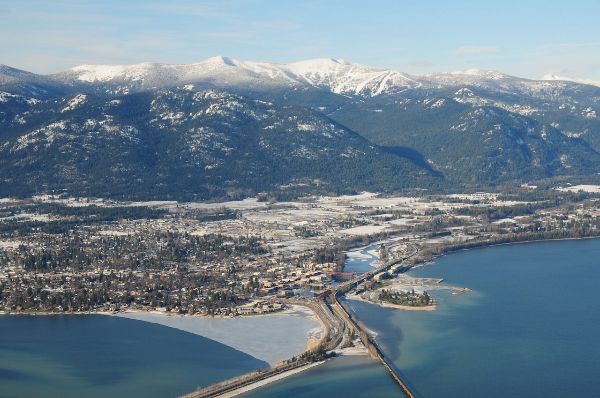
We initially had the website focusing on connecting with people first before deciding on a place, which is still partially accurate, but we really couldn’t imagine a better place on earth for this than northern Idaho, if we were going to stay in the United States. We have scourred the globe, physically and virtually, to find this exact place. Nia has contacted the most obscure people on facebook comments and lonely places of the Earth for anyone who could connect us with anything they know, similar to what we’re envisioning. We’ve found specific cultures that do a good job at respecting children’s autonomy and including them in daily life and 3 potential intentional communities that are similar to this in Europe and India. Lots of underground workings of unschool networks around the globe, especially in places that don’t allow that sort of thing. If you don’t jive with our vision, we most likely have a good place in mind for your family if you contact us. Personally, we ultimately felt such a burden for the future of the Western world, America specifically, and the plight of children here that we decided we needed to start something in Europe or America. We are between the options of Sandpoint, ID or joining efforts with the Revillage project in Europe (whose location is TBD). Both have massive pros and cons, which are outlined on a page on our website. Let’s talk if you feel the same about the Western world or if you’re looking into other parts of the globe and would like some resources/connections.
For the health of families in America. For their children to grow up experiencing deep and thriving relationships with themselves and each other that continue on far past our lifetimes. A focus on autonomy, cooperative and nonviolent communication, human movement and hand skills, access to others within walking distance, and a harmonious desire to lift each other up rather than compete for resources, time, or people. Not an isolated escape, but involved in larger community life with the nearby town, with a desire to influence the greater culture towards more connection, trust, and generosity.
Under the “Steps to Becoming Neighbors” tab under the “More” drop down at the top of our website.
Contact us! View our website listed on this page :)
A few people (not elected by the broader community) make the major decisions.
Everyone must agree before moving forward.
Power and responsibility are shared relatively equally among members.
We would like to have weekly women’s circles, men’s circles, and of course, children’s circles (where children discuss community topics, an older child would moderate or an adult if there isn’t an older child that stands out as a voluntarily leader). Circles would also be a time to intentionally connect, share where everyone is at, what people might need help with, what they have to offer, new interests/hobbies, or anything else that comes up! Along with these would be a bi weekly whole-community gathering to intentionally discuss any community topics and decisions. Of course, we would meet as a community more than this, but a gathering solely focused on resolving concerns, making decisions and changes, and planning other events and gatherings. If more time is needed than what we allotted, then we’ll plan to extend the gathering to another day (not taxing the children’s time or schedules too much/late into the night). Ideally, someone would guide our gatherings, maybe a couple individuals that switch out or naturally piggy-back off each other in guiding the discussion. We value open and tactful, respectfully honest communication. If someone doesn’t appreciate how the decision making process is going, it should be openly shared. If someone feels too stressed to participate in the gathering or is overwhelmed, then we’ll all take a bit to reconcile the situation and comfort the individual. This is a fluid gathering that can change based off of the families involved and their preferences, but everyone does need to be involved in the decision making process and show up. Let’s be there for each other, even in the occasional mess of life :)
Members contribute a percentage of income to community funds.
Join fee: $0
Regular fees: $0
Labor: Encouraged or suggested (0 hrs/week)
Members with pre-existing debt: allowed
We have a plan for owning land based on the intentional communities Friskoven and Ecovillage de Pourgues. We have thought this through extensively. We have a spreadsheet we’ll be posting on our website very shortly outlining it- equal ownership, but not socialist. Everyone will be financially/legally protected and owning their own space.
Common House, Garden(s), Greenhouse(s), Vehicle Share, Library, Workshop, Outbuilding(s), Swimming pond or pool, Hot tub or hot springs, Outdoor Kitchen, Large Scale Kitchen, Stage or Auditorium, Fire pit, Swingsets & play areas, Recreational vehicles, Gym or sports area, Internet
Connecting people and communities through an intentional online marketplace
There are no needs and offers
We use cookies to improve your experience on our site. By using our site, you consent to cookies.
Manage your cookie preferences below:
Essential cookies enable basic functions and are necessary for the proper function of the website.
These cookies are needed for adding comments on this website.
Statistics cookies collect information anonymously. This information helps us understand how visitors use our website.
Service URL: policies.google.com (opens in a new window)
A residential project: people live here as their primary home.
An institution, business, network, or project that isn’t a residence (e.g. a learning center, farm, or network with no one living there full-time).
{{ item.label }}
{{ item.value ? item.value : currencyFormat( item.amount ) }}
Subtotal
{{ currencyFormat( pricing_summary.total_amount ) }}
There are no results matching your search
We’re introducing new Plus features — including community reviews, Profile Match, and unlimited Needs & Offers posts — while keeping most of FIC free for everyone. Membership costs less than two coffees a month.