
Lush garden with trees, plants, and a dirt path in a rural setting.

Ilatán

  • Communities

About the Communities

  • Forming
  • Ecological
  • Rural

Founding year

  • 2018

What we do

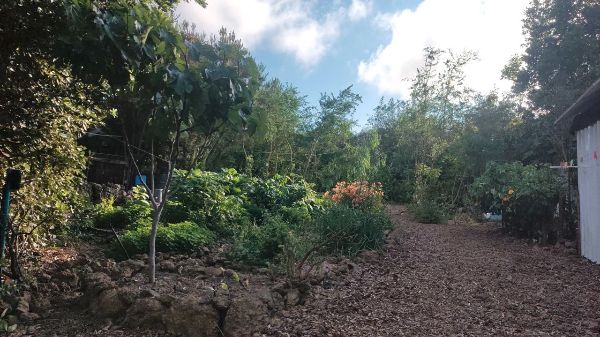
Ilatán is an association and a group of people that manages a forested area on the mountains of Northern Tenerife. Here we work on regenerating the surrounding ecosystem, producing food, and living in a joyful and relaxed way. There is also space for more people to join us in sharing and enjoying this place.
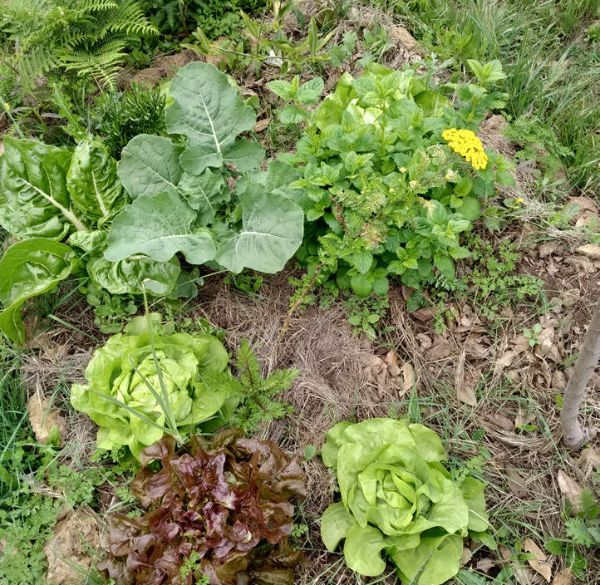
Our work in this ecosystem started only 5 years ago, which we have devoted to regenerating our environment and adapting to it, slowly establishing a food forest that integrates both edible and native trees – with a few hundred already planted and thousands more growing in our nursery – to complete the reforestation of the pace under our care, which is close to a hectare.
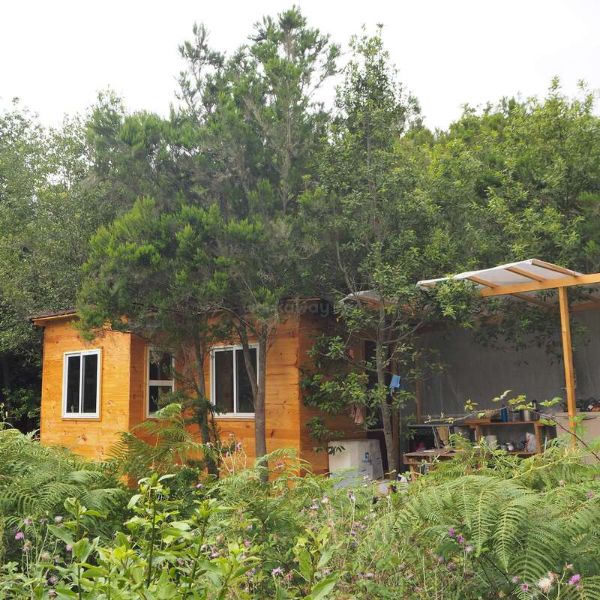
The human side of the project is close to a traditional village, where some shared spaces for socializing are available, but most of the time we each live our own lives – knowing the rest are there if we need them. Intimacy, personal space and natural day-to-day communication are priorities for us, rather than planning constant structured meetings and community activities (in pop culture terms, Ilatán looks more like a mountain retreat than a hippie commune). Our long-term vision is for this place to hold a multi-generational extended family, so we are open to receiving people of all ages.

Our Mission

We are a Co-Housing and Permaculture project located in the laurisilva forests of the North of Tenerife. We work towards human rewilding and ecosystem regeneration, integrating the cultural reality of the current world and making the most of modern science and technology to enjoy the process of living meaningful lives together.

  • Purpose
  • Ecological
  • Community type
  • Cohousing
  • Ecovillage
  • Sustainability practices
  • Renewable energy systems
  • Permaculture design
  • Natural / low-impact building
  • Activities
  • Property management

Commemorative dates

  • January 1, 2018
  • Started planning
  • January 1, 2021
  • Started living together

Gallery

  • 3 Total members
  • Open to new members
  • Not open to visitors
Total
3

How to join

1. Carefully read our website.
2. Apply using the form in our website.
3. Plan a videocall.
4. Plan few short visits.
5. Start a trial period living in the community.
6. Become a member.

Decision-making process

  • Consent-Based (Sociocracy)

Decisions proceed unless someone has a reasoned objection.

Governance structure

  • Sociocratic/Circle-Based

Organized in circles or domains with distributed authority.

Economic model

  • Independent Finances

Members maintain separate personal finances with minimal sharing.

Economic scenarios for this community

  • Members need to pay fees, dues, or similar to live there on a per month or per year basis
  • There is a labor obligation
  • Members typically need to have their own job or other personal source of income to cover their expenses while living in the community?

Additional economic information

Regular fees: Yes
Labor: Yes
We expect people who can be responsible of their own financial needs.

Shared resources and amenities that are accessible to everyone in the community

Garden(s), Greenhouse(s), Workshop

Frequency of communal meals

  • Rarely

Significant food acquisition practices

  • Locally sourced

Community activities and engagement

  • Neighborhood, Community Housing, or Homeowner's Association

Substance use culture

  • Substance use occurs primarily at celebrations or ceremonies
  • Religions
  • Wiccan, Paganism, or Earth Religions

Age demographics

  • Mixed adults (few or no children)

Property status

  • Privately owned

Property owner

  • By a Land Trust, Home Owners Association, or corporation

Setting

  • Rural

Countryside locations with significant distance from urban centers.

Community type

  • Cohousing

    Private homes with shared common facilities, designed for neighborly
    interaction while maintaining independence.

  • Ecovillage

    Integrated communities designed around ecological principles with sustainable living practices.

Community type

  • Partially built or remodeled with recycled or environmentally friendly materials, and/or using natural building methods

Sustainability approach

  • Renewable energy systems
  • Permaculture design
  • Natural / low-impact building

Land practices in our community

  • The community practices permaculture

Community type

  • Partially built or remodeled with recycled or environmentally friendly materials, and/or using natural building methods

Some or all of the buildings are...

  • Partially built or remodeled with recycled or environmentally friendly materials, and/or using natural building methods

Self-produced energy

  • Over 66%

Energy sources used

  • Photovoltaic Solar
  • Biomass (from wood or other organic materials)

Self-produced food

  • Up to 33%

Local, organic, or fair trade food

  • 33 - 66%

Food systems

  • Community garden
  • Food forest
  • Greenhouse / aquaponics
  • Land area size
    1 hectares

Guest Book

Written reviews are available for plus members. Click here to upgrade.

Location

  • Santa Cruz de Tenerife, Spain

Ilatán

Needs and Offers

Connecting people and communities through an intentional online marketplace

Offer
Offer
Offer
  • Events
3 days ago

Coastal Regeneration Immersion: Permaculture Design Certification in Jalisco, Mexico

Tropical Dry Forest Permaculture Design & Regenerative Stewardship Certification (PDC)12-Day Intensive | 120 Hours | Costalegre, Jalisco, Mexico Join us for an immersive Permaculture Design Certificate course set in the tropical dry forest bioregion of coastal Jalisco. This 120-hour intensive blends internationally recognized PDC curriculum with hands-on regenerative practice — combining ecological design, agroforestry, natural building, and community stewardship into one integrated learning experience. Lead Faculty Jorge Luis Gtz. Olarte (Arborescencia RedGenerativa) – Regenerative Design, Soil Biology & Agroforestry Ozzy Lusth (Survior & Xochiraíz) – Wilderness Resilience & Survival Skills Dave Collins (Capacha Coastal Conservation Center) – Bioarchitecture & Ecological Development What You’ll LearnThe course moves through six progressive phases: Permaculture & Ecological Literacy – ethics, principles, and reading the tropical dry forest landscape Water & Soil Systems – keyline design, water harvesting, living soils, and compost systems Horticulture – food garden design, propagation, and biological pest control Regenerative Food Systems – tropical agroforestry, food forest design, and guild planting Ecological Infrastructure – bamboo bioarchitecture, bioclimatic farm design, compost toilets, greywater, and rocket stoves Integrated Design Studio – team-based final design projects covering watershed strategy, agroforestry, food forest layout, infrastructure, and phased implementation Daily RhythmMornings begin with optional surf/yoga and journaling, followed by field practicums and hands-on workshops. Afternoons include design studio and construction lab work, with reflection circles, communal dinners, and evening talks, films, or campfire discussions rounding out the day. Final ProjectParticipants work in teams to produce a full regenerative design package — landscape analysis, water plan, agroforestry design, food forest plan, ecological infrastructure, and bioclimatic farm plan — presented to a faculty review panel on the final day, followed by a closing ceremony, certificate delivery, and community feast. CertificationGraduates receive the Tropical Dry Forest Permaculture Design & Regenerative Stewardship Certification (120 contact hours), hosted by Capacha Coastal Conservation Center and Tierralegre, A.C. Curriculum integrates international PDC standards with tropical ecology, agroforestry, ecological restoration, bamboo bioarchitecture, bioclimatic design, GIS/photogrammetry, and regenerative leadership. Highlights Hands-on bamboo construction (temazcal, bathhouses, sculpture) Tropical dry forest silviculture practicum Community mapping and design project for Ekoa Green Community Talent show and sea turtle release
November 13, 2026 09:00 – November 25, 2026 16:00
Need
  • Forming Communities
3 weeks ago

A call for pioneers, trade-builders, and the four Elemental Elders to construct our first cooperative village prototype.

Intake Open: Flagship WE Network Village in Clubb, MO Call for pioneers, trade-builders, and 4 Elemental Elders to construct our first cooperative village prototype. WE Network is opening ground zero in Clubb, Missouri—our living model to build trade shops and train leadership teams for nationwide village rollout. We are building a self-sustaining, salvaged homestead ecosystem operating as a parallel society alongside existing systems. Bring your own living setup (tents, micro-campers, trucks, schoolies, tiny homes) to secure your lot within the co-op village. The 3×3 Exchange: Mental, Physical, & Spiritual Maintain your lot via our 3×3 exchange (3 hours/day, 3 days/week = 9 hours total): Mental: Classroom teaching, strategy, skill-sharing, and village instruction. Physical: Hands-on labor building active land and shop projects. Spiritual: Participation in our weekly Friday Fellowship Fire Circle. Trade Shops & Lot Placement Every member contributes directly to our local micro-economy: Trade Holders: Set up your specific service shop for the co-op. Transitioning Members: Assigned a trade lot to focus on constructing the physical shop structure. Weekend Operations: Retail open Saturdays and Sundays. Mid-week is reserved for building and life. Priority Intake: The Four Elemental Elders We are recruiting four foundational Elders: Earth Elder: Land, soil, livestock, permaculture, and natural materials. Air Elder: Building structures and Eco Junk waste-to-material upcycling. Fire Elder: Spiritual health, Natural Law, body healing, and Fire Circles. Water Elder: Resource flow, food storage, bookkeeping, and services. How to Apply 👉 Visit fffc.wtf to submit your intake request today.

Update to a Public Profile

  • Log in
  • Go to your profile page
  • Toggle on the "Add my profile to the directory"
  • Save your profile

Information

Communities

A residential project: people live here as their primary home.

Organizations

An institution, business, network, or project that isn’t a residence (e.g. a learning center, farm, or network with no one living there full-time).

Plus Community Membership

  • Find people with Profile Match
  • Access to your community listing statistics
  • Create Discussion Groups
  • Access to our affiliate program
  • Member badge on your community profile
I am an official member of this community
Disclaimer
I affirm that my information is accurate and I am authorized to manage this listing
Foundation for Intentional Community FIC Member badge logo.

Free Plan

Free Membership
Free

Intentional Advertising

  • Subtotal

    {{ currencyFormat( pricing_summary.total_amount ) }}

Icon representing community connections and collaboration for intentional communities.

Plus Membership

We’re introducing new Plus features — including community reviews, Profile Match, and unlimited Needs & Offers posts — while keeping most of FIC free for everyone. Membership costs less than two coffees a month. 

  • Find communities with Profile Match
  • View detailed reviews about communities
  • Create free listings in Needs & Offers
  • Plus Member resources in CommUniversity
  • View communities detailed reviews
  • Plus Member badge on your profile