
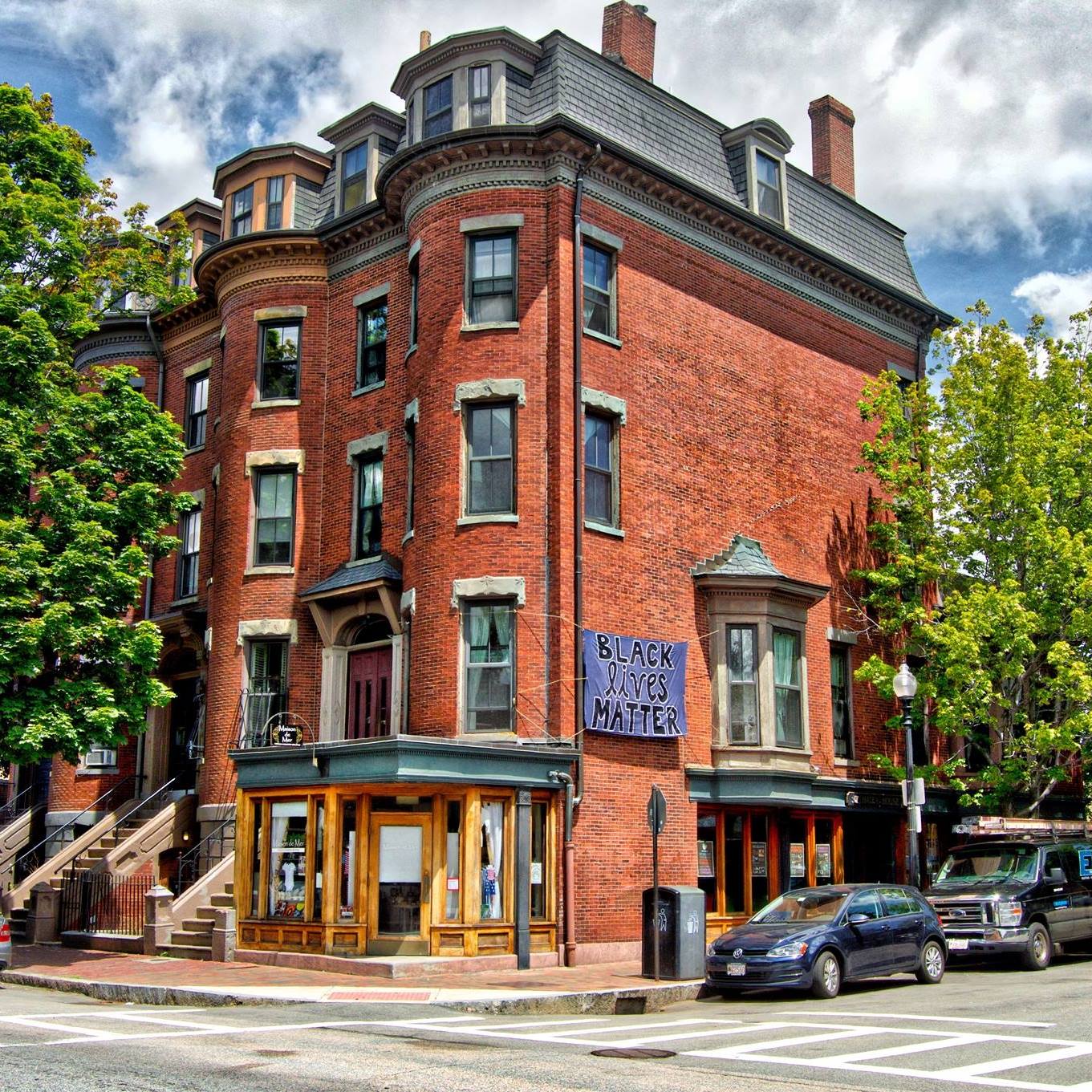
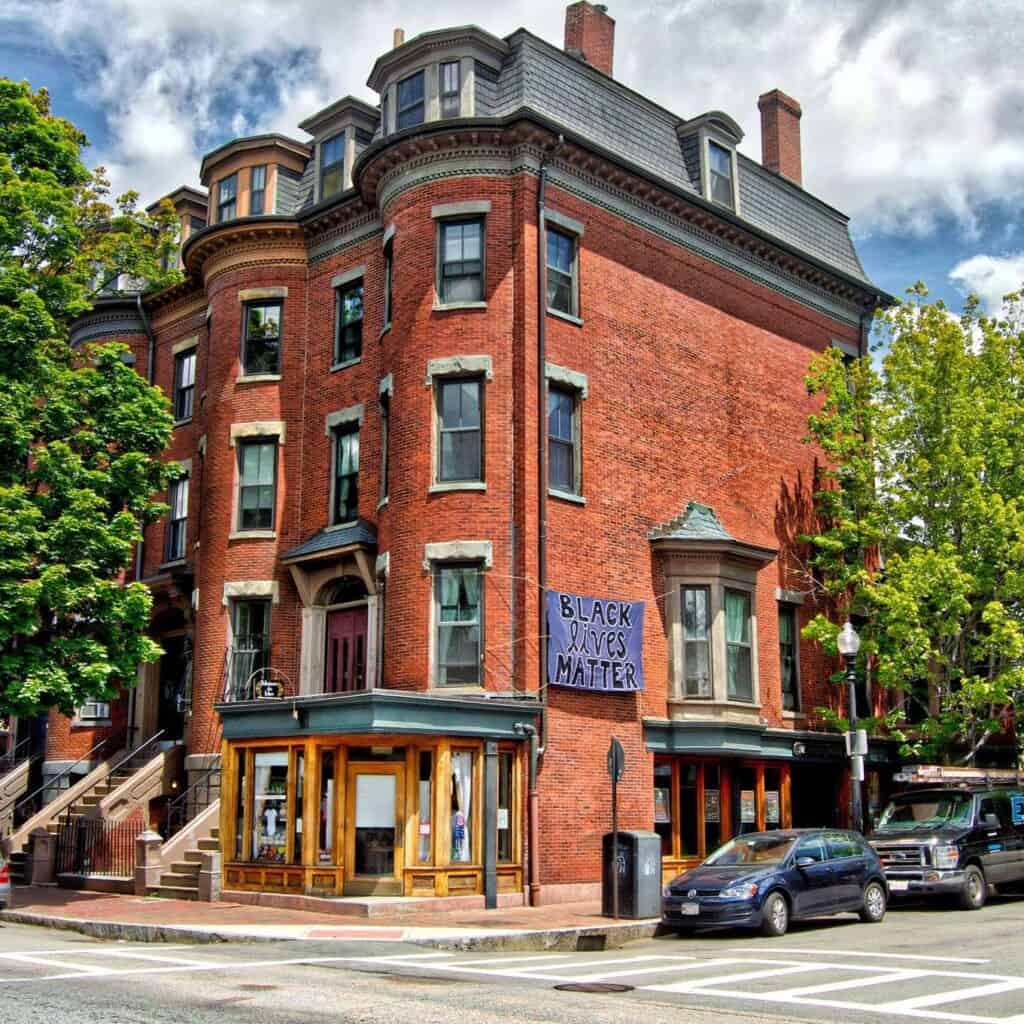
Historic brick building with Black Lives Matter banner and street view.

Haley House Live-In Community

  • Communities

About the Communities

  • Established
  • Home-sharing
  • Urban

Founding year

  • 1966

What we do

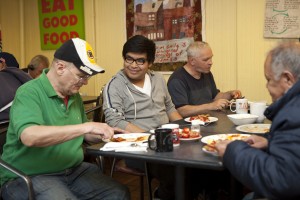
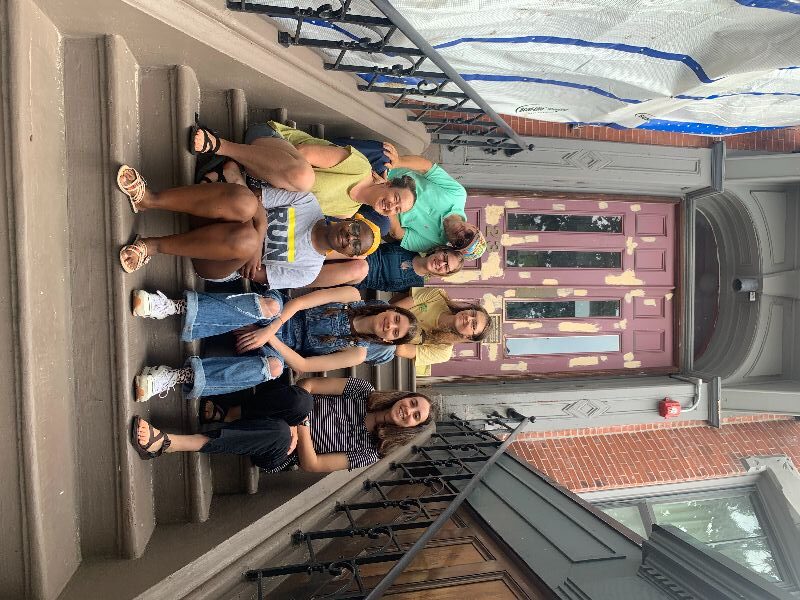
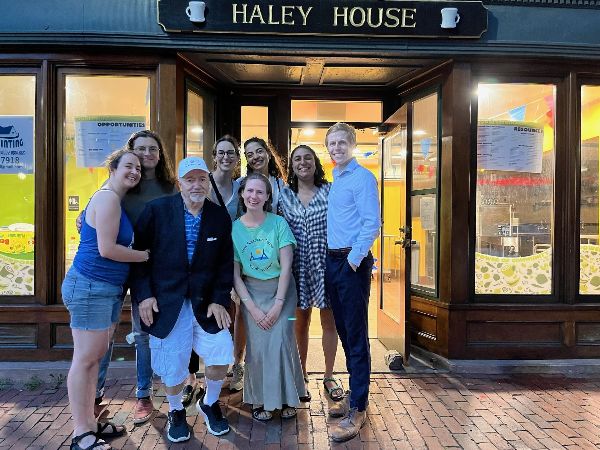
The Haley House Live-In Community is a group of volunteers who have committed to living and working at Haley House for a period of at least two years. Collectively, the community manages the Haley House soup kitchen on the ground floor of 23 Dartmouth St.
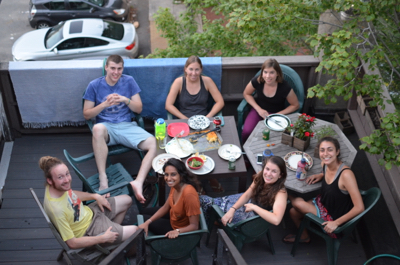
Joining the community is much more than a full time job. Living intentionally means not only serving the poor but being responsible to each other through weekly meetings, community meals, shared tasks, and a mindful approach to daily life. In our collective decision-making we utilize the consensus process and emphasize careful listening and mutual respect –- values that we try to live out both in our personal lives and our work in the soup kitchen.
Living together takes courage. It means challenging each other with a deep respect for the learning process of each individual, while holding a safe space for positive growth. Community living also requires accountability to both those we serve and those who support us.

Our Mission

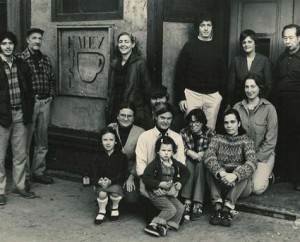
Since its inception in 1966, the Live-In Community of Haley House has brought together diverse, loving, and dedicated people who have offered to commit themselves fully to the daily mission of Haley House, while living together as an intentional community on the top floors of 23 Dartmouth Street. While managing the Haley House soup kitchen, volunteers commit to living together as a community, building deep connections with each other and our guests. Hospitality is key to the community’s way of life. We share friendship, space, and material goods that we have received through the generosity of others.

  • Purpose
  • Home-sharing
  • Community type
  • Coliving
  • Activities
  • Experiences
  • Networking

Commemorative dates

  • January 1, 1966
  • Started planning
  • January 1, 1966
  • Started living together

Video

Gallery

  • 5 Total members
  • Open to new members
  • Open to visitors
Total
5

How to join

We ask that applicants submit an online application, a current resume, and two letters of reference. Information about applying to the Live-In Community can be found here: http://haleyhouse.org/what-we-do/community/

Basic expectations or agreements for members

We accept individual volunteers in the soup kitchen and short-term hospitality guests. To volunteer, please visit: http://haleyhouse.org/give/volunteer/. To request hospitality, please email li*****@********se.org

Primary decision-making authority

  • All Community Members Together

The whole membership decides collectively.

Decision-making process

  • Modified Consensus

Generally seek agreement, but have backup methods when consensus isn’t reached.

Governance structure

  • Collaborative/Horizontal

Power and responsibility are shared relatively equally among members.

Conflict resolution approach

The rules of the community are created by the members at the time & are always subject to change.

Economic model

  • Independent Finances

Members maintain separate personal finances with minimal sharing.

Economic scenarios for this community

  • There is a labor obligation
  • Members typically need to have their own job or other personal source of income to cover their expenses while living in the community?

Additional economic information

Labor: Yes (25 hrs/week)
Members with pre-existing debt: allowed
Members are responsible for their own debts. We have a community fund which is dispersed to members should they need financial help upon leaving the community – this is replenished through individual contributions, external donations or through collective work such as shoveling. All living expenses are paid for through the 501C3 (i.e. utilities). Some members have part-time outside jobs for personal expenses.

Shared resources and amenities that are accessible to everyone in the community

Common House, Garden(s), Vehicle Share, Library, Workshop, Large Scale Kitchen, Internet

Frequency of communal meals

  • 2-5 times per week

Significant food acquisition practices

  • Locally sourced

Dietary type

  • Vegetarian Only

Dietary restriction

  • People can cook and eat what they want in their own residence

Community activities and engagement

  • Volunteer, Internship, or Apprenticeship, or WWOOF’ing
  • Organization, Resource, or Network

Substance use culture

  • Substance use appears in public spaces but no pressure
  • Religions
  • Christian
  • Buddhist
  • Jewish
  • Wiccan, Paganism, or Earth Religions
  • Unitarian Universalist

Gender composition

  • Roughly balanced (no group over 60%)

Age demographics

  • Mixed adults (few or no children)

Property status

  • Privately owned

Property owner

  • By a Community Land Trust or some other kind of nonprofit

Setting

  • Urban

Within city limits with access to urban amenities and infrastructure.

Community type

  • Coliving

    Shared living spaces with private bedrooms/bathrooms and communal
    kitchens, dining, and social areas.

Self-produced energy

  • Up to 33%

Self-produced food

  • Up to 33%

Local, organic, or fair trade food

  • Up to 33%

Food systems

  • Community garden

Guest Book

Written reviews are available for plus members. Click here to upgrade.

Location

  • Massachusetts, United States

Haley House Live-In Community

Needs and Offers

Connecting people and communities through an intentional online marketplace

  • Events
4 days ago

Coastal Regeneration Immersion: Permaculture Design Certification in Jalisco, Mexico

Tropical Dry Forest Permaculture Design & Regenerative Stewardship Certification (PDC)12-Day Intensive | 120 Hours | Costalegre, Jalisco, Mexico Join us for an immersive Permaculture Design Certificate course set in the tropical dry forest bioregion of coastal Jalisco. This 120-hour intensive blends internationally recognized PDC curriculum with hands-on regenerative practice — combining ecological design, agroforestry, natural building, and community stewardship into one integrated learning experience. Lead Faculty Jorge Luis Gtz. Olarte (Arborescencia RedGenerativa) – Regenerative Design, Soil Biology & Agroforestry Ozzy Lusth (Survior & Xochiraíz) – Wilderness Resilience & Survival Skills Dave Collins (Capacha Coastal Conservation Center) – Bioarchitecture & Ecological Development What You’ll LearnThe course moves through six progressive phases: Permaculture & Ecological Literacy – ethics, principles, and reading the tropical dry forest landscape Water & Soil Systems – keyline design, water harvesting, living soils, and compost systems Horticulture – food garden design, propagation, and biological pest control Regenerative Food Systems – tropical agroforestry, food forest design, and guild planting Ecological Infrastructure – bamboo bioarchitecture, bioclimatic farm design, compost toilets, greywater, and rocket stoves Integrated Design Studio – team-based final design projects covering watershed strategy, agroforestry, food forest layout, infrastructure, and phased implementation Daily RhythmMornings begin with optional surf/yoga and journaling, followed by field practicums and hands-on workshops. Afternoons include design studio and construction lab work, with reflection circles, communal dinners, and evening talks, films, or campfire discussions rounding out the day. Final ProjectParticipants work in teams to produce a full regenerative design package — landscape analysis, water plan, agroforestry design, food forest plan, ecological infrastructure, and bioclimatic farm plan — presented to a faculty review panel on the final day, followed by a closing ceremony, certificate delivery, and community feast. CertificationGraduates receive the Tropical Dry Forest Permaculture Design & Regenerative Stewardship Certification (120 contact hours), hosted by Capacha Coastal Conservation Center and Tierralegre, A.C. Curriculum integrates international PDC standards with tropical ecology, agroforestry, ecological restoration, bamboo bioarchitecture, bioclimatic design, GIS/photogrammetry, and regenerative leadership. Highlights Hands-on bamboo construction (temazcal, bathhouses, sculpture) Tropical dry forest silviculture practicum Community mapping and design project for Ekoa Green Community Talent show and sea turtle release
November 13, 2026 09:00 – November 25, 2026 16:00
Need
  • Forming Communities
3 weeks ago

Looking for: people building relational capacity, with a view to community

What’s here now: An intention, a framework developed over five years, and a programme running in central Victoria to find people to build with. No land, no group, no timeline. The question this is organised around: What makes a community of people living together sustainable over decades – where people enjoy being there, conflict is low, and the conflict that does arise gets handled in ways people value. The distinctive premise is capacity before formation. Most communities form first and build relational skill afterwards, usually under pressure. This one proposes doing it the other way round: people build the capacities first, and the group forms from people who have them. That includes a working idea about collective capacity – that a group has a ratio, and below some threshold it can’t metabolise its own conflict and starts consuming itself. Roughly: in a group of twenty, perhaps three or four with high capacity, most in the middle, and very few without. Untested, and something this project exists to find out. Governance: Sociocracy, with the intention of testing it meaningfully at scale rather than adopting it nominally. What’s actually happening: A three-week residency at a property near Castlemaine, and a practice group running before it. The medium-term aim is twenty to forty people at a rented facility. The long-term aim is a support hub sharing the framework more widely. What I’m looking for: People who want to build this capacity seriously, and who might eventually want to build something together. Not necessarily people who want to live here – the current property probably isn’t the long-term site. Happy to hear from anyone this resonates with, including people already in community who’d rather share what they’ve learned than join anything.
  • Events
3 weeks ago

Harvest Moon Fellowship Fire Circle

Harvest Moon Fellowship Fire Circle WE Network Flagship Village – Clubb, MO Join us under the rising Harvest Moon for our monthly Fellowship Fire Circle as we align with Natural Law, celebrate our monthly birthdays, and hold space for community fellowship. When: Friday, September 25, 2026 (Gathering begins at dusk) Where: Flagship Village Grounds – Clubb, Missouri Who: Pioneers, trade-builders, families, and community supporters Astrological & Lunar Alignments The Harvest Moon in Aries: Sitting opposite the Sun in Virgo, this full moon illuminates Aries, bringing pioneer energy, bold action, initiative, and the drive to build. Virgo Birthdays: At this gathering, we celebrate all village members born under Virgo (harvesting skills, practical service, order, and detail). Natural Law & Elemental Alignment Earth & Water (Harvest & Storage): As the Autumnal Equinox turns the season, we honor the physical yields of our raw materials, soil stewardship, and long-term storage preparation. Fire & Air (Fellowship & Vision): We gather around the flames to heal the body, align with Natural Law, share upcoming trade shop plans, and build our parallel community ecosystem together. Seeking Foundational Elders We are actively recruiting our Four Elemental Elders (Earth, Air, Fire, Water) to help lead and anchor our flagship village. If you feel called to step into a leadership role for land stewardship, eco-upcycling, spiritual/body healing, or community systems, come connect with us at the fire. What to Bring: Camp chairs, blankets, and a spirit of fellowship. 👉 Details & Intake: Visit fffc.wtf
September 25, 2026 00:00 – September 27, 2026 23:59

Update to a Public Profile

  • Log in
  • Go to your profile page
  • Toggle on the "Add my profile to the directory"
  • Save your profile

Information

Communities

A residential project: people live here as their primary home.

Organizations

An institution, business, network, or project that isn’t a residence (e.g. a learning center, farm, or network with no one living there full-time).

Plus Community Membership

  • Find people with Profile Match
  • Access to your community listing statistics
  • Create Discussion Groups
  • Access to our affiliate program
  • Member badge on your community profile
I am an official member of this community
Disclaimer
I affirm that my information is accurate and I am authorized to manage this listing
Foundation for Intentional Community FIC Member badge logo.

Free Plan

Free Membership
Free

Intentional Advertising

  • Subtotal

    {{ currencyFormat( pricing_summary.total_amount ) }}

Icon representing community connections and collaboration for intentional communities.

Plus Membership

We’re introducing new Plus features — including community reviews, Profile Match, and unlimited Needs & Offers posts — while keeping most of FIC free for everyone. Membership costs less than two coffees a month. 

  • Find communities with Profile Match
  • View detailed reviews about communities
  • Create free listings in Needs & Offers
  • Plus Member resources in CommUniversity
  • View communities detailed reviews
  • Plus Member badge on your profile
