
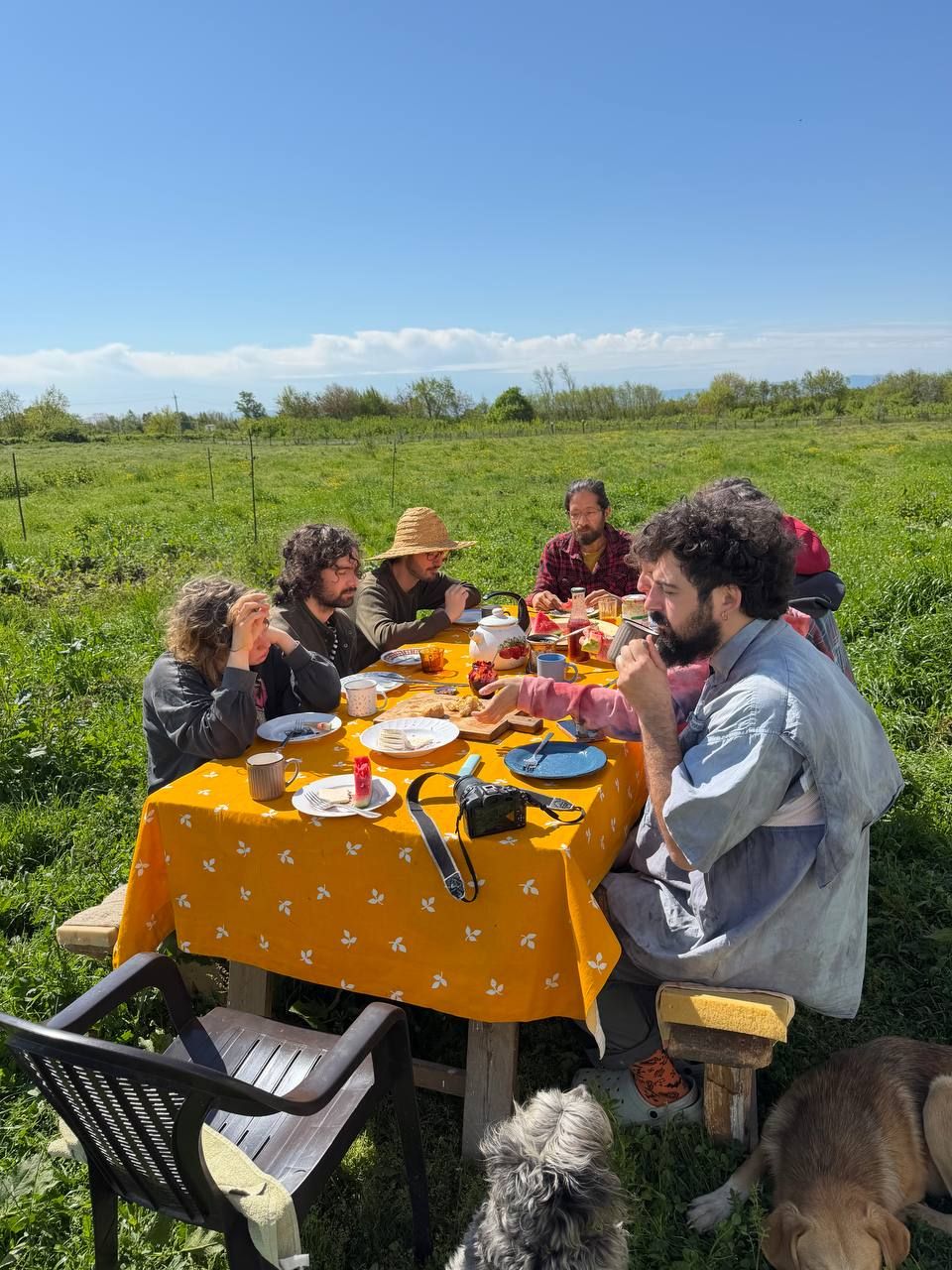
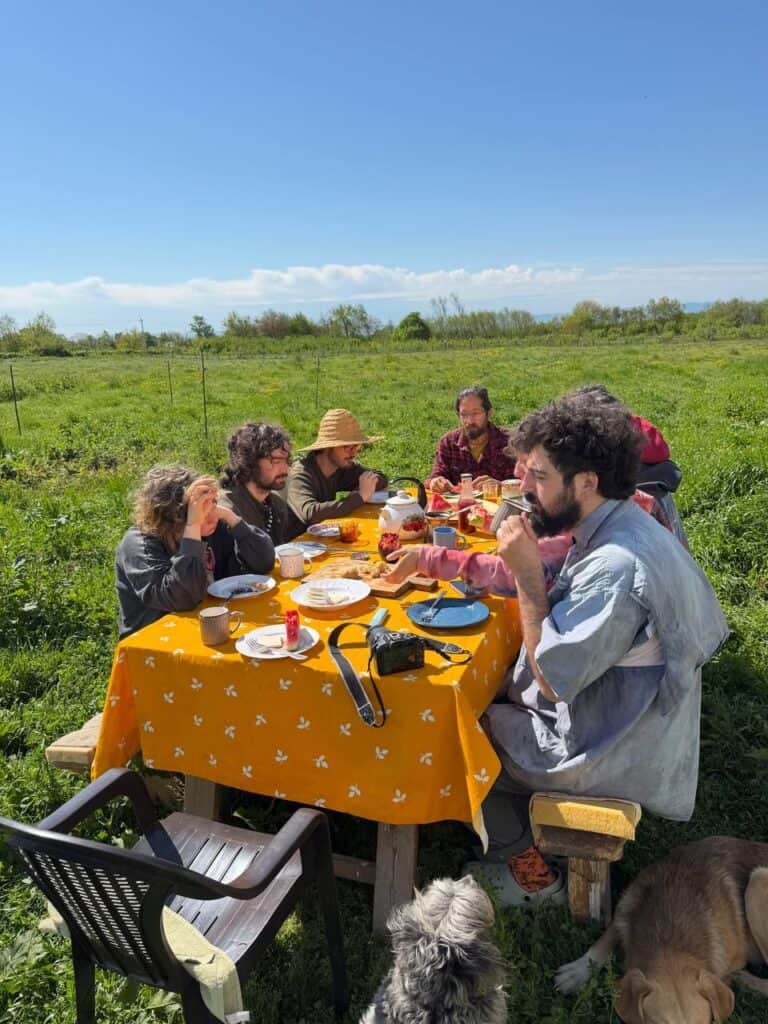
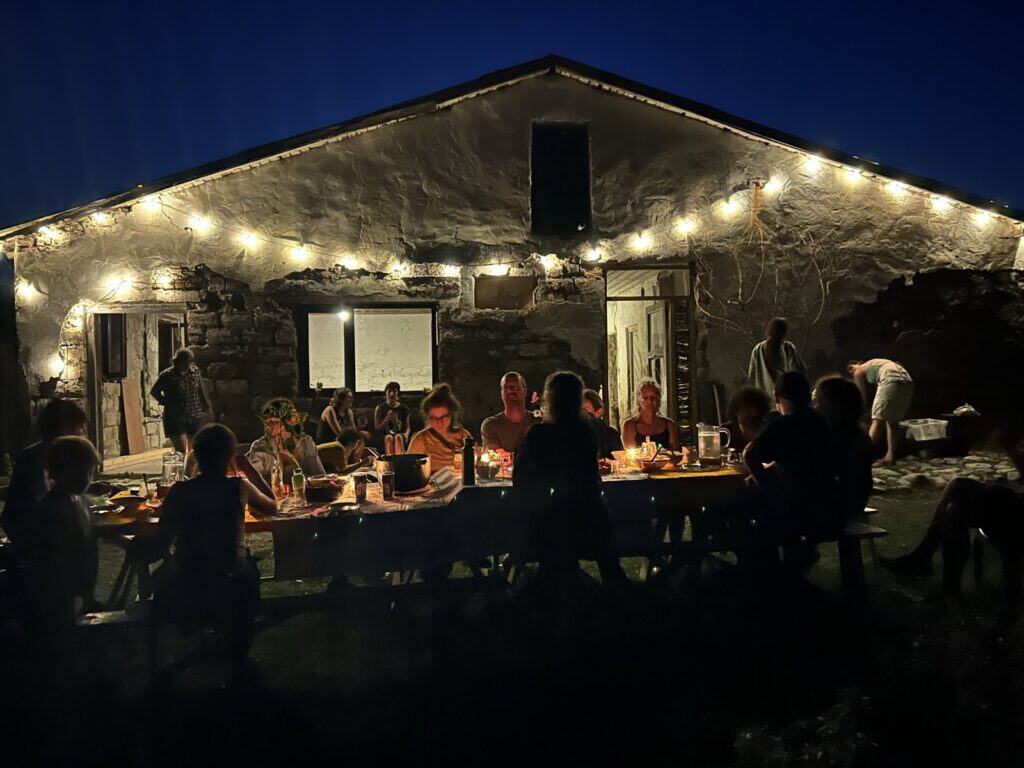
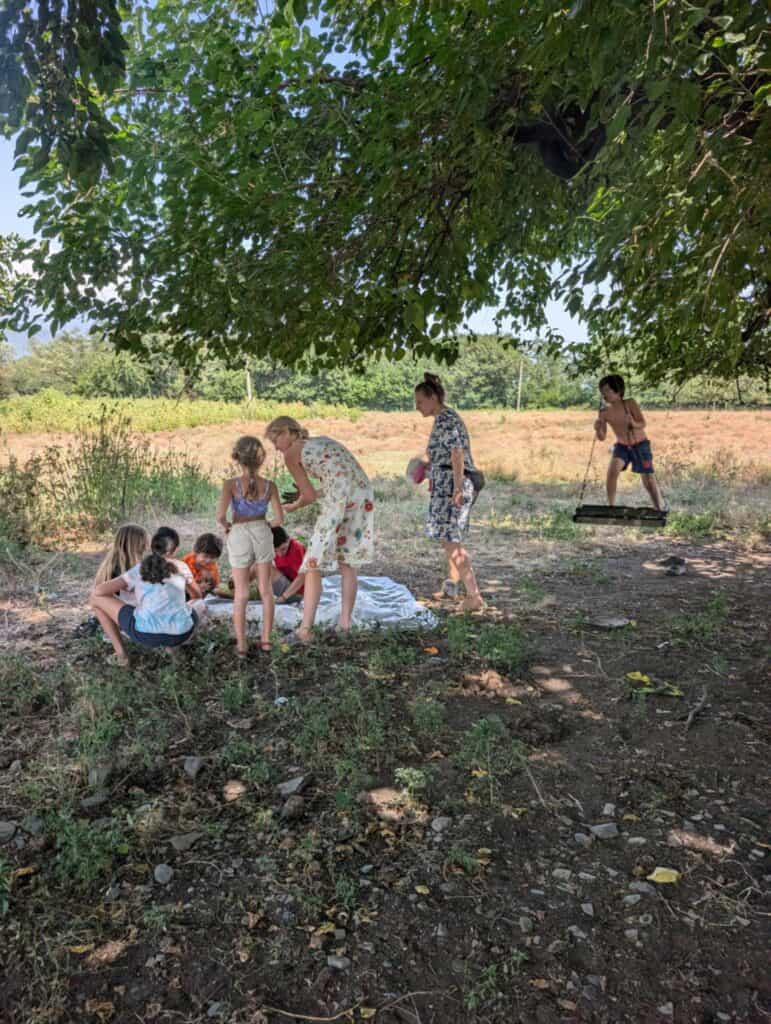
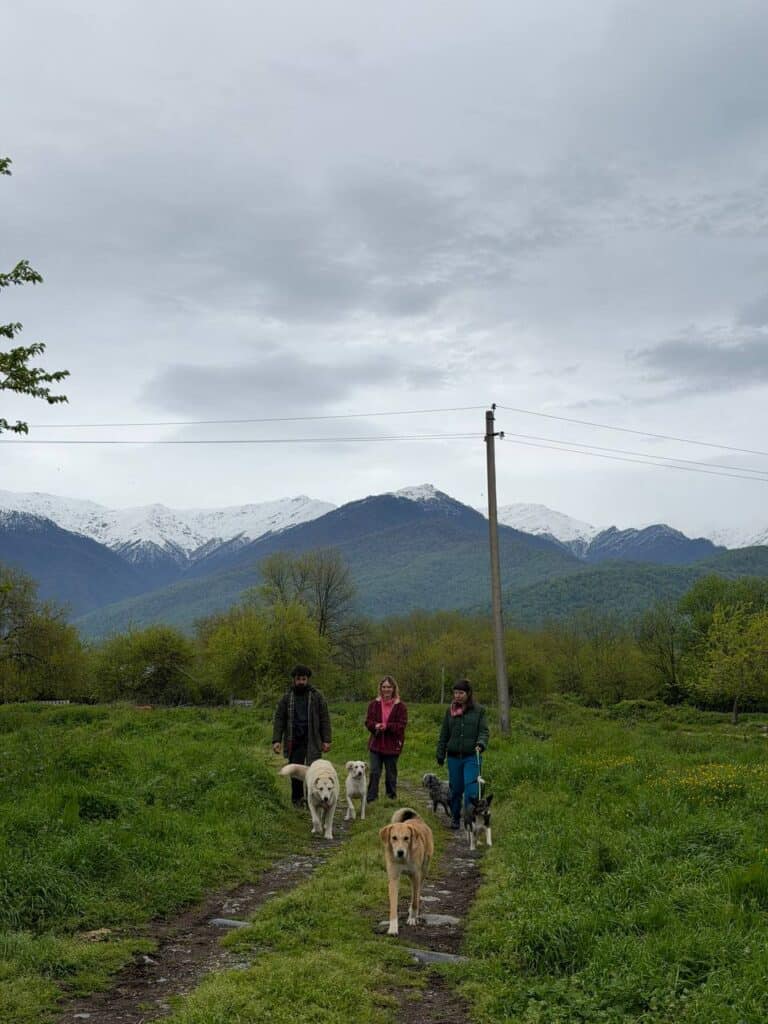
People enjoying outdoor meal at Ecovillage Georgia in a green field.

Ecovillage Georgia

  • Communities

About the Communities

  • Established
  • Ecological
  • Rural

Founding year

  • 2021

What we do

Ecovillage Georgia is an intentional community building a regenerative, ecological and socially just future in rural Georgia.It was initiated by a group of Georgian and international people who share values of trust, cooperation and care, and a desire for a more sustainable, grounded way of life.
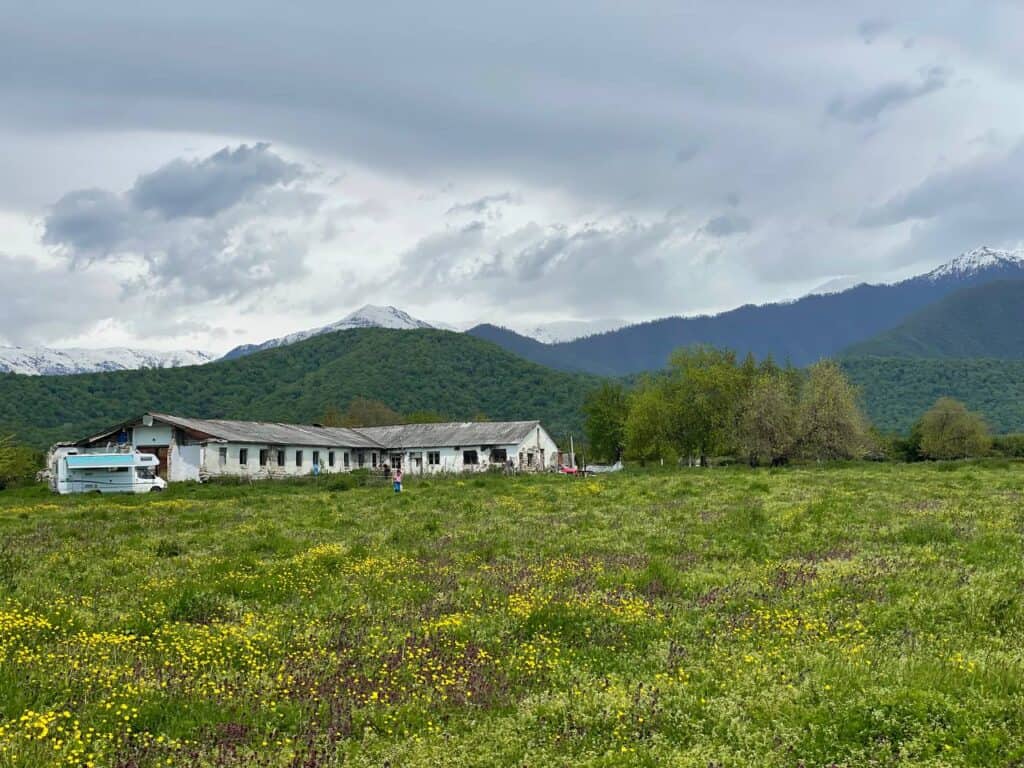
In 2023, we jointly purchased a beautiful 6.5-hectare plot of land in the Lagodekhi municipality of Kakheti, nestled at the foot of the Greater Caucasus mountains. The land offers space for housing, fresh water, fertile soil, trees and stunning views; everything needed to build the ecovillage we envision.
The village features:
– Community Center to connect, learn, organize events, trainings, retreats and host visitors.
– Communal gardens and food forest that will provide a large share of the food for inhabitants and visitors.
Planned:
– residential plots in private ownership where residents can create their own environmental friendly living space
– Co-housing spaces for volunteers, travelers and prospect members
– Artisanal workshops and tool sharing
– Social businesses by (groups of) residents
– A learning center for adults and child led education
Our vision: We are a voluntarily self-organized, non-hierarchical community, thriving in mutual respect and support. We are co-learning and implementing approaches to Regenerative ecology and culture. Being interconnected with the wider community, we desire to create a sustainable society.
Our community is growing, and we are welcoming people who are searching a meaningful way of life and resonate with our vision. It is possible to join as residents, supporters, lenders, advisors or volunteers. We are diverse, and believe that everyone has talents and inspiration to share, and can contribute to shaping and developing the ecovillage. New members join through a process of conversations, meetings, land visits and getting to know each other on different levels.
If this resonates, or if you want to learn more, we’d be happy to hear from you.

Membership & Visitors

  • Current members: 10
  • Open to new members
  • Open to visitors

We are diverse, and believe that everyone has talents and inspiration to share, and can contribute to shaping and developing the ecovillage. New members join through a process of conversations, meetings, land visits and getting to know each other on different levels.
There are several options to join us:
1. As a (Future) resident
With the residential loan of 6000 $, you gain the right to utilize 300 sq.m. of land for your private use. The land is owned by the NGO, granting residents the right to utilize designated portions for building homes or social businesses. Additionally, you will have free access to the remaining 6.5 hectares of land and all other communal facilities (community center, workshops, community garden, etc.) By becoming a resident, you’ll be involved in the decision-making processes.
2. As a friendly loaner
To support the Ecovillage, you can borrow us at least USD 1000 without interest. As a friendly lender, you will become part of our extended community, could become a resident later, attend events, organize your own (non-profit) events, and share in our surplus harvest of hazelnuts, fruits, and vegetables. Most importantly, it means strengthening the foundation for a sustainable and just community.
3. As a volunteer:
We are looking for builders, gardeners, financial and fundraising talents, legal specialists, communication coordinators, landscape planning, green architects, educators and other people who would like to work, learn and live with us.
Please not that as of now (beginning of 2026) we do not yet live on the land, but there is almost always someone present. We stay in tents, and the community center is functional with a kitchen and social room. We have functioning gardens and a food forest. We are open to temporary shelters and permanent housing. See our architectural plan on our website.

Our Mission

The First Intentional Community in South Caucasus

  • Purpose
  • Ecological
  • Community type
  • Cohousing
  • Ecovillage
  • Sustainability practices
  • Regenerative agriculture or permaculture
  • Activities
  • Farming
  • Education
  • Experiences
  • Networking

Commemorative dates

  • January 1, 2021
  • Started planning
  • January 1, 2024
  • Started living together

Video

Gallery

  • 6 Total members
  • Open to new members
  • Open to visitors
Total
16

How to join

You can apply to become a resident at https://ecovillagegeorgia.ge/join-ecovillage-georgia/
or write us an email.

Basic expectations or agreements for members

You can apply as a volunteer at https://ecovillagegeorgia.ge/join-ecovillage-georgia/
Or write us an email.

Primary decision-making authority

  • Small Leadership Group

A few people (not elected by the broader community) make the major decisions.

Decision-making process

  • Consent-Based (Sociocracy)

Decisions proceed unless someone has a reasoned objection.

Governance structure

  • Sociocratic/Circle-Based

Organized in circles or domains with distributed authority.

Economic model

  • Independent Finances

Members maintain separate personal finances with minimal sharing.

Economic scenarios for this community

  • Members need to pay fees, dues, or similar to live there on a per month or per year basis
  • There is a labor obligation
  • Members typically need to have their own job or other personal source of income to cover their expenses while living in the community?

Additional economic information

Regular fees: $15
Labor: Yes (15 hrs/week)
Members with pre-existing debt: allowed
For residents, we require a re-fundable loan of 6000$. It will give you access to a plot to build and all communal areas.
For more information see https://ecovillagegeorgia.ge/join-ecovillage-georgia/

Shared resources and amenities that are accessible to everyone in the community

Garden(s), Greenhouse(s), Vehicle Share, Library, Workshop, Outbuilding(s), Swimming pond or pool, Large Scale Kitchen, Fire pit, Swingsets & play areas

Frequency of communal meals

  • Approximately all meals

Significant food acquisition practices

  • Locally sourced

Community activities and engagement

  • School, Educational Institute or Experience
  • Volunteer, Internship, or Apprenticeship, or WWOOF’ing
  • Organization, Resource, or Network
  • WWOOF'ing, Guest Farming

Substance use culture

  • Substance use appears in public spaces but no pressure
  • Substance use occurs primarily at celebrations or ceremonies

Age demographics

  • Multi-generational (all ages well represented)

Property status

  • Privately owned

Property owner

  • NGO

Setting

  • Rural

Countryside locations with significant distance from urban centers.

Sustainability approach

  • Regenerative agriculture or permaculture

Self-produced energy

  • Up to 33%

Self-produced food

  • 33 - 66%

Local, organic, or fair trade food

  • 33 - 66%

Food systems

  • Community garden
  • Food forest
  • Greenhouse / aquaponics
  • Land area size
    6.5 hectares

Guest Book

Written reviews are available for plus members. Click here to upgrade.

Location

  • Kakheti, Georgia

Ecovillage Georgia

Needs and Offers

Connecting people and communities through an intentional online marketplace

Offer
Need
Need
  • Forming Communities
2 weeks ago

A call for pioneers, trade-builders, and the four Elemental Elders to construct our first cooperative village prototype.

Intake Open: Flagship WE Network Village in Clubb, MO Call for pioneers, trade-builders, and 4 Elemental Elders to construct our first cooperative village prototype. WE Network is opening ground zero in Clubb, Missouri—our living model to build trade shops and train leadership teams for nationwide village rollout. We are building a self-sustaining, salvaged homestead ecosystem operating as a parallel society alongside existing systems. Bring your own living setup (tents, micro-campers, trucks, schoolies, tiny homes) to secure your lot within the co-op village. The 3×3 Exchange: Mental, Physical, & Spiritual Maintain your lot via our 3×3 exchange (3 hours/day, 3 days/week = 9 hours total): Mental: Classroom teaching, strategy, skill-sharing, and village instruction. Physical: Hands-on labor building active land and shop projects. Spiritual: Participation in our weekly Friday Fellowship Fire Circle. Trade Shops & Lot Placement Every member contributes directly to our local micro-economy: Trade Holders: Set up your specific service shop for the co-op. Transitioning Members: Assigned a trade lot to focus on constructing the physical shop structure. Weekend Operations: Retail open Saturdays and Sundays. Mid-week is reserved for building and life. Priority Intake: The Four Elemental Elders We are recruiting four foundational Elders: Earth Elder: Land, soil, livestock, permaculture, and natural materials. Air Elder: Building structures and Eco Junk waste-to-material upcycling. Fire Elder: Spiritual health, Natural Law, body healing, and Fire Circles. Water Elder: Resource flow, food storage, bookkeeping, and services. How to Apply 👉 Visit fffc.wtf to submit your intake request today.
Offer
  • Real Estate For Sale
5 days ago

Co-housing Unit For Sale in Portland Oregon

Light-filled 976 sq ft, 3-bedroom, 1-bath end unit in Columbia Ecovillage, Portland’sestablished cohousing community in the Cully neighborhood. With windows onthree sides, this ground-floor home gets natural light all day, even onPortland’s grey ones. The open living and dining area has warm hardwood floors and flows into akitchen with solid wood cabinets and granite counters. The dining roomwindows look straight into a native vine maple — a wall of green from springthrough fall. There’s good storagein the unit, plus an extra storage space in the community storage building.A ductless mini-split provides efficient heating and air conditioning, andthe plumbing was fully replaced in 2026. The primary bedroom has a full-width closet behind a sliding barn door; thesecond bedroom’s closet sits behind a pair of French doors. The thirdbedroom has no closet, which makes it a flexible room — guest room, office,or playroom. Step out the sliding glass door onto your own covered patio, which opens onto the community grounds: organic gardens, personal garden plots,greenhouses, a grape arbor, a bamboo grove, native plantings throughout, andtrees everywhere — including a truly massive old black walnut. The orchard alone is a reason to live here — to name a few:apples, pears, plums, figs, mulberries, chestnuts, walnuts, grapes,blueberries, raspberries, and blackberries, in several varieties each. A75,000-gallon rainwater catchment system keeps it all watered through thesummer. Kids have a playhouse, sandbox, small soccer field, a favorite climbingtree, and a parking loop where bikes can circle but cars can’t; adults havea workshop, garden shed, fire pit, quiet space and big community porches. The common hall is the heart of the village: a commercial kitchen anyresident can use, a kids’ play area, pool table and ping pong, and asoapstone stove that burns every winter evening. Residents can reserve it forevents for almost nothing. The historic farmhouse has guest rooms owners canbook for visiting family (about 30 nights a year). Shared laundry rooms(three washers and dryers) come with indoor drying racks and outdoorclotheslines, and there’s a craft room and a trade room where things you nolonger need find a new home next door. Potlucks, communitymeals, work parties, and acres of safe space for kids to roam makethis a rare chance to own a home and a neighborhood at the same time. Built in 1973 and fully remodeled in 2008–09 for energy efficiency and healthy indoor air — metal roof, HardiePlank siding, and standard community-built finishes throughout. Nothing to update, nothing deferred. The $522 monthly HOA coverswater, sewer, and garbage, plus the roof, siding, exterior paint, and allstructural maintenance — and it’s what pays for the grounds, the common hall,and everything else described above. And it’s close in: Cully’s cafés andparks are a short walk or bike ride away, the rest of Portland’s food,music, and neighborhoods are minutes beyond that, and the commute downtownor to the airport is easy by car, bus, or bike – 3.7-acre grounds with organic gardens, personal plots, greenhouses, native plantings, and mature trees (huge black walnut)- Orchard: apples, pears, plums, figs, mulberries, chestnuts, walnuts, grapes, blueberries, raspberries, blackberries- 75,000-gallon rainwater catchment feeds the gardens year-round- Workshop, garden shed, fire pit, quiet space, community porches  
Need
  • Forming Communities
3 weeks ago

Looking for: people building relational capacity, with a view to community

What’s here now: An intention, a framework developed over five years, and a programme running in central Victoria to find people to build with. No land, no group, no timeline. The question this is organised around: What makes a community of people living together sustainable over decades – where people enjoy being there, conflict is low, and the conflict that does arise gets handled in ways people value. The distinctive premise is capacity before formation. Most communities form first and build relational skill afterwards, usually under pressure. This one proposes doing it the other way round: people build the capacities first, and the group forms from people who have them. That includes a working idea about collective capacity – that a group has a ratio, and below some threshold it can’t metabolise its own conflict and starts consuming itself. Roughly: in a group of twenty, perhaps three or four with high capacity, most in the middle, and very few without. Untested, and something this project exists to find out. Governance: Sociocracy, with the intention of testing it meaningfully at scale rather than adopting it nominally. What’s actually happening: A three-week residency at a property near Castlemaine, and a practice group running before it. The medium-term aim is twenty to forty people at a rented facility. The long-term aim is a support hub sharing the framework more widely. What I’m looking for: People who want to build this capacity seriously, and who might eventually want to build something together. Not necessarily people who want to live here – the current property probably isn’t the long-term site. Happy to hear from anyone this resonates with, including people already in community who’d rather share what they’ve learned than join anything.
  • Events
3 weeks ago

Restoring Choice - free online practice group, from Australia

Restoring Choice – free sessions and a practice group Many of us are less practised at three things than we realise: making clear requests, saying no when it isn’t a full yes, and hearing no without something getting damaged. These aren’t personality traits. They’re capacities that were trained out of many of us by ordinary structures – families where some needs were allowed and others weren’t, workplaces that reward overstretch. They can be trained back. Why this might interest people here Most communities teach communication after people arrive, once conflict has already surfaced. This works the other way round – building capacity first, and finding out what a group can do when most people already have it. What’s running Free 60-minute introduction, online. Same session each time; come to whichever suits. Register for intro session below: https://events.humanitix.com/reclaim-your-power-with-restoring-choice Four-week practice group, Tuesdays from 15 September, 6:30-8:00pm. One session a week, and at least one short written entry a day about a real situation in your own life. The writing is the actual work; the sessions support it. Sign up by Sunday 13 September. Register for practice group below: https://events.humanitix.com/restoring-choice-practice-group Everything is free. Times are Australian Eastern 6:30pm here is the early hours in most of the Americas. Worth checking before you register. Who it’s for No prior experience needed. It isn’t therapy, and I’m not a therapist. Many people find that looking honestly at how well they ask, decline, or hear a no is less flattering than expected. That’s common, and it isn’t a verdict on anyone. Run by Glenn Russo – 13 years practising this material, seven years co-facilitating an NVC practice group in Castlemaine. If you’re already living in community and would rather share what you’ve learned than join anything, I’d like to hear from you too.

Update to a Public Profile

  • Log in
  • Go to your profile page
  • Toggle on the "Add my profile to the directory"
  • Save your profile

Information

Communities

A residential project: people live here as their primary home.

Organizations

An institution, business, network, or project that isn’t a residence (e.g. a learning center, farm, or network with no one living there full-time).

Plus Community Membership

  • Find people with Profile Match
  • Access to your community listing statistics
  • Create Discussion Groups
  • Access to our affiliate program
  • Member badge on your community profile
I am an official member of this community
Disclaimer
I affirm that my information is accurate and I am authorized to manage this listing
Foundation for Intentional Community FIC Member badge logo.

Free Plan

Free Membership
Free

Intentional Advertising

  • Subtotal

    {{ currencyFormat( pricing_summary.total_amount ) }}

Icon representing community connections and collaboration for intentional communities.

Plus Membership

We’re introducing new Plus features — including community reviews, Profile Match, and unlimited Needs & Offers posts — while keeping most of FIC free for everyone. Membership costs less than two coffees a month. 

  • Find communities with Profile Match
  • View detailed reviews about communities
  • Create free listings in Needs & Offers
  • Plus Member resources in CommUniversity
  • View communities detailed reviews
  • Plus Member badge on your profile
