
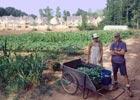
Community members working in a garden at East Lake Commons CoHousing.

East Lake Commons CoHousing

  • Communities

About the Communities

  • Established
  • Ecological
  • Suburban

Founding year

  • 1997

What we do

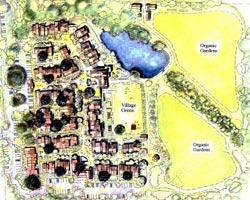
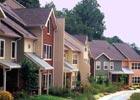
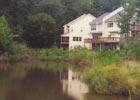
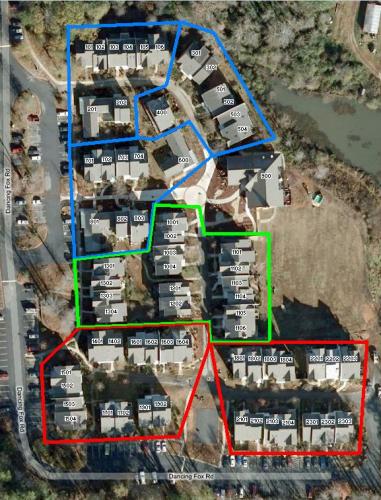
East Lake Commons is a cohousing community located five miles (eight minutes) from downtown Atlanta, and several miles southeast of the Little Five Points neighborhood. Completed in 2001, it includes 67 townhomes with 12 rental apartments attached, a 4500-sq-ft common house with a classroom, office, playroom, media room, woodworking room, workout room, and guest rooms. A playing field and children’s playground surround the common house. About half of the 20-acre site is dedicated to housing and parking on the perimeter; the remainder includes natural woodlands, wildlife corridor, and an organic garden with beehives, blueberry groves, and a spring-fed pond. Homes are clustered around pedestrian courtyards and walkways.
Children can run and play with their friends in a safe and nurturing environment; teenagers have supportive role models; and seniors are actively integrated into the community. We are an intergenerational community with diverse religious, ethnic, cultural, and racial backgrounds, and differently-abled. What binds us together is knowing and caring about our neighbors.
We manage the community ourselves using a consensus-like decision-making process. A backup voting procedure is also in place. Core community values include sustainability, visitability, diversity, affordability, and community. (“Visitability” means each townhome has a zero-step entrance and includes a bedroom and bathroom on the main floor to accommodate those with mobility challenges.)

Our Mission

Organic Garden of just under 5 acres with 1.3 acres of crop space. The farm includes tractor, 2 walk-in coolers, irrigation, implements, 2-wheel walk-behind BCS, greenhouse, 2 high tunnels, wash station and tractor barn. All is leased to a farmer for $1 per year in order to provide a new farmer with experience without the huge capital investment it typically takes to get into farming.

  • Purpose
  • Ecological
  • Community type
  • Cohousing
  • Ecovillage
  • Activities
  • Property management
  • Experiences

Commemorative dates

  • January 1, 1997
  • Started planning
  • January 1, 1999
  • Started living together

Gallery

  • 130 Total members
  • Open to new members
  • Open to visitors
Total
210

How to join

For purchase or rental opportunities see http://www.eastlakecommons.org then click the Sales/Rentals tab. We highly encourage people who are interested in living here to get to know us in advance as every co-ho community is different. Please tour, attend a business meeting and a committee meeting, attend a common meal, and read our Book of Commons. You are invited to spend time here wandering and introducing yourself to whoever walks by.

Basic expectations or agreements for members

We love visitors. Please contact us at https://www.eastlakecommons.org/contact-us and explain your interest and when you would like to visit. Volunteers are often available to answer questions, assist with tours, and to make contacts as needed. Advance notice is appreciated, especially if guest rooms are needed as rooms are reserved on a first come, first served basis. Tours are typically offered the first Saturday of each month; make a reservation through Co*******@*************ns.org. We’d love to show you what we’ve developed over the past several decades and share our experiences with co-housing.

Primary decision-making authority

  • All Community Members Together

The whole membership decides collectively.

Decision-making process

  • Modified Consensus

Generally seek agreement, but have backup methods when consensus isn’t reached.

Governance structure

  • Collaborative/Horizontal

Power and responsibility are shared relatively equally among members.

Conflict resolution approach

Our structure is committee-driven with Board approvals. We use a modified consensus process that includes a back-up vote if consensus cannot be reached after two meetings. We expect all adults to contribute 4 hours of work every month as we are a self-run community.

Economic model

  • Independent Finances

Members maintain separate personal finances with minimal sharing.

Economic scenarios for this community

  • Members need to pay fees, dues, or similar to live there on a per month or per year basis
  • There is a labor obligation
  • Members typically need to have their own job or other personal source of income to cover their expenses while living in the community?

Additional economic information

Regular fees: $300.00
Labor: Encouraged or suggested (1 hrs/week)
Members with pre-existing debt: allowed
We share some common space, occasional meals, some tools, etc.
Each adult is asked to contribute 4 hours per month to community work.
Owners pay monthly HOA dues (currently ranging from $270 to $320/month, depending on unit size) for maintaining common areas, etc.

Shared resources and amenities that are accessible to everyone in the community

Common House, Garden(s), Greenhouse(s), Workshop, Outbuilding(s), Large Scale Kitchen, Fire pit, Swingsets & play areas, Gym or sports area, Internet

Frequency of communal meals

  • 1-3 times per month

Community activities and engagement

  • Neighborhood, Community Housing, or Homeowner's Association
  • Festivals, Conferences, Events

Substance use culture

  • Substance use appears in public spaces but no pressure
  • Substance use occurs primarily at celebrations or ceremonies

Gender composition

  • Majority cis (over 60%)

Age demographics

  • Family-focused (many children and parents)

Property status

  • Privately owned

Property owner

  • By a Land Trust, Home Owners Association, or corporation

Setting

  • Suburban

Residential areas outside city centers but within metropolitan regions.

Community type

  • Cohousing

    Private homes with shared common facilities, designed for neighborly
    interaction while maintaining independence.

  • Ecovillage

    Integrated communities designed around ecological principles with sustainable living practices.

Self-produced energy

  • Up to 33%

Energy sources used

  • Photovoltaic Solar

Self-produced food

  • Up to 33%

Food systems

  • Community garden
  • Greenhouse / aquaponics
  • Land area size
    20 acres

Guest Book

Written reviews are available for plus members. Click here to upgrade.

Location

  • Georgia, United States

East Lake Commons CoHousing

Needs and Offers

Connecting people and communities through an intentional online marketplace

Need
  • Forming Communities
3 weeks ago

Looking for: people building relational capacity, with a view to community

What’s here now: An intention, a framework developed over five years, and a programme running in central Victoria to find people to build with. No land, no group, no timeline. The question this is organised around: What makes a community of people living together sustainable over decades – where people enjoy being there, conflict is low, and the conflict that does arise gets handled in ways people value. The distinctive premise is capacity before formation. Most communities form first and build relational skill afterwards, usually under pressure. This one proposes doing it the other way round: people build the capacities first, and the group forms from people who have them. That includes a working idea about collective capacity – that a group has a ratio, and below some threshold it can’t metabolise its own conflict and starts consuming itself. Roughly: in a group of twenty, perhaps three or four with high capacity, most in the middle, and very few without. Untested, and something this project exists to find out. Governance: Sociocracy, with the intention of testing it meaningfully at scale rather than adopting it nominally. What’s actually happening: A three-week residency at a property near Castlemaine, and a practice group running before it. The medium-term aim is twenty to forty people at a rented facility. The long-term aim is a support hub sharing the framework more widely. What I’m looking for: People who want to build this capacity seriously, and who might eventually want to build something together. Not necessarily people who want to live here – the current property probably isn’t the long-term site. Happy to hear from anyone this resonates with, including people already in community who’d rather share what they’ve learned than join anything.
Offer
  • Real Estate For Sale
4 weeks ago

Unit C-2, Woodard Lane Cohousing — Olympia, WA

Join Olympia’s first and longest-running cohousing community, in a quiet West Side neighborhood 1.6 miles from downtown, backing onto a forested ravine along Schneider Creek. Unit C-2 offers 1,904 SF. Two stories, 4 bedrooms, 2 full bathrooms, and a bonus loft room on the main level. It can be lived in as one spacious family home — or split into two independent living spaces, each with its own kitchen, entrance, and effective soundproofing. Great for multigenerational households, live/work arrangements, or an owner-occupied half with a rented or shared half. Upper level: bedroom, full bath, bonus room with built-in loft bed, and an open kitchen-dining-living area with a deck facing the forest. Lower level: 3 bedrooms, full bath with dual sinks, second full kitchen, laundry room, and a second patio. Features: 2 full kitchens, radiant floor heat, stained concrete floors (bamboo upstairs), double-pane windows, bolted keyed entries at both levels, dedicated laundry, concrete patios facing the ravine, shared parking with 18 EV charging stations.   Ownership includes a Common House with a guest room, full kitchen, gathering space, and kids’ play area; a shared vegetable garden; a wood shop and bike storage; and wooded grounds with a stream path and central Green. Monthly dues are $799, covering all utilities except internet. Established in 2010, Woodard Lane is home to ~40 residents across 18 homes, with shared meals, work parties, and genuine neighborliness. Learn more about Woodard Lane Cohousing  We’re looking for a buyer who wants to participate fully in community life. $630,000. Contact Kate Greene: yo******@***il.com or text: 360-789-7587.
Offer
Need

Update to a Public Profile

  • Log in
  • Go to your profile page
  • Toggle on the "Add my profile to the directory"
  • Save your profile

Information

Communities

A residential project: people live here as their primary home.

Organizations

An institution, business, network, or project that isn’t a residence (e.g. a learning center, farm, or network with no one living there full-time).

Plus Community Membership

  • Find people with Profile Match
  • Access to your community listing statistics
  • Create Discussion Groups
  • Access to our affiliate program
  • Member badge on your community profile
I am an official member of this community
Disclaimer
I affirm that my information is accurate and I am authorized to manage this listing
Foundation for Intentional Community FIC Member badge logo.

Free Plan

Free Membership
Free

Intentional Advertising

  • Subtotal

    {{ currencyFormat( pricing_summary.total_amount ) }}

Icon representing community connections and collaboration for intentional communities.

Plus Membership

We’re introducing new Plus features — including community reviews, Profile Match, and unlimited Needs & Offers posts — while keeping most of FIC free for everyone. Membership costs less than two coffees a month. 

  • Find communities with Profile Match
  • View detailed reviews about communities
  • Create free listings in Needs & Offers
  • Plus Member resources in CommUniversity
  • View communities detailed reviews
  • Plus Member badge on your profile
