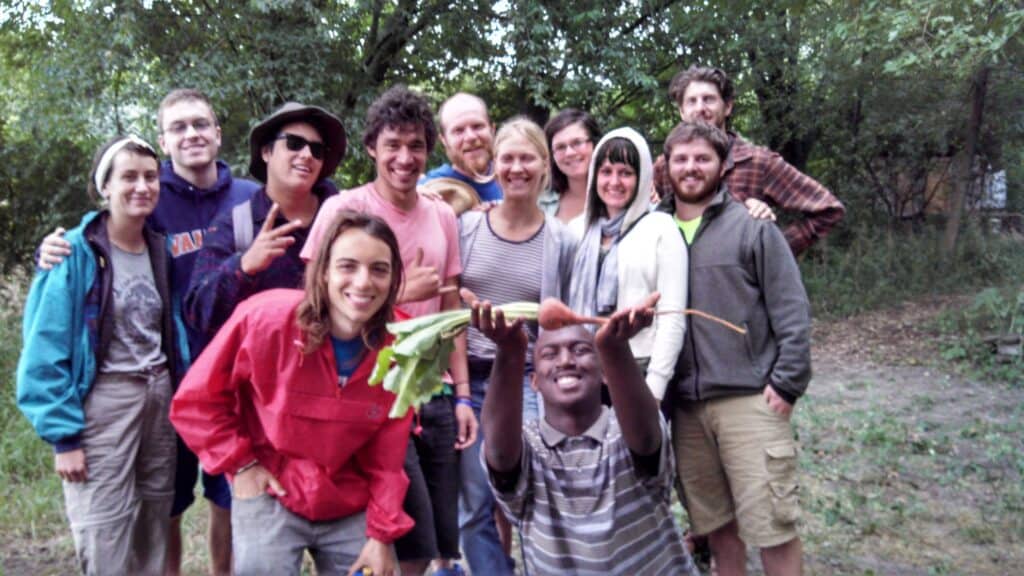
Group of diverse people outdoors at Foundation for Intentional Community event.

White Rose Catholic Worker Farm

  • Communities

About the Communities

  • Established
  • Ecological
  • Rural

Founding year

  • 2008

What we do

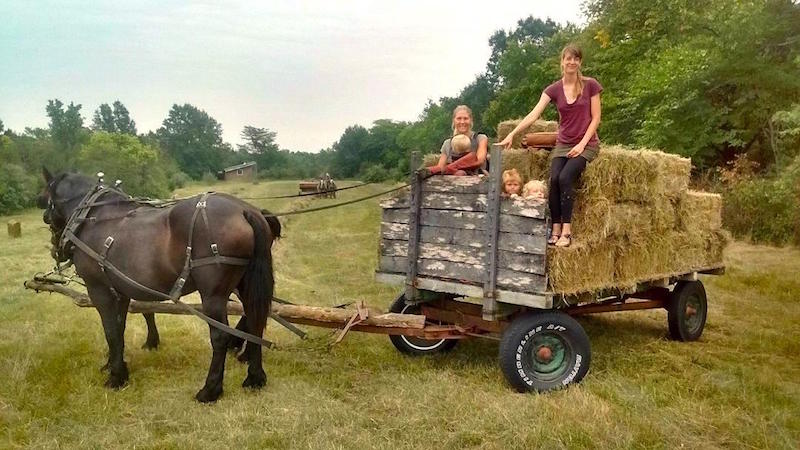
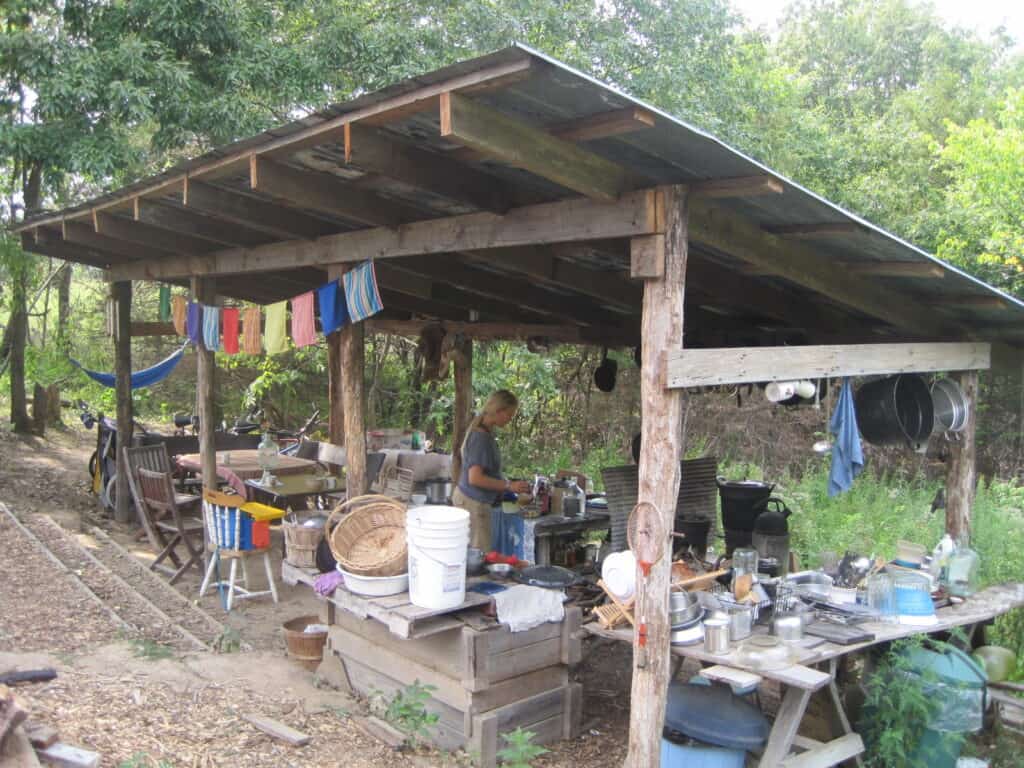
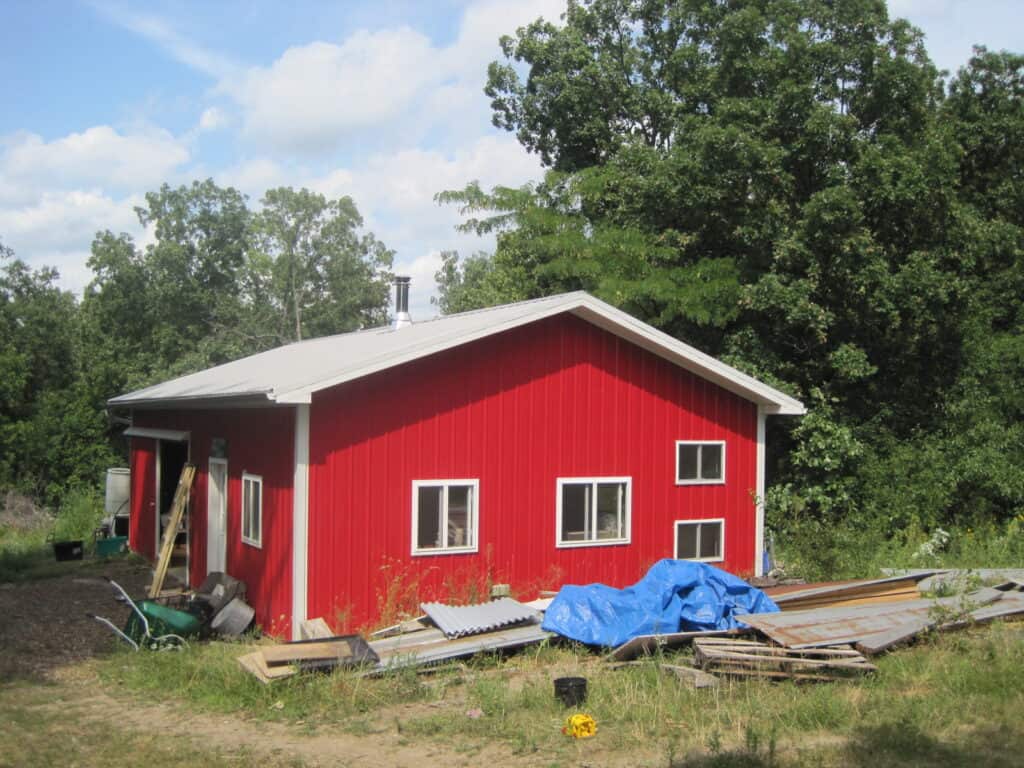
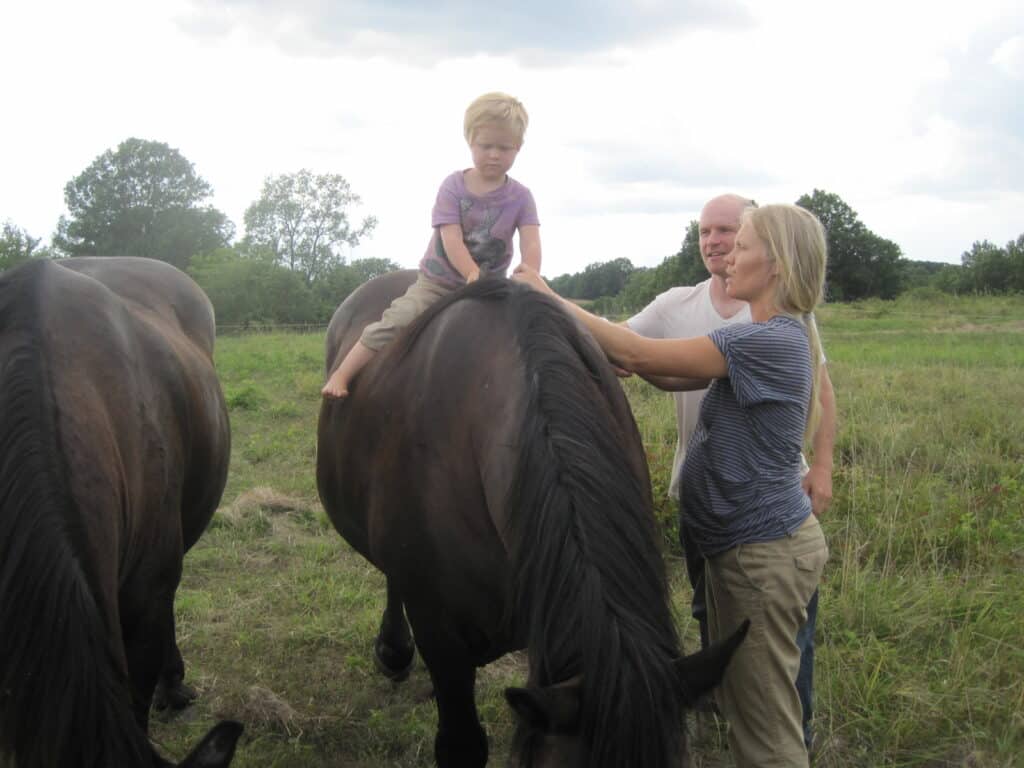
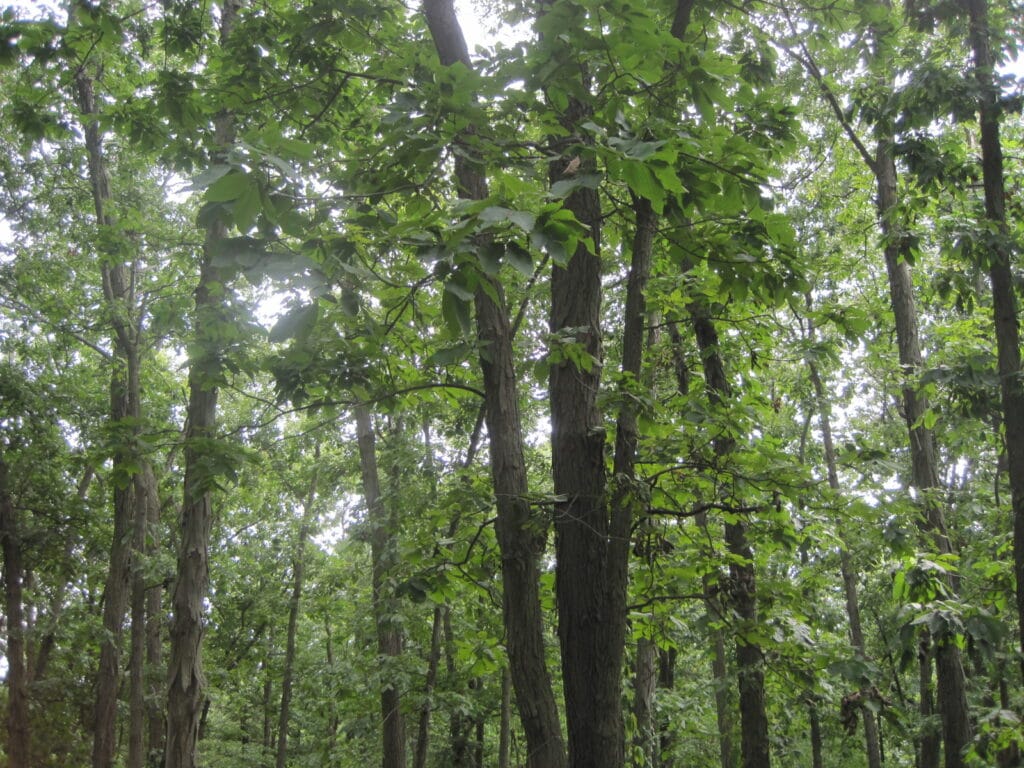
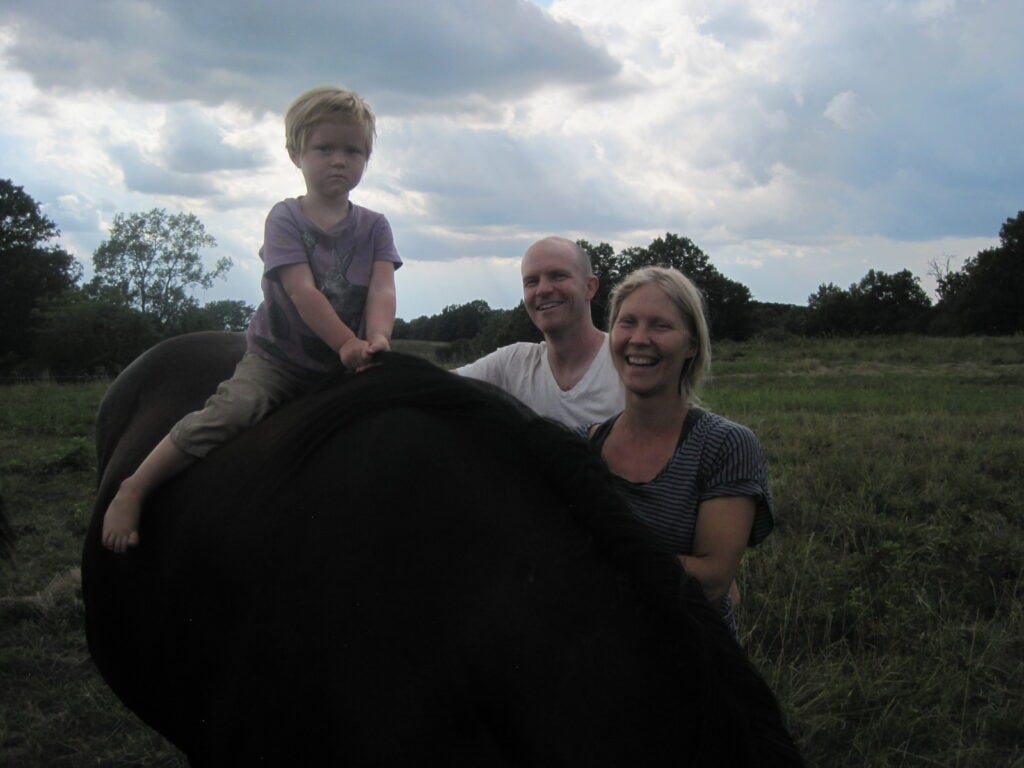
WRCW is committed to faith, hospitality to the homeless, education for social justice, peacemaking/nonviolence, sustainability, and gift economy. Started in 2009 in the Chicagoland area, the WRCW moved to Northeast Missouri in spring of 2014. We are dedicated to integral nonviolence (meaning to self, others, earth, institutions, etc.) including caring for those in need, striving towards electricity & petroleum free living, gift economy, communal living, simplicity, etc. We are part of Bear Creek Community Land Trust, which is a 154 acre off-the-grid community with our immediate neighbors (17 adults and 14 children). At White Rose, we have three residential buildings on the land: a medium-size home, a small 4 season one-room cabin, and a small 3 season cabin. Planning to build more natural buildings to expand our housing options. We also have a barn, horse-powered laundry house, and a large swimming pond.
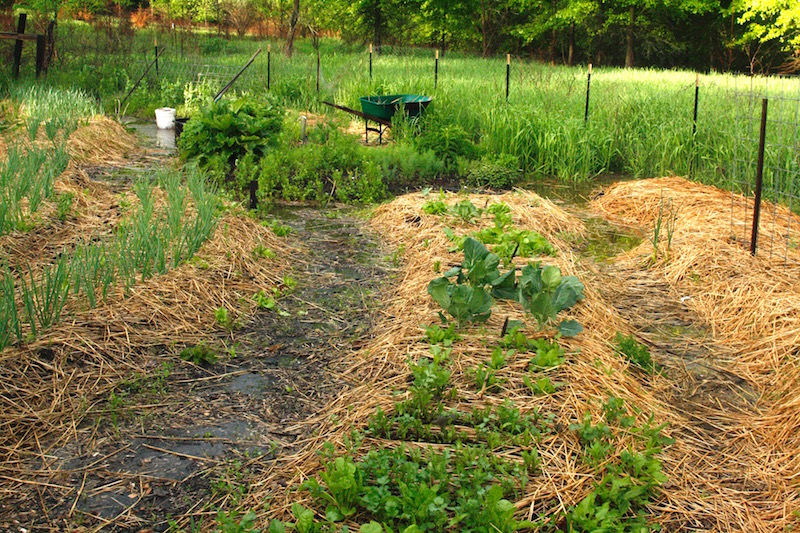
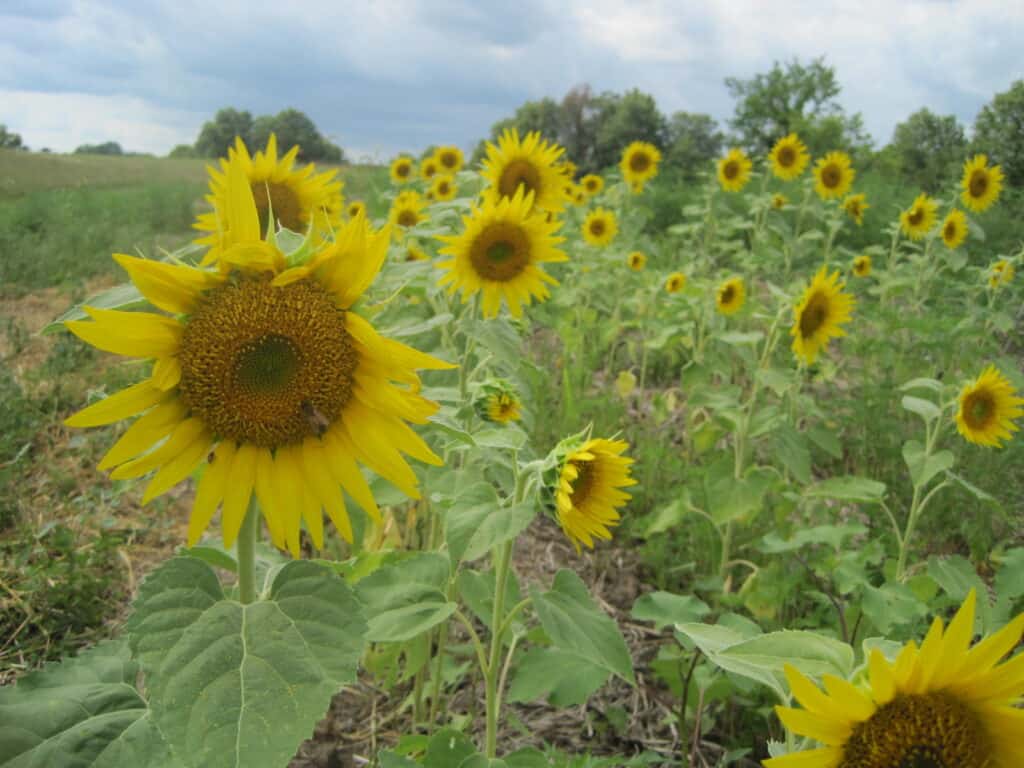
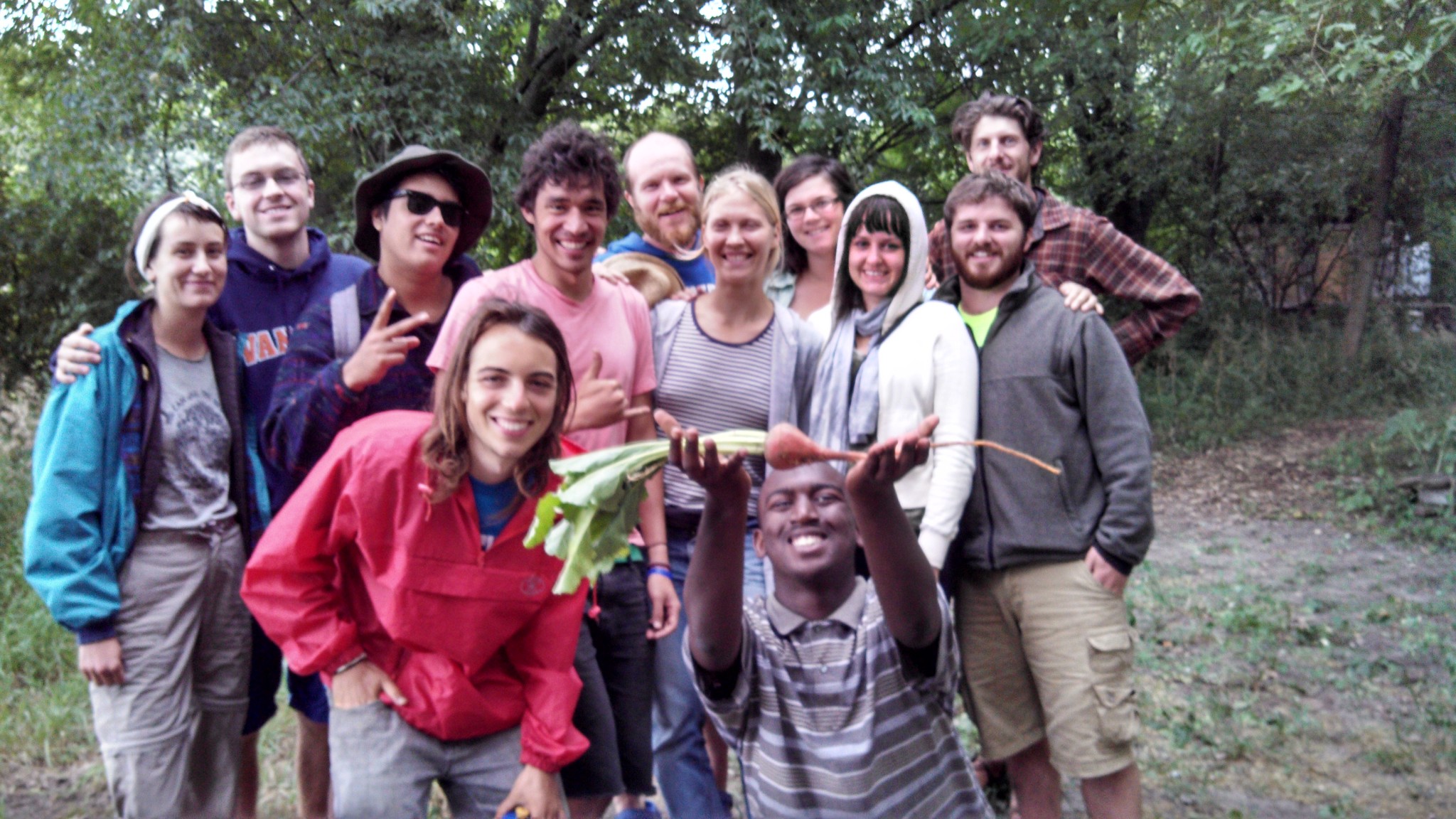
Life on the farm includes home-cooked meals, composting toilets, hosting those in need, growing vegetables, planting trees, continuing permaculture design, chopping wood, hosting college groups, and much more! Off the farm, we are involved in a variety of social justice causes.
There are plenty of additional opportunities on the 154 acres like classes on permaculture, wild edibles, primitive skills, nonviolent communication, canning/preserving vegetables, natural building, etc. Plenty of self entertainment is available on the 154 acres … birthday parties, sports playing, craft nights, swimming, etc. Between White Rose and Bear Creek, we host over 300 visitors a year … so there are plenty of opportunities to meet people from all over the country and the world doing fascinating things.
The nearest town is La Plata, which is 6 miles away and has a public library and an Amtrak station! So it is easy to get to by mass transportation. We have extra bikes available for use. Kirksville is 14 miles away and is a small college town.
The Catholic Worker movement is composed of over 200 communities worldwide of many different faiths (not just Catholic) that are committed to nonviolence, voluntary poverty, prayer, hospitality for the homeless, exiled, hungry, and forsaken, and protest of injustice and violence of all forms. To learn more about the movement, the best book is probably “Loaves & Fishes” by Dorothy Day (co-founder).
Other skills – Our neighbors are often working on a variety of interesting projects like straw bale house building, hand tool repair, canning, spoon carving, fermenting foods, horse care, etc. There could be opportunities to volunteer with some of these projects on occasion.

Our Mission

Following God’s path. Care for the poor, sustainability, justice, nonviolence.

  • Purpose
  • Ecological
  • Community type
  • Ecovillage
  • Commune
  • Spiritual Retreat Centers
  • Sustainability practices
  • Waste reduction / composting
  • Permaculture design
  • Natural / low-impact building
  • Activities
  • Farming
  • Education
  • Experiences
  • Others

Commemorative dates

  • January 1, 2008
  • Started planning
  • January 1, 2009
  • Started living together
  • 4 Total members
  • Open to new members
  • Open to visitors
Total
8

Basic expectations or agreements for members

Rarely ever on email, so please call or write if you are interested in coming. An easy Amtrak train trip from Chicago or KC. Open for short- or long-term visits all year. Open for new or experienced community-goers who are excited about experiencing what it takes to get a farm off the ground. We love teaching and learning! Tent camping available. Indoor space is usually available as well. We’d love to answer any questions and work out the details of a visit! Also someone who likes playing with kids is a plus!

Decision-making process

  • Full Consensus

Everyone must agree before moving forward.

Governance structure

  • Collaborative/Horizontal

Power and responsibility are shared relatively equally among members.

Economic model

  • Complete Income-Sharing

All member income goes into common pool for community use.

Economic scenarios for this community

  • There is a labor obligation

Additional economic information

Labor: Yes

Frequency of communal meals

  • Approximately all meals

Community activities and engagement

  • Transition Town (post-petroleum and off-grid communities.)
  • School, Educational Institute or Experience
  • Volunteer, Internship, or Apprenticeship, or WWOOF’ing
  • WWOOF'ing, Guest Farming
  • Festivals, Conferences, Events

Substance use culture

  • Substance use occurs primarily at celebrations or ceremonies

Age demographics

  • Multi-generational (all ages well represented)

Property status

  • Privately owned

Setting

  • Rural

Countryside locations with significant distance from urban centers.

Community type

  • Ecovillage

    Integrated communities designed around ecological principles with sustainable living practices.

  • Commune

    Communal living with shared resources, property, and often income or work responsibilities

  • Spiritual Retreat Centers

    Residential communities focused on providing space for meditation, spiritual practice, and personal growth retreats.

Community type

  • Partially built or remodeled with recycled or environmentally friendly materials, and/or using natural building methods

Sustainability approach

  • Waste reduction / composting
  • Permaculture design
  • Natural / low-impact building

Land practices in our community

  • The community practices permaculture

Community type

  • Partially built or remodeled with recycled or environmentally friendly materials, and/or using natural building methods

Some or all of the buildings are...

  • Partially built or remodeled with recycled or environmentally friendly materials, and/or using natural building methods

Self-produced food

  • 33 - 66%

Local, organic, or fair trade food

  • Over 66%

Water conservation practices

  • Composting toilets

Waste management practices

  • Composting
  • Land area size
    30 acres

Guest Book

Written reviews are available for plus members. Click here to upgrade.

Location

  • Missouri, United States

White Rose Catholic Worker Farm

Needs and Offers

Connecting people and communities through an intentional online marketplace

Offer
  • Events
1 day ago

Coastal Regeneration Immersion: Permaculture Design Certification in Jalisco, Mexico

Tropical Dry Forest Permaculture Design & Regenerative Stewardship Certification (PDC)12-Day Intensive | 120 Hours | Costalegre, Jalisco, Mexico Join us for an immersive Permaculture Design Certificate course set in the tropical dry forest bioregion of coastal Jalisco. This 120-hour intensive blends internationally recognized PDC curriculum with hands-on regenerative practice — combining ecological design, agroforestry, natural building, and community stewardship into one integrated learning experience. Lead Faculty Jorge Luis Gtz. Olarte (Arborescencia RedGenerativa) – Regenerative Design, Soil Biology & Agroforestry Ozzy Lusth (Survior & Xochiraíz) – Wilderness Resilience & Survival Skills Dave Collins (Capacha Coastal Conservation Center) – Bioarchitecture & Ecological Development What You’ll LearnThe course moves through six progressive phases: Permaculture & Ecological Literacy – ethics, principles, and reading the tropical dry forest landscape Water & Soil Systems – keyline design, water harvesting, living soils, and compost systems Horticulture – food garden design, propagation, and biological pest control Regenerative Food Systems – tropical agroforestry, food forest design, and guild planting Ecological Infrastructure – bamboo bioarchitecture, bioclimatic farm design, compost toilets, greywater, and rocket stoves Integrated Design Studio – team-based final design projects covering watershed strategy, agroforestry, food forest layout, infrastructure, and phased implementation Daily RhythmMornings begin with optional surf/yoga and journaling, followed by field practicums and hands-on workshops. Afternoons include design studio and construction lab work, with reflection circles, communal dinners, and evening talks, films, or campfire discussions rounding out the day. Final ProjectParticipants work in teams to produce a full regenerative design package — landscape analysis, water plan, agroforestry design, food forest plan, ecological infrastructure, and bioclimatic farm plan — presented to a faculty review panel on the final day, followed by a closing ceremony, certificate delivery, and community feast. CertificationGraduates receive the Tropical Dry Forest Permaculture Design & Regenerative Stewardship Certification (120 contact hours), hosted by Capacha Coastal Conservation Center and Tierralegre, A.C. Curriculum integrates international PDC standards with tropical ecology, agroforestry, ecological restoration, bamboo bioarchitecture, bioclimatic design, GIS/photogrammetry, and regenerative leadership. Highlights Hands-on bamboo construction (temazcal, bathhouses, sculpture) Tropical dry forest silviculture practicum Community mapping and design project for Ekoa Green Community Talent show and sea turtle release
November 13, 2026 09:00 – November 25, 2026 16:00
Offer
  • Forming Communities
1 month ago

Cohousing ABQ: Life is better together. We're moving in during 2026. Last homes available!

We’ve broken ground on a multigenerational cohousing community along the Rio Grande River in Albuquerque, NM! Our community features 25 beautiful, energy-efficient homes clustered around a shared open space, with a fully equipped common house and a range of community amenities. A few last homes are still available — please refer to our website for up-to-date availability. These homes will be move-in ready in the summer/fall of 2026. Or you might be interested in our Wait Pool for unit sizes no longer available. Click here to watch a video of our cohousing community: https://cohousingabq.org/video Our land is on a quiet road with lots of families and kids. The neighborhood’s agricultural roots give it a rural feel, but the center of town is just a 3-minute drive away. Our community plans include play areas for kids, a shared farming area, a year-round greenhouse, an orchard, a workshop and electric vehicle charging. We are diverse in age, background and identity, representing a mix of families with children, couples and singles. We range in age from 2 to 82, and there are 13 kids in our community so far. We have created a fun, caring culture among our group, regularly getting together for meals, camping trips and play dates by the river, in addition to collaborating on our community plans and supporting one another through life’s ups and downs. In Albuquerque, there’s lots to keep us busy, from museums and galleries to nationally recognized wineries and breweries. With 310 sunny days per year, you can often find us outside—hiking, biking or skiing, or exploring the mountains, parks and historic sites all around the region. The Rio Grande that flows through the city center is a playground for kayakers, and miles of walking and cycling trails wind through its wooded banks. Reach out to us or join an upcoming Meet & Greet to learn more about becoming a part of our community! Email: neig
Offer
  • Real Estate For Sale
4 days ago

Co-housing Unit For Sale in Portland Oregon

Light-filled 976 sq ft, 3-bedroom, 1-bath end unit in Columbia Ecovillage, Portland’sestablished cohousing community in the Cully neighborhood. With windows onthree sides, this ground-floor home gets natural light all day, even onPortland’s grey ones. The open living and dining area has warm hardwood floors and flows into akitchen with solid wood cabinets and granite counters. The dining roomwindows look straight into a native vine maple — a wall of green from springthrough fall. There’s good storagein the unit, plus an extra storage space in the community storage building.A ductless mini-split provides efficient heating and air conditioning, andthe plumbing was fully replaced in 2026. The primary bedroom has a full-width closet behind a sliding barn door; thesecond bedroom’s closet sits behind a pair of French doors. The thirdbedroom has no closet, which makes it a flexible room — guest room, office,or playroom. Step out the sliding glass door onto your own covered patio, which opens onto the community grounds: organic gardens, personal garden plots,greenhouses, a grape arbor, a bamboo grove, native plantings throughout, andtrees everywhere — including a truly massive old black walnut. The orchard alone is a reason to live here — to name a few:apples, pears, plums, figs, mulberries, chestnuts, walnuts, grapes,blueberries, raspberries, and blackberries, in several varieties each. A75,000-gallon rainwater catchment system keeps it all watered through thesummer. Kids have a playhouse, sandbox, small soccer field, a favorite climbingtree, and a parking loop where bikes can circle but cars can’t; adults havea workshop, garden shed, fire pit, quiet space and big community porches. The common hall is the heart of the village: a commercial kitchen anyresident can use, a kids’ play area, pool table and ping pong, and asoapstone stove that burns every winter evening. Residents can reserve it forevents for almost nothing. The historic farmhouse has guest rooms owners canbook for visiting family (about 30 nights a year). Shared laundry rooms(three washers and dryers) come with indoor drying racks and outdoorclotheslines, and there’s a craft room and a trade room where things you nolonger need find a new home next door. Potlucks, communitymeals, work parties, and acres of safe space for kids to roam makethis a rare chance to own a home and a neighborhood at the same time. Built in 1973 and fully remodeled in 2008–09 for energy efficiency and healthy indoor air — metal roof, HardiePlank siding, and standard community-built finishes throughout. Nothing to update, nothing deferred. The $522 monthly HOA coverswater, sewer, and garbage, plus the roof, siding, exterior paint, and allstructural maintenance — and it’s what pays for the grounds, the common hall,and everything else described above. And it’s close in: Cully’s cafés andparks are a short walk or bike ride away, the rest of Portland’s food,music, and neighborhoods are minutes beyond that, and the commute downtownor to the airport is easy by car, bus, or bike – 3.7-acre grounds with organic gardens, personal plots, greenhouses, native plantings, and mature trees (huge black walnut)- Orchard: apples, pears, plums, figs, mulberries, chestnuts, walnuts, grapes, blueberries, raspberries, blackberries- 75,000-gallon rainwater catchment feeds the gardens year-round- Workshop, garden shed, fire pit, quiet space, community porches  
Offer
  • Real Estate For Sale
3 weeks ago

Unit C-2, Woodard Lane Cohousing — Olympia, WA

Join Olympia’s first and longest-running cohousing community, in a quiet West Side neighborhood 1.6 miles from downtown, backing onto a forested ravine along Schneider Creek. Unit C-2 offers 1,904 SF. Two stories, 4 bedrooms, 2 full bathrooms, and a bonus loft room on the main level. It can be lived in as one spacious family home — or split into two independent living spaces, each with its own kitchen, entrance, and effective soundproofing. Great for multigenerational households, live/work arrangements, or an owner-occupied half with a rented or shared half. Upper level: bedroom, full bath, bonus room with built-in loft bed, and an open kitchen-dining-living area with a deck facing the forest. Lower level: 3 bedrooms, full bath with dual sinks, second full kitchen, laundry room, and a second patio. Features: 2 full kitchens, radiant floor heat, stained concrete floors (bamboo upstairs), double-pane windows, bolted keyed entries at both levels, dedicated laundry, concrete patios facing the ravine, shared parking with 18 EV charging stations.   Ownership includes a Common House with a guest room, full kitchen, gathering space, and kids’ play area; a shared vegetable garden; a wood shop and bike storage; and wooded grounds with a stream path and central Green. Monthly dues are $799, covering all utilities except internet. Established in 2010, Woodard Lane is home to ~40 residents across 18 homes, with shared meals, work parties, and genuine neighborliness. Learn more about Woodard Lane Cohousing  We’re looking for a buyer who wants to participate fully in community life. $630,000. Contact Kate Greene: yo******@***il.com or text: 360-789-7587.

Update to a Public Profile

  • Log in
  • Go to your profile page
  • Toggle on the "Add my profile to the directory"
  • Save your profile

Information

Communities

A residential project: people live here as their primary home.

Organizations

An institution, business, network, or project that isn’t a residence (e.g. a learning center, farm, or network with no one living there full-time).

Plus Community Membership

  • Find people with Profile Match
  • Access to your community listing statistics
  • Create Discussion Groups
  • Access to our affiliate program
  • Member badge on your community profile
I am an official member of this community
Disclaimer
I affirm that my information is accurate and I am authorized to manage this listing
Foundation for Intentional Community FIC Member badge logo.

Free Plan

Free Membership
Free

Intentional Advertising

  • Subtotal

    {{ currencyFormat( pricing_summary.total_amount ) }}

Icon representing community connections and collaboration for intentional communities.

Plus Membership

We’re introducing new Plus features — including community reviews, Profile Match, and unlimited Needs & Offers posts — while keeping most of FIC free for everyone. Membership costs less than two coffees a month. 

  • Find communities with Profile Match
  • View detailed reviews about communities
  • Create free listings in Needs & Offers
  • Plus Member resources in CommUniversity
  • View communities detailed reviews
  • Plus Member badge on your profile