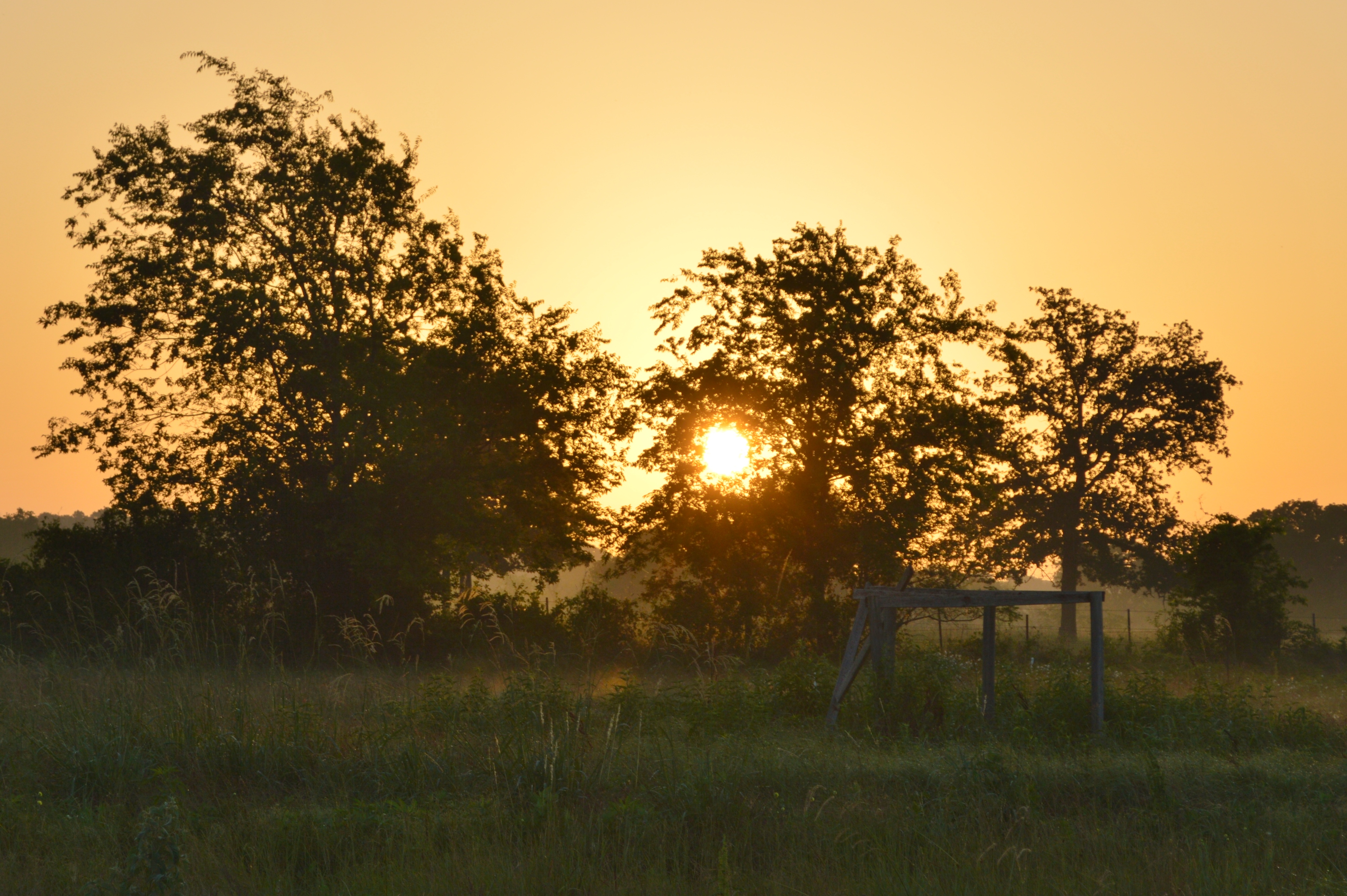
Sunset behind trees in a peaceful rural setting with a wooden structure.

The Rose Colored Forest

  • Communities

About the Communities

  • Forming
  • English
  • Ecological
  • Rural

Founding year

  • 2020

What we do

A small farm, doing the minimum farming to keep us ag exempt.  We are semi-retired and wanting to stay on the land.  We are looking for wanna be farmers or homesteaders.  We are fragrance free, I am allergic to the man made world.  Currently we are replacing the fencing with dog proof fencing, year 3 of a 5 year plan on the 20 acres we own.  Barbed wire will remain on the 40 acres we lease.   This year will see the finished installation of a 23000 gallon water catchment with solar pump for the farm.  

Our Vision

Community means helping each other, a complete win/win, no losers.  Healthy food, no toxic chemicals of any sort allowed, especially fragrances.  We care about the planet and do it no harm.  Everything living here is happy, happy critters and humans.  Mostly off grid, a large solar system that operates the farm.  We have a large barn for food processing and for the community to gather, when we are finished with the rebuild.

Our Mission

We are working towards the land feeding every living thing that lives here.  We don’t like using the feed store, it is too expensive.  We are closing the loops and working carefully with nature to provide more natural diets for our critters.  I am well known in the regenerative ag world and have my permaculture design certificate.  But we are going beyond these, we are closing the loop.  Nothing is wasted, everything finds a use.  

  • Purpose
  • Ecological
  • Economical
  • Languages
  • English
  • Community type
  • Ecovillage
  • Sustainability practices
  • Ecosystem restoration
  • Renewable energy systems
  • Water conservation and management
  • Waste reduction / composting
  • Regenerative agriculture or permaculture
  • Permaculture design
  • Natural / low-impact building
  • Ecosystem
  • Grassland/Savanna

Commemorative dates

  • January 1, 2020
  • Started planning
  • January 1, 2022
  • Started living together
  • 3 Total members
  • Open to new members
  • Open to visitors
  • Open to volunteers
Total
3

How to join

Discussion to make sure we are all a good fit, short in person or on line video visits, then a three month trial.

Basic expectations or agreements for members

Send us an email, show up for a work day, come for a visit. Lets talk.

Primary decision-making authority

  • Single Leader or Founding Couple

One person or partnership has ultimate authority.

Decision-making process

  • Modified Consensus

Generally seek agreement, but have backup methods when consensus isn’t reached.

Governance structure

  • Collaborative/Horizontal

Power and responsibility are shared relatively equally among members.

Conflict resolution approach

For now, as the owners, we are in control. But this can change as the community grows. The only firm rules have to do with chemical sensitivities, most other stuff can be negotiated.

Economic model

  • Cooperative Business

Community operates shared enterprises that provide income.

Economic scenarios for this community

  • There is a labor obligation

Additional economic information

Labor: Yes (12 hrs/week)
At present there is no income, so that would need to be created before it can be shared. If you have debt, you must have the income to pay it without depending on the farm. I am not sure about the job market here. Our current laborer can not find a job, locally. He wants weekends off as he has a 9 year old son he spends most weekends with.
We have a huge variety of things that could bring in some money that could be set up in a very short time period, 2-3 months. We have no desire to make money off anyone.

Vehicle accessibility

  • Most / all people own their own vehicles

Shared resources and amenities that are accessible to everyone in the community

Common House, Garden(s), Greenhouse(s), Library, Workshop, Outbuilding(s), Large Scale Kitchen, Tractor & Farm Equipment, Fire pit

Frequency of communal meals

  • About once a week

Significant food acquisition practices

  • Locally sourced
  • Livestock / Animal Husbandry

Nature of social activity

  • The community is pretty quiet

Educational and retreat offerings

We will be inviting people to help us build the new chicken coop, it will be a wattle and daub building with a lime plaster.

Local connectedness

  • We try to engage with our local community

Friendliness of people and local government

  • It’s a mix

Pet policy

  • Pets are allowed, with special approval or according to policy

We have a pair of cats that live here, no other animals is allowed to bother them.  Dogs must prove they will behave around the farm critters that live here.  Also, pets that are already here have priority, so if you pet can’t get along with them, it will be a problem.

Substance use culture

  • Substance use occurs primarily at celebrations or ceremonies

Practiced relationship models

  • Monogamy
  • Celibacy
  • Others

DEI and anti-oppression training

  • No

Level of LGBTQIA+ inclusion

  • Somewhat - we have some LGBTQIA+ members

Gender composition

  • Majority cis (over 60%)

Age demographics

  • Mixed adults (few or no children)

Racial / ethnic demographics

  • Some diversity (2-3 different backgrounds)

Socioeconomic and wealth composition

  • Mostly working class / lower income

Diversity representation

  • Physical / mobility limitations
  • Neurodiverse (ex. autism, ADHD, sensory processing etc.)

Property status

  • Privately owned

Property owner

  • By a single individual, couple, or Family Trust

Ecosystem

  • Grassland/Savanna

Open landscapes with predominantly grass vegetation
Subtypes include tropical, temperate, and desert grasslands
Examples: African Savannas, North American Prairies

Setting

  • Rural

Countryside locations with significant distance from urban centers.

Community type

  • Ecovillage

    Integrated communities designed around ecological principles with sustainable living practices.

Community type

  • Partially built or remodeled with recycled or environmentally friendly materials, and/or using natural building methods
  • Super-insulated to reduce energy usage

Sustainability approach

  • Ecosystem restoration
  • Renewable energy systems
  • Water conservation and management
  • Waste reduction / composting
  • Regenerative agriculture or permaculture
  • Permaculture design
  • Natural / low-impact building

Land practices in our community

  • The community practices permaculture
  • The community is working to remove invasive plants and grow only indigenous plants
  • The community is working to build soil using only natural methods
  • The community is working to restore natural habitat

Community type

  • Partially built or remodeled with recycled or environmentally friendly materials, and/or using natural building methods
  • Super-insulated to reduce energy usage

Some or all of the buildings are...

  • Partially built or remodeled with recycled or environmentally friendly materials, and/or using natural building methods
  • Super-insulated to reduce energy usage

Energy sources used

  • Wind
  • Photovoltaic Solar

Self-produced food

  • 33 - 66%

Food production methods

Currently we have dairy cows, beef cows and extensive gardens.  We are working slowly to expand this, but we need help to get there.  

Local, organic, or fair trade food

  • Up to 33%

Food purchase methods

Local farmer’s market every Saturday.  

Food systems

  • Community garden
  • Greenhouse / aquaponics
  • Livestock / poultry

Renewable water use

  • Up to 33%

Water recycle methods

Greywater to water various trees

Source of water

  • Well water
  • Rainwater capture and storage for use (barrels, cisterns, etc.)

Wastewater management

  • Septic system
  • Constructed wetland

Water conservation practices

  • Greywater reuse
  • Rainwater capture
  • Composting toilets

Waste management practices

  • Composting
  • Recycling program
  • Reuse or repair systems
  • Land area size
    60 acres
  • Land allocated for food production
    55 acres
  • Land used for biodiversity enhancement
    5 acres
  • Land used for tree planting
    1 acre at a time.

Guest Book

Written reviews are available for plus members. Click here to upgrade.

Location

  • Texas, United States

The Rose Colored Forest

Needs and Offers

Connecting people and communities through an intentional online marketplace

  • Promoted
Offer
  • Real Estate For Sale
2 weeks ago

Beautiful 3+ Bed, 2.5 Bath Townhome in Established West Emerald CoHousing, Seattle

A rare home is available at West Emerald Cohousing, an established all-ages intentional community in West Seattle. For those considering a move to the Pacific Northwest—or hoping to join a mature community rather than one still in the forming stages—West Emerald offers decades of community life, beautiful gardens, shared resources and a peaceful setting within the city in a convenient location since 1999. This unit has a unique floor plan that is ideal for co-buying, co-living, or for one household. The home itself offers a flexible 3+ bedroom, 2.5 bath layout: Garden-level room with a separate exterior entrance and half bath—ideal for a home office, studio, guest space or client-facing business Main-level bedroom and full bath, laundry, making one-level living possible Open great room with large windows overlooking gardens filled with birdsong Well-designed kitchen with generous storage and pantry Two additional light-filled spacious bedrooms and a full bath upstairs Thoughtfully maintained and updated Located at the end of a common pathway for added privacy and garden views, Just feet from parking, which is out of view West Emerald community amenities include: Common House with gathering and activity spaces Community meals and events Mature gardens and shared outdoor spaces Workshop/maker spaces and bike barn Exercise room EV charging opportunity Excellent Metro access to Downtown Seattle just minutes away Nestled into a dell, it’s Seattle’s best-kept secret South Seattle College and lifelong learning, NW Wine Academy, the Seattle Chinese Garden are nearby, with easy access to Alki Beach, Lincoln Park, magnet schools, ferries, and the shops and restaurants of the West Seattle Junction. 6000 17th Ave SW, Seattle, WA Is a wonderful opportunity to have your own comfortable, private home while becoming part of a vibrant and well-established Seattle all-ages cohousing community. For more information contact the friendly Realtor at 206-579-9066, or at ki**********@**********te.com who will be happy to meet you there or do a facetime tour.
  • Promoted
Offer
  • Communities with Openings
4 months ago

Do you feel called to help co-create a small, newly forming eco-spiritual community?

Old structures are crumbling. New ways of living are calling. We are answering that call. Wild Grace is an eco-spiritual community located in the Sierra foothills 30 minutes from Grass Valley, California. We recently completed new homes for those who feel called to our vision. Currently there are four of us living on this sacred 80 acres of land although we are a hub for an expanded neighborhood community. Many join us weekly for potlucks, expressive dance, Qi Gong, monthly musical gatherings, and seasonal celebrations in our temple, as well as tending to our orchard. We are excited to welcome others to join us on the land who are dedicating their lives to spiritual growth and ready to live in a more focused and intimate heart-centered lifestyle. Might that be you or someone you know? The fundamentals are simple. Spirit. We listen personally and collectively together most mornings, usually starting with a musical offering, a prayer, or a short reading, followed by about 40 minutes of what we call “sacred silence.” Heart Circles. About once a week we gather to share and listen. We are informed by authentic and compassionate communication practices. Nature. The land itself—an 80-acre oasis of field and forest perched above the wild and scenic South Yuba River—calls for our stewardship in the gardens, orchard, greenhouses, and general care. In turn, nature feeds us abundantly, both literally and spiritually. Interbeing. We join with others to share inspiration and connection as we host monthly gatherings of song, story and prayer that draws from the larger community in addition to other events we share with our closer neighbors. As we attend to these fundamentals, Grace flows to and through us—often in “Wild” or unexpected ways. Grace catalyzes through us, but is not something we possess. Because we all are connected, we feel that Grace actively transforms n
Need
Offer
Offer
  • Professional Services
2 weeks ago

Rebalancing your pet's well being (also looking for intentional community of animal lovers)

🌿 Can animals look after their own well-being? Science says yes! Zoopharmacognosy is the fascinating behavior in which animals self-medicate by selecting, inhaling, or topically applying plants, soils, and insects with natural well-being properties. Applied zoopharmacognosy brings these principles into practical use, providing animals with sensory choices for general well-being and environmental enrichment. 🧠 Driven by Consciousness & Evolution The Cambridge Declaration on Consciousness (2012): Signed by global neuroscientists, this milestone established that non-human animals possess the neurological framework for consciousness, intentional behaviors, and emotional states. Describing an animal experiencing fear, joy, or grief is a biologically accurate observation, not a human projection. Prominent advocates like Jane Goodall and animal lovers have always known this from personal experience! Innate Sensory Guidance: Only the animal knows the required plant and amount. This behavior is entirely guided by highly specialized senses of taste and smell, which is an evolutionary survival mechanism of animals. 👀 Incredible Behaviors Observed in Nature: 🐦 Birds (Starlings): Male starlings incorporate yarrow, wild carrot, and agrimony into their nests to ward off pests; chicks in nests lacking these plants suffer from significantly higher mite burdens (Clark & Mason 1988). 🦜 Birds (Parrots): Amazon parrots intentionally consume clay to neutralize toxic alkaloids ingested from wild plants (Gilardi 1999). 🐛 Insects: Parasitized caterpillars ingest specific plants rich in pyrrolizidine alkaloids to support their health (Singer & Bernays 2010; Smilanich et al. 2011). 🐒 Primates: Chimpanzees suffering from intestinal bugs intentionally select and consume bitter, anti-parasitic plants (Huffman & Seifu 1989). 🐑 Livestock: Lambs actively select plants high in tannins when dealing with internal challenges (Villalba & Provenza 2005). 🐘 Elephants: Excavate salt deposits to neutralize dietary toxins (Redmond 1992), and select botanical oils to support their natural defense mechanisms (Ingraham 2007). 🤝 How I Practice The IMIM approach honors the animal as an intelligent being capable of directing its own well-being by honoring its instinct and non-verbal language. I provide safe educational consultations to help you connect with your animal on a deeper level. (Contact me at ge*********@*****il.com to learn how to offer this sensory enrichment for the well-being of your animal!) ℹ️ Further Learning: Learn more about IMIM methodology, case studies and research at carolineingraham.com. ⚠️ Veterinary Disclaimer: Applied zoopharmacognosy is an educational and supportive tool for well-being. It does not offer veterinary advice, diagnose, or prescribe, and should never replace professional veterinary care.
Offer

Update to a Public Profile

  • Log in
  • Go to your profile page
  • Toggle on the "Add my profile to the directory"
  • Save your profile

Information

Communities

A residential project: people live here as their primary home.

Organizations

An institution, business, network, or project that isn’t a residence (e.g. a learning center, farm, or network with no one living there full-time).

Plus Community Membership

  • Find people with Profile Match
  • Access to your community listing statistics
  • Create Discussion Groups
  • Access to our affiliate program
  • Member badge on your community profile
I am an official member of this community
Disclaimer
I affirm that my information is accurate and I am authorized to manage this listing
Foundation for Intentional Community FIC Member badge logo.

Free Plan

Free Membership
Free

Intentional Advertising

  • Subtotal

    {{ currencyFormat( pricing_summary.total_amount ) }}

Icon representing community connections and collaboration for intentional communities.

Plus Membership

  • Find communities with Profile Match
  • View detailed reviews about communities
  • Create free listings in Needs & Offers
  • Plus Member resources in CommUniversity
  • View communities detailed reviews
  • Plus Member badge on your profile