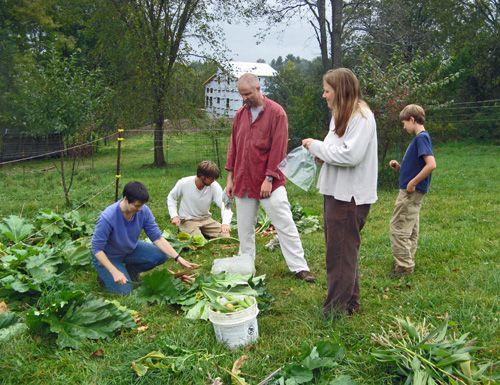
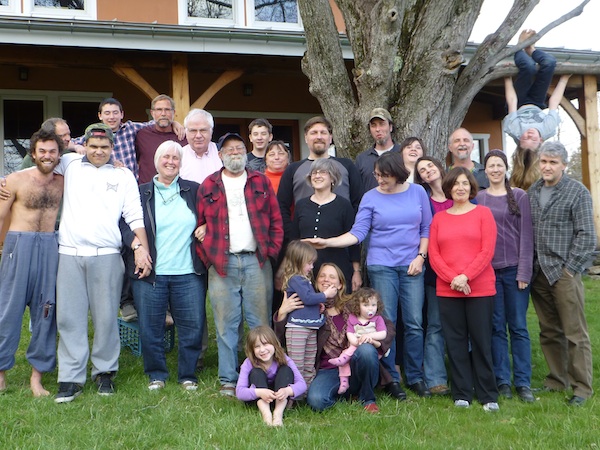
Group of diverse people gathered outdoors near a large tree at Canaan Village.

Quaker Intentional Village-Canaan

  • Communities

About the Communities

  • Established
  • Spiritual
  • Rural

Founding year

  • 2000

What we do

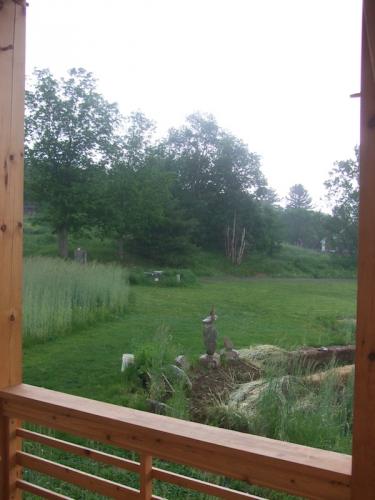
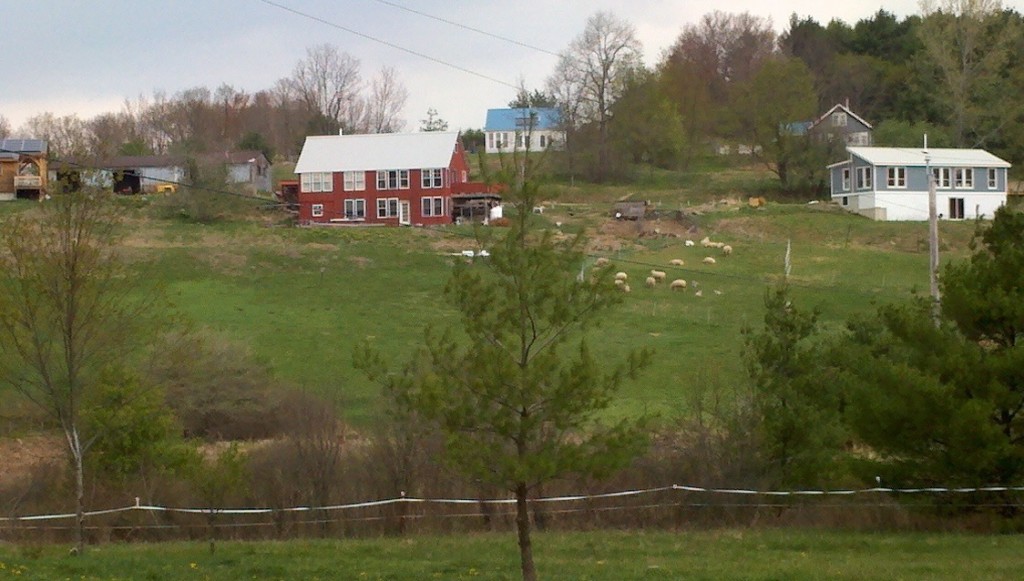
We are currently a community of about 10 households living close to the land on 135 acres of mixed woodland and pasture. We range in age from toddler to 90’s, with more than 15 adults, a number of young adults, and an abundant handful of children.
We are on land in the gorgeous Hudson Valley and Capital Region of upstate New York, and in the foothills of the Berkshires. East Chatham is in Columbia County and by car is 35 minutes from Albany, 2.5 hours from NYC/Boston, and 10 minutes from our local Quaker Meeting in Old Chatham (http://oldchathamquakers.org/) as well as the Powell House Conference Center (https://powellhouse.org) of New York Yearly Meeting (https://nyym.org).
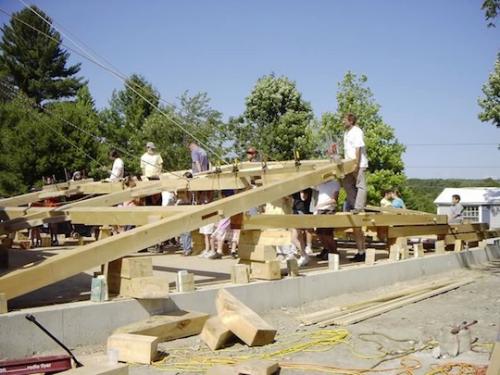
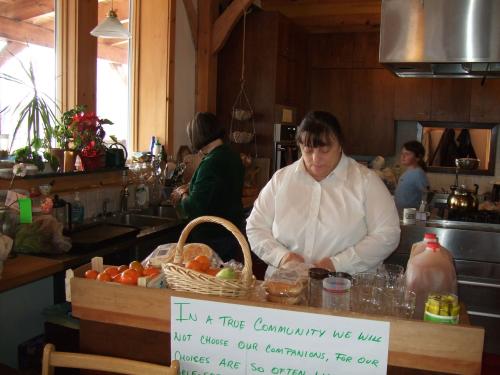
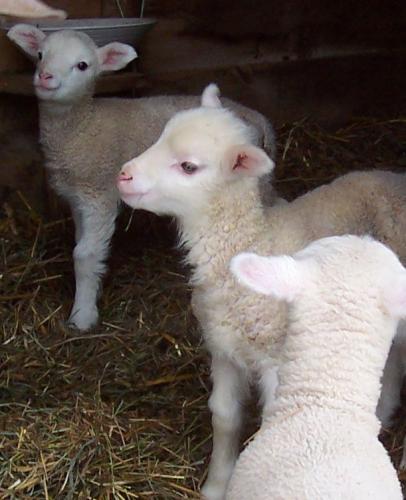
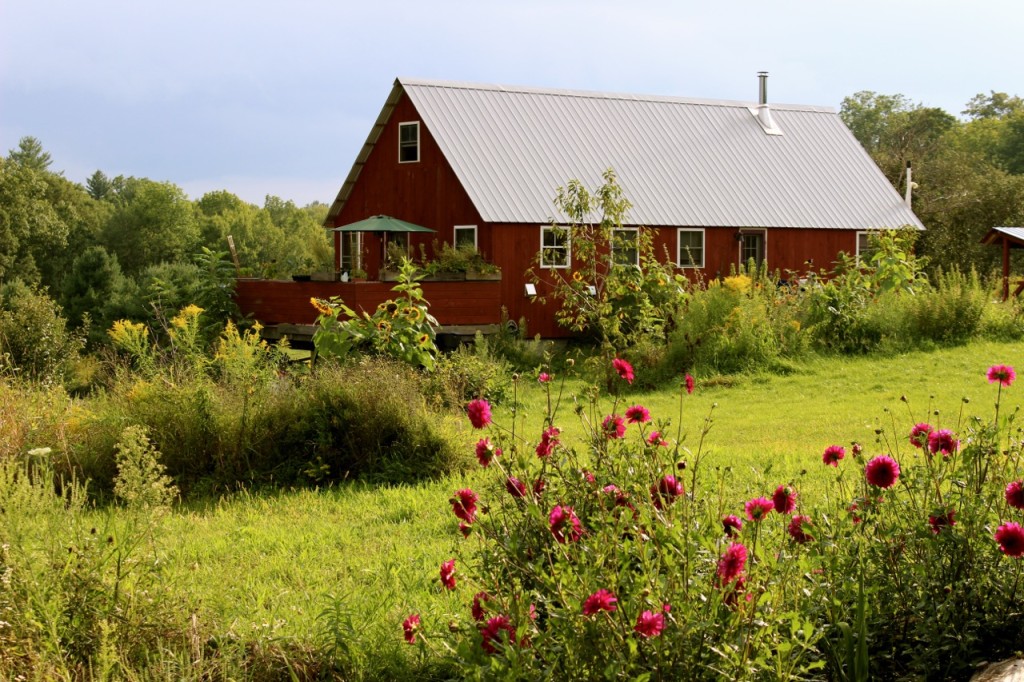
We are thriving in a range of green homes that use technologies including plastered strawbale walls, slip-and-chip walls, stick-building, timber-framing, passive solar design, solar hot-water systems, and wood heat; many of us built our own. Many of us garden organically, raise chickens, and eat increasingly more from what we grow. We join together in our big farmhouse or around a campfire for potlucks, occasional community dinners, workdays, committee meetings, spontaneous game nights and tea times, presentations on topics of interest, monthly community business meetings, and extended weekend retreats. We use Quaker processes in our self-government, including a form of consensus that seeks a spiritually led way forward, individual and corporate discernment, and the clearness process. We value equality, simplicity, and diversity of experience and viewpoints.
We are currently seeking new members! We regularly have (a) home(s) and rooms available for rent or purchase. We also have one house building site available. Our membership process starts with a mutual getting-to-know-each-other time, during which the potential member or member family gets involved with the community in various ways and gets to know us (and vice-versa). This often takes up to a year. The goal is to come to a sense of clearness, for the applicant as well as the community members, about whether the fit is a good one. More about our membership process can be found on our web site (https://community.qivc.org/faq-qivc#Participation).
We believe conscious culture creation in community can be a means to advance our intentions to:
* live in worship, increasing our mindfulness, spiritual focus, and God-centeredness by intertwining our daily lives with others who share these intentions
* create a village setting that values and engages participation by people of all ages, expands our experience of family, and supports our expression in the world
* create wealth that embodies integrity and Truth by carefully examining our engagement in the current economic order and stepping away from its destructive elements
* live in unity & harmony with the earth by considering the near and far environmental impact of our actions while striving for thrivability
* include a good measure of joy, fun, creativity, and service in our lives
QIVP (https://qivp.org) believes that our communities’ successes in achieving these five intentions will be aided by memberships diverse in race, age, ethnicity, sexual preference, and economic situations, and therefore it is our aim to gather communities whose members are diverse in these ways as well as others.

Our Mission

We strive to live spirit-focused lives that are simple, sustainable, and joyful, benefitting from and enjoying our close connections with each other and the land. We don’t all need to identify explicitly as Quaker (Religious Society of Friends). We welcome diversity of all sorts.

  • Purpose
  • Spiritual
  • Community type
  • Cohousing
  • Spiritual Retreat Centers
  • Sustainability practices
  • Renewable energy systems

Commemorative dates

  • January 1, 2000
  • Started planning
  • January 1, 2005
  • Started living together
  • 15 Total members
  • Open to new members
  • Open to visitors
Total
31

How to join

Prospective members get to know the community by participating in its activities, then write letters requesting membership and explaining how they and the community are a good fit. A committee of members and advisors meets with the prospective members to arrive at a recommendation, which is then considered by the entire membership. For more see the Steps in Membership section of our website: https://community.qivc.org/membership-qivc
(We’re actively seeking new members who share our intentions for community living, who have a healthy sense of self, and who are open to and able to hear other points of view. We have one house building site available now, two more possibly available in the future, and an existing house to purchase by a member household–see pictures of red house below.)

Basic expectations or agreements for members

Visitor Process: We welcome visits in person — please contact us by e-mail at in**@**vc.org. To make your visit more informative, get some background beforehand from our web site, qivc.org. Visits on Friday afternoon/evening work best for guests and the community, with potluck or campfires regularly scheduled on Friday evenings. Overnight hospitality is available, usually, for those traveling from outside the area.

Primary decision-making authority

  • All Community Members Together

The whole membership decides collectively.

Decision-making process

  • Full Consensus

Everyone must agree before moving forward.

Governance structure

  • Collaborative/Horizontal

Power and responsibility are shared relatively equally among members.

Conflict resolution approach

Since we operate according to Quaker business practice, we are all equally responsible to lead and to be led by others.
We make all decisions by a process called “sense of the meeting” or “unity.” These are Quaker terms for a process that goes beyond consensus to seek the will of the Spirit.

Economic model

  • Independent Finances

Members maintain separate personal finances with minimal sharing.

Economic scenarios for this community

  • There is a one-time fee, investment, or share purchase to join the community separate from accessing housing
  • Members need to pay fees, dues, or similar to live there on a per month or per year basis
  • There is a labor obligation
  • Members typically need to have their own job or other personal source of income to cover their expenses while living in the community?

Additional economic information

Join fee: Yes
Regular fees: Yes
Labor: Yes
Members with pre-existing debt: allowed
Annual operating fee per adult member is about $2,500; this is the average amount based on annual budget needs. It is often adjusted per household based on need/ability. Members with more money generally contribute more on an annual basis. The operating fees cover property taxes, capital loan repayments, insurance, and maintenance of commonly held assets as well as other community operating costs. We are not setup to offer work exchange.
There’s a required capital loan of $30 per square foot of living space (2011 figure) for homeowner members, and a capital loan equivalent to one month’s rent for renter members.
All are required to serve on committees and are encouraged to participate in seasonal work days, weekly chores to care for our Common House, and other projects.

Shared resources and amenities that are accessible to everyone in the community

Common House, Garden(s), Greenhouse(s), Vehicle Share, Library, Outbuilding(s), Large Scale Kitchen, Tractor & Farm Equipment, Fire pit, Swingsets & play areas, Internet

Frequency of communal meals

  • About once a week

Significant food acquisition practices

  • Locally sourced

Dietary type

  • Kosher Only

Dietary restriction

  • People can cook and eat what they want in their own residence

Substance use culture

  • Substance use occurs primarily at celebrations or ceremonies
  • Religions
  • Christian
  • Buddhist
  • Jewish
  • Quaker

Gender composition

  • Roughly balanced (no group over 60%)

Age demographics

  • Family-focused (many children and parents)

Property status

  • Privately owned

Property owner

  • By a Land Trust, Home Owners Association, or corporation

Setting

  • Rural

Countryside locations with significant distance from urban centers.

Community type

  • Cohousing

    Private homes with shared common facilities, designed for neighborly
    interaction while maintaining independence.

  • Spiritual Retreat Centers

    Residential communities focused on providing space for meditation, spiritual practice, and personal growth retreats.

Community type

  • Built or remodeled using passive solar design

Sustainability approach

  • Renewable energy systems

Community type

  • Built or remodeled using passive solar design

Some or all of the buildings are...

  • Built or remodeled using passive solar design

Self-produced energy

  • Up to 33%

Energy sources used

  • Photovoltaic Solar
  • Biomass (from wood or other organic materials)

Self-produced food

  • Up to 33%

Local, organic, or fair trade food

  • 33 - 66%

Food systems

  • Community garden
  • Greenhouse / aquaponics
  • Livestock / poultry
  • Land area size
    135 acres

Guest Book

Written reviews are available for plus members. Click here to upgrade.

Location

  • New York, United States

Quaker Intentional Village-Canaan

Needs and Offers

Connecting people and communities through an intentional online marketplace

  • Promoted
Offer
  • Real Estate For Sale
4 weeks ago

Beautiful 3+ Bed, 2.5 Bath Townhome in Established West Emerald CoHousing, Seattle

A rare home is available at West Emerald Cohousing, an established all-ages intentional community in West Seattle. For those considering a move to the Pacific Northwest—or hoping to join a mature community rather than one still in the forming stages—West Emerald offers decades of community life, beautiful gardens, shared resources and a peaceful setting within the city in a convenient location since 1999. This unit has a unique floor plan that is ideal for co-buying, co-living, or for one household. The home itself offers a flexible 3+ bedroom, 2.5 bath layout: Garden-level room with a separate exterior entrance and half bath—ideal for a home office, studio, guest space or client-facing business Main-level bedroom and full bath, laundry, making one-level living possible Open great room with large windows overlooking gardens filled with birdsong Well-designed kitchen with generous storage and pantry Two additional light-filled spacious bedrooms and a full bath upstairs Thoughtfully maintained and updated Located at the end of a common pathway for added privacy and garden views, Just feet from parking, which is out of view West Emerald community amenities include: Common House with gathering and activity spaces Community meals and events Mature gardens and shared outdoor spaces Workshop/maker spaces and bike barn Exercise room EV charging opportunity Excellent Metro access to Downtown Seattle just minutes away Nestled into a dell, it’s Seattle’s best-kept secret South Seattle College and lifelong learning, NW Wine Academy, the Seattle Chinese Garden are nearby, with easy access to Alki Beach, Lincoln Park, magnet schools, ferries, and the shops and restaurants of the West Seattle Junction. 6000 17th Ave SW, Seattle, WA Is a wonderful opportunity to have your own comfortable, private home while becoming part of a vibrant and well-established Seattle all-ages cohousing community. For more information contact the friendly Realtor at 206-579-9066, or at ki**********@**********te.com who will be happy to meet you there or do a facetime tour.
  • Promoted
Need
  • Promoted
Offer
  • Promoted
  • Events
1 week ago

Healing Love Healing Money: Trust As The Foundation For A New Culture

Money, love and power are among the hardest things any community works with, and many of us carry the same fears into both: not having enough, losing what we have, and the sense that if someone else gets money or love, we won’t. Healing Love, Healing Money: Trust as the Foundation for a New Culture is taught by two intentional communities. Karen McAllister and Duncan Cryle are from Clear Sky Meditation and Retreat Center, a Buddhist-lineage community in the BC Rockies. Monika Alleweldt and Benjamin von Mendelssohn from Tamera Healing Biotope, a community of about 160 people in southern Portugal that has spent decades studying love, trust and relationship. Clear Sky has spent years working on its relationship with money, and our two communities found surprising parallels in the fears beneath both. Over four sessions we explore the roots of fear around money and belonging, love, possession and power, trust as infrastructure (community as a container for healing), and ethical livelihood. We use short meditations, body-based practices, reflection and small-group conversation. You do not need to be in a romantic relationship or live in community. When: October 27, Nov 3, 10, 17. All four sessions: 12–2pm Vancouver, 1–3pm Alberta, 7–9pm UK and Portugal, 8–10pm Central Europe. Note: US and some Canadian provinces change clocks on November 1, so the US west coast is 12–2pm on October 27, then 11am–1pm for the remaining sessions, and Eastern is 3–5pm on October 27, then 2–4pm for the rest. Cost: sliding scale Details and registration: https://www.clearskycenter.org/event/healing-love-healing-money-online/  
October 27, 2026 13:00 – November 17, 2026 15:00
  • Promoted
Offer
  • Communities with Openings
4 months ago

Do you feel called to help co-create a small, newly forming eco-spiritual community?

Old structures are crumbling. New ways of living are calling. We are answering that call. Wild Grace is an eco-spiritual community located in the Sierra foothills 30 minutes from Grass Valley, California. We recently completed new homes for those who feel called to our vision. Currently there are four of us living on this sacred 80 acres of land although we are a hub for an expanded neighborhood community. Many join us weekly for potlucks, expressive dance, Qi Gong, monthly musical gatherings, and seasonal celebrations in our temple, as well as tending to our orchard. We are excited to welcome others to join us on the land who are dedicating their lives to spiritual growth and ready to live in a more focused and intimate heart-centered lifestyle. Might that be you or someone you know? The fundamentals are simple. Spirit. We listen personally and collectively together most mornings, usually starting with a musical offering, a prayer, or a short reading, followed by about 40 minutes of what we call “sacred silence.” Heart Circles. About once a week we gather to share and listen. We are informed by authentic and compassionate communication practices. Nature. The land itself—an 80-acre oasis of field and forest perched above the wild and scenic South Yuba River—calls for our stewardship in the gardens, orchard, greenhouses, and general care. In turn, nature feeds us abundantly, both literally and spiritually. Interbeing. We join with others to share inspiration and connection as we host monthly gatherings of song, story and prayer that draws from the larger community in addition to other events we share with our closer neighbors. As we attend to these fundamentals, Grace flows to and through us—often in “Wild” or unexpected ways. Grace catalyzes through us, but is not something we possess. Because we all are connected, we feel that Grace actively transforms n
Need
  • Communities with Openings
2 weeks ago

Heart-centered, nature-loving unschooling family seeking a community to land with for winter 2027

We’re a German-American family who left conventional life about four years ago to live in line with our values: freedom, connection, nature, and spirituality. We started out as worldschoolers, moving every month or two. That taught us a lot, including that too much movement leaves a family rootless. Since then we’ve been looking for the balance between adventure and belonging. We found a taste of it on a multigenerational farm community in Austria, and we’re now living alongside a small community in Norway. For January to March 2027, we’d love to spend a season inside a community that feels like home. What we’re hoping for A community with teenagers and a culture that welcomes self-directed learning, where unschooling is understood and not just tolerated Nature at your doorstep (forest, land, animals, or garden) Some shared meals, perhaps shared rhythms, and real relationships, not just a place to park A spiritual or reflective thread, whatever form it takes for you An opportunity to get to know your community by giving back (although we can’t do a ‘full’ volunteering program as we have the past three years – ie: Workaway- because we have meetings online that take up too much of our time to volunteer full time)  What we bring Resilience and emotional wellbeing. I’m an online resilience coach with a BA in Developmental Psychology, certified in HeartMath®, and an experienced yoga and meditation teacher. I can offer community sessions in nervous system regulation, stress resilience, and meditation, and support for parents and teens. Experience raising three children in a nomadic, family-centered lifestyle, including years of travel across Europe. Open, adaptable, and grounded. We’ve lived in many settings and adapt quickly. We show up as contributors, not consumers. Unschooling and homeschooling know-how. We’re glad to share what we’ve learned, especially for families navigating legal and practical questions in Europe. Many other shareable skills: carpentry, sourdough bread baking, food fermenting, music making, dad-joke-telling, drone pilots, cookie bakers, food preservation and much much more.   We’re looking for a mutual fit, not just a bed for the winter. If our story resonates and you have space or know someone who does, we’d love to hear from you. Tell us about your community: your values, your daily rhythm, and what you’re hoping for from the people who join you.

Update to a Public Profile

  • Log in
  • Go to your profile page
  • Toggle on the "Add my profile to the directory"
  • Save your profile

Information

Communities

A residential project: people live here as their primary home.

Organizations

An institution, business, network, or project that isn’t a residence (e.g. a learning center, farm, or network with no one living there full-time).
Plus Community Membership

  • Find people with Profile Match
  • Access to your community listing statistics
  • Create Discussion Groups
  • Access to our affiliate program
  • Member badge on your community profile
I am an official member of this community
Disclaimer
I affirm that my information is accurate and I am authorized to manage this listing
Foundation for Intentional Community FIC Member badge logo.

Free Plan

Free Membership
Free

Intentional Advertising

  • Subtotal

    {{ currencyFormat( pricing_summary.total_amount ) }}

Icon representing community connections and collaboration for intentional communities.

Plus Membership

  • Find communities with Profile Match
  • View detailed reviews about communities
  • Create free listings in Needs & Offers
  • Plus Member resources in CommUniversity
  • View communities detailed reviews
  • Plus Member badge on your profile