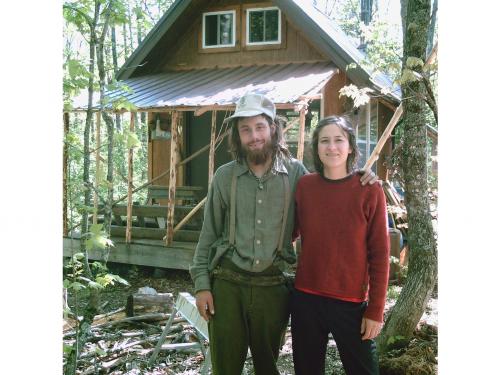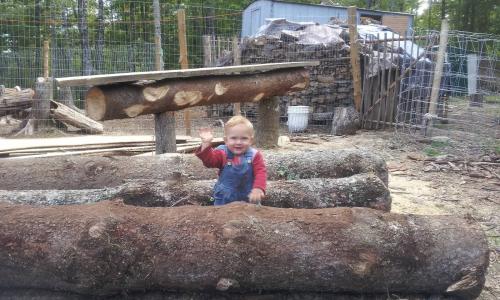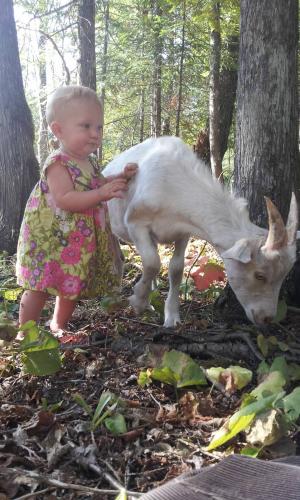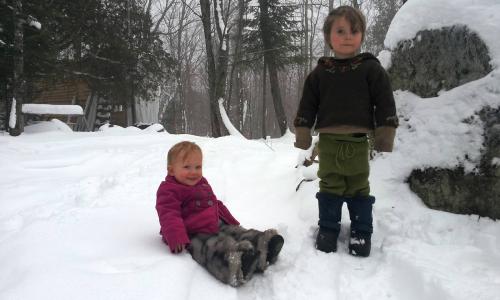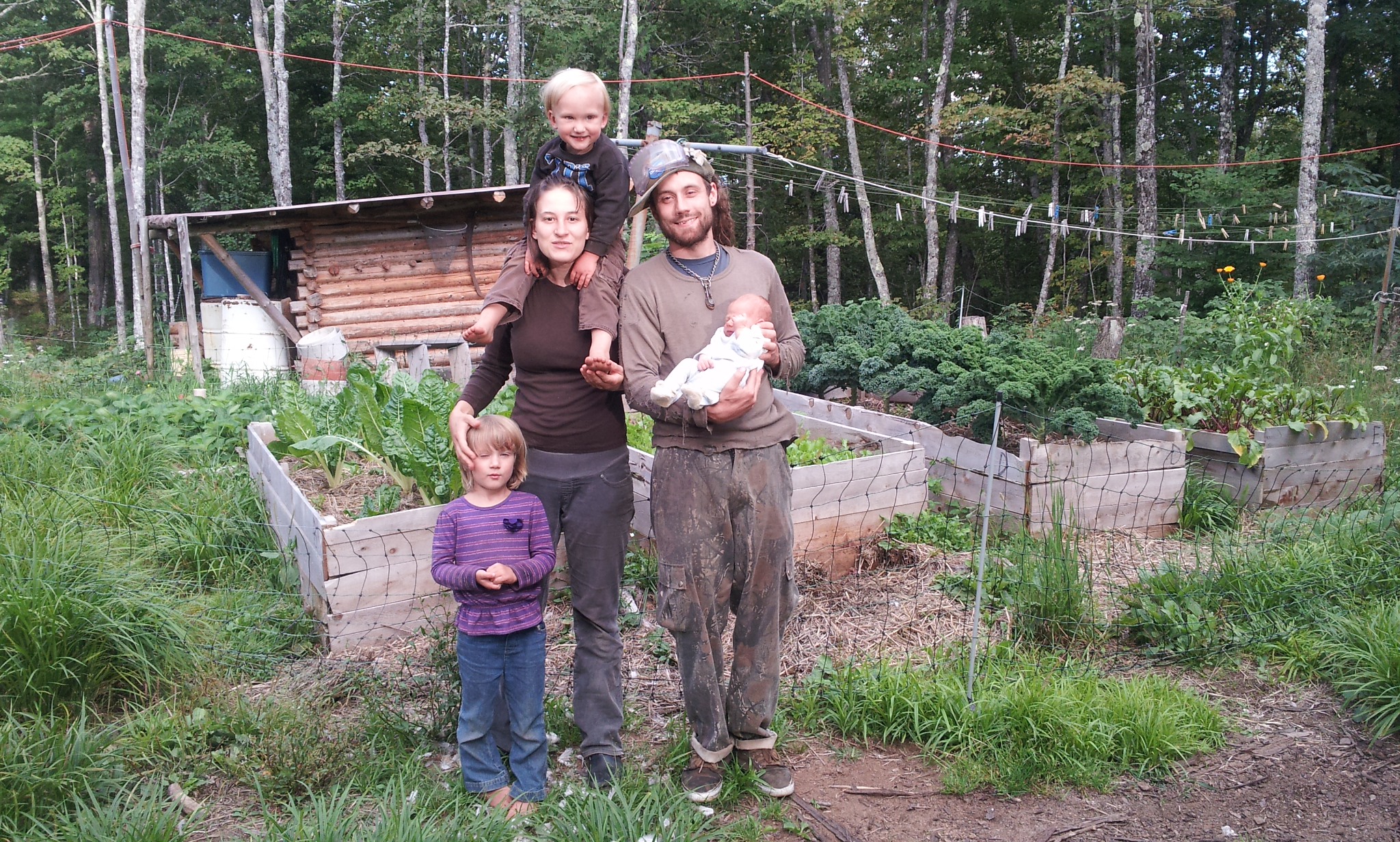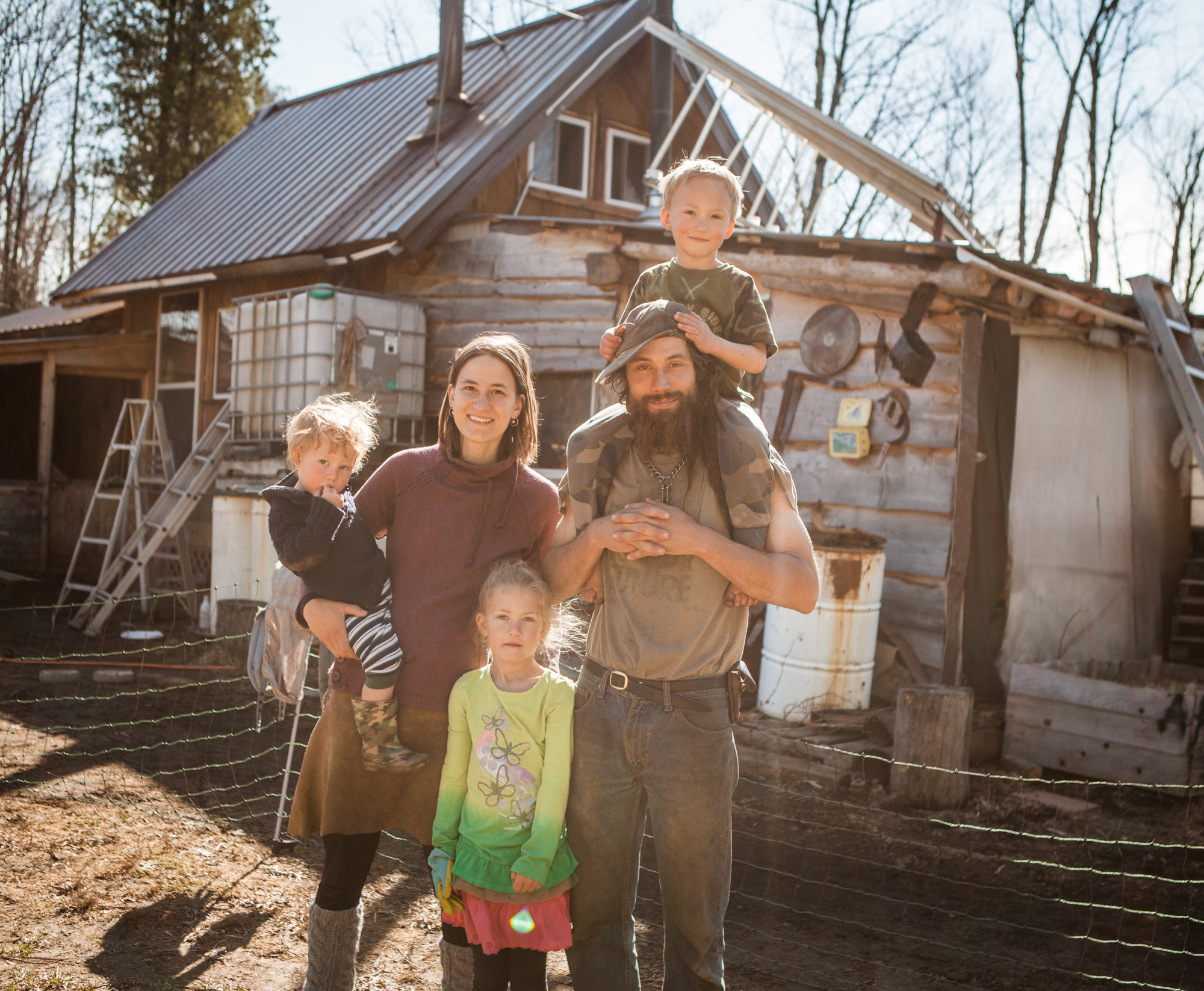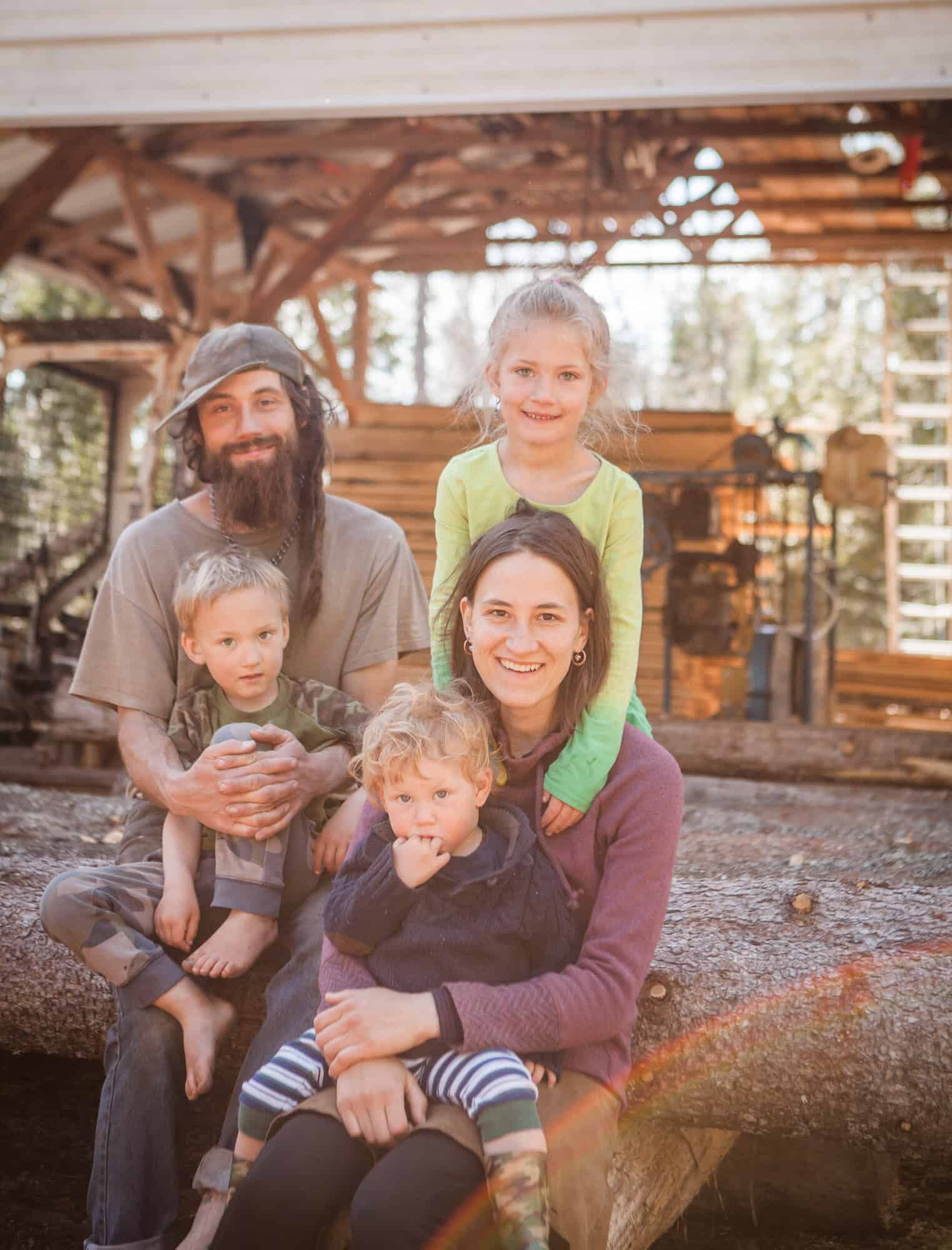
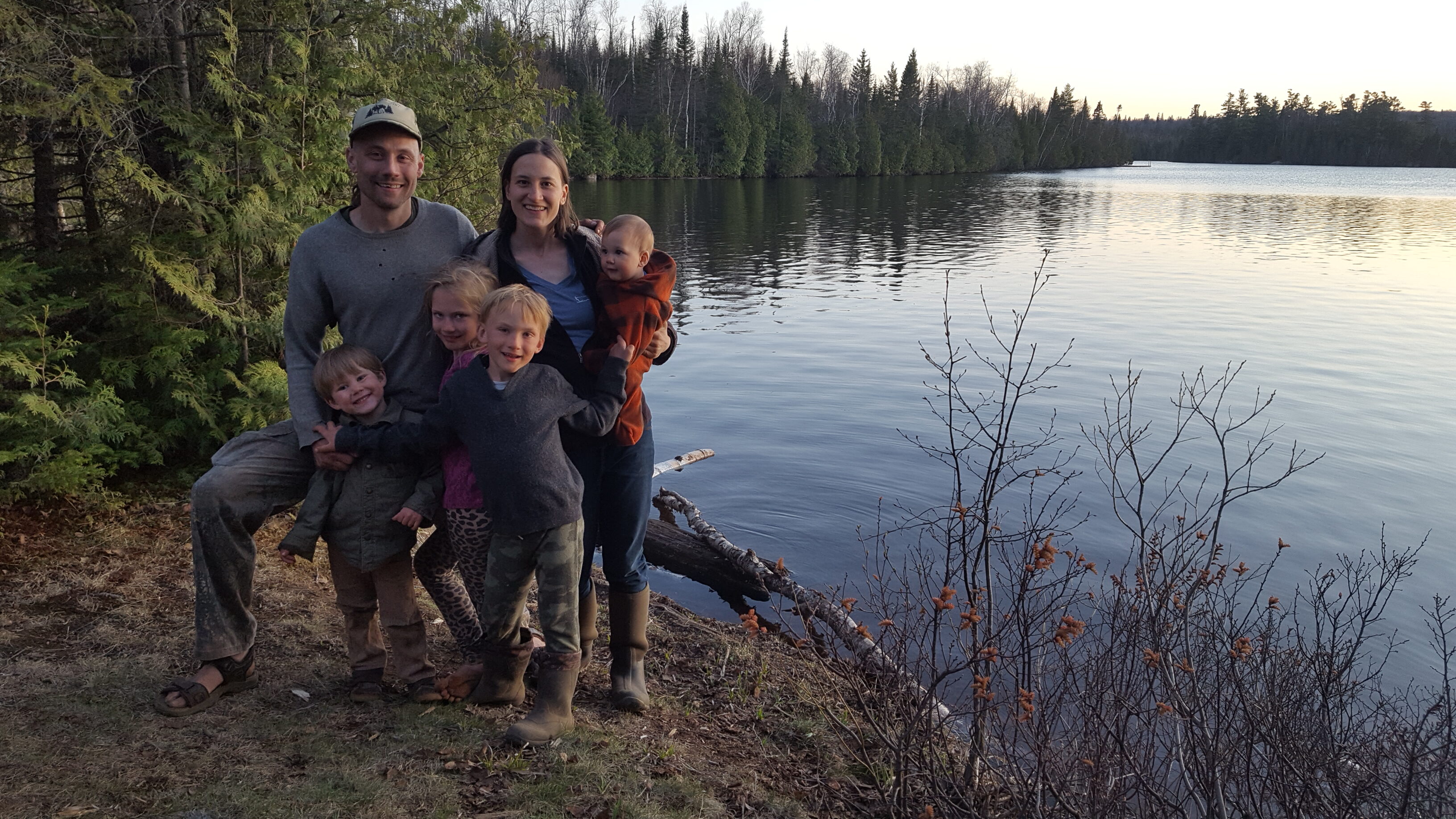
Family of six by a lake with trees and calm water in the background.

Long Haul

  • Communities

About the Communities

  • Forming
  • Ecological
  • Rural

Founding year

  • 2010

What we do

We can host visitors from May-October for general homestead infrastructure help including, gardening, building, firewood etc. During the winter months, we can sometimes host hardy visitors who are willing to work outside.
We’re a young family of 6 + 3 friends + 1 other young family of 4 with 534 acres of mature forest land surrounded by thousands of acres of wilderness. We’ve cleared a few acres and we’ve planted apples, plums, juneberries, raspberries, blueberries, currants, gooseberries, honeyberries, blackberries and strawberries among other things. We’re surrounded by mature maple and mixed boreal forest which is primarily public land. We do not have a functional well yet (no running water). There’s a spring near the center of the property and we catch rainwater off our roof. We’re 5 miles as the crow flies from the North Shore of Lake Superior and close to many smaller inland lakes. There are many hiking trails close by including the Superior Hiking Trail. We’re 20 miles south of the Boundary Waters Canoe Area Wilderness. We’re primarily working on building infrastructure and raising and homeschooling out kids. We’re 7 miles from town on a good county dirt road and then 2 miles up a rough old logging road which is not maintained by any government entity. We plow the road in the winter but occasionally have to resort to snowmobile for access in some circumstances. We have a work party every fall. We’re off the grid with wi-fi internet through cell phone towers and solar electricity. We cook and heat with wood. We’re happy to host visitors who are willing to help out and who are self reliant and able to get their basic needs met in a primitive camp setting. We also sometimes have opportunities for work trade guests with meals and lodging provided. We have two insulated tiny houses and a yurt for guests. We prefer to host work trade visitors for a minimum of 1 month. Our long term vision is to share the land with up to 15 other households with similar interests. We envision it to look like a “Neighborhood of Awesome Autonomous Homesteads”. Feel free to contact us with any questions and thanks for your interest.

Our Mission

We aspire to live simple and healthy lives in a family oriented community setting. Our goal is to reconnect to our means of existence by meeting our needs with land based local economy. We also focus on getting along and character development. We hope to re-cultivate a more meaningful existence for our children than is offered by modern society.

  • Purpose
  • Ecological
  • Community type
  • Ecovillage
  • Sustainability practices
  • Renewable energy systems
  • Water conservation and management
  • Permaculture design
  • Activities
  • Farming
  • Experiences

Commemorative dates

  • January 1, 2010
  • Started planning
  • January 1, 2011
  • Started living together
  • 6 Total members
  • Not open to new members
  • Not open to visitors
Total
14

How to join

People who can meet their own basic needs (food, shelter, financial, etc) without a permanent structure can stay for any amount of time for free as long as they are getting along with other residents. People who wish to build a permanent structure need to spend a lot of time here getting to know us first

Basic expectations or agreements for members

Please email and we will send you a questionnaire with more info.

Primary decision-making authority

  • Small Leadership Group

A few people (not elected by the broader community) make the major decisions.

Decision-making process

  • Modified Consensus

Generally seek agreement, but have backup methods when consensus isn’t reached.

Governance structure

  • Collaborative/Horizontal

Power and responsibility are shared relatively equally among members.

Conflict resolution approach

Owners have the final say, but we’re open to input and suggestions.

Economic model

  • Independent Finances

Members maintain separate personal finances with minimal sharing.

Economic scenarios for this community

  • There is a labor obligation
  • Members typically need to have their own job or other personal source of income to cover their expenses while living in the community?

Additional economic information

Labor: Encouraged or suggested
Members with pre-existing debt: allowed

Shared resources and amenities that are accessible to everyone in the community

Garden(s), Workshop, Fire pit, Swingsets & play areas, Internet

Frequency of communal meals

  • 1-3 times per month

Significant food acquisition practices

  • Locally sourced
  • Wildcrafting / Foraging

Community activities and engagement

  • Volunteer, Internship, or Apprenticeship, or WWOOF’ing
  • WWOOF'ing, Guest Farming

Substance use culture

  • Substance use is frequent and public in the community
  • Substance use occurs primarily at celebrations or ceremonies

Gender composition

  • Roughly balanced (no group over 60%)

Age demographics

  • Family-focused (many children and parents)

Property status

  • Privately owned

Property owner

  • By a single individual, couple, or Family Trust

Setting

  • Rural

Countryside locations with significant distance from urban centers.

Community type

  • Ecovillage

    Integrated communities designed around ecological principles with sustainable living practices.

Sustainability approach

  • Renewable energy systems
  • Water conservation and management
  • Permaculture design

Land practices in our community

  • The community practices permaculture

Self-produced energy

  • 33 - 66%

Energy sources used

  • Photovoltaic Solar

Self-produced food

  • Up to 33%

Local, organic, or fair trade food

  • 33 - 66%

Food systems

  • Community garden

Source of water

  • Rainwater capture and storage for use (barrels, cisterns, etc.)
  • Land area size
    534 acres

Guest Book

Written reviews are available for plus members. Click here to upgrade.

Location

  • Minnesota, United States

Long Haul

Needs and Offers

Connecting people and communities through an intentional online marketplace

  • Promoted
Offer
  • Communities with Openings
4 days ago

Herding Cats Collective, Calgary: a shared home, a hub, and a launching pad for a micro village

Herding Cats Collective is a shared home of seven adults in Calgary, Alberta, Canada, about an hour from the Rocky Mountains. We are people who could live on their own and choose to live with others, around the things that move us: caring for the land, a grounded spiritual life, social justice, new ways to live and decide together. A good home first. We share dinners: each of us cooks one night, and the others cook the rest of the week. There is a sauna, a fireplace, gardens front and back, a shared office and a maker area. It is a place to rest, and a place where we strengthen each other. A hub. People from outside the house come through for our gatherings, our dinners and short stays: a party with music and fire in the backyard, a talk in the living room, a friend from out of town for a few nights. A launching pad. With families around Calgary, we are working toward a micro village: households close together, sharing more than one house can. The picture is still forming, and the people who join now help shape it. We decide together by consent, in the sociocratic way. I steward the home, with feedback that keeps me accountable to the residents and the owners, and other residents hold roles of their own. Two ways in. Rent a room for one to three years: rooms run $825 to $950 CAD a month, with utilities, wifi and household supplies included. Or, if you want to build this with us, a negotiated agreement to co-own the social side and the infrastructure of the project. Write to us for availability: a few lines about you and what you are looking for. Then a call, dinner with us as our guest if you are nearby, and a ten-day stay before anyone signs anything. Louis MarceauCommunity development and coordination for Herding Cats Collective
  • Promoted
  • Events
3 weeks ago

Coastal Regeneration Immersion: Permaculture Design Certification in Jalisco, Mexico

Tropical Dry Forest Permaculture Design & Regenerative Stewardship Certification (PDC)12-Day Intensive | 120 Hours | Costalegre, Jalisco, Mexico APPLY AT XOCHIRAIZ.COM Join us for an immersive Permaculture Design Certificate course set in the tropical dry forest bioregion of coastal Jalisco. This 120-hour intensive blends internationally recognized PDC curriculum with hands-on regenerative practice — combining ecological design, agroforestry, natural building, and community stewardship into one integrated learning experience. Lead Faculty Jorge Luis Gtz. Olarte (Arborescencia RedGenerativa) – Regenerative Design, Soil Biology & Agroforestry Ozzy Lusth (Survior & Xochiraíz) – Wilderness Resilience & Survival Skills Dave Collins (Capacha Coastal Conservation Center) – Bioarchitecture & Ecological Development What You’ll LearnThe course moves through six progressive phases: Permaculture & Ecological Literacy – ethics, principles, and reading the tropical dry forest landscape Water & Soil Systems – keyline design, water harvesting, living soils, and compost systems Horticulture – food garden design, propagation, and biological pest control Regenerative Food Systems – tropical agroforestry, food forest design, and guild planting Ecological Infrastructure – bamboo bioarchitecture, bioclimatic farm design, compost toilets, greywater, and rocket stoves Integrated Design Studio – team-based final design projects covering watershed strategy, agroforestry, food forest layout, infrastructure, and phased implementation Daily RhythmMornings begin with optional surf/yoga and journaling, followed by field practicums and hands-on workshops. Afternoons include design studio and construction lab work, with reflection circles, communal dinners, and evening talks, films, or campfire discussions rounding out the day. Final ProjectParticipants work in teams to produce a full regenerative design package — landscape analysis, water plan, agroforestry design, food forest plan, ecological infrastructure, and bioclimatic farm plan — presented to a faculty review panel on the final day, followed by a closing ceremony, certificate delivery, and community feast. CertificationGraduates receive the Tropical Dry Forest Permaculture Design & Regenerative Stewardship Certification (120 contact hours), hosted by Capacha Coastal Conservation Center and Tierralegre, A.C. Curriculum integrates international PDC standards with tropical ecology, agroforestry, ecological restoration, bamboo bioarchitecture, bioclimatic design, GIS/photogrammetry, and regenerative leadership. Highlights Hands-on bamboo construction (temazcal, bathhouses, sculpture) Tropical dry forest silviculture practicum Community mapping and design project for Ekoa Green Community Talent show and sea turtle release
January 10 – January 24
  • Promoted
Offer
  • Promoted
Offer
  • Professional Services
4 months ago

Community Matchmaking: Get Help Finding Your Community

Would you like to join an intentional community but don’t know how? Feel overwhelmed by the number of communities out there? Not sure if there is one that’s a fit for you? CommunityFinders is here to support you on your path to community living. You can find your community by: Taking the free Community Types Quiz to learn which of the most common types of community is a fit for you. Booking a 1:1 consultation with a Community Matchmaker to receive recommendations for communities that are a fit for you. Joining the Money and Community Mini-Course to find out which communities are within your budget. Reading the book Intentional Community to help you understand your options and decide whether community living is right for you. Our goal is to help community seekers become community finders — people with confidence that their community match is out there and they will find it. Looking forward to working with you to find your community! Please be in touch, Cynthia Tina Founder communityfinders.com What communitarians are saying: “Cynthia helped me clarify the intentional communities that fit me, better get to know them, and finally choose one that I’m now a member of. I have no doubt anyone on a community journey will find great value in her guidance.” – Alan Stillman “Out of potentially thousands of communities, Cynthia matched me with very similar values revealed on their websites. I am in the process of applying to visit the number one recommendation. I’m excited and thankful for Cynthia‘s skills. Beyond well worth.” – Tommy Teeple “Due to her extensive community experience, she could offer many insights, provide useful tips and present selected communities to me that she had visited herself.” – Antonia Von Hassell

Update to a Public Profile

  • Log in
  • Go to your profile page
  • Toggle on the "Add my profile to the directory"
  • Save your profile

Information

Communities

A residential project: people live here as their primary home.

Organizations

An institution, business, network, or project that isn’t a residence (e.g. a learning center, farm, or network with no one living there full-time).

Plus Community Membership

  • Find people with Profile Match
  • Access to your community listing statistics
  • Create Discussion Groups
  • Access to our affiliate program
  • Member badge on your community profile
I am an official member of this community
Disclaimer
I affirm that my information is accurate and I am authorized to manage this listing
Foundation for Intentional Community FIC Member badge logo.

Free Plan

Free Membership
Free

Intentional Advertising

  • Subtotal

    {{ currencyFormat( pricing_summary.total_amount ) }}

Icon representing community connections and collaboration for intentional communities.

Plus Membership

  • Find communities with Profile Match
  • View detailed reviews about communities
  • Create free listings in Needs & Offers
  • Plus Member resources in CommUniversity
  • View communities detailed reviews
  • Plus Member badge on your profile