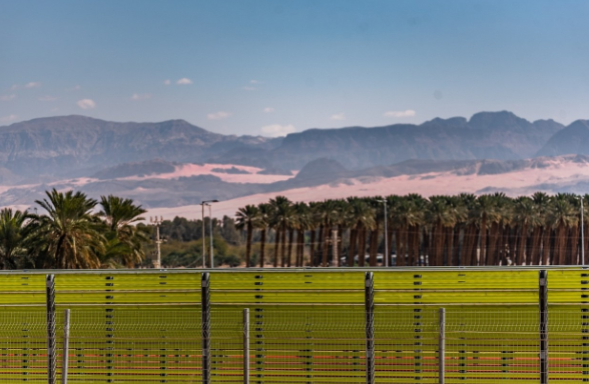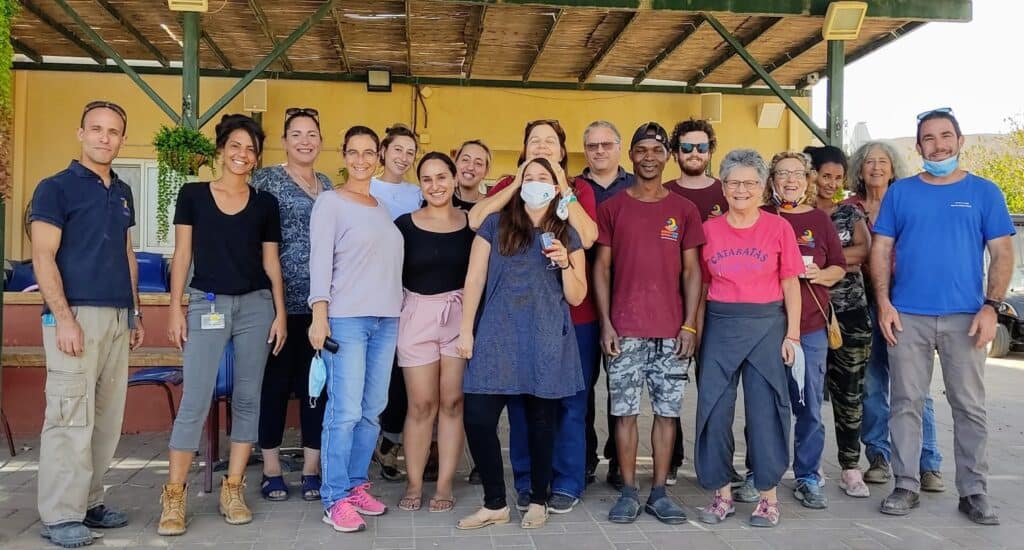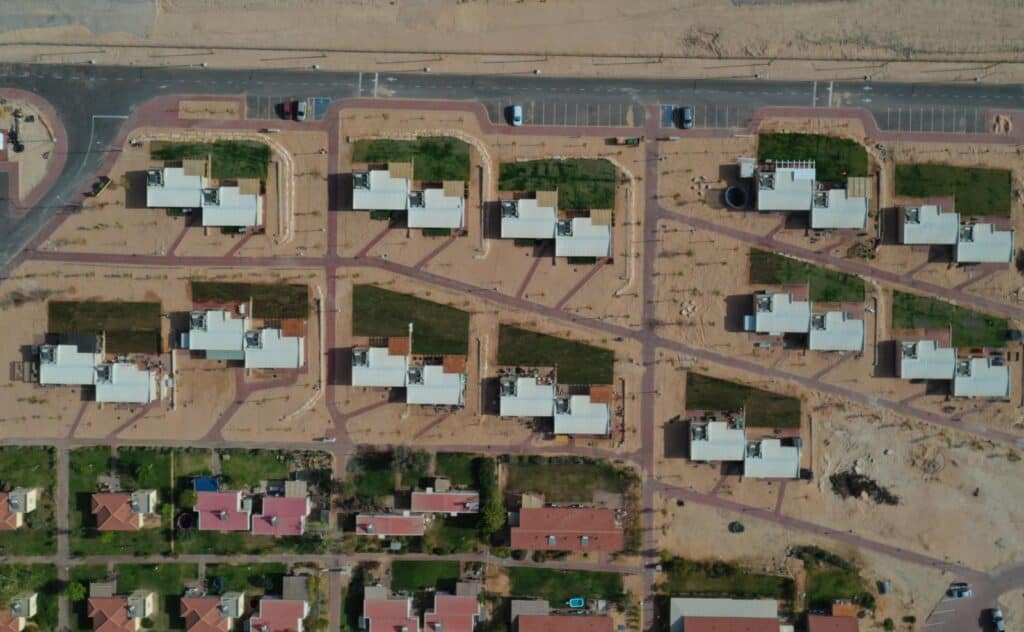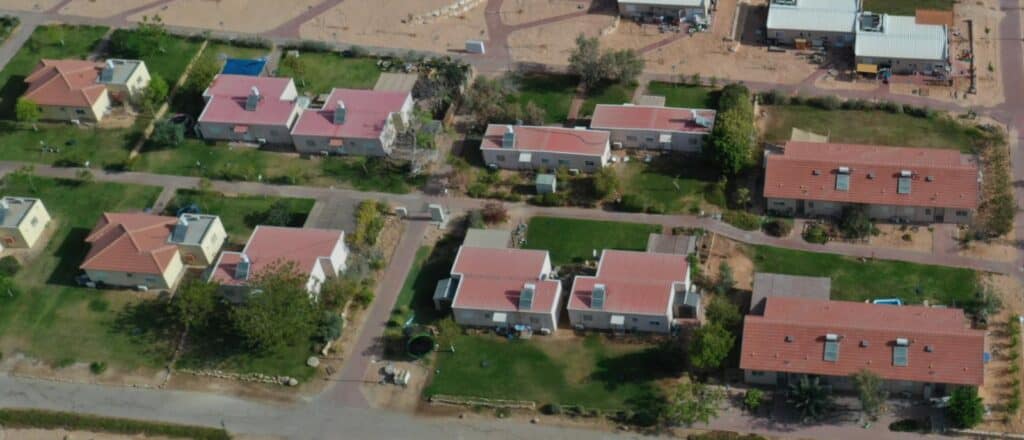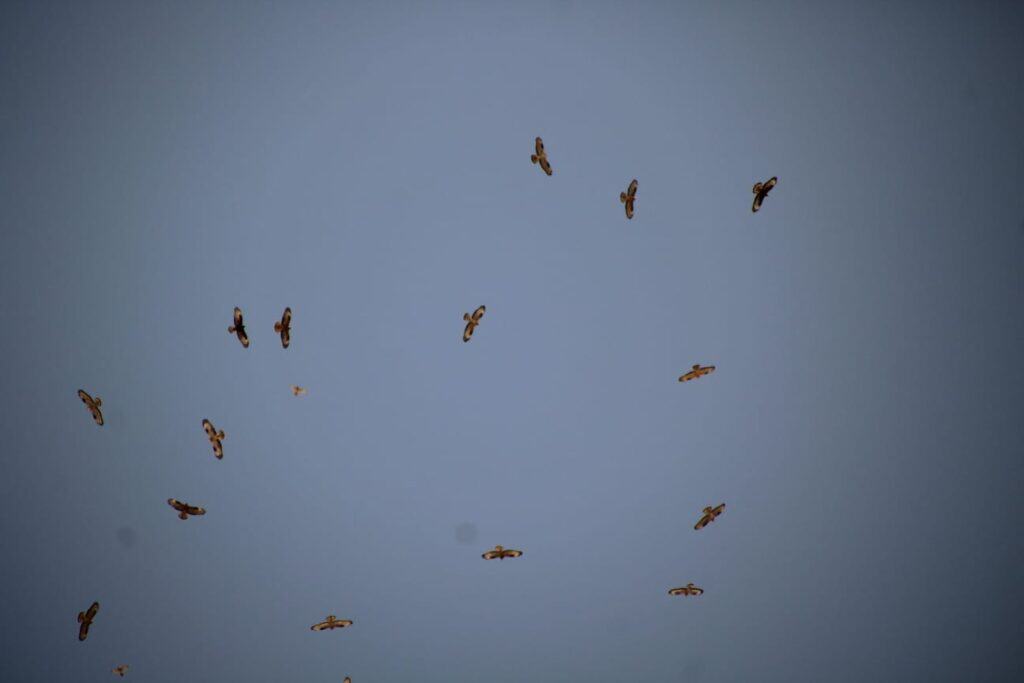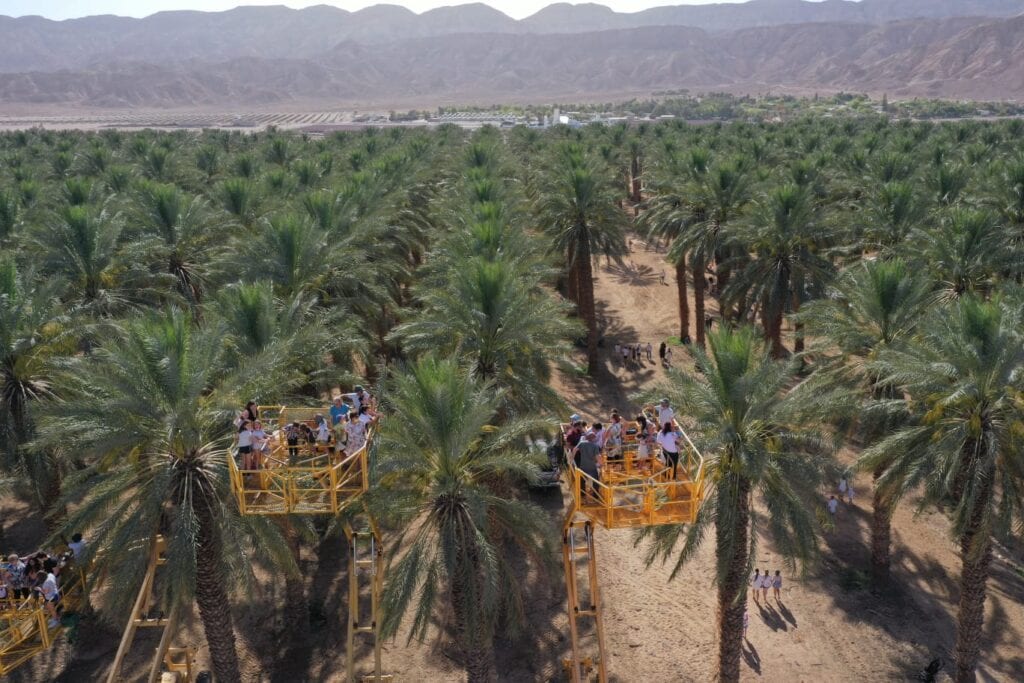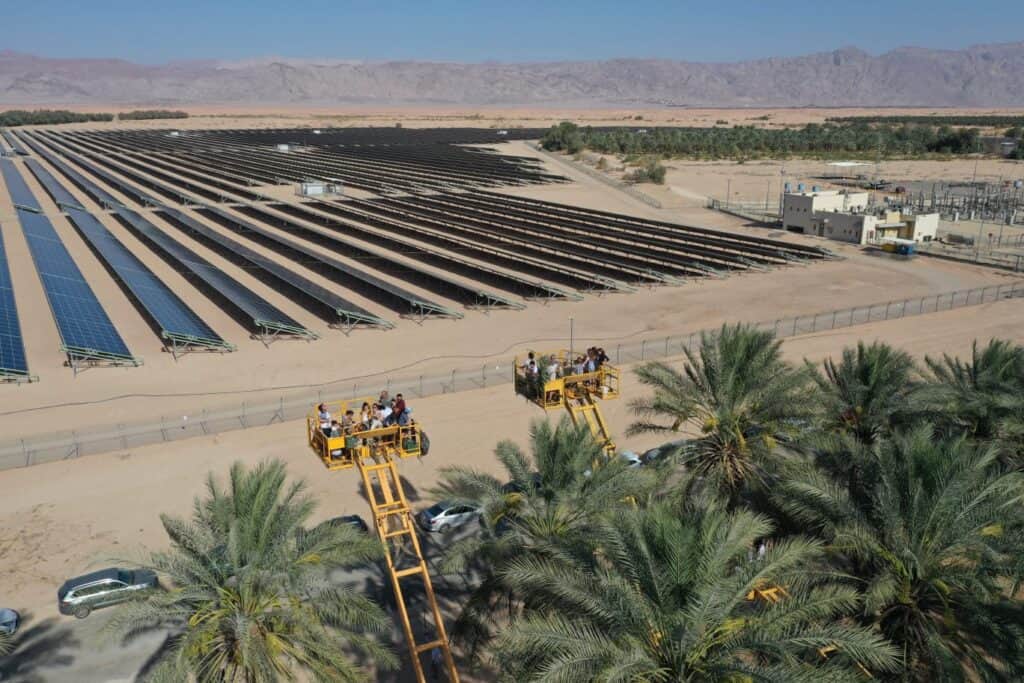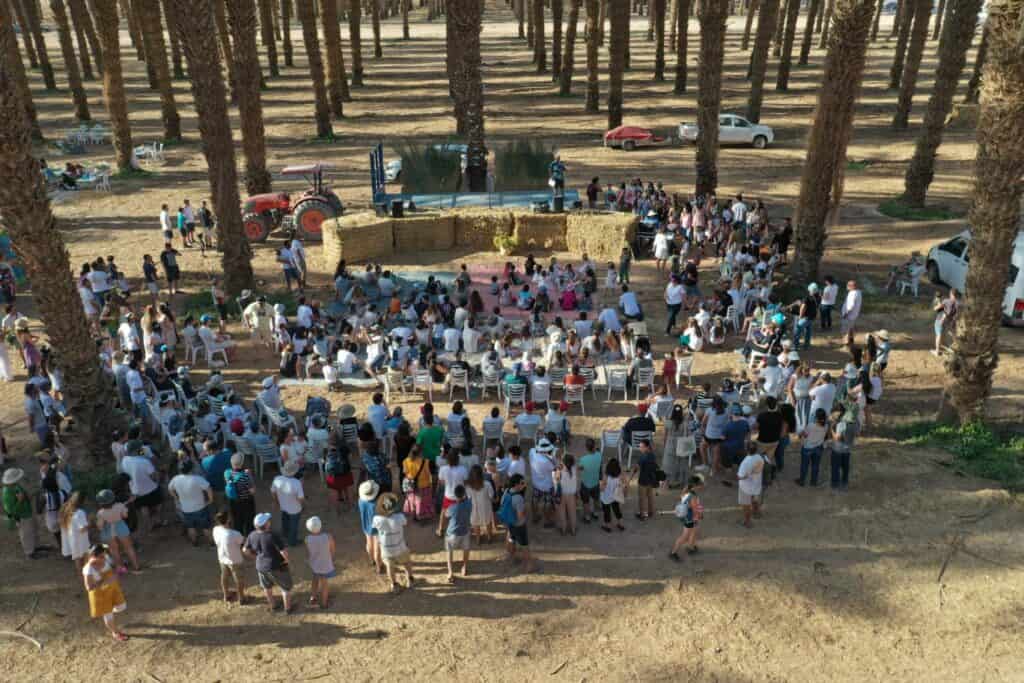
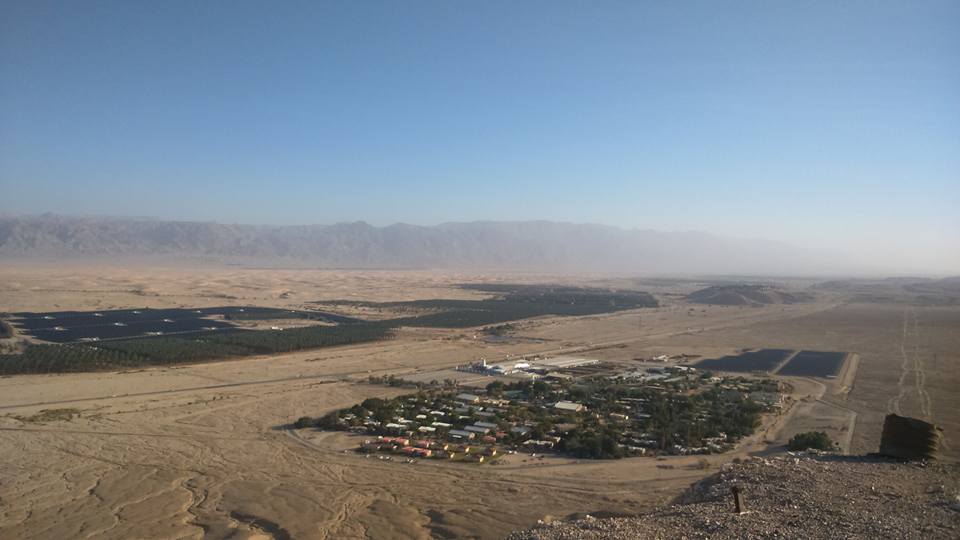
Aerial view of a desert community with agricultural fields near Kibbutz Ketura.

Kibbutz Ketura

  • Communities

About the Communities

  • Established
  • Ecological
  • Rural

Founding year

  • 1970

What we do

Kibbutz Ketura is located in the Southern Arava, 50 kilometers (31 miles) north of Eilat. Travel time by car is approximately 2 1/4 hours from Be’er Sheva (via Rte. 40), 3 1/2 hours from Jerusalem, and 4 hours from Tel Aviv.
Ketura is an income-sharing community with a communal dining hall; housing is in the form of attached, single-family dwellings with shared yards and garden space. A shared fleet of about 20 cars serve members on a reservation basis (via an app). Our area is also served by public bus service 7 days a week, and two domestic airlines operate between the Asaf and Ilan Ramon International Airport (Eilat) and the airport in Israel’s center. Small numbers of international lo-costs flights are available between October and March.
One thing that makes Ketura unique is our pluralistic approach to Judaism: We believe that each individual should observe (or not) as per his or her belief, so that while members are free to observe (or not) as they wish in their own living spaces, we observe the Jewish laws and traditions including kashrut, Shabbat, and holidays in our public spaces and at cultural events, so that those who do observe feel comfortable, and everyone enjoys a taste of the experience. We also avoid non-essential work that would violate the Shabbat, and incorporate Jewish traditions and values into the community’s life. On a personal level, people can behave as they wish – for example sign out a car on Shabbat and drive to the Red Sea for the day.
We are committed to continuing education to benefit the community, as well as individual enrichment for our members. So at any point in time, some of our members are studying for vocational, academic, or professional advancement and for personal interest. The extension campus of Ben-Gurion University in Eilat has expanded our options in this area as have the options online. In addition a regional community center offers classes such as yoga, pilates, language study, sports, ceramics, painting, and more. Both on the kibbutz and in the Regional Council there are many one time activities such as lectures, workshops, and more.
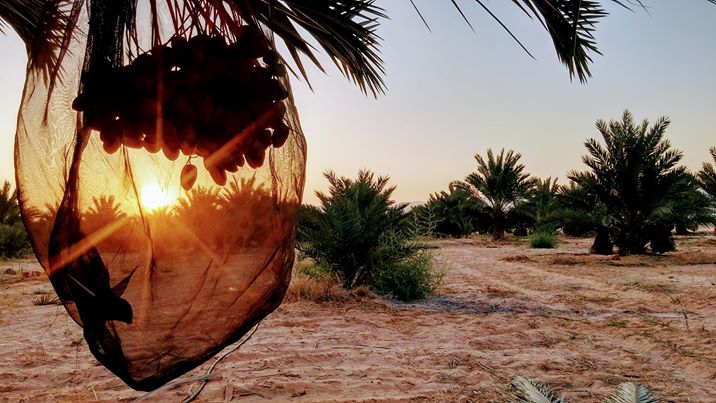
While many members work on the kibbutz in service branches such as daycare and after-school programming, food service (we have a communal dining room with 3 meals served a day), landscaping, and maintenance, others are involved in businesses such as our date orchards, a craft brewery, argan oil production, and our tourism enterprise.
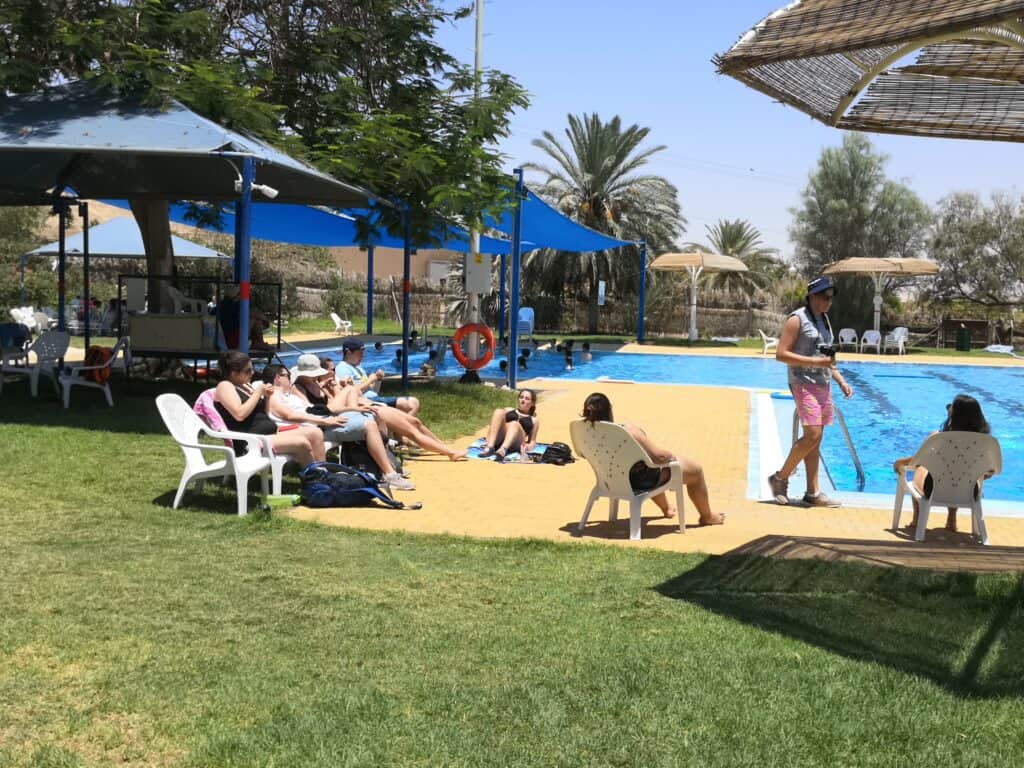
We also have “hybrid” workplaces, i.e., engaged both in service and production. For example, the member who operates our pool and teaches water aerobics serves both the community and outside students. Our accounting branch serves not only the community and our businesses, but also are contracted for services to many other businesses both in the region and nationwide.
In addition, many members work “outside” as teachers, bookkeepers, social workers, and laboratory technicians. Among our members are specialists including a sports physical therapist, the regional inseminator for area dairy herds, a veterinarian, a chiropractor, and researchers in fields ranging from anthropology and conflict resolution to aquaculture and agricultural research. Most members have undergraduate degrees (Bachelor’s), many have Master’s degrees, and several have or are currently in the process of earning doctorates.
Beyond what we do to earn a living, many members engage in hobbies or pursuits beyond their “day jobs”. Among these are a fitness instructor who leads aerobics, kickboxing and various other workouts; a voice coach; bar and bat mitzvah tutors; several published writers, artists, and artisans (painting, drawing, sculpture and pottery, a range of jewelry makers), and a team of craft beer brewers. Several members sing in the area vocal ensemble, and others run two organic gardens, the produce from which we regularly see in our daily salad bar.
We are currently adding new housing in order to accommodate a growing population, and are welcoming young families, expanding our physical plant, and continuing to grow. Guests are welcome to reserve a room in the Guest House so you can come and explore our way of life, from our myriad expanding businesses to our values and goals. A free tour is included with every Bed and Breakfast reservation.

Our Mission

Kibbutz Ketura seeks to empower its members to fulfill themselves by working together with our communal decision making and resources, and to empower our community to do good in the world.

  • Purpose
  • Ecological
  • Community type
  • Ecovillage
  • Commune
  • Activities
  • Education
  • Experiences

Commemorative dates

  • January 1, 1970
  • Started planning
  • January 1, 1973
  • Started living together

Video

  • 37 Total members
  • Open to new members
  • Open to visitors
Total
477

How to join

In order to join Kibbutz Ketura one must be a citizen or permanent resident of the country and able to speak Hebrew fluently. Details are available here: https://www.ketura.org.il/joining-ketura/

Basic expectations or agreements for members

Visitors are welcome. For short visits contact the Keren Kolot – Kibbutz Ketura guest house (https://www.keren-kolot.co.il/Homepage.html). For persons ages 18-35 wishing to spend at least 2 months in the community as a volunteer – Kibbutz Ketura accepts healthy young people (often but not always, Jewish, single, ages 18-30) able to do physical work as required for AT LEAST 2 months. While we are not a “religious” kibbutz, our dining room is kosher/shomer shabbat and we have an traditional egalitarian minyan on Shabbatot & holidays. Work is assigned according to the needs of the kibbutz – mostly services (dining room, laundry, kitchen). Before you arrive in Israel, you MUST register on line to volunteer via the *Kibbutz Program Center*: https://kibbutzvolunteers.org.il/ they will help you understand the visa application process.

Primary decision-making authority

  • Small Leadership Group

A few people (not elected by the broader community) make the major decisions.

Decision-making process

  • Majority Vote

More than 50% agreement needed.

Governance structure

  • Representative/Democratic

Members elect leaders who make decisions within defined roles.

Conflict resolution approach

Our highest authority is the assembly of all the members and all major decisions must be made at this level. We have 5 community leaders who are elected to a term of office from 2 to 4 years and then elections are held and other members take on those roles. We stagger the dates of the terms of office so that there is continuity in the leadership positions. We have an elaborate system of committees which are also members elected to 2 year terms of office to serve on a particular committee. Committees have to bring major decisions to the executive council to be “checked for form” and then to the general assembly for a vote by all members.

Economic model

  • Complete Income-Sharing

All member income goes into common pool for community use.

Economic scenarios for this community

  • There is a one-time fee, investment, or share purchase to join the community separate from accessing housing
  • Members need to pay fees, dues, or similar to live there on a per month or per year basis
  • There is a labor obligation

Additional economic information

Join fee: Yes
Regular fees: Yes
Labor: Yes
Kibbutz Ketura requires that all benefits of a members’ work is contributed to the public financial system, and that system covers expenses for members. Each member also receives a small personal allowance for personal spending. All basics are covered by the collective: housing, food, health, and education.

Shared resources and amenities that are accessible to everyone in the community

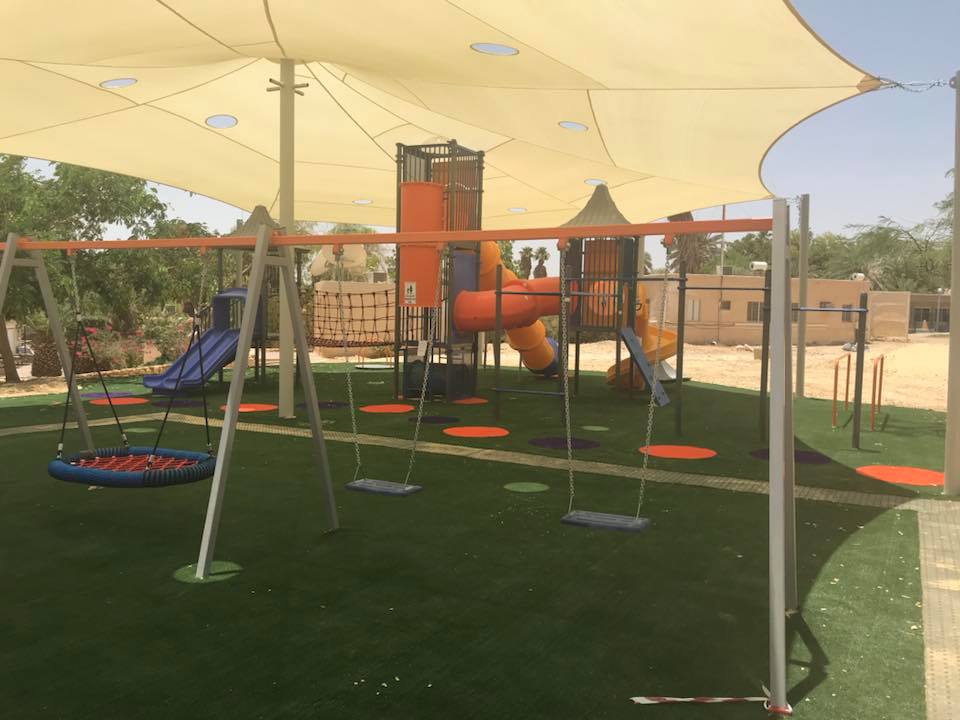
Common House, Garden(s), Vehicle Share, Library, Workshop, Swimming pond or pool, Large Scale Kitchen, Tractor & Farm Equipment, Stage or Auditorium, Fire pit, Swingsets & play areas, Gym or sports area, Internet

Frequency of communal meals

  • Approximately all meals

Community activities and engagement

  • School, Educational Institute or Experience
  • Volunteer, Internship, or Apprenticeship, or WWOOF’ing

Substance use culture

  • Substance use appears in public spaces but no pressure
  • Religions
  • Jewish

Gender composition

  • Roughly balanced (no group over 60%)

Age demographics

  • Family-focused (many children and parents)

Property status

  • Privately owned

Property owner

  • By a Land Trust, Home Owners Association, or corporation

Setting

  • Rural

Countryside locations with significant distance from urban centers.

Community type

  • Ecovillage

    Integrated communities designed around ecological principles with sustainable living practices.

  • Commune

    Communal living with shared resources, property, and often income or work responsibilities

Self-produced energy

  • Over 66%

Energy sources used

  • Photovoltaic Solar
  • Biomass (from wood or other organic materials)

Self-produced food

  • Up to 33%

Food systems

  • Community garden

Guest Book

Written reviews are available for plus members. Click here to upgrade.

Location

  • Israel, Israel

Kibbutz Ketura

Needs and Offers

Connecting people and communities through an intentional online marketplace

  • Promoted
Need
  • Promoted
Offer
  • Promoted
  • Events
1 week ago

Healing Love Healing Money: Trust As The Foundation For A New Culture

Money, love and power are among the hardest things any community works with, and many of us carry the same fears into both: not having enough, losing what we have, and the sense that if someone else gets money or love, we won’t. Healing Love, Healing Money: Trust as the Foundation for a New Culture is taught by two intentional communities. Karen McAllister and Duncan Cryle are from Clear Sky Meditation and Retreat Center, a Buddhist-lineage community in the BC Rockies. Monika Alleweldt and Benjamin von Mendelssohn from Tamera Healing Biotope, a community of about 160 people in southern Portugal that has spent decades studying love, trust and relationship. Clear Sky has spent years working on its relationship with money, and our two communities found surprising parallels in the fears beneath both. Over four sessions we explore the roots of fear around money and belonging, love, possession and power, trust as infrastructure (community as a container for healing), and ethical livelihood. We use short meditations, body-based practices, reflection and small-group conversation. You do not need to be in a romantic relationship or live in community. When: October 27, Nov 3, 10, 17. All four sessions: 12–2pm Vancouver, 1–3pm Alberta, 7–9pm UK and Portugal, 8–10pm Central Europe. Note: US and some Canadian provinces change clocks on November 1, so the US west coast is 12–2pm on October 27, then 11am–1pm for the remaining sessions, and Eastern is 3–5pm on October 27, then 2–4pm for the rest. Cost: sliding scale Details and registration: https://www.clearskycenter.org/event/healing-love-healing-money-online/  
October 27, 2026 13:00 – November 17, 2026 15:00
  • Promoted
Offer
  • Communities with Openings
4 months ago

Do you feel called to help co-create a small, newly forming eco-spiritual community?

Old structures are crumbling. New ways of living are calling. We are answering that call. Wild Grace is an eco-spiritual community located in the Sierra foothills 30 minutes from Grass Valley, California. We recently completed new homes for those who feel called to our vision. Currently there are four of us living on this sacred 80 acres of land although we are a hub for an expanded neighborhood community. Many join us weekly for potlucks, expressive dance, Qi Gong, monthly musical gatherings, and seasonal celebrations in our temple, as well as tending to our orchard. We are excited to welcome others to join us on the land who are dedicating their lives to spiritual growth and ready to live in a more focused and intimate heart-centered lifestyle. Might that be you or someone you know? The fundamentals are simple. Spirit. We listen personally and collectively together most mornings, usually starting with a musical offering, a prayer, or a short reading, followed by about 40 minutes of what we call “sacred silence.” Heart Circles. About once a week we gather to share and listen. We are informed by authentic and compassionate communication practices. Nature. The land itself—an 80-acre oasis of field and forest perched above the wild and scenic South Yuba River—calls for our stewardship in the gardens, orchard, greenhouses, and general care. In turn, nature feeds us abundantly, both literally and spiritually. Interbeing. We join with others to share inspiration and connection as we host monthly gatherings of song, story and prayer that draws from the larger community in addition to other events we share with our closer neighbors. As we attend to these fundamentals, Grace flows to and through us—often in “Wild” or unexpected ways. Grace catalyzes through us, but is not something we possess. Because we all are connected, we feel that Grace actively transforms n
Offer
  • Real Estate For Sale
3 days ago

Lot of Goodness

Are you seeking to live in a sustainable, wellness-oriented community that prioritizes nature and environmental conservation? Lot 6 in the Living Well Ecovillage offers the perfect opportunity to be part of a vibrant, self-sufficient community committed to holistic health and ecological harmony. This lot, approximately 1/3 acre in size, is equipped with city utilities and fiber internet access. It is located in a unique mixed-use community with a variety of land uses planned for the future, including small business/commercial spaces, tiny houses, cluster housing, and a 10-acre farm. Your home could face the street or look North to the Living Well Park &  Pavilion where we enjoy many activities together as a Community.  Lot 6 would be ideal for someone who wanted to be close to the action.  Maybe you’d like a large, shared home. Or a business location. The Ecovillage is home to a diverse range of homes, such as timber frame, Deltec, hempcrete, and Net-Zero energy designs—all built with green building principles in mind. This community prioritizes sustainability and wellness in every aspect of life. About the Living Well EcovillageSpanning 126 acres, the Living Well Ecovillage is bordered by the Deep River and Sandy Creek, offering stunning natural beauty and a tranquil environment. The Ecovillage includes shared spaces like a community garden, a Greenway/Rail Trail, and a neighborhood park. Over 53 acres of natural land buffer the river and creek, preserving the area’s pristine beauty and offering residents a true connection to nature. Your Dream Home AwaitsLot 6 is the ideal spot to build your sustainable home, surrounded by trees, rock outcroppings, and abundant wild edible plants. Experience breathtaking views and a peaceful setting, perfect for those seeking a slower, more connected way of life. A Community That Supports WellnessThe Living Well Ecovillage is not just about space—it’s about community. With access to the Folk School, residents engage in hands-on learning, sustainable practices, and personal growth, fostering a sense of belonging and purpose. Perfectly LocatedJust two miles from Highway 64 in Franklinville, North Carolina, the Ecovillage is easily accessible to Greensboro, Asheboro, and Siler City, and a short drive from Raleigh, Durham, and Charlotte. It’s centrally located between the mountains and the ocean, with easy access to cultural and recreational amenities. Join Us in Building a Better FutureLot 6 offers more than just land—it’s an opportunity to be part of a community with a shared vision for a sustainable, resilient future. Ready to start the next chapter of your life in the Living Well Ecovillage? Visit Living Well Ecovillage for more information and to explore your future home. For an aerial and street level view, visit Google Maps.
Offer

Update to a Public Profile

  • Log in
  • Go to your profile page
  • Toggle on the "Add my profile to the directory"
  • Save your profile

Information

Communities

A residential project: people live here as their primary home.

Organizations

An institution, business, network, or project that isn’t a residence (e.g. a learning center, farm, or network with no one living there full-time).
Plus Community Membership

  • Find people with Profile Match
  • Access to your community listing statistics
  • Create Discussion Groups
  • Access to our affiliate program
  • Member badge on your community profile
I am an official member of this community
Disclaimer
I affirm that my information is accurate and I am authorized to manage this listing
Foundation for Intentional Community FIC Member badge logo.

Free Plan

Free Membership
Free

Intentional Advertising

  • Subtotal

    {{ currencyFormat( pricing_summary.total_amount ) }}

Icon representing community connections and collaboration for intentional communities.

Plus Membership

  • Find communities with Profile Match
  • View detailed reviews about communities
  • Create free listings in Needs & Offers
  • Plus Member resources in CommUniversity
  • View communities detailed reviews
  • Plus Member badge on your profile