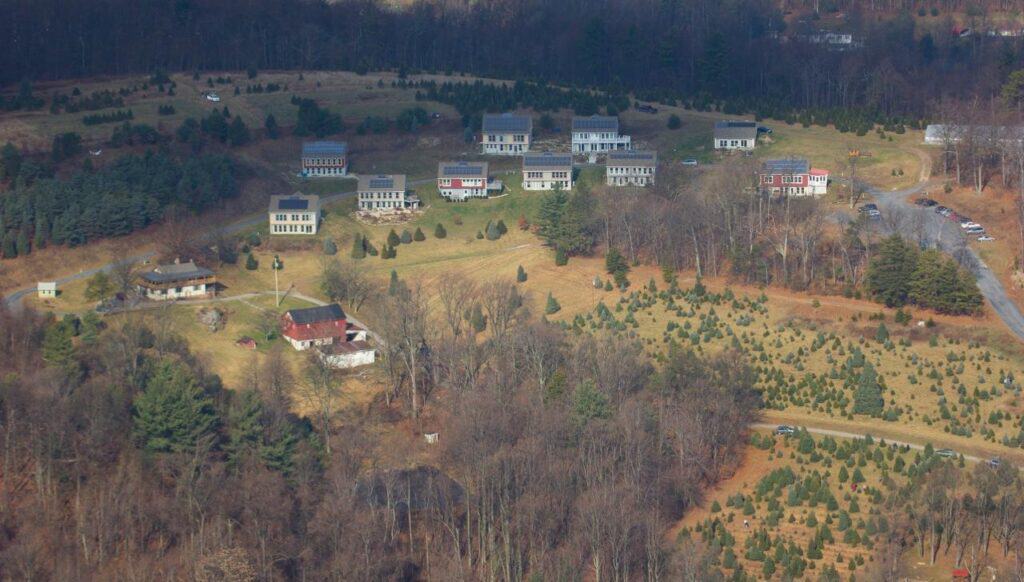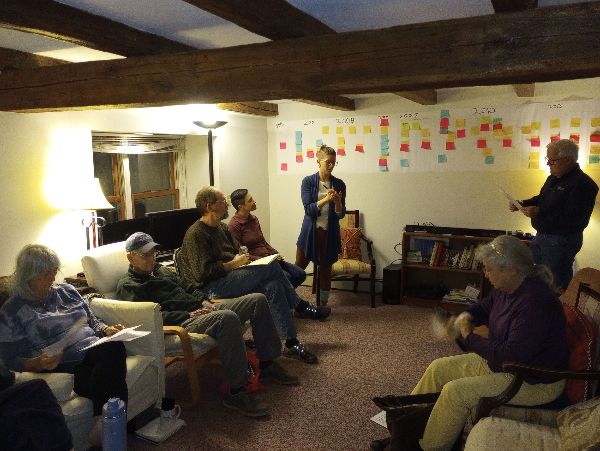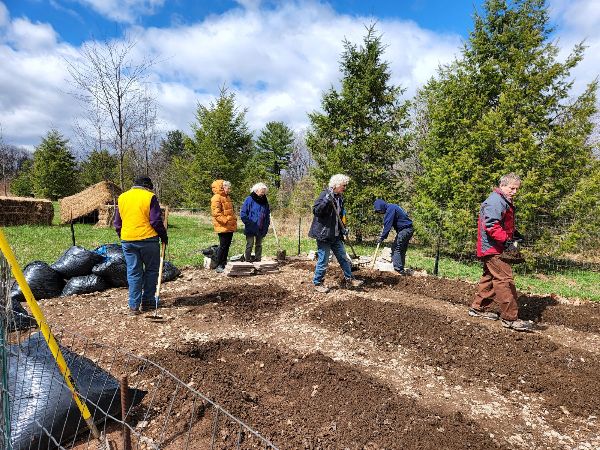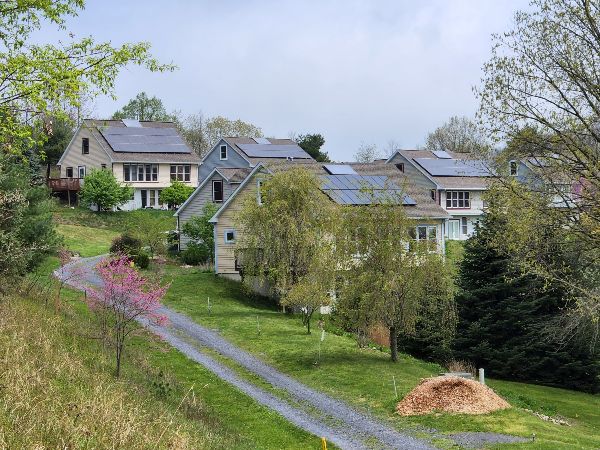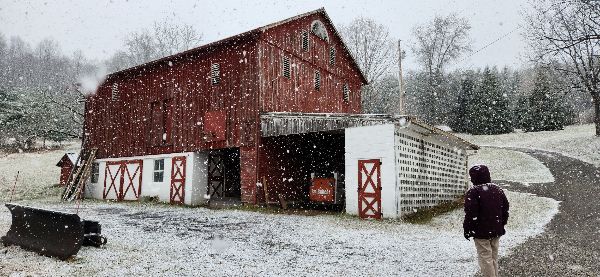
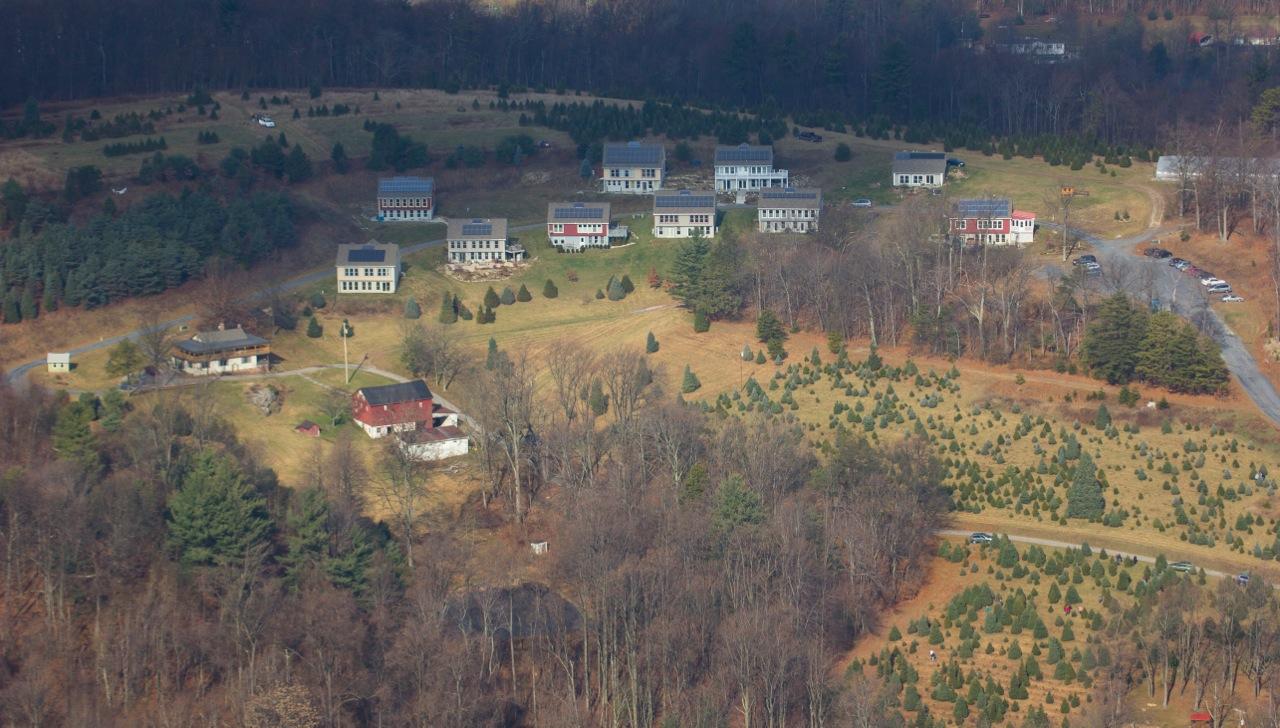
Aerial view of The Hundredfold Farm Community with houses and farmland.

The Hundredfold Farm Community

  • Communities

About the Communities

  • Established
  • Ecological
  • Rural

Founding year

  • 1998

What we do

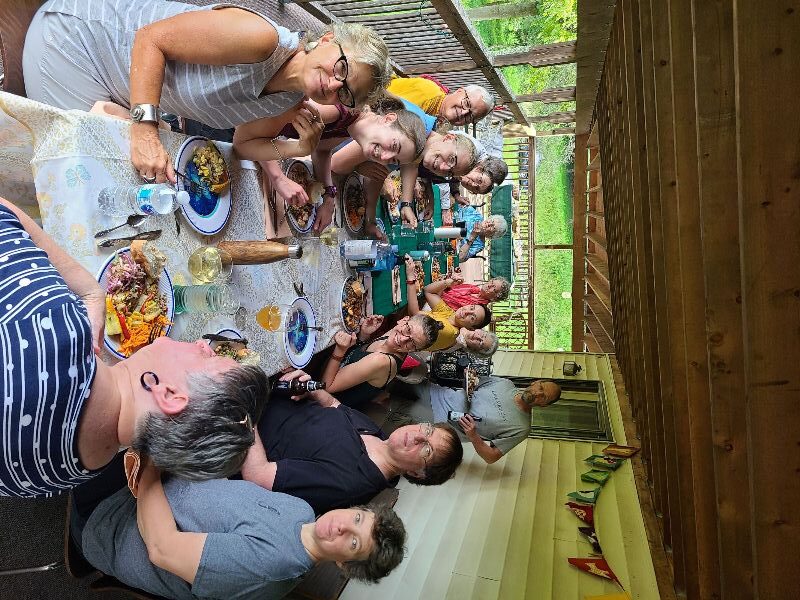
Nestled in the rolling hills near Gettysburg, Pennsylvania, Hundredfold Farm is a 14-household cohousing community where the privacy of modern living meets the warmth of a traditional village. Our multi-generational neighborhood is designed to foster deep connections, offering a meaningful antidote to the isolation of modern life. By balancing energy-efficient, single-family homes with extensive shared facilities, we create a space where neighbors truly know one another and work together to ensure that every member of the community can flourish.
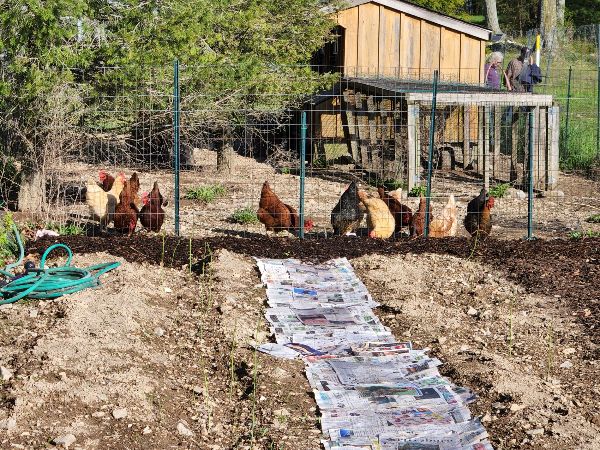
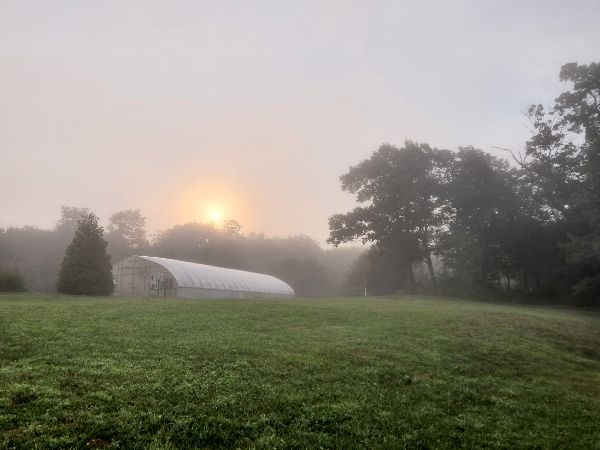
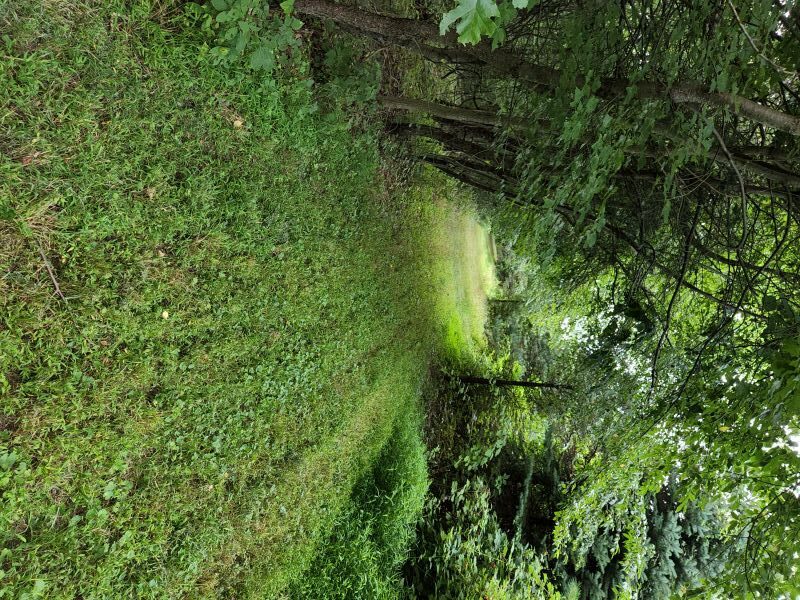
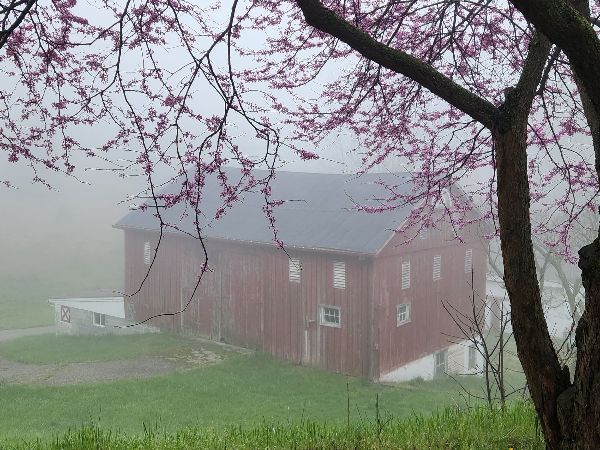
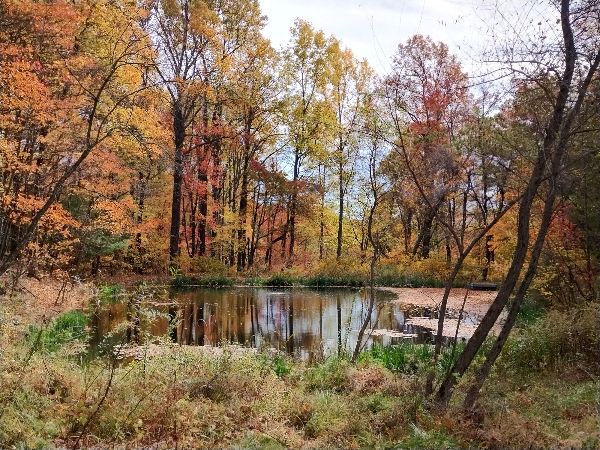
Sustainability is at the heart of our mission. Our 80-acre property is a sanctuary of native woodlands, walking paths, and organic gardens that have been cultivated since 2001. We tread lightly on the land through innovative practices, including passive solar home designs, a community-wide water recycling system, and a site plan that clusters homes to preserve the surrounding beauty. Whether we are gathering for a meal in our historic eight-room common house or enjoying the 180-degree views from the upper meadows, our shared spaces are the backdrop for a life lived in harmony with nature.
Life at Hundredfold Farm is as convenient as it is serene. We are located within an hour of Harrisburg and ten college campuses, and only ninety minutes from the Baltimore and Washington, D.C. metro areas. We pride ourselves on being a community of radical tolerance, welcoming individuals and families of all backgrounds and identities. Here, we aren’t just building houses; we are cultivating a diverse, inclusive, and sustainable future for everyone who calls this land home.

Our Mission

CARING: Reducing our ecological footprint – this value underlies decisions about incorporating active and passive solar power into the homes, a system which recycles our waste water for reuse as flush water, growing our own food, vigorous recycling. We are continually seeking ways to live more lightly on the land.
PARING: We are committed to keeping the interests of the land foremost in all our decisions. This is why we are clustering the homes on six acres, siting the community on the steeper portions of the property that is less suitable for gardening, are working with the natural contours of the land in laying out the community, and giving much thought to where to site gardens and activities.
SHARING: An ethic of finding ways to community as it naturally arises from living lives that consciously intersect with the lives of others.

  • Purpose
  • Ecological
  • Community type
  • Cohousing
  • Ecovillage
  • Sustainability practices
  • Renewable energy systems
  • Waste reduction / composting
  • Activities
  • Property management

Commemorative dates

  • January 1, 1998
  • Started planning
  • January 1, 2006
  • Started living together
  • 19 Total members
  • Open to new members
  • Open to visitors
Total
19

How to join

The membership pathway at Hundredfold Farm is designed as a journey of mutual discovery, moving beyond a simple transactional checklist toward a process of cultural integration. We call this the “Path of the Collaborative Neighbor,” a narrative-driven onboarding experience that helps you determine if our community is the right soil for you to grow in.

Basic expectations or agreements for members

Contact the community by email at ou*********@***il.com to let us know when you want to come. Preferred times are the first Saturday of each month; other times can be arranged.

Primary decision-making authority

  • Small Leadership Group

A few people (not elected by the broader community) make the major decisions.

Decision-making process

  • Full Consensus

Everyone must agree before moving forward.

Governance structure

  • Collaborative/Horizontal

Power and responsibility are shared relatively equally among members.

Conflict resolution approach

Our core leadership group is our rotating four-member Executive Board (EB). The EB oversees our committees, which are responsible for the day-to-day operation of the community. The EB has no authority to impose policy.

Economic model

  • Independent Finances

Members maintain separate personal finances with minimal sharing.

Economic scenarios for this community

  • Members need to pay fees, dues, or similar to live there on a per month or per year basis
  • There is a labor obligation
  • Members typically need to have their own job or other personal source of income to cover their expenses while living in the community?

Additional economic information

Regular fees: $379
Labor: Encouraged or suggested
Members with pre-existing debt: allowed
The monthly HOA fee covers the cost of things such as maintaining the common house, common property, wastewater treatment facility, and the road. The community agrees to the annual budget.

Shared resources and amenities that are accessible to everyone in the community

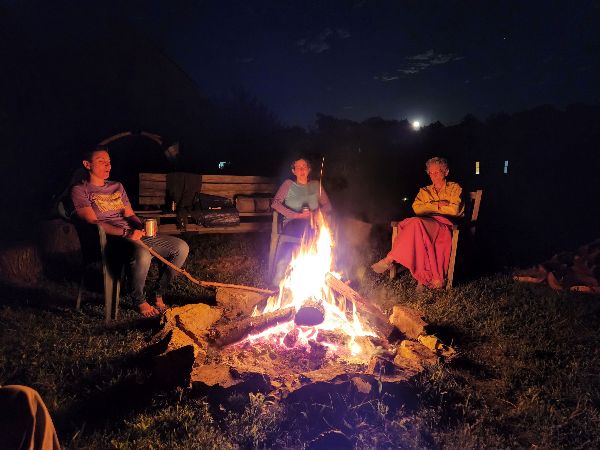
Common House, Garden(s), Greenhouse(s), Vehicle Share, Library, Workshop, Outbuilding(s), Swimming pond or pool, Tractor & Farm Equipment, Fire pit, Swingsets & play areas, Waterfront access

Frequency of communal meals

  • 1-3 times per month

Significant food acquisition practices

  • Growing our own
  • Locally sourced

Dietary type

  • Vegetarian Only

Dietary restriction

  • People can cook and eat what they want in their own residence

Community activities and engagement

  • Neighborhood, Community Housing, or Homeowner's Association

Substance use culture

  • Substance use appears in public spaces but no pressure
  • Substance use occurs primarily at celebrations or ceremonies

Gender composition

  • Roughly balanced (no group over 60%)

Age demographics

  • Mixed adults (few or no children)

Property status

  • Privately owned

Property owner

  • By a Land Trust, Home Owners Association, or corporation

Setting

  • Rural

Countryside locations with significant distance from urban centers.

Community type

  • Cohousing

    Private homes with shared common facilities, designed for neighborly
    interaction while maintaining independence.

  • Ecovillage

    Integrated communities designed around ecological principles with sustainable living practices.

Community type

  • Built or remodeled using passive solar design

Sustainability approach

  • Renewable energy systems
  • Waste reduction / composting

Community type

  • Built or remodeled using passive solar design

Some or all of the buildings are...

  • Built or remodeled using passive solar design

Self-produced energy

  • 33 - 66%

Energy sources used

  • Photovoltaic Solar

Self-produced food

  • Up to 33%

Local, organic, or fair trade food

  • 33 - 66%

Food systems

  • Community garden
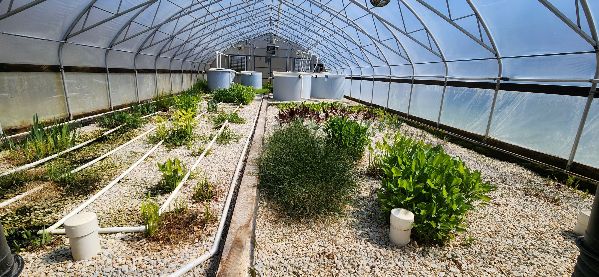
  • Greenhouse / aquaponics

Waste management practices

  • Recycling program
  • Reuse or repair systems
  • Land area size
    80 acres

Guest Book

Written reviews are available for plus members. Click here to upgrade.

Location

  • Pennsylvania, United States

The Hundredfold Farm Community

Needs and Offers

Connecting people and communities through an intentional online marketplace

  • Promoted
  • Events
4 days ago

Coastal Regeneration Immersion: Permaculture Design Certification in Jalisco, Mexico

Tropical Dry Forest Permaculture Design & Regenerative Stewardship Certification (PDC)12-Day Intensive | 120 Hours | Costalegre, Jalisco, Mexico APPLY AT XOCHIRAIZ.COM Join us for an immersive Permaculture Design Certificate course set in the tropical dry forest bioregion of coastal Jalisco. This 120-hour intensive blends internationally recognized PDC curriculum with hands-on regenerative practice — combining ecological design, agroforestry, natural building, and community stewardship into one integrated learning experience. Lead Faculty Jorge Luis Gtz. Olarte (Arborescencia RedGenerativa) – Regenerative Design, Soil Biology & Agroforestry Ozzy Lusth (Survior & Xochiraíz) – Wilderness Resilience & Survival Skills Dave Collins (Capacha Coastal Conservation Center) – Bioarchitecture & Ecological Development What You’ll LearnThe course moves through six progressive phases: Permaculture & Ecological Literacy – ethics, principles, and reading the tropical dry forest landscape Water & Soil Systems – keyline design, water harvesting, living soils, and compost systems Horticulture – food garden design, propagation, and biological pest control Regenerative Food Systems – tropical agroforestry, food forest design, and guild planting Ecological Infrastructure – bamboo bioarchitecture, bioclimatic farm design, compost toilets, greywater, and rocket stoves Integrated Design Studio – team-based final design projects covering watershed strategy, agroforestry, food forest layout, infrastructure, and phased implementation Daily RhythmMornings begin with optional surf/yoga and journaling, followed by field practicums and hands-on workshops. Afternoons include design studio and construction lab work, with reflection circles, communal dinners, and evening talks, films, or campfire discussions rounding out the day. Final ProjectParticipants work in teams to produce a full regenerative design package — landscape analysis, water plan, agroforestry design, food forest plan, ecological infrastructure, and bioclimatic farm plan — presented to a faculty review panel on the final day, followed by a closing ceremony, certificate delivery, and community feast. CertificationGraduates receive the Tropical Dry Forest Permaculture Design & Regenerative Stewardship Certification (120 contact hours), hosted by Capacha Coastal Conservation Center and Tierralegre, A.C. Curriculum integrates international PDC standards with tropical ecology, agroforestry, ecological restoration, bamboo bioarchitecture, bioclimatic design, GIS/photogrammetry, and regenerative leadership. Highlights Hands-on bamboo construction (temazcal, bathhouses, sculpture) Tropical dry forest silviculture practicum Community mapping and design project for Ekoa Green Community Talent show and sea turtle release
January 10, 2027 00:00 – January 24, 2027 23:59
  • Promoted
Offer
  • Promoted
Offer
  • Promoted
Offer
  • Professional Services
3 months ago

Community Matchmaking: Get Help Finding Your Community

Would you like to join an intentional community but don’t know how? Feel overwhelmed by the number of communities out there? Not sure if there is one that’s a fit for you? CommunityFinders is here to support you on your path to community living. You can find your community by: Taking the free Community Types Quiz to learn which of the most common types of community is a fit for you. Booking a 1:1 consultation with a Community Matchmaker to receive recommendations for communities that are a fit for you. Joining the Money and Community Mini-Course to find out which communities are within your budget. Reading the book Intentional Community to help you understand your options and decide whether community living is right for you. Our goal is to help community seekers become community finders — people with confidence that their community match is out there and they will find it. Looking forward to working with you to find your community! Please be in touch, Cynthia Tina Founder communityfinders.com What communitarians are saying: “Cynthia helped me clarify the intentional communities that fit me, better get to know them, and finally choose one that I’m now a member of. I have no doubt anyone on a community journey will find great value in her guidance.” – Alan Stillman “Out of potentially thousands of communities, Cynthia matched me with very similar values revealed on their websites. I am in the process of applying to visit the number one recommendation. I’m excited and thankful for Cynthia‘s skills. Beyond well worth.” – Tommy Teeple “Due to her extensive community experience, she could offer many insights, provide useful tips and present selected communities to me that she had visited herself.” – Antonia Von Hassell
Offer
  • Real Estate For Sale
2 days ago

Beautiful Eco-Friendly Home in Central North Carolina

Welcome home to thoughtful craftsmanship, low-maintenance living, and exceptional energy efficiency across 1,254 square feet of well-designed living space. Step through the front door into a light-flooded sunroom— the perfect setting to sip your morning coffee while taking in serene views of the mature grounds. Inside, the open-concept living and dining room combo centers around a cozy propane fireplace, ready for chilly evenings and effortless entertaining. The heart of the home features a beautifully appointed kitchen boasting custom maple cabinetry with glass-front display accents, durable granite countertops, an undermount sink, and room for stool seating at the counter for casual meals. The bathroom features two space-saving pocket doors—offering direct access from both the main living area and the bedroom—as well as a fully tiled shower enclosure, a handheld showerhead, and a toilet with an upgraded bidet seat. Thoughtful design extends to the back entry, where a secondary covered porch opens directly into a mudroom/laundry room to keep clutter out of sight. An elegant solid oak staircase ascends to an expansive, sunlit loft offering exceptional flexibility: easily convert it into a second bedroom with bath, or enjoy it today as a home office, studio, fitness zone, or guest retreat—complete with generous storage along the knee walls. Built for lasting peace of mind, this ENERGY STAR® qualified home features premium building upgrades, including a durable metal roof, fiber-cement Hardie Plank siding, high-performance Rockwool insulation, and a sealed, climate-controlled crawlspace. Outside, the property is a private sanctuary featuring mature, pollinator-friendly gardens, a tranquil meditation nook, a flourishing passion fruit bush, and a rain barrel for eco-friendly garden watering. For more information on joining the Living Well Community in North Carolina, talk to Harvey at  919-799-6819. To learn more about this beautiful home, talk to Tina at 843-834-6566 or email her at  ti********@*****il.com 

Update to a Public Profile

  • Log in
  • Go to your profile page
  • Toggle on the "Add my profile to the directory"
  • Save your profile

Information

Communities

A residential project: people live here as their primary home.

Organizations

An institution, business, network, or project that isn’t a residence (e.g. a learning center, farm, or network with no one living there full-time).

Plus Community Membership

  • Find people with Profile Match
  • Access to your community listing statistics
  • Create Discussion Groups
  • Access to our affiliate program
  • Member badge on your community profile
I am an official member of this community
Disclaimer
I affirm that my information is accurate and I am authorized to manage this listing
Foundation for Intentional Community FIC Member badge logo.

Free Plan

Free Membership
Free

Intentional Advertising

  • Subtotal

    {{ currencyFormat( pricing_summary.total_amount ) }}

Icon representing community connections and collaboration for intentional communities.

Plus Membership

  • Find communities with Profile Match
  • View detailed reviews about communities
  • Create free listings in Needs & Offers
  • Plus Member resources in CommUniversity
  • View communities detailed reviews
  • Plus Member badge on your profile