
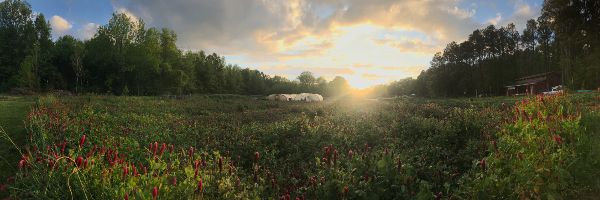
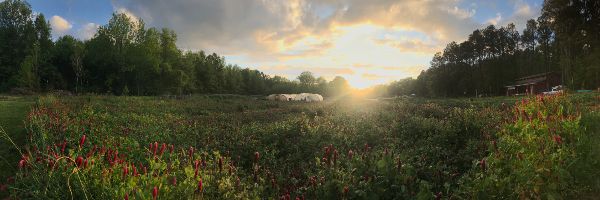
Scenic sunset view over lush Ecovillage farmland with trees and flowering plants.

Common Ground Ecovillage

  • Communities

About the Communities

  • Forming
  • Ecological
  • Rural

Founding year

  • 2008

What we do

03/03/2025 UPDATE: Things are moving fast at Common Ground Ecovillage! With changes in zoning that allow for more flexibility, a surge of inspired and skilled members joining us, a deepening of our community relationships and culture, and a greater clarity of our next steps, we are now moving forward at a quickening pace. Ultimately, we aim to develop a diverse, multigenerational community that will thrive for 7 generations to come, with a non-profit educational center and outreach programs that will support all beings, past and present, both human and non-human with dignity, honor, and awareness.
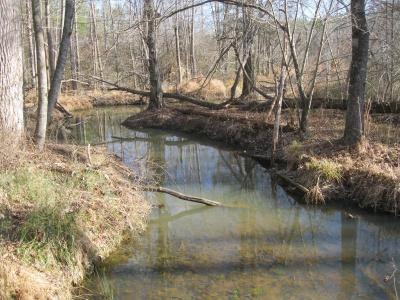
LOCATION: Our agrarian village will be located on 112 acres of fields, streams and woodlands, 10 miles west of Hillsborough in Orange County, NC. We are rural, yet not isolated, within convenient commuting distance to Greensboro, Chapel Hill, Durham, and Raleigh, all with renowned medical and university systems, and economic and cultural opportunities. We anticipate breaking ground for our common house in 2025 and possibly some housing by late 2025. Our 2 acres of dedicated farmland currently includes a solar powered barn with an office and farm intern apartment and supports a CSA called Full Table CSA. We are currently working on funding our infrastructure costs and our land is well on its way to being paid off.
HOUSING, BUILDINGS, AMENITIES & PRICING: This is a rapidly changing situation as we progress. Please refer to our website for up-to-date information on pricing and housing options as they become available. We anticipate a mix of farm worker housing, cooperative shared housing, and small-scale family homes with ADUs on each compactly organized 1/3 acre parcel. There may be rental options available. In general, what we build depends on the needs of the individuals that are currently contributing to the work and are actively moving through our membership process. We are still accepting new members, both to live with us on our land and to buy homes and property near us as an extended community. Volunteers to assist in the building and fundraising are very welcome!
LAND USE: Our goal is to establish a high quality of life while maximally sharing resources, deeply caring for the gift of our land and water, and minimizing our use of fossil fuels. The majority of our land will be preserved for regenerative agriculture (growing up to 30% of our food), managed woodlands (80%), and open space, and includes a small pond near our village site, meadows, and a stream along one border. Elements of this goal include:
– Adoption of the best site and building design principles and practices for reducing use of energy (solar), water (well), and other resources
– Management of the land for diversified food and timber production, wildlife habitat, recreation, research, and education
– Onsite opportunities for farm and other home-based employment
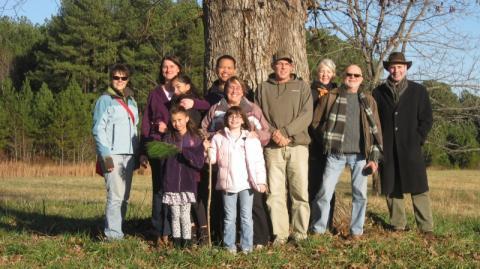
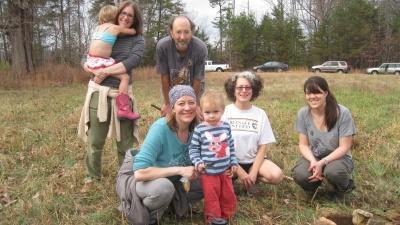
GOVERNANCE & CULTURE: Our governance system is Sociocracy. We actively cultivate a cooperative culture that respects and embraces the many skills, talents, cultures, and unique qualities that each individual brings. Farmers, gardeners, musicians, artists, artisans, tradespeople, academics, caregivers, healers, builders, engineers, technicians, writers, and others who embrace our vision for the world are all welcome and valued! We are dedicated to racial justice as well as equity and mutual acceptance among all members, no matter race, culture, gender, size, age, sexual orientation, or ability. We have recently completed our Community Cultural Agreements which support a compassionate cooperative culture, and include the practice of Non-violent Communication (NVC).
As an agrarian community, we focus on regenerative farming, land stewardship and food sovereignty. All members (if able) are encouraged to participate in some aspect of the growing, processing, and preservation of food and the functioning of the community. The planned size of our village will allow us to meet many of our needs on-site.

Our Mission

Common Ground Ecovillage is a forming agrarian intentional community that thrives on collaborative social and work life with creativity and celebration in all we do. We envision providing a tangible example of how we can live equitably and sustainably. Regenerative ecological, social, and economic practices are at the heart of our daily lives. Common Ground Ecovillage has been founded with the intention of modeling integrated, low-impact approaches to residential development and land stewardship.

  • Purpose
  • Ecological
  • Community type
  • Cohousing
  • Coliving
  • Ecovillage
  • Sustainability practices
  • Renewable energy systems
  • Regenerative agriculture or permaculture
  • Permaculture design
  • Activities
  • Education
  • Experiences

Commemorative dates

  • January 1, 2008
  • Started planning
  • January 1, 2025
  • Started living together

Gallery

  • 48 Total members
  • Open to new members
  • Open to visitors
Total
60

How to join

Members start as Visiting Members by completing our JOIN form and can choose to be Exploratory members at any time for up to 1 year and includes nominal monthly dues and many benefits and opportunities to actively participate in decision making. They will progress through a mutual discernment process to the Engaged membership level, at which point they may commit to live in the village, once built. We now also have a membership option “Affiliate Member” for people that want to help and be part of the community but don’t plan to live on the land. Start here: https://www.commonground.eco/become-a-member/

Basic expectations or agreements for members

Contact us through our website or send an email to we*****@**********nd.eco

Primary decision-making authority

  • Small Leadership Group

A few people (not elected by the broader community) make the major decisions.

Decision-making process

  • Consent-Based (Sociocracy)

Decisions proceed unless someone has a reasoned objection.

Governance structure

  • Sociocratic/Circle-Based

Organized in circles or domains with distributed authority.

Conflict resolution approach

All dues paying members have the opportunity to participate in policy formation and decision-making activities if they choose.

Economic model

  • Independent Finances

Members maintain separate personal finances with minimal sharing.

Economic scenarios for this community

  • There is a one-time fee, investment, or share purchase to join the community separate from accessing housing
  • Members need to pay fees, dues, or similar to live there on a per month or per year basis
  • There is a labor obligation
  • Members typically need to have their own job or other personal source of income to cover their expenses while living in the community?

Additional economic information

Join fee: Yes
Regular fees: $30
Labor: Yes (2 hrs/week)
Members with pre-existing debt: allowed

Shared resources and amenities that are accessible to everyone in the community

Garden(s), Outbuilding(s), Swimming pond or pool, Outdoor Kitchen, Tractor & Farm Equipment, Fire pit

Frequency of communal meals

  • 1-3 times per month

Significant food acquisition practices

  • Locally sourced

Dietary type

  • Vegetarian Only

Dietary restriction

  • People can cook and eat what they want in their own residence

Community activities and engagement

  • School, Educational Institute or Experience
  • Volunteer, Internship, or Apprenticeship, or WWOOF’ing
  • Festivals, Conferences, Events

Substance use culture

  • Substance use appears in public spaces but no pressure
  • Substance use occurs primarily at celebrations or ceremonies
  • Religions
  • Christian
  • Buddhist
  • Jewish
  • Quaker
  • Wiccan, Paganism, or Earth Religions
  • Unitarian Universalist

Gender composition

  • Majority cis (over 60%)

Age demographics

  • Family-focused (many children and parents)

Property status

  • Privately owned

Property owner

  • By several individuals through an LLC or a Tenancy In Common agreement

Setting

  • Rural

Countryside locations with significant distance from urban centers.

Community type

  • Cohousing

    Private homes with shared common facilities, designed for neighborly
    interaction while maintaining independence.

  • Coliving

    Shared living spaces with private bedrooms/bathrooms and communal
    kitchens, dining, and social areas.

  • Ecovillage

    Integrated communities designed around ecological principles with sustainable living practices.

Sustainability approach

  • Renewable energy systems
  • Regenerative agriculture or permaculture
  • Permaculture design

Land practices in our community

  • The community practices permaculture

Energy sources used

  • Photovoltaic Solar

Self-produced food

  • Up to 33%

Local, organic, or fair trade food

  • 33 - 66%

Food systems

  • Community garden
  • Land area size
    112 acres

Guest Book

Written reviews are available for plus members. Click here to upgrade.

Location

  • North Carolina, United States

Common Ground Ecovillage

Needs and Offers

Connecting people and communities through an intentional online marketplace

  • Promoted
Offer
  • Promoted
  • Events
4 days ago

Coastal Regeneration Immersion: Permaculture Design Certification in Jalisco, Mexico

Tropical Dry Forest Permaculture Design & Regenerative Stewardship Certification (PDC)12-Day Intensive | 120 Hours | Costalegre, Jalisco, Mexico APPLY AT XOCHIRAIZ.COM Join us for an immersive Permaculture Design Certificate course set in the tropical dry forest bioregion of coastal Jalisco. This 120-hour intensive blends internationally recognized PDC curriculum with hands-on regenerative practice — combining ecological design, agroforestry, natural building, and community stewardship into one integrated learning experience. Lead Faculty Jorge Luis Gtz. Olarte (Arborescencia RedGenerativa) – Regenerative Design, Soil Biology & Agroforestry Ozzy Lusth (Survior & Xochiraíz) – Wilderness Resilience & Survival Skills Dave Collins (Capacha Coastal Conservation Center) – Bioarchitecture & Ecological Development What You’ll LearnThe course moves through six progressive phases: Permaculture & Ecological Literacy – ethics, principles, and reading the tropical dry forest landscape Water & Soil Systems – keyline design, water harvesting, living soils, and compost systems Horticulture – food garden design, propagation, and biological pest control Regenerative Food Systems – tropical agroforestry, food forest design, and guild planting Ecological Infrastructure – bamboo bioarchitecture, bioclimatic farm design, compost toilets, greywater, and rocket stoves Integrated Design Studio – team-based final design projects covering watershed strategy, agroforestry, food forest layout, infrastructure, and phased implementation Daily RhythmMornings begin with optional surf/yoga and journaling, followed by field practicums and hands-on workshops. Afternoons include design studio and construction lab work, with reflection circles, communal dinners, and evening talks, films, or campfire discussions rounding out the day. Final ProjectParticipants work in teams to produce a full regenerative design package — landscape analysis, water plan, agroforestry design, food forest plan, ecological infrastructure, and bioclimatic farm plan — presented to a faculty review panel on the final day, followed by a closing ceremony, certificate delivery, and community feast. CertificationGraduates receive the Tropical Dry Forest Permaculture Design & Regenerative Stewardship Certification (120 contact hours), hosted by Capacha Coastal Conservation Center and Tierralegre, A.C. Curriculum integrates international PDC standards with tropical ecology, agroforestry, ecological restoration, bamboo bioarchitecture, bioclimatic design, GIS/photogrammetry, and regenerative leadership. Highlights Hands-on bamboo construction (temazcal, bathhouses, sculpture) Tropical dry forest silviculture practicum Community mapping and design project for Ekoa Green Community Talent show and sea turtle release
January 10, 2027 00:00 – January 24, 2027 23:59
  • Promoted
Offer
  • Promoted
Offer
  • Professional Services
3 months ago

Community Matchmaking: Get Help Finding Your Community

Would you like to join an intentional community but don’t know how? Feel overwhelmed by the number of communities out there? Not sure if there is one that’s a fit for you? CommunityFinders is here to support you on your path to community living. You can find your community by: Taking the free Community Types Quiz to learn which of the most common types of community is a fit for you. Booking a 1:1 consultation with a Community Matchmaker to receive recommendations for communities that are a fit for you. Joining the Money and Community Mini-Course to find out which communities are within your budget. Reading the book Intentional Community to help you understand your options and decide whether community living is right for you. Our goal is to help community seekers become community finders — people with confidence that their community match is out there and they will find it. Looking forward to working with you to find your community! Please be in touch, Cynthia Tina Founder communityfinders.com What communitarians are saying: “Cynthia helped me clarify the intentional communities that fit me, better get to know them, and finally choose one that I’m now a member of. I have no doubt anyone on a community journey will find great value in her guidance.” – Alan Stillman “Out of potentially thousands of communities, Cynthia matched me with very similar values revealed on their websites. I am in the process of applying to visit the number one recommendation. I’m excited and thankful for Cynthia‘s skills. Beyond well worth.” – Tommy Teeple “Due to her extensive community experience, she could offer many insights, provide useful tips and present selected communities to me that she had visited herself.” – Antonia Von Hassell
Offer
  • Real Estate For Sale
4 weeks ago

Lots of Goodness

Are you seeking to live in a sustainable, wellness-oriented community that prioritizes nature and environmental conservation? Lot 6 in the Living Well Ecovillage offers the perfect opportunity to be part of a vibrant, self-sufficient community committed to holistic health and ecological harmony. This lot, approximately 1/3 acre in size, is equipped with city utilities and fiber internet access. It is located in a unique mixed-use community with a variety of land uses planned for the future, including small business/commercial spaces, tiny houses, cluster housing, and a 10-acre farm. Your home could face the street or look North to the Living Well Park &  Pavilion where we enjoy many activities together as a Community.  Lot 6 would be ideal for someone who wanted to be close to the action.  Maybe you’d like a large, shared home. Or a business location. The Ecovillage is home to a diverse range of homes, such as timber frame, Deltec, hempcrete, and Net-Zero energy designs—all built with green building principles in mind. This community prioritizes sustainability and wellness in every aspect of life. About the Living Well EcovillageSpanning 126 acres, the Living Well Ecovillage is bordered by the Deep River and Sandy Creek, offering stunning natural beauty and a tranquil environment. The Ecovillage includes shared spaces like a community garden, a Greenway/Rail Trail, and a neighborhood park. Over 53 acres of natural land buffer the river and creek, preserving the area’s pristine beauty and offering residents a true connection to nature. Your Dream Home AwaitsLot 6 is the ideal spot to build your sustainable home, surrounded by trees, rock outcroppings, and abundant wild edible plants. Experience breathtaking views and a peaceful setting, perfect for those seeking a slower, more connected way of life. A Community That Supports WellnessThe Living Well Ecovillage is not just about space—it’s about community. With access to the Folk School, residents engage in hands-on learning, sustainable practices, and personal growth, fostering a sense of belonging and purpose. Perfectly LocatedJust two miles from Highway 64 in Franklinville, North Carolina, the Ecovillage is easily accessible to Greensboro, Asheboro, and Siler City, and a short drive from Raleigh, Durham, and Charlotte. It’s centrally located between the mountains and the ocean, with easy access to cultural and recreational amenities. Join Us in Building a Better FutureLot 6 offers more than just land—it’s an opportunity to be part of an established community with a shared vision for a sustainable, resilient future. Ready to start the next chapter of your life in the Living Well Ecovillage? Visit Living Well Ecovillage for more information and to explore your future home. For an aerial and street level view, visit Google Maps.

Update to a Public Profile

  • Log in
  • Go to your profile page
  • Toggle on the "Add my profile to the directory"
  • Save your profile

Information

Communities

A residential project: people live here as their primary home.

Organizations

An institution, business, network, or project that isn’t a residence (e.g. a learning center, farm, or network with no one living there full-time).

Plus Community Membership

  • Find people with Profile Match
  • Access to your community listing statistics
  • Create Discussion Groups
  • Access to our affiliate program
  • Member badge on your community profile
I am an official member of this community
Disclaimer
I affirm that my information is accurate and I am authorized to manage this listing
Foundation for Intentional Community FIC Member badge logo.

Free Plan

Free Membership
Free

Intentional Advertising

  • Subtotal

    {{ currencyFormat( pricing_summary.total_amount ) }}

Icon representing community connections and collaboration for intentional communities.

Plus Membership

  • Find communities with Profile Match
  • View detailed reviews about communities
  • Create free listings in Needs & Offers
  • Plus Member resources in CommUniversity
  • View communities detailed reviews
  • Plus Member badge on your profile