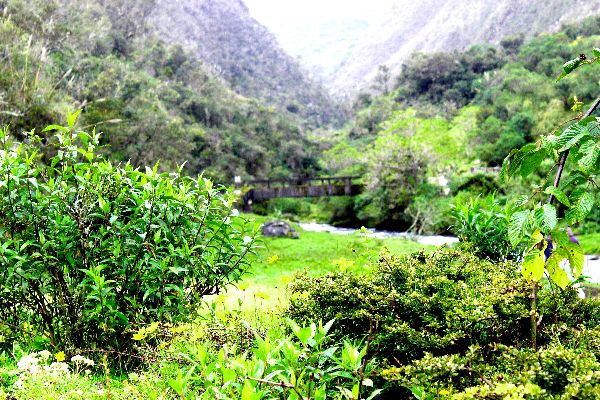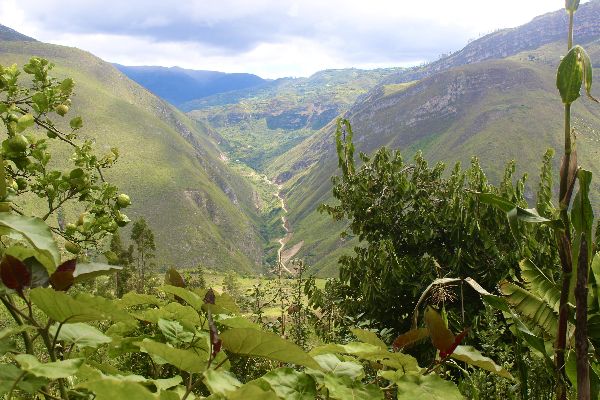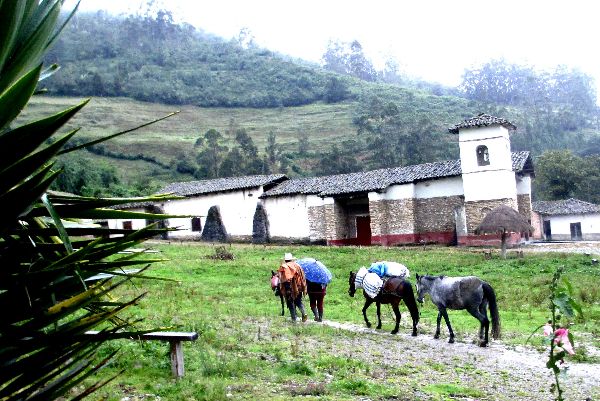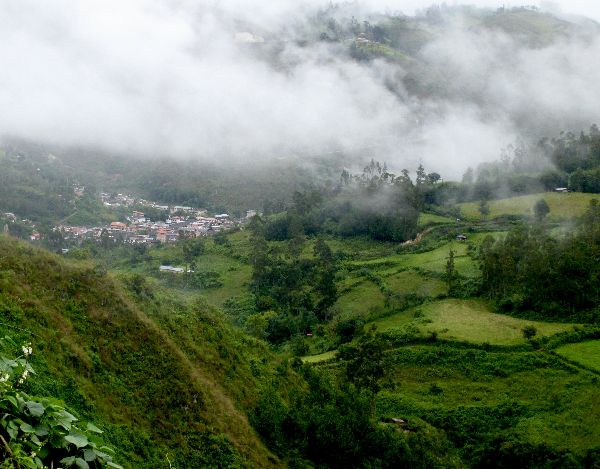
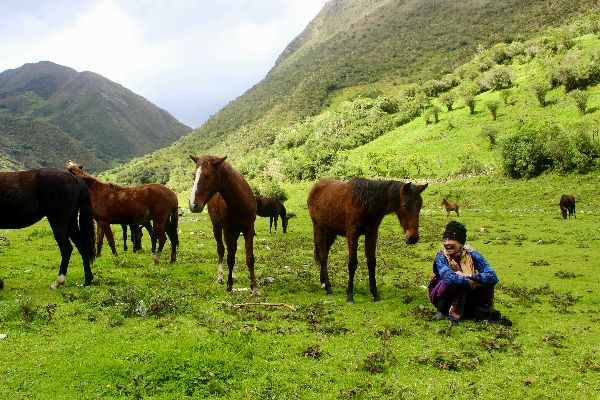
Horses grazing in a lush green valley with mountains in the background.

Halcyon Community

  • Communities

About the Communities

  • Forming
  • Ecological
  • Rural

Founding year

  • 2024

What we do

Our community demonstrates a working model for the New Earth of how human beings can live in harmony with each other and with Nature, as a foundation for future generations. Our goal is to live largely independent from techno-industrial society, as we transition to a sovereign, sustainable, healthy, spiritually integrated culture.
We are in the stage of forming this community. Here are our immediate goals:
1. Gather more people for community collaboration
2. Scout for and acquire land (northern Peru)
3. Harmonize personal dynamics for group cohesion as we prepare for turbulent times (see Additional Comments section below)
4. Build out physical infrastructure
5. Get food production to self-sufficiency
Halcyon Community Profiles
Global Ecovillage Network
https://ecovillage.org/ecovillage/comunidad-halcyon/ (Español)
https://ecovillage.org/ecovillage/halcyon-community/ (English)
Ecobasa
https://ecobasa.org/en/communities/halcyon-community/
Permies
https://permies.com/t/362307/Halcyon-Community-Northern-Peru
Freedom Cell Network
https://freedomcells.org/cells/halcyon-community/
https://freedomcells.org/ (account required)
Solar Killshot Action Network | Micronova Survival Groups
https://network.solarkillshot.org/c/halcyon/
https://solarkillshot.org/ (account required)

Our Mission

We co-create a community to unlearn toxic lifeways of civilization and learn/practice/prove healthy lifeways useful to the Next Culture/New Earth.
We are a group choosing consciously to survive the imminent Technocratic threats, in addition to economic/political/geophysical collapse, and to build together a cultural “Ark” for those inspired to move into the New Era. We are in service to the future, as we understand that all are One. May we set the stage for great possibility and achievement.

  • Purpose
  • Ecological
  • Community type
  • Ecovillage
  • Commune
  • Intentional Neighborhoods
  • Sustainability practices
  • Renewable energy systems
  • Waste reduction / composting
  • Regenerative agriculture or permaculture
  • Permaculture design
  • Natural / low-impact building
  • Activities
  • Education
  • Networking
  • Others

Commemorative dates

  • January 1, 2024
  • Started planning
  • January 1, 2025
  • Started living together
  • 3 Total members
  • Open to new members
  • Open to visitors
Total
3

How to join

Step (1) Contact us to get the conversation started. ……..
Step (2) We send you the prospectus to read. ……..
Step (3) If you are inspired by the prospectus, we send you a questionairre to fill out. ………
Step (4) We conduct an online interview. ……..
Step (5 ) Transition to Linux operating system and privacy platforms to participate in group calls and chat. ……..
Step (6) Trial period for co-living/working together. ……..
Step (7) Community consent for on-boarding new member. ……..

Basic expectations or agreements for members

Contact us. Preferably using SimpleX Chat.
Download the app here: https://simplex.chat/
Copy and paste this link below into the app and send us a message:
(BECCA’s address:)
https://smp10.simplex.im/a#7hvyAkCU9kK26Vgek-WlaXZ9YKQRhJcmKq-5thU5qw8
(LUCAS’ address:)
https://smp17.simplex.im/a#EenHjm1SmfWuIAJgmYyTymKtI_Q7ErRyboZmCBR3PPE

Primary decision-making authority

  • Small Leadership Group

A few people (not elected by the broader community) make the major decisions.

Decision-making process

  • Consent-Based (Sociocracy)

Decisions proceed unless someone has a reasoned objection.

Governance structure

  • Sociocratic/Circle-Based

Organized in circles or domains with distributed authority.

Conflict resolution approach

A core focus of our community is human dynamics. We have all been born into a Dominator System (some people call this the Patriarchy), so we are habituated to victimhood, competition, and selfishness. There is no blame in this, but we expect everyone in our community to be pro-active in healing these emotional and self-esteem wounds. Therefore, we work together to acquire more functional skills and practice communication (such s NonViolent Communication/Compassionate Communication), listening, empathy, conflict management, and mediation………………………..
We organize ourselves using primarily a sociocracy model, with flexible variations………………………
Sociocracy is built on a governance structure of semi-autonomous, nested groups called “circles”. Each circle has a defined aim and full authority over a specific domain of responsibility within the community. This structure resembles a horizontal association rather than an autocratic hierarchy. Decision-making within a circle is based on consent, not majority voting nor consensus. Consent is achieved when no member has an objection to a proposal. Of course, the objection must be based on the concern that the circle cannot achieve its aim adequately if the proposal were approved. Different circles are linked and engender feedback loops, so that their decisions also serve the greater goals of the whole group…………………
As people become more adept, sociocracy becomes more vibrant and relevant. We will need empowered, capable community members to problem-solve and work together when we face, for example, the loss of internet, electricity, and the supply chain……

Economic model

  • Complete Income-Sharing

All member income goes into common pool for community use.

Economic scenarios for this community

  • Members need to pay fees, dues, or similar to live there on a per month or per year basis
  • There is a labor obligation

Additional economic information

Regular fees: Yes
Labor: Yes (25 hrs/week)
Members with pre-existing debt: allowed
Each person needs to be committed to doing the work required to attain self-sufficiency. This would probably be a minimum of 25 hours/week/person for food production (work in the gardens, caring for the animals, etc.) ……………..
Barter/Gift Economy – as well as interfacing with global economic currencies & markets, while they exist ………….
BARTER is the direct, reciprocal exchange of goods …………
GIFT ECONOMY transactions are part of a flow of unselfish giving in which the giver is inspired to confer benefits to someone else. Akin to the Native American tradition of the potlatch, and recently revived with the slogan, “Pay It Forward”, our goal is to transition to this style of economy, as this way of relating recognizes that All Are One, as Dr. Bronner’s puts it ……….
In the meantime, community economy is apt to be a mix of money, energy exchange, hours exchange, barter, and gifting.

Shared resources and amenities that are accessible to everyone in the community

Common House, Garden(s), Vehicle Share, Library, Workshop, Outbuilding(s), Swimming pond or pool, Outdoor Kitchen, Large Scale Kitchen, Stage or Auditorium, Fire pit, Swingsets & play areas, Internet

Frequency of communal meals

  • Approximately 1 meal per day

Significant food acquisition practices

  • Locally sourced

Dietary type

  • Kosher Only

Dietary restriction

  • People can cook and eat what they want in their own residence

Community activities and engagement

  • Transition Town (post-petroleum and off-grid communities.)
  • School, Educational Institute or Experience
  • Organization, Resource, or Network

Substance use culture

  • Substance use occurs primarily at celebrations or ceremonies

Gender composition

  • Majority cis (over 60%)

Age demographics

  • Mixed adults (few or no children)

Guest Book

Written reviews are available for plus members. Click here to upgrade.

Location

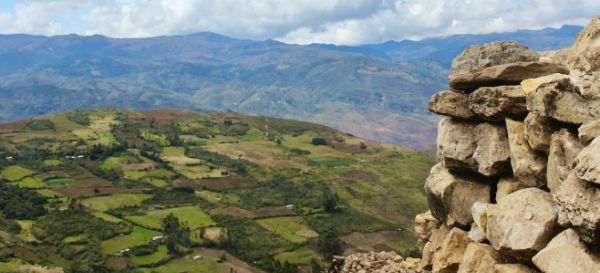
  • Amazonas, Peru

Halcyon Community

Needs and Offers

Connecting people and communities through an intentional online marketplace

Offer
Offer
  • Events
3 weeks ago

Restoring Choice - free online practice group, from Australia

Restoring Choice – free sessions and a practice group Many of us are less practised at three things than we realise: making clear requests, saying no when it isn’t a full yes, and hearing no without something getting damaged. These aren’t personality traits. They’re capacities that were trained out of many of us by ordinary structures – families where some needs were allowed and others weren’t, workplaces that reward overstretch. They can be trained back. Why this might interest people here Most communities teach communication after people arrive, once conflict has already surfaced. This works the other way round – building capacity first, and finding out what a group can do when most people already have it. What’s running Free 60-minute introduction, online. Same session each time; come to whichever suits. Register for intro session below: https://events.humanitix.com/reclaim-your-power-with-restoring-choice Four-week practice group, Tuesdays from 15 September, 6:30-8:00pm. One session a week, and at least one short written entry a day about a real situation in your own life. The writing is the actual work; the sessions support it. Sign up by Sunday 13 September. Register for practice group below: https://events.humanitix.com/restoring-choice-practice-group Everything is free. Times are Australian Eastern 6:30pm here is the early hours in most of the Americas. Worth checking before you register. Who it’s for No prior experience needed. It isn’t therapy, and I’m not a therapist. Many people find that looking honestly at how well they ask, decline, or hear a no is less flattering than expected. That’s common, and it isn’t a verdict on anyone. Run by Glenn Russo – 13 years practising this material, seven years co-facilitating an NVC practice group in Castlemaine. If you’re already living in community and would rather share what you’ve learned than join anything, I’d like to hear from you too.
  • Events
4 days ago

Coastal Regeneration Immersion: Permaculture Design Certification in Jalisco, Mexico

Tropical Dry Forest Permaculture Design & Regenerative Stewardship Certification (PDC)12-Day Intensive | 120 Hours | Costalegre, Jalisco, Mexico Join us for an immersive Permaculture Design Certificate course set in the tropical dry forest bioregion of coastal Jalisco. This 120-hour intensive blends internationally recognized PDC curriculum with hands-on regenerative practice — combining ecological design, agroforestry, natural building, and community stewardship into one integrated learning experience. Lead Faculty Jorge Luis Gtz. Olarte (Arborescencia RedGenerativa) – Regenerative Design, Soil Biology & Agroforestry Ozzy Lusth (Survior & Xochiraíz) – Wilderness Resilience & Survival Skills Dave Collins (Capacha Coastal Conservation Center) – Bioarchitecture & Ecological Development What You’ll LearnThe course moves through six progressive phases: Permaculture & Ecological Literacy – ethics, principles, and reading the tropical dry forest landscape Water & Soil Systems – keyline design, water harvesting, living soils, and compost systems Horticulture – food garden design, propagation, and biological pest control Regenerative Food Systems – tropical agroforestry, food forest design, and guild planting Ecological Infrastructure – bamboo bioarchitecture, bioclimatic farm design, compost toilets, greywater, and rocket stoves Integrated Design Studio – team-based final design projects covering watershed strategy, agroforestry, food forest layout, infrastructure, and phased implementation Daily RhythmMornings begin with optional surf/yoga and journaling, followed by field practicums and hands-on workshops. Afternoons include design studio and construction lab work, with reflection circles, communal dinners, and evening talks, films, or campfire discussions rounding out the day. Final ProjectParticipants work in teams to produce a full regenerative design package — landscape analysis, water plan, agroforestry design, food forest plan, ecological infrastructure, and bioclimatic farm plan — presented to a faculty review panel on the final day, followed by a closing ceremony, certificate delivery, and community feast. CertificationGraduates receive the Tropical Dry Forest Permaculture Design & Regenerative Stewardship Certification (120 contact hours), hosted by Capacha Coastal Conservation Center and Tierralegre, A.C. Curriculum integrates international PDC standards with tropical ecology, agroforestry, ecological restoration, bamboo bioarchitecture, bioclimatic design, GIS/photogrammetry, and regenerative leadership. Highlights Hands-on bamboo construction (temazcal, bathhouses, sculpture) Tropical dry forest silviculture practicum Community mapping and design project for Ekoa Green Community Talent show and sea turtle release
November 13, 2026 09:00 – November 25, 2026 16:00

Update to a Public Profile

  • Log in
  • Go to your profile page
  • Toggle on the "Add my profile to the directory"
  • Save your profile

Information

Communities

A residential project: people live here as their primary home.

Organizations

An institution, business, network, or project that isn’t a residence (e.g. a learning center, farm, or network with no one living there full-time).
Plus Community Membership

  • Find people with Profile Match
  • Access to your community listing statistics
  • Create Discussion Groups
  • Access to our affiliate program
  • Member badge on your community profile
I am an official member of this community
Disclaimer
I affirm that my information is accurate and I am authorized to manage this listing
Foundation for Intentional Community FIC Member badge logo.

Free Plan

Free Membership
Free

Intentional Advertising

  • Subtotal

    {{ currencyFormat( pricing_summary.total_amount ) }}

Icon representing community connections and collaboration for intentional communities.

Plus Membership

We’re introducing new Plus features — including community reviews, Profile Match, and unlimited Needs & Offers posts — while keeping most of FIC free for everyone. Membership costs less than two coffees a month. 

  • Find communities with Profile Match
  • View detailed reviews about communities
  • Create free listings in Needs & Offers
  • Plus Member resources in CommUniversity
  • View communities detailed reviews
  • Plus Member badge on your profile