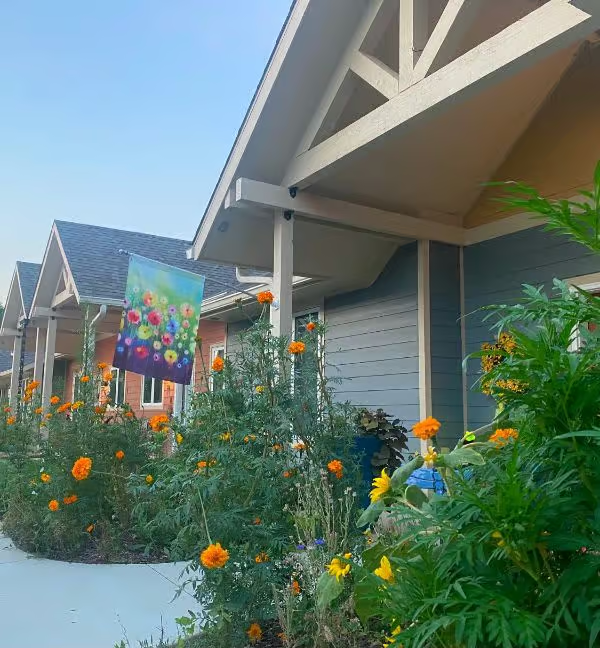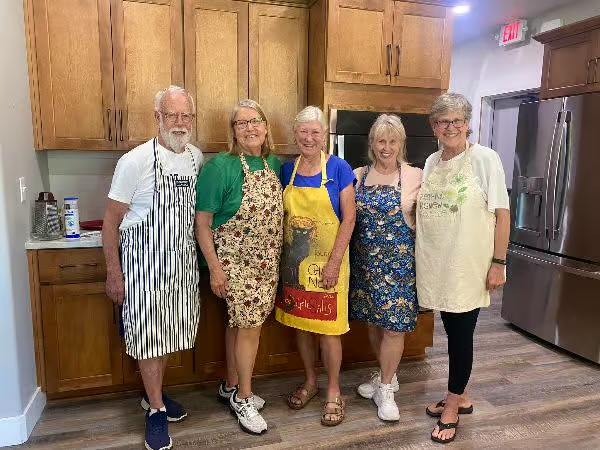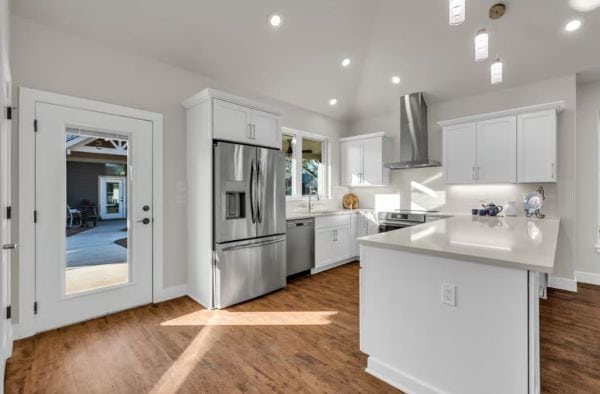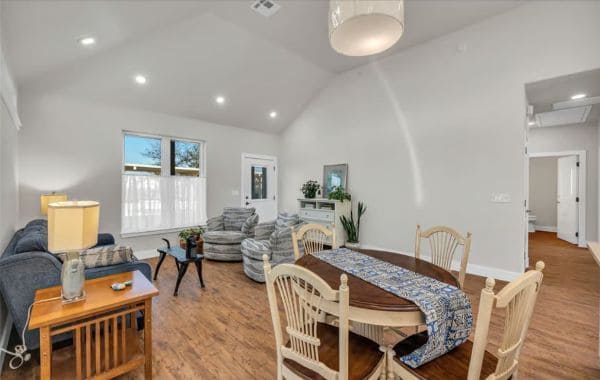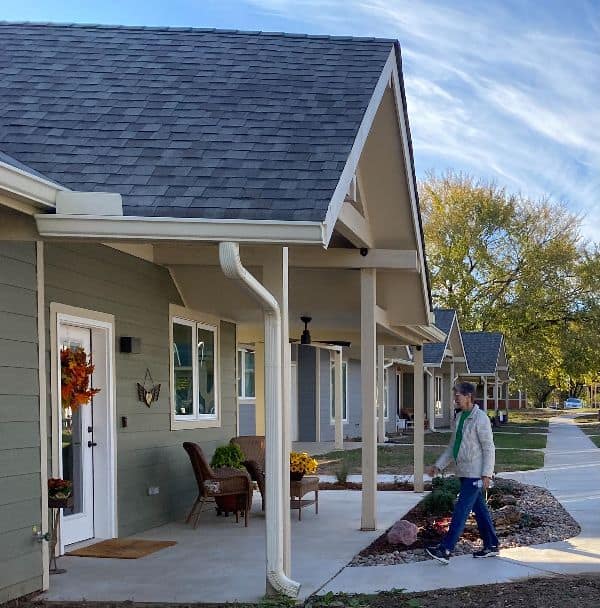
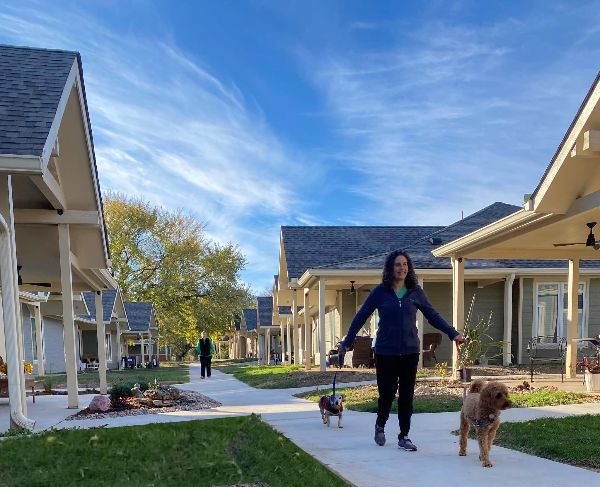
Woman walking two dogs in a community neighborhood with houses and blue sky.

Heartwood Commons - Tulsa

  • Communities

About the Communities

  • Established
  • Home-sharing
  • Suburban

Founding year

  • 2016

What we do

Come home to Heartwood Commons – Tulsa where your cohousing dollars go further. Join people from all across the country who are choosing to call Heartwood Commons home.
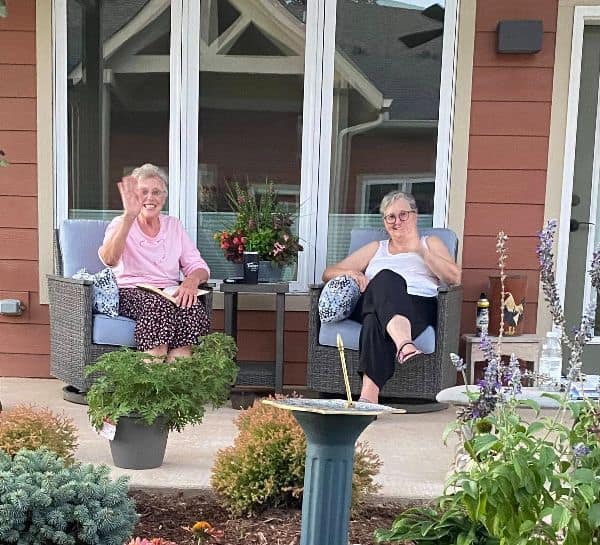
Heartwood Commons is a lively, cohousing neighborhood of 36 homes for active adults in one of America’s most livable cities. Tulsa, a progressive city, offers the charm of a small town combined with the amenities of a vibrant urban center, all at an accessible cost. Opened in 2024, the community prioritizes connection, sustainability, acceptance, diversity, wellness, support, and joy in everyday living.
Heartwood Commons offers exceptional cohousing value. Our prices, which have been recently reduced, combined with Tulsa’s low cost of living, make it easy to live well, stay connected, and enjoy a vibrant, supportive community. A soft place to land, nearly 30% of our residents have move here from out-of-state.
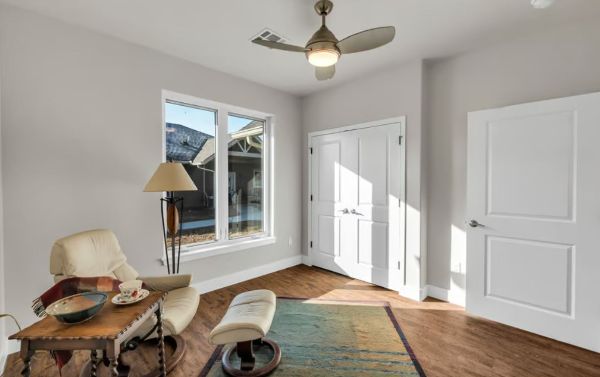
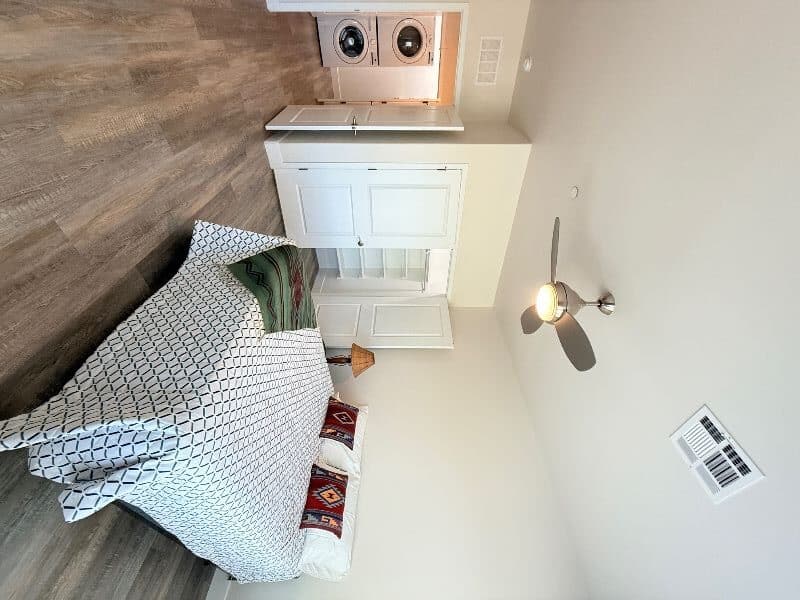
Our thoughtfully designed single‑story homes feature open floor plans, abundant natural light, quality kitchens, accessible bathrooms, generous storage, and spacious porches. Every home includes geothermal energy, fire monitoring and sprinklers, and storm protection—smart, sustainable living built in.
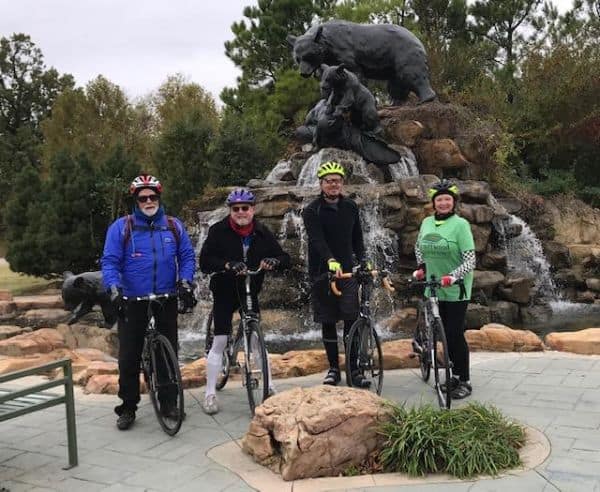
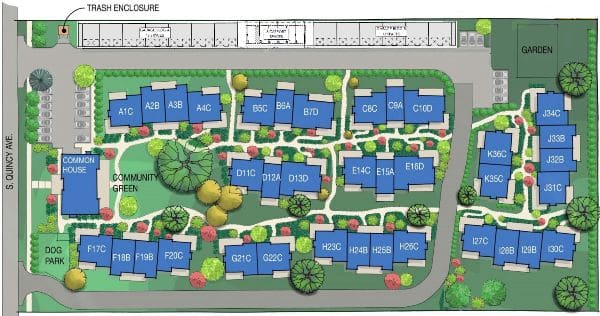
At the heart of our neighborhood is the common house, where shared meals, celebrations, guest rooms, creative spaces, and community activities bring people together. Step outside and enjoy gardens, walking paths, a dog park, tool sharing, and easy access to the Arkansas River trails, Turkey Mountain Urban Wilderness, and affordable state-of-the-art exercise facilities.
Located in the heart of “Green Country,” Tulsa features all four seasons and blends affordability with culture, nature, and a friendly, engaged progressive spirit. World‑class museums and performing arts, award-winning parks, a diverse and thriving music, food and craft beer scene, year‑round outdoor recreation, and a revitalized Historic Route 66 make it a standout place to call home. Tulsans are known for their friendliness, a culture of philanthropy, and community engagement. More than a quarter of our residents have moved here from across the country—and absolutely love it.
Prices on available homes have recently been reduced by up to $50,000.
Check us out. We think you’ll be surprised. Call us. Visit our website. Come meet us for a cup of coffee, a glass of wine, and a tour. We’d love to share with you the exciting opportunities to live better and healthier the cohousing way at Heartwood Commons – and for less.
Our website is http://www.heartwoodcommonstulsa.com. You’ll find us on Facebook @HeartwoodCommonsTulsa. And for information about homes for sale at Heartwood, check out: https://www.heartwoodcommonstulsa.com/for-sale.
We look forward to talking with you soon.

Our Mission

Heartwood Commons is a vibrant, welcoming, cohousing community for active adults in Tulsa, Oklahoma designed to promote connections, health and wellness, and successful maturing in place.

  • Purpose
  • Home-sharing
  • Community type
  • Cohousing

Commemorative dates

  • January 1, 2016
  • Started planning
  • January 1, 2024
  • Started living together
  • 40 Total members
  • Open to new members
  • Open to visitors
Total
40

How to join

To purchase a home available for sale at Heartwood Commons, individuals tour the home and the community, learn about the community through an orientation and get their questions answered, and finalize a purchase contract and close on their home.

Basic expectations or agreements for members

For more information about Heartwood Commons or to arrange a visit, please contact Community Member Suzy at 918-519-5298 or email he*******************@***il.com.

Primary decision-making authority

  • Small Leadership Group

A few people (not elected by the broader community) make the major decisions.

Decision-making process

  • Modified Consensus

Generally seek agreement, but have backup methods when consensus isn’t reached.

Governance structure

  • Collaborative/Horizontal

Power and responsibility are shared relatively equally among members.

Conflict resolution approach

According to our HOA documents, all homeowners are on the Board of Directors. We also elect a President, Vice-President, Treasurer, and Secretary annually for legal purposes, however they have no more power than anyother member of the board.

Economic model

  • Independent Finances

Members maintain separate personal finances with minimal sharing.

Economic scenarios for this community

  • Members need to pay fees, dues, or similar to live there on a per month or per year basis
  • There is a labor obligation
  • Members typically need to have their own job or other personal source of income to cover their expenses while living in the community?

Additional economic information

Regular fees: $500
Labor: Encouraged or suggested
Members with pre-existing debt: allowed
Our HOA dues cover a lot: water, sewer, trash, recyling, high-speed internet, 140-channel cable package, and your share of operational expenses and reserves for long-term maintenance and replacement costs. They range generally from $468-$602 for 2026, depending on the size of the home, and an additional $34 for a garage or $13 for a carport if applicable. Your remaining personal bills are: electric, which is minimized due to the use of geothermal power and energy-efficient building practices, cell phone, personal property (condo) insurance, and property taxes. No longer will you need to pay for outside home maintenance, lawn care, security, and other costs you might have incurred in your single-family home.
Everyone is encouraged to participate in community life by volunteering on one or more community team or subteam and by assisting in the occasional preparation and/or clean-up of common meals.

Shared resources and amenities that are accessible to everyone in the community

Common House, Garden(s), Greenhouse(s), Library, Workshop, Outbuilding(s), Large Scale Kitchen, Fire pit, Internet

Frequency of communal meals

  • About once a week

Substance use culture

  • Substance use appears in public spaces but no pressure
  • Substance use is prohibited in the community

Age demographics

  • Mixed adults (few or no children)

Property status

  • Privately owned

Property owner

  • By a Land Trust, Home Owners Association, or corporation

Setting

  • Suburban

Residential areas outside city centers but within metropolitan regions.

Community type

  • Cohousing

    Private homes with shared common facilities, designed for neighborly
    interaction while maintaining independence.

Energy sources used

Food systems

  • Community garden
  • Greenhouse / aquaponics

Wastewater management

  • Public sewage
  • Land area size
    4.8 acres

Guest Book

Written reviews are available for plus members. Click here to upgrade.

Location

  • Oklahoma, United States

Heartwood Commons - Tulsa

Needs and Offers

Connecting people and communities through an intentional online marketplace

  • Promoted
  • Events
2 weeks ago

Coastal Regeneration Immersion: Permaculture Design Certification in Jalisco, Mexico

Tropical Dry Forest Permaculture Design & Regenerative Stewardship Certification (PDC)12-Day Intensive | 120 Hours | Costalegre, Jalisco, Mexico APPLY AT XOCHIRAIZ.COM Join us for an immersive Permaculture Design Certificate course set in the tropical dry forest bioregion of coastal Jalisco. This 120-hour intensive blends internationally recognized PDC curriculum with hands-on regenerative practice — combining ecological design, agroforestry, natural building, and community stewardship into one integrated learning experience. Lead Faculty Jorge Luis Gtz. Olarte (Arborescencia RedGenerativa) – Regenerative Design, Soil Biology & Agroforestry Ozzy Lusth (Survior & Xochiraíz) – Wilderness Resilience & Survival Skills Dave Collins (Capacha Coastal Conservation Center) – Bioarchitecture & Ecological Development What You’ll LearnThe course moves through six progressive phases: Permaculture & Ecological Literacy – ethics, principles, and reading the tropical dry forest landscape Water & Soil Systems – keyline design, water harvesting, living soils, and compost systems Horticulture – food garden design, propagation, and biological pest control Regenerative Food Systems – tropical agroforestry, food forest design, and guild planting Ecological Infrastructure – bamboo bioarchitecture, bioclimatic farm design, compost toilets, greywater, and rocket stoves Integrated Design Studio – team-based final design projects covering watershed strategy, agroforestry, food forest layout, infrastructure, and phased implementation Daily RhythmMornings begin with optional surf/yoga and journaling, followed by field practicums and hands-on workshops. Afternoons include design studio and construction lab work, with reflection circles, communal dinners, and evening talks, films, or campfire discussions rounding out the day. Final ProjectParticipants work in teams to produce a full regenerative design package — landscape analysis, water plan, agroforestry design, food forest plan, ecological infrastructure, and bioclimatic farm plan — presented to a faculty review panel on the final day, followed by a closing ceremony, certificate delivery, and community feast. CertificationGraduates receive the Tropical Dry Forest Permaculture Design & Regenerative Stewardship Certification (120 contact hours), hosted by Capacha Coastal Conservation Center and Tierralegre, A.C. Curriculum integrates international PDC standards with tropical ecology, agroforestry, ecological restoration, bamboo bioarchitecture, bioclimatic design, GIS/photogrammetry, and regenerative leadership. Highlights Hands-on bamboo construction (temazcal, bathhouses, sculpture) Tropical dry forest silviculture practicum Community mapping and design project for Ekoa Green Community Talent show and sea turtle release
January 10 – January 24
  • Promoted
Offer
  • Promoted
Offer
  • Professional Services
3 months ago

Community Matchmaking: Get Help Finding Your Community

Would you like to join an intentional community but don’t know how? Feel overwhelmed by the number of communities out there? Not sure if there is one that’s a fit for you? CommunityFinders is here to support you on your path to community living. You can find your community by: Taking the free Community Types Quiz to learn which of the most common types of community is a fit for you. Booking a 1:1 consultation with a Community Matchmaker to receive recommendations for communities that are a fit for you. Joining the Money and Community Mini-Course to find out which communities are within your budget. Reading the book Intentional Community to help you understand your options and decide whether community living is right for you. Our goal is to help community seekers become community finders — people with confidence that their community match is out there and they will find it. Looking forward to working with you to find your community! Please be in touch, Cynthia Tina Founder communityfinders.com What communitarians are saying: “Cynthia helped me clarify the intentional communities that fit me, better get to know them, and finally choose one that I’m now a member of. I have no doubt anyone on a community journey will find great value in her guidance.” – Alan Stillman “Out of potentially thousands of communities, Cynthia matched me with very similar values revealed on their websites. I am in the process of applying to visit the number one recommendation. I’m excited and thankful for Cynthia‘s skills. Beyond well worth.” – Tommy Teeple “Due to her extensive community experience, she could offer many insights, provide useful tips and present selected communities to me that she had visited herself.” – Antonia Von Hassell

Update to a Public Profile

  • Log in
  • Go to your profile page
  • Toggle on the "Add my profile to the directory"
  • Save your profile

Information

Communities

A residential project: people live here as their primary home.

Organizations

An institution, business, network, or project that isn’t a residence (e.g. a learning center, farm, or network with no one living there full-time).

Plus Community Membership

  • Find people with Profile Match
  • Access to your community listing statistics
  • Create Discussion Groups
  • Access to our affiliate program
  • Member badge on your community profile
I am an official member of this community
Disclaimer
I affirm that my information is accurate and I am authorized to manage this listing
Foundation for Intentional Community FIC Member badge logo.

Free Plan

Free Membership
Free

Intentional Advertising

  • Subtotal

    {{ currencyFormat( pricing_summary.total_amount ) }}

Icon representing community connections and collaboration for intentional communities.

Plus Membership

  • Find communities with Profile Match
  • View detailed reviews about communities
  • Create free listings in Needs & Offers
  • Plus Member resources in CommUniversity
  • View communities detailed reviews
  • Plus Member badge on your profile