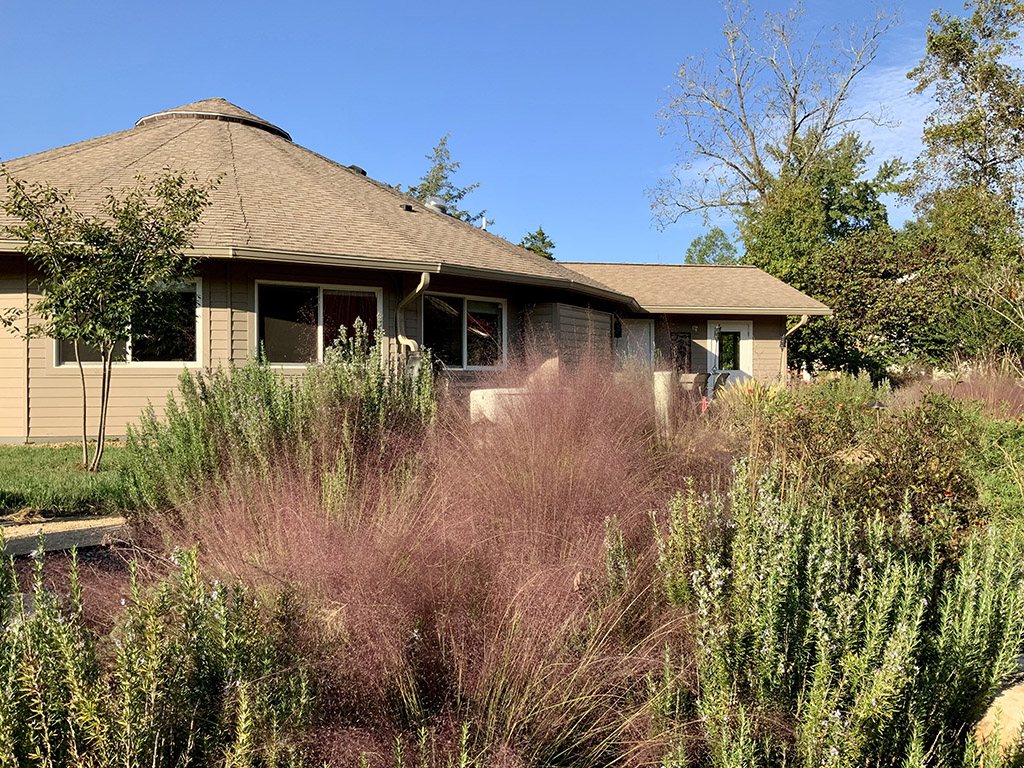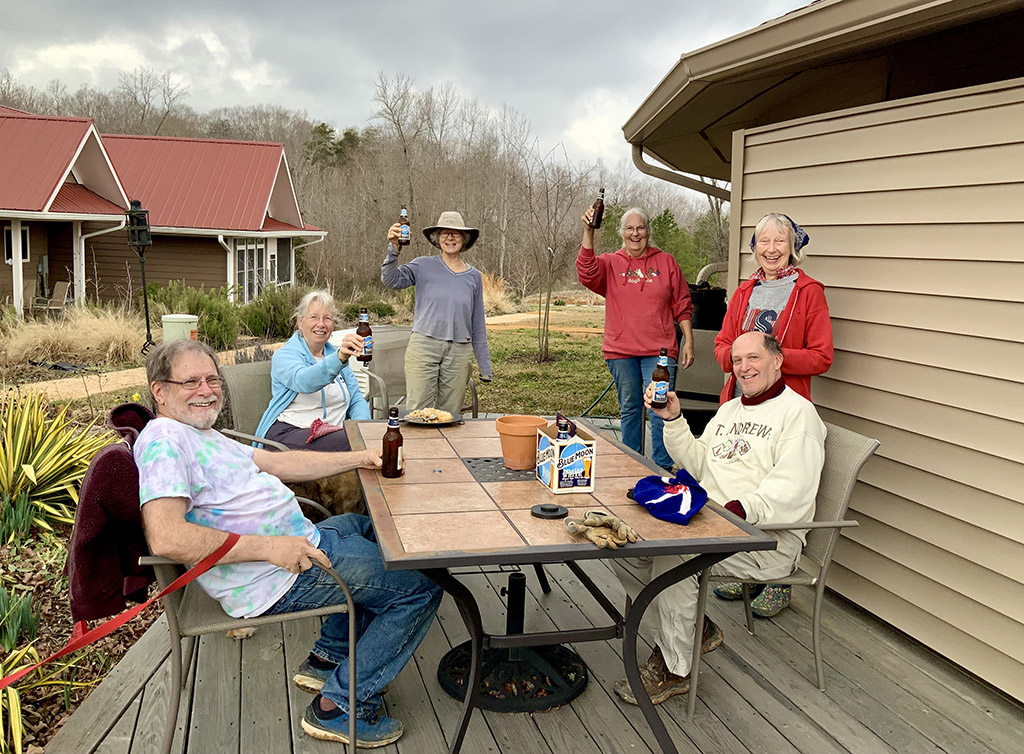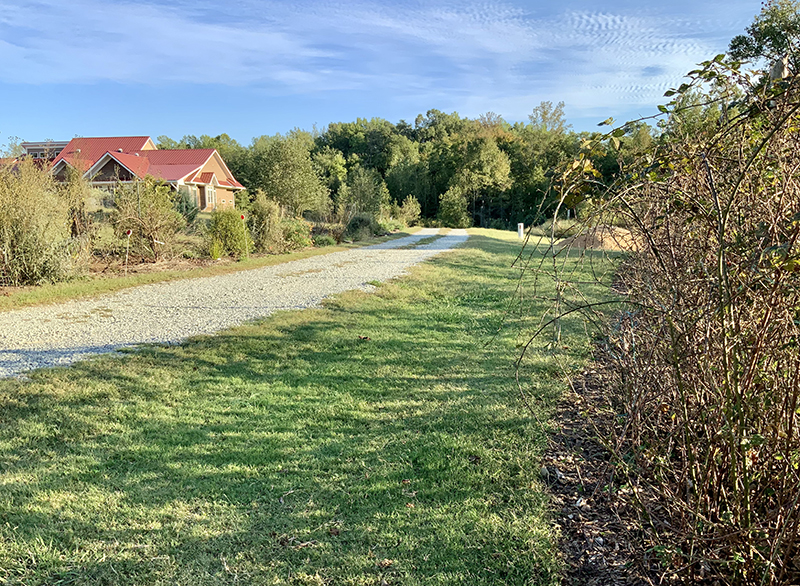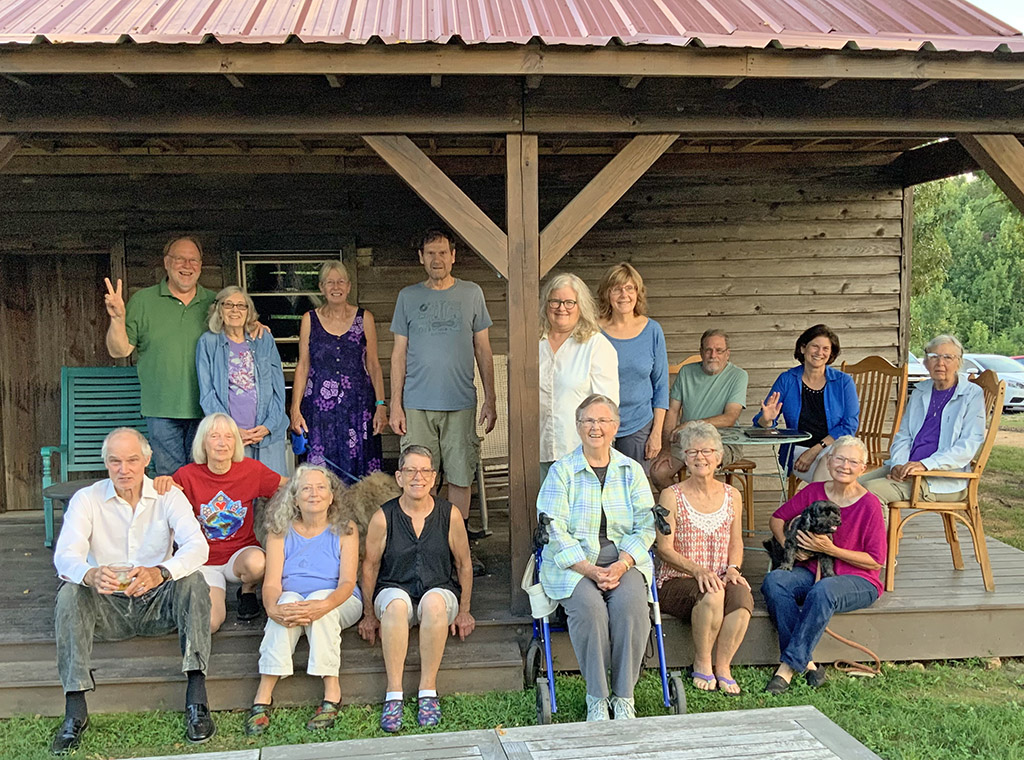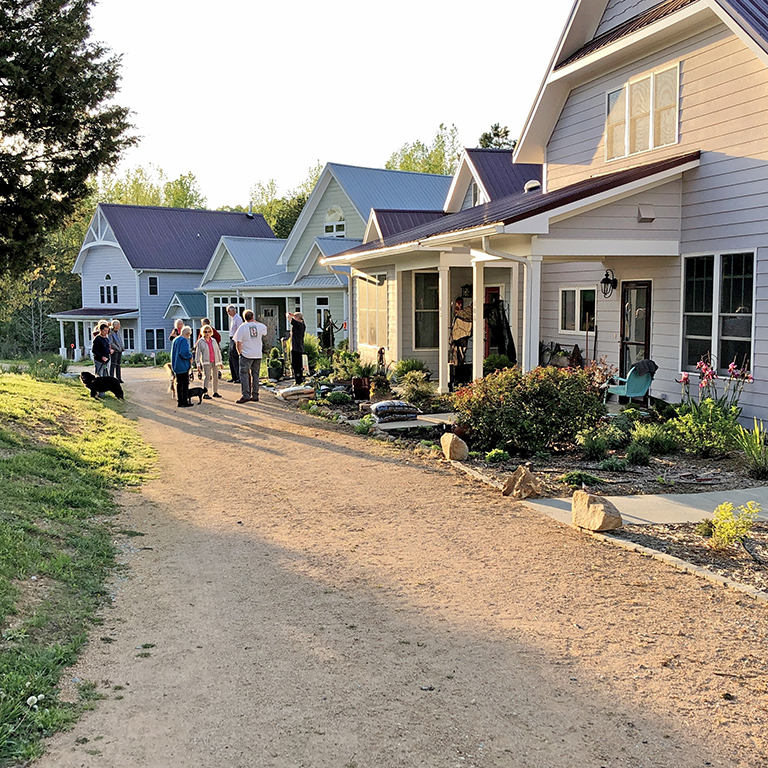
Community gathering outside Elderberry Cohousing Village homes at sunset.

Elderberry Cohousing Village

  • Communities

About the Communities

  • Established
  • Home-sharing
  • Rural

Founding year

  • 2008

What we do

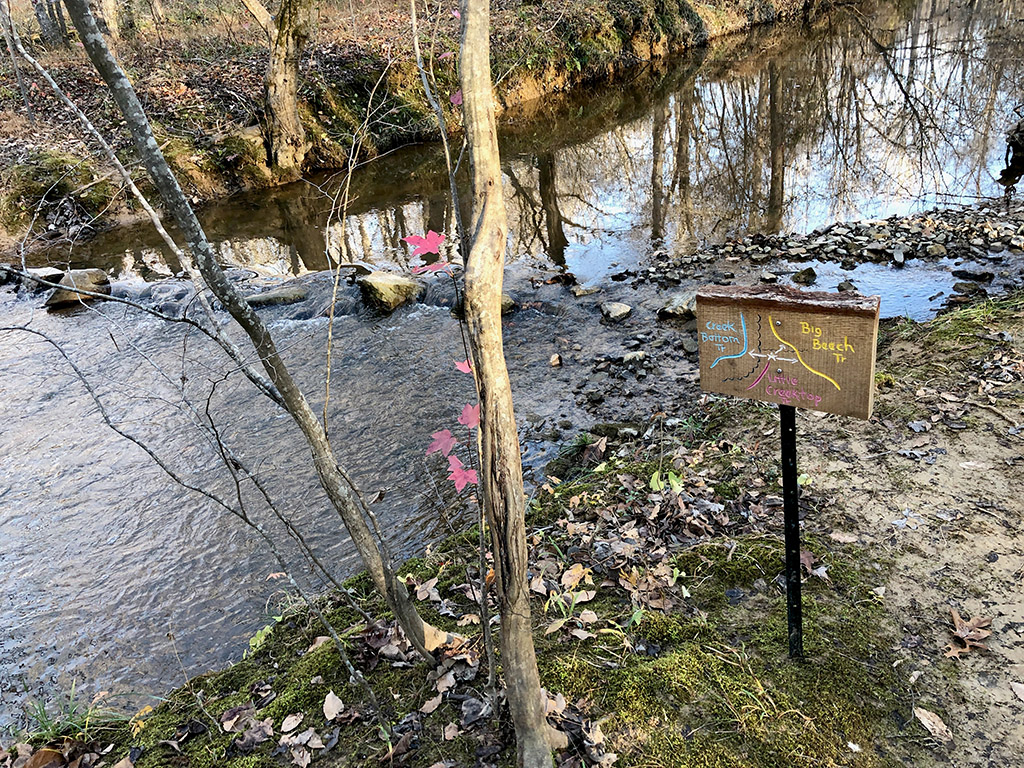
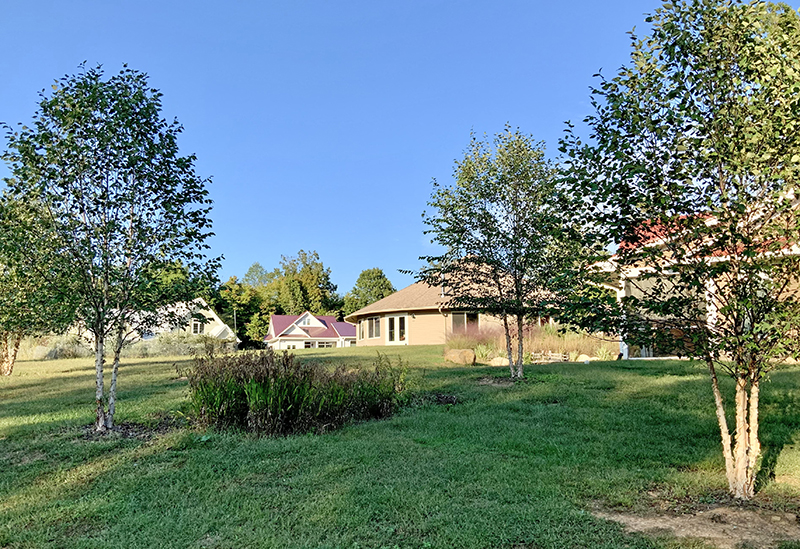
Elderberry is situated on a 10 acres in scenic, rural Rougemont, North Carolina, approximately 30 minutes north of downtown Durham. Durham, the home of Duke University, provides many cultural and learning experiences. Durham is also known for its many outstanding restaurants, arts and festivals.
Elderberry provides a unique model for adults living simply and supporting one another as we grow older, continuing to enjoy the activities we love, with close neighbors and friends.
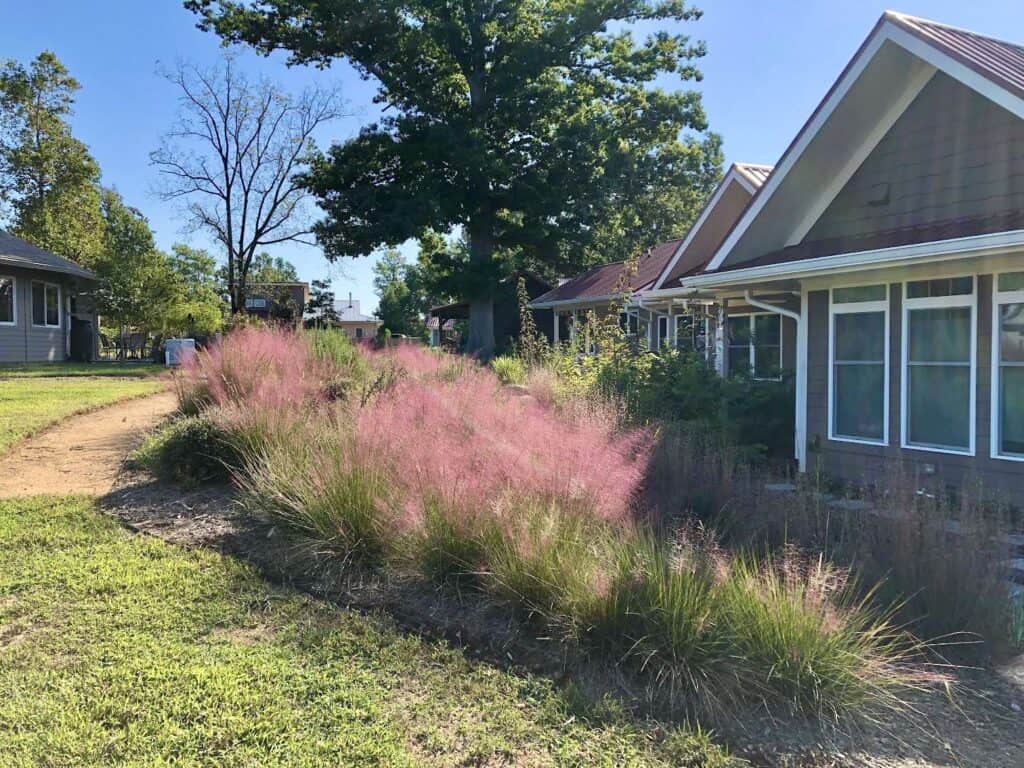
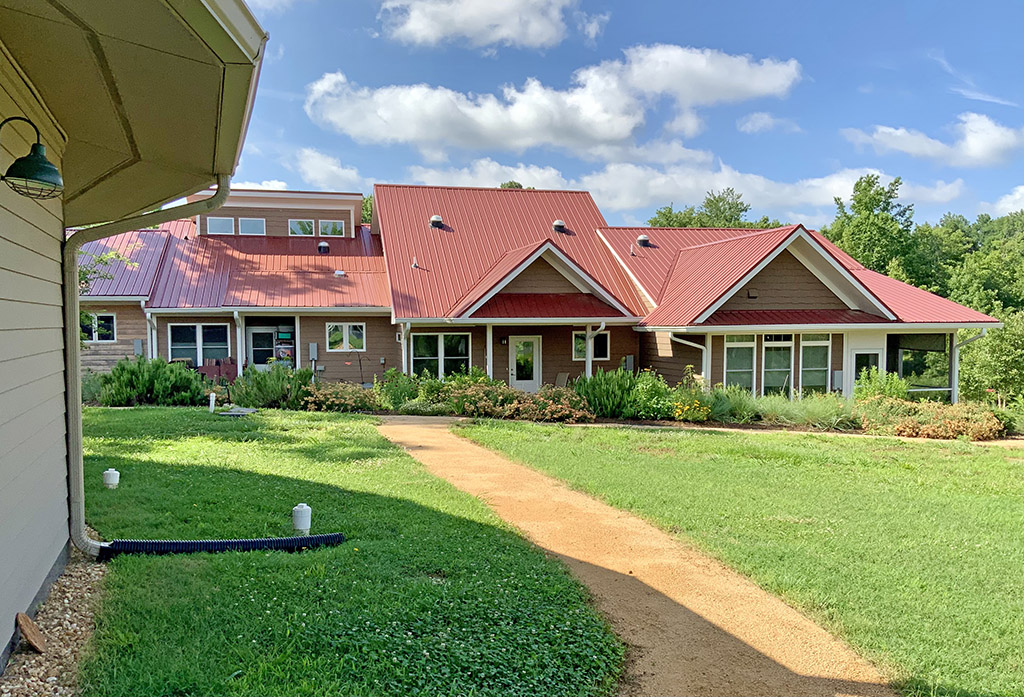
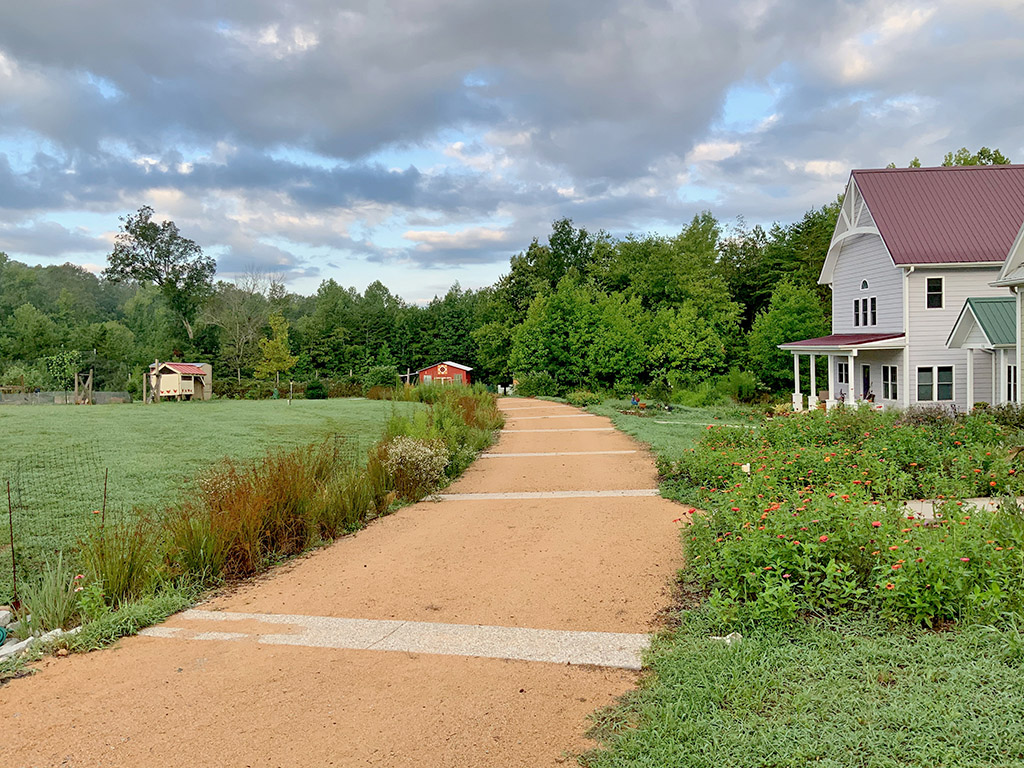
A cozy community of 18 individually-owned, energy-efficient, universally-designed homes (duplexes and quadraplexes) where members may interact, work on projects, eat and play together, as we choose, and pursue our unique interests and spiritual paths. A large common house for cooking, group meals, exercise, music, dance, crafts, special events, guests and other activities is situated in the center of the community surrounded by a courtyard with paths connecting homes.
As a rural community would imply, we have created community vegetable gardens and areas for animals with the intention of being mindful of protecting the ecological integrity of the land, with the goal of becoming an ecovillage, and as self reliant as possible.
Elderberry is a self-managed, consensus-based community where all members have equal voice in decisions. The community was founded by three members of a nearby intentional community and is self developed.

Our Mission

To provide a comfortable and affordable home in the country for adults, where we can make independent life choices, pursue activities of interest, follow our spiritual paths, enjoy the benefits of a rural lifestyle (organic gardens, food production, animals) form close and caring relationships, contribute to others, and enjoy life as we age and help one another.

  • Purpose
  • Home-sharing
  • Community type
  • Cohousing
  • Sustainability practices
  • Renewable energy systems
  • Activities
  • Property management

Commemorative dates

  • January 1, 2008
  • Started planning
  • January 1, 2014
  • Started living together
  • 26 Total members
  • Open to new members
  • Open to visitors
Total
26

How to join

Membership is required of everyone who lives at Elderberry. The full process is on the website at
https://www.elderberrycohousing.com/uploads/1/0/4/0/104044246/membership_process_20180811.pdf
The process begins with a visit and meeting with the Membership Committee. Prospective members must attend AT LEAST one plenary meeting (the second Saturday afternoon of each month) and work day (second Saturday and fourth Sunday of each month) and at least one social event where many members are present.
Another required step is to become an Associate Member ($300/year) which allows access to internal e-mails and the members-only website. When the Membership Committee and the prospective member agree, a community circle is held where the prospect and community members can learn more about each other.
If everyone is confident with proceeding, there is one final meeting of the prospect with the Membership Committee where prospective members sign that they have read and agree to Elderberry’s policies and covenants.

Basic expectations or agreements for members

We encourage visitors on the second Saturday and/or fourth Sunday of each month which are scheduled for community work days.
Monthly plenary meetings are also on the second Saturday.

Primary decision-making authority

  • All Community Members Together

The whole membership decides collectively.

Decision-making process

  • Modified Consensus

Generally seek agreement, but have backup methods when consensus isn’t reached.

Governance structure

  • Collaborative/Horizontal

Power and responsibility are shared relatively equally among members.

Conflict resolution approach

Some of our members have trained as facilitators and they facilitate the plenary meetings.

Economic model

  • Independent Finances

Members maintain separate personal finances with minimal sharing.

Economic scenarios for this community

  • There is a one-time fee, investment, or share purchase to join the community separate from accessing housing
  • Members need to pay fees, dues, or similar to live there on a per month or per year basis
  • There is a labor obligation
  • Members typically need to have their own job or other personal source of income to cover their expenses while living in the community?

Additional economic information

Join fee: $300
Regular fees: $228
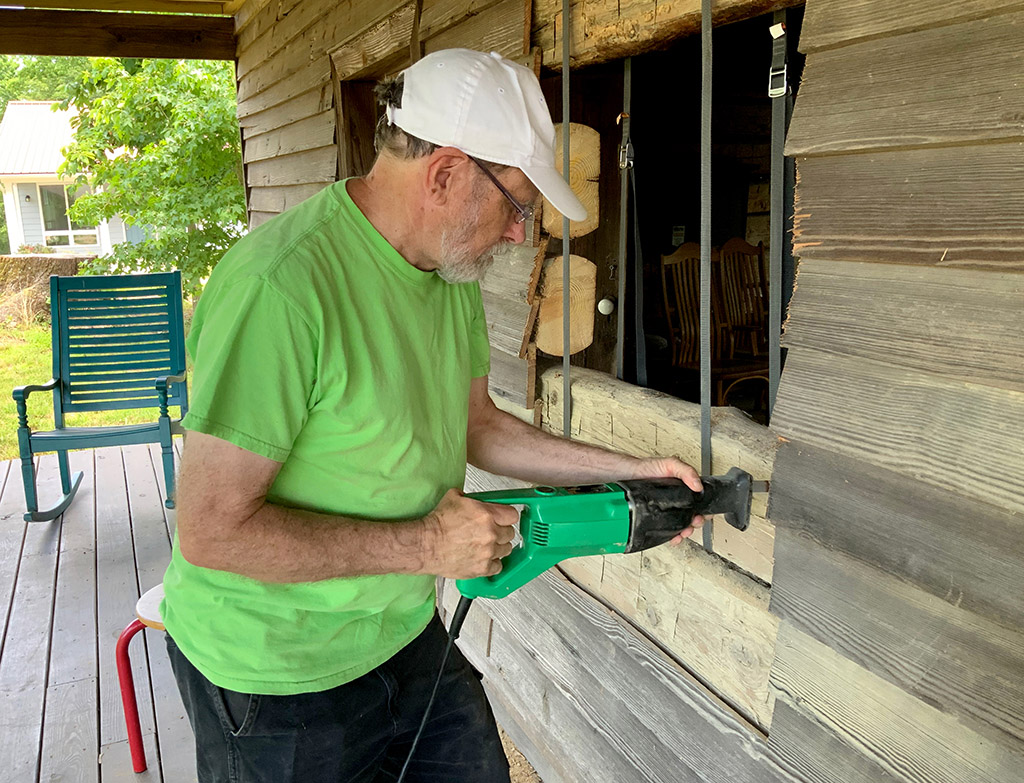
Labor: Yes (3 hrs/week)
We share electricity based on size of home to keep electricity costs low. We have a solar array, two wells and two septic systems. We try to do as much ourselves as we can.

Shared resources and amenities that are accessible to everyone in the community

Common House, Garden(s), Vehicle Share, Library, Workshop, Outbuilding(s), Hot tub or hot springs, Large Scale Kitchen, Tractor & Farm Equipment, Fire pit, Recreational vehicles, Internet

Frequency of communal meals

  • About once a week

Significant food acquisition practices

  • Locally sourced

Dietary restriction

  • People can cook and eat what they want in their own residence

Community activities and engagement

  • Neighborhood, Community Housing, or Homeowner's Association

Substance use culture

  • Substance use appears in public spaces but no pressure
  • Substance use is prohibited in the community

Gender composition

  • Roughly balanced (no group over 60%)

Age demographics

  • Mixed adults (few or no children)

Property status

  • Privately owned

Property owner

  • By a single individual, couple, or Family Trust

Setting

  • Rural

Countryside locations with significant distance from urban centers.

Community type

  • Cohousing

    Private homes with shared common facilities, designed for neighborly
    interaction while maintaining independence.

Sustainability approach

  • Renewable energy systems

Self-produced energy

  • Up to 33%

Energy sources used

  • Photovoltaic Solar

Self-produced food

  • Up to 33%

Local, organic, or fair trade food

  • 33 - 66%

Food systems

  • Community garden

Wastewater management

  • Septic system
  • Land area size
    10 acres

Guest Book

Written reviews are available for plus members. Click here to upgrade.

Location

  • North Carolina, United States

Elderberry Cohousing Village

Needs and Offers

Connecting people and communities through an intentional online marketplace

  • Promoted
Offer
  • Promoted
Offer
  • Real Estate For Sale
1 month ago

3000sf House+Apartment, Rosewind Cohousing, Port Townsend WA

We are a retired couple who are downsizing, still living within the community. We are selling our large, flexible, comfortably rustic house, perfect for a multigenerational household, a family with kids or for 2 separate households. It’s 3000 square feet on 3 levels. The house is on a slope, with 2 main entrances. At one time it housed a large blended family. The current setup is a 2250 square foot, 2 bath main house with a 700 square foot rental apartment, also called an auxiliary dwelling unit (ADU). There is a staircase between the main and lower floor, with a lockable door. If desired, the ADU kitchen can be removed. The main floor has a very large kitchen/dining area, large living room, two small bedrooms, a bathroom with 2 sinks and a shower, a laundry room and a large mudroom. The non-bearing wall between the 2 bedrooms can be removed to turn it back to a single primary bedroom. The top floor has two bedrooms, one of which is primary with a large bright sitting area, and a large open middle area between them (game room, TV room, kids sleeping area, etc.). There is a bathroom with a claw-foot tub, no shower. The lower floor is the ADU, a finished storage area and a stand-up “crawl space“ which is used as a second pantry and storage.Attached to the house there is also a 150 sq ft wood paneled office/hobby space with its own electric and propane lines. Features: – straw bale construction, which is energy-efficient, great sound insulation, and provides a warm, soft, feeling. -very large functional kitchen with a long granite countertop. The dining area fits 10 people. -natural construction, with solid maple floors in the middle and upper level, marmoleum floor in kitchen and oak floor in the lower level. The two small bedrooms have painted wood floors. The doors are all solid wood. -large, functional, low maintenance patio area. Room for a table for eight and an additional sitting area. Propane hook ups for grills and smokers.
  • Promoted
  • Promoted
Offer
  • Promoted
Offer
  • Promoted
Offer
  • Communities with Openings
8 months ago

Worktrade Opportunities on Big Island Hawaii

We are continuing our work-trade program at Bridge Hawaii for the right people on this beautiful 86-acre land located along the Hāmākua Coast. Ideally, we want to host those individuals who can help with the garden and who can support with build projects for up to a 3 month stay. This work-trade would include lodging, food staples, community kitchen, running hot water showers, off-grid electricity, and laundry. There is access to high speed wi-fi. We often have a car that can be reserved. We also have full bar signal strength with Verizon cellphone service. We have about 2 acres of permaculture garden that needs to be cared for including; weeding, planting, picking up mulch, some tree trimming, ect. We are currently in a building stage on the land. We have a few current grant projects we are working on and some build projects that are underway. We are an intentional community with about 8 permanent residents. There are rescue dairy cows, mini cows, mini donkeys, horses, a donkey, cats, dogs, and active bee hives. We are a drug and alcohol “free” space. A glass of wine or beer with dinner is fine, but absolutely no day drinking or parties. We have a meditation temple and many waterfall pools that are wonderful for swimming. Close to some of the nicest beaches on island. We have snorkeling gear and a kayak. Since this is an animal sanctuary, we limit the consumption of meat on the land. Fish, eggs, honey, and dairy are fine. Let me know if you’re interested by sending an email or text for our application. Maomi (801) 623-0738 ma***@*****************ii.com

Update to a Public Profile

  • Go to your profile page
  • Toggle on the "Add my profile to the directory"
  • Save your profile

Information

Communities

A residential project: people live here as their primary home.

Organizations

An institution, business, network, or project that isn’t a residence (e.g. a learning center, farm, or network with no one living there full-time).

Plus Community Membership

  • Find people with Profile Match
  • Access to your community listing statistics
  • Create Discussion Groups
  • Access to our affiliate program
  • Member badge on your community profile
I am an official member of this community
Disclaimer
I affirm that my information is accurate and I am authorized to manage this listing
Foundation for Intentional Community FIC Member badge logo.

Free Plan

Free Membership
Free

Intentional Advertising

  • Subtotal

    {{ currencyFormat( pricing_summary.total_amount ) }}

Icon representing community connections and collaboration for intentional communities.

Plus Membership

We’re introducing new Plus features — including community reviews, Profile Match, and unlimited Needs & Offers posts — while keeping most of FIC free for everyone. Membership costs less than two coffees a month. 

  • Find communities with Profile Match
  • View detailed reviews about communities
  • Create free listings in Needs & Offers
  • Plus Member resources in CommUniversity
  • View communities detailed reviews
  • Plus Member badge on your profile