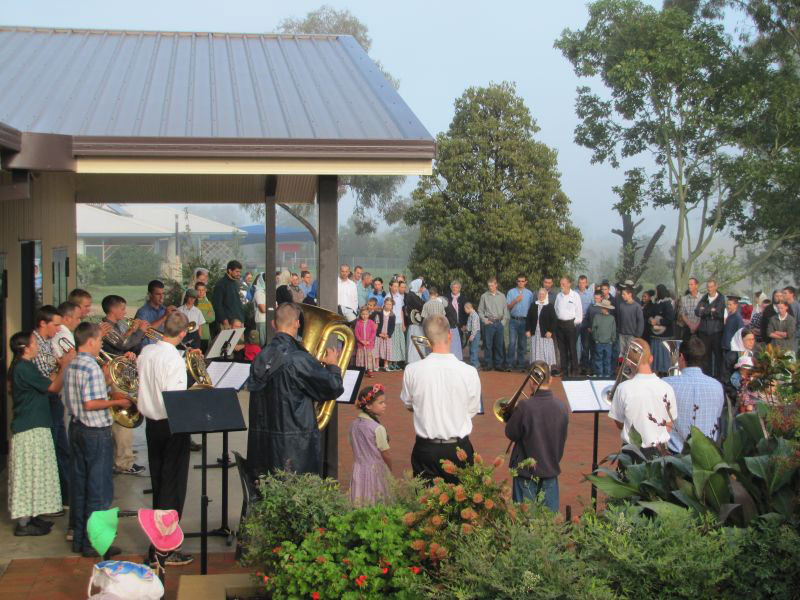
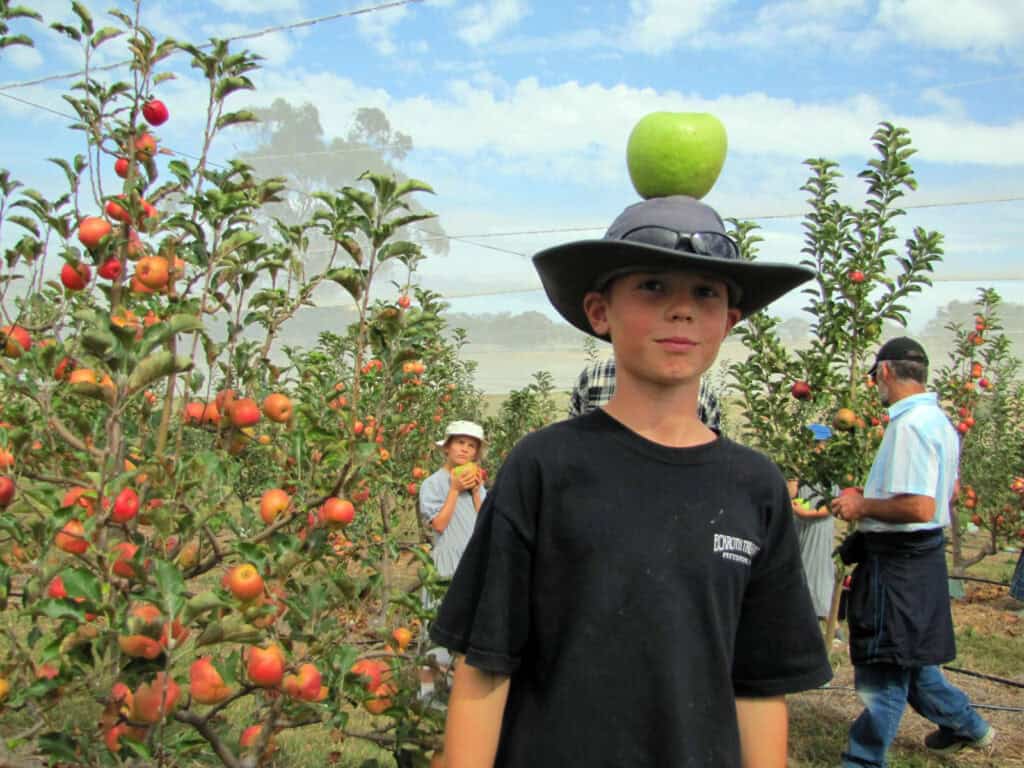
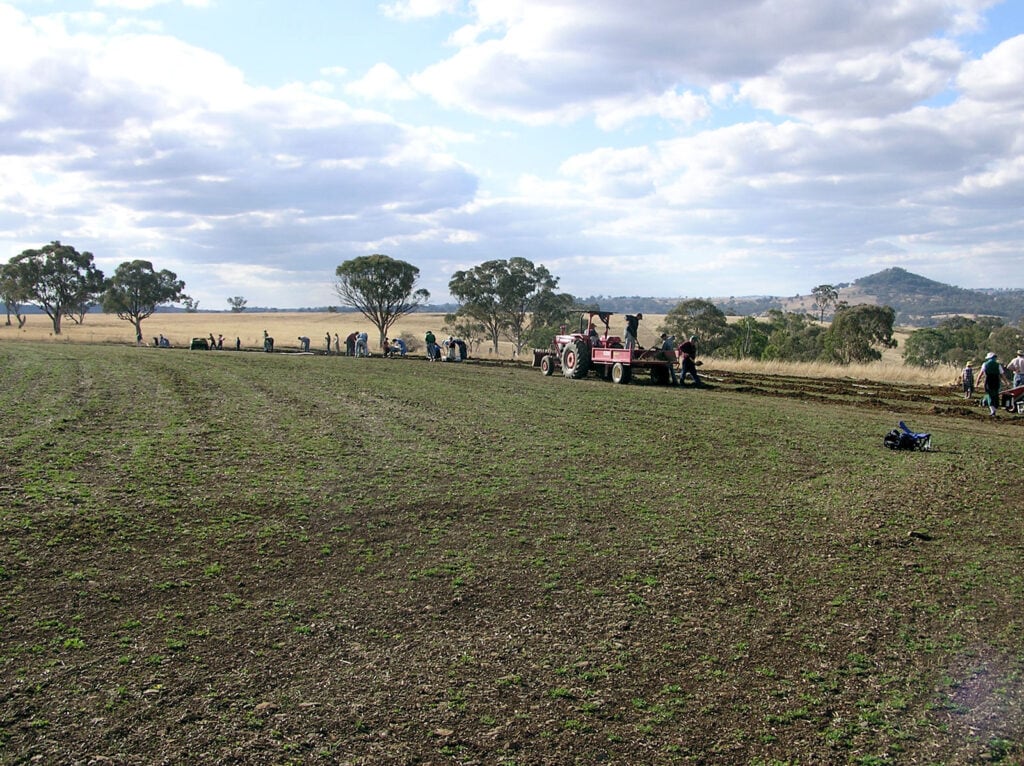
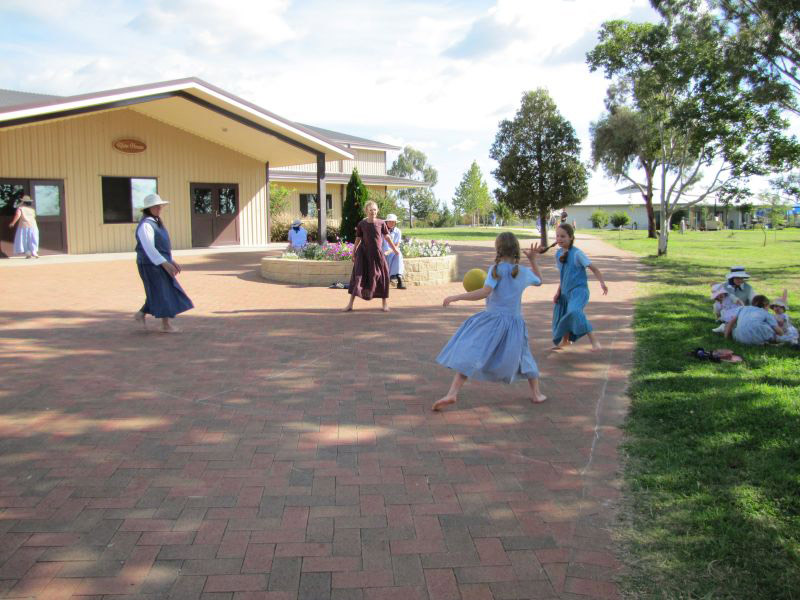
Community gathering at the Foundation for Intentional Community event.

Danthonia Bruderhof Community

  • Communities

About the Communities

  • Established
  • Spiritual
  • Rural

Founding year

  • 1999

What we do

Danthonia is a large Bruderhof settlement made up of a lively mix of families and singles, young and old, who live, work, and worship together. Children at Danthonia are home-schooled, and most adults work within the community. We support ourselves with Danthonia Designs, a business that makes a wide variety of signs, from hand-carved and sculptured to LED digital signs.
Danthonia Bruderhof is a living, working intentional community, not a retreat center or spiritual getaway. During your visit you’ll be hosted by one of our families and participate in our daily life, from joining the workforce to taking part in meals and worship.
We are convinced that a life in church community is the greatest service we can offer humanity and the best way we can proclaim Christ. To be part of the Bruderhof movement is not a lifestyle choice. It is an answer to Jesus’ insistent call to humankind as expressed in the Gospels, especially the Sermon on the Mount. While we follow the communal traditions of the early church, we believe our way of life is a compelling answer to the problems of contemporary society, with its emphasis on wealth and self and its resulting isolation, conflict, and inequality.
Through community, we have experienced Christ’s transforming love. He makes the impossible possible: for ordinary and flawed men and women to live together in forgiveness and mutual trust, as brothers and sisters. It is his Spirit that calls Bruderhof members to a life of love where work, worship, mission, education, and family life are brought together into a single whole.

Our Mission

Love your neighbor. Share everything. We believe that another way of life is possible.

  • Purpose
  • Spiritual
  • Community type
  • Commune
  • Spiritual Retreat Centers

Commemorative dates

  • January 1, 1999
  • Started planning
  • January 1, 1999
  • Started living together

Gallery

  • 250 Total members
  • Open to new members
  • Open to visitors
Total
250

Decision-making process

  • Full Consensus

Everyone must agree before moving forward.

Governance structure

  • Collaborative/Horizontal

Power and responsibility are shared relatively equally among members.

Economic model

  • Complete Income-Sharing

All member income goes into common pool for community use.

Economic scenarios for this community

  • There is a labor obligation

Additional economic information

Labor: Yes

  • Religions
  • Christian

Age demographics

  • Mixed adults (few or no children)

Guest Book

Written reviews are available for plus members. Click here to upgrade.

Location

  • New South Wales, Australia

Danthonia Bruderhof Community

Needs and Offers

Connecting people and communities through an intentional online marketplace

Offer
Offer
  • Real Estate For Sale
6 days ago

Co-housing Unit For Sale in Portland Oregon

Light-filled 976 sq ft, 3-bedroom, 1-bath end unit in Columbia Ecovillage, Portland’sestablished cohousing community in the Cully neighborhood. With windows onthree sides, this ground-floor home gets natural light all day, even onPortland’s grey ones. The open living and dining area has warm hardwood floors and flows into akitchen with solid wood cabinets and granite counters. The dining roomwindows look straight into a native vine maple — a wall of green from springthrough fall. There’s good storagein the unit, plus an extra storage space in the community storage building.A ductless mini-split provides efficient heating and air conditioning, andthe plumbing was fully replaced in 2026. The primary bedroom has a full-width closet behind a sliding barn door; thesecond bedroom’s closet sits behind a pair of French doors. The thirdbedroom has no closet, which makes it a flexible room — guest room, office,or playroom. Step out the sliding glass door onto your own covered patio, which opens onto the community grounds: organic gardens, personal garden plots,greenhouses, a grape arbor, a bamboo grove, native plantings throughout, andtrees everywhere — including a truly massive old black walnut. The orchard alone is a reason to live here — to name a few:apples, pears, plums, figs, mulberries, chestnuts, walnuts, grapes,blueberries, raspberries, and blackberries, in several varieties each. A75,000-gallon rainwater catchment system keeps it all watered through thesummer. Kids have a playhouse, sandbox, small soccer field, a favorite climbingtree, and a parking loop where bikes can circle but cars can’t; adults havea workshop, garden shed, fire pit, quiet space and big community porches. The common hall is the heart of the village: a commercial kitchen anyresident can use, a kids’ play area, pool table and ping pong, and asoapstone stove that burns every winter evening. Residents can reserve it forevents for almost nothing. The historic farmhouse has guest rooms owners canbook for visiting family (about 30 nights a year). Shared laundry rooms(three washers and dryers) come with indoor drying racks and outdoorclotheslines, and there’s a craft room and a trade room where things you nolonger need find a new home next door. Potlucks, communitymeals, work parties, and acres of safe space for kids to roam makethis a rare chance to own a home and a neighborhood at the same time. Built in 1973 and fully remodeled in 2008–09 for energy efficiency and healthy indoor air — metal roof, HardiePlank siding, and standard community-built finishes throughout. Nothing to update, nothing deferred. The $522 monthly HOA coverswater, sewer, and garbage, plus the roof, siding, exterior paint, and allstructural maintenance — and it’s what pays for the grounds, the common hall,and everything else described above. And it’s close in: Cully’s cafés andparks are a short walk or bike ride away, the rest of Portland’s food,music, and neighborhoods are minutes beyond that, and the commute downtownor to the airport is easy by car, bus, or bike – 3.7-acre grounds with organic gardens, personal plots, greenhouses, native plantings, and mature trees (huge black walnut)- Orchard: apples, pears, plums, figs, mulberries, chestnuts, walnuts, grapes, blueberries, raspberries, blackberries- 75,000-gallon rainwater catchment feeds the gardens year-round- Workshop, garden shed, fire pit, quiet space, community porches  
  • Events
3 days ago

Coastal Regeneration Immersion: Permaculture Design Certification in Jalisco, Mexico

Tropical Dry Forest Permaculture Design & Regenerative Stewardship Certification (PDC)12-Day Intensive | 120 Hours | Costalegre, Jalisco, Mexico Join us for an immersive Permaculture Design Certificate course set in the tropical dry forest bioregion of coastal Jalisco. This 120-hour intensive blends internationally recognized PDC curriculum with hands-on regenerative practice — combining ecological design, agroforestry, natural building, and community stewardship into one integrated learning experience. Lead Faculty Jorge Luis Gtz. Olarte (Arborescencia RedGenerativa) – Regenerative Design, Soil Biology & Agroforestry Ozzy Lusth (Survior & Xochiraíz) – Wilderness Resilience & Survival Skills Dave Collins (Capacha Coastal Conservation Center) – Bioarchitecture & Ecological Development What You’ll LearnThe course moves through six progressive phases: Permaculture & Ecological Literacy – ethics, principles, and reading the tropical dry forest landscape Water & Soil Systems – keyline design, water harvesting, living soils, and compost systems Horticulture – food garden design, propagation, and biological pest control Regenerative Food Systems – tropical agroforestry, food forest design, and guild planting Ecological Infrastructure – bamboo bioarchitecture, bioclimatic farm design, compost toilets, greywater, and rocket stoves Integrated Design Studio – team-based final design projects covering watershed strategy, agroforestry, food forest layout, infrastructure, and phased implementation Daily RhythmMornings begin with optional surf/yoga and journaling, followed by field practicums and hands-on workshops. Afternoons include design studio and construction lab work, with reflection circles, communal dinners, and evening talks, films, or campfire discussions rounding out the day. Final ProjectParticipants work in teams to produce a full regenerative design package — landscape analysis, water plan, agroforestry design, food forest plan, ecological infrastructure, and bioclimatic farm plan — presented to a faculty review panel on the final day, followed by a closing ceremony, certificate delivery, and community feast. CertificationGraduates receive the Tropical Dry Forest Permaculture Design & Regenerative Stewardship Certification (120 contact hours), hosted by Capacha Coastal Conservation Center and Tierralegre, A.C. Curriculum integrates international PDC standards with tropical ecology, agroforestry, ecological restoration, bamboo bioarchitecture, bioclimatic design, GIS/photogrammetry, and regenerative leadership. Highlights Hands-on bamboo construction (temazcal, bathhouses, sculpture) Tropical dry forest silviculture practicum Community mapping and design project for Ekoa Green Community Talent show and sea turtle release
November 13, 2026 09:00 – November 25, 2026 16:00
Need
Need
  • Forming Communities
3 weeks ago

Looking for: people building relational capacity, with a view to community

What’s here now: An intention, a framework developed over five years, and a programme running in central Victoria to find people to build with. No land, no group, no timeline. The question this is organised around: What makes a community of people living together sustainable over decades – where people enjoy being there, conflict is low, and the conflict that does arise gets handled in ways people value. The distinctive premise is capacity before formation. Most communities form first and build relational skill afterwards, usually under pressure. This one proposes doing it the other way round: people build the capacities first, and the group forms from people who have them. That includes a working idea about collective capacity – that a group has a ratio, and below some threshold it can’t metabolise its own conflict and starts consuming itself. Roughly: in a group of twenty, perhaps three or four with high capacity, most in the middle, and very few without. Untested, and something this project exists to find out. Governance: Sociocracy, with the intention of testing it meaningfully at scale rather than adopting it nominally. What’s actually happening: A three-week residency at a property near Castlemaine, and a practice group running before it. The medium-term aim is twenty to forty people at a rented facility. The long-term aim is a support hub sharing the framework more widely. What I’m looking for: People who want to build this capacity seriously, and who might eventually want to build something together. Not necessarily people who want to live here – the current property probably isn’t the long-term site. Happy to hear from anyone this resonates with, including people already in community who’d rather share what they’ve learned than join anything.

Update to a Public Profile

  • Log in
  • Go to your profile page
  • Toggle on the "Add my profile to the directory"
  • Save your profile

Information

Communities

A residential project: people live here as their primary home.

Organizations

An institution, business, network, or project that isn’t a residence (e.g. a learning center, farm, or network with no one living there full-time).

Plus Community Membership

  • Find people with Profile Match
  • Access to your community listing statistics
  • Create Discussion Groups
  • Access to our affiliate program
  • Member badge on your community profile
I am an official member of this community
Disclaimer
I affirm that my information is accurate and I am authorized to manage this listing
Foundation for Intentional Community FIC Member badge logo.

Free Plan

Free Membership
Free

Intentional Advertising

  • Subtotal

    {{ currencyFormat( pricing_summary.total_amount ) }}

Icon representing community connections and collaboration for intentional communities.

Plus Membership

We’re introducing new Plus features — including community reviews, Profile Match, and unlimited Needs & Offers posts — while keeping most of FIC free for everyone. Membership costs less than two coffees a month. 

  • Find communities with Profile Match
  • View detailed reviews about communities
  • Create free listings in Needs & Offers
  • Plus Member resources in CommUniversity
  • View communities detailed reviews
  • Plus Member badge on your profile