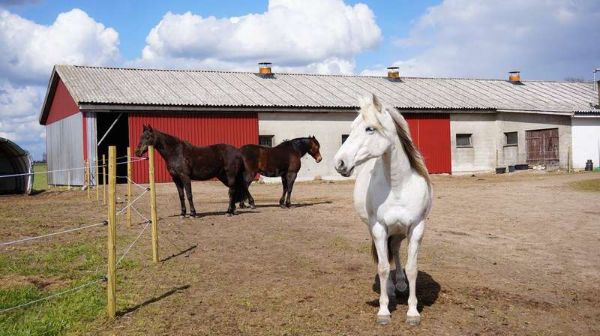
This is a small organic farm that nurtures the soul and the soil. It houses cows, cats, horses and humans. The farm is a vegan/vegetarian sanctuary, with focus on animal ethics and growing food for self-sufficiency.
It is a simple and compassionate way of life inspired by spiritual concepts of Ahimsa and Goraksya (non-violence, non-slaughter). Our commitment for nature and animals is based on a belief that the Earth and life are sacred and we need to nurture them and each other.
Some of the projects we do include:
-Using composted or dried manure to make our own soil for plants, which build up top soil in gardens and grazing lands, thus sequestering carbon in soil.
-Planting trees and bushes in alignment with a specific Permaculture design for the farm.
-Creating a market garden with vegetables, herbs and berries.
On the farm, some members of the community practice the ancient Vaishnava or Bhakti-yoga tradition of India (also known as the Krishna tradition). Volunteers and visitors are sometimes invited to participate in Kirtan-yoga sessions and other special celebrations pertaining to the Krishna-tradition. People practicing other spiritual traditions are also welcomed and offered space for their practices on the farm. It is not required to have any spiritual practice at all in order to participate in our farm, but while sharing space, life and work together, we all need to have a respectful and empathetic attitude towards spirituality and other people.
We would like any potential members to stay for at least two months trial period. It usually takes from two to three weeks to learn the daily routines and get to know others on the farm. In addition, the Introduction to Permaculture -course takes two months to complete.
While you are here, we need you to practice simple organizational skills like cleanliness, clear communication, commitment and politeness.
On the premises, smoking and consumption of alcohol, drugs, meat, fish and eggs are not allowed.
We are in the process of transitioning the farm in to a wellness and permaculture centre where we can teach some classes and workshops to paying guests. We have also recently started a business based on producing and selling our own produce or natural products. We want to expand this into making our own small market on site, with handcrafts and other sustainable or natural market goods.
We can accept both guests and potential members at this time and ask that you participate in the general farm service in some way. You would then be helping in animal care and cleaning for horses and cows, gardening, harvesting (including cutting grass or weeding, preserving, planting and/or nursery work. We do have building projects, extra animal care and maintenance projects as well.
Please note that the chores on the farm are mostly physical and can be demanding if you are not used to physical work.
Our focus is to continue building our community and maintain it in terms of sustainable intentional community living, permaculture ethics, animal ethics and eventually off grid sustainability.
The membership process is new for us. We already have established space for renters or volunteers. We have a set price for those renting, so if you are interested in becoming a member, you will get benefits of the farm acting as your home. We can set up a contract together, so you are safe and stable here as a member of the community. If you wish to purchase part of the land yourself, that is difficult because it is agricultural land, but it would be possible under a legal entity according to the Swedish law. Then you could build and own your residence under that entity.
If you are local, we have an open house on Sundays. Please contact us for more information. If you are not local, we have many people that apply to volunteer with us, or come as a paying guest or tenant. You can visit us and see if the community is right for you by being a volunteer, a paying guest or a tenant.
A few people (not elected by the broader community) make the major decisions.
Decisions proceed unless someone has a reasoned objection.
Organized in circles or domains with distributed authority.
We have always involved everyone in the decision making, but do have leadership roles for the safety of the community and animals as well as for organization and keeping the business going. We have Common Community Codes of Conduct that is set by the community and can be changed and added to if needed.
Members contribute a percentage of income to community funds.
Join fee: $75
Regular fees: $250
Labor: Encouraged or suggested (20 hrs/week)
Members with pre-existing debt: allowed
Community economics will depend on your membership. Full or partial participation then depends on how you want to interact in the business aspects of the farm. Regardless of your participation, you should be a part of the community activities and common caretaking/cleaning or building. We are too small to have isolated members, unless you have your own special project and we are able to contract a special membership for you. If you want to be involved in the business aspect, you would participate in all of the activities and would be a part of the profit or have payment according to your role or our agreement.
Common House, Garden(s), Greenhouse(s), Workshop, Outbuilding(s), Large Scale Kitchen, Fire pit, Internet
Countryside locations with significant distance from urban centers.
Private homes with shared common facilities, designed for neighborly
interaction while maintaining independence.
Shared living spaces with private bedrooms/bathrooms and communal
kitchens, dining, and social areas.
Integrated communities designed around ecological principles with sustainable living practices.
Residential communities focused on providing space for meditation, spiritual practice, and personal growth retreats.
Connecting people and communities through an intentional online marketplace
There are no needs and offers
We use cookies to improve your experience on our site. By using our site, you consent to cookies.
Manage your cookie preferences below:
Essential cookies enable basic functions and are necessary for the proper function of the website.
These cookies are needed for adding comments on this website.
Statistics cookies collect information anonymously. This information helps us understand how visitors use our website.
Service URL: policies.google.com (opens in a new window)
A residential project: people live here as their primary home.
An institution, business, network, or project that isn’t a residence (e.g. a learning center, farm, or network with no one living there full-time).

{{ item.label }}
{{ item.value ? item.value : currencyFormat( item.amount ) }}
Subtotal
{{ currencyFormat( pricing_summary.total_amount ) }}
There are no results matching your search