

Timeline of Intentional Communities

Smiling woman with long hair holding a coffee mug indoors.
Cynthia Tina
  • October 8, 2021
  • Life Transitions
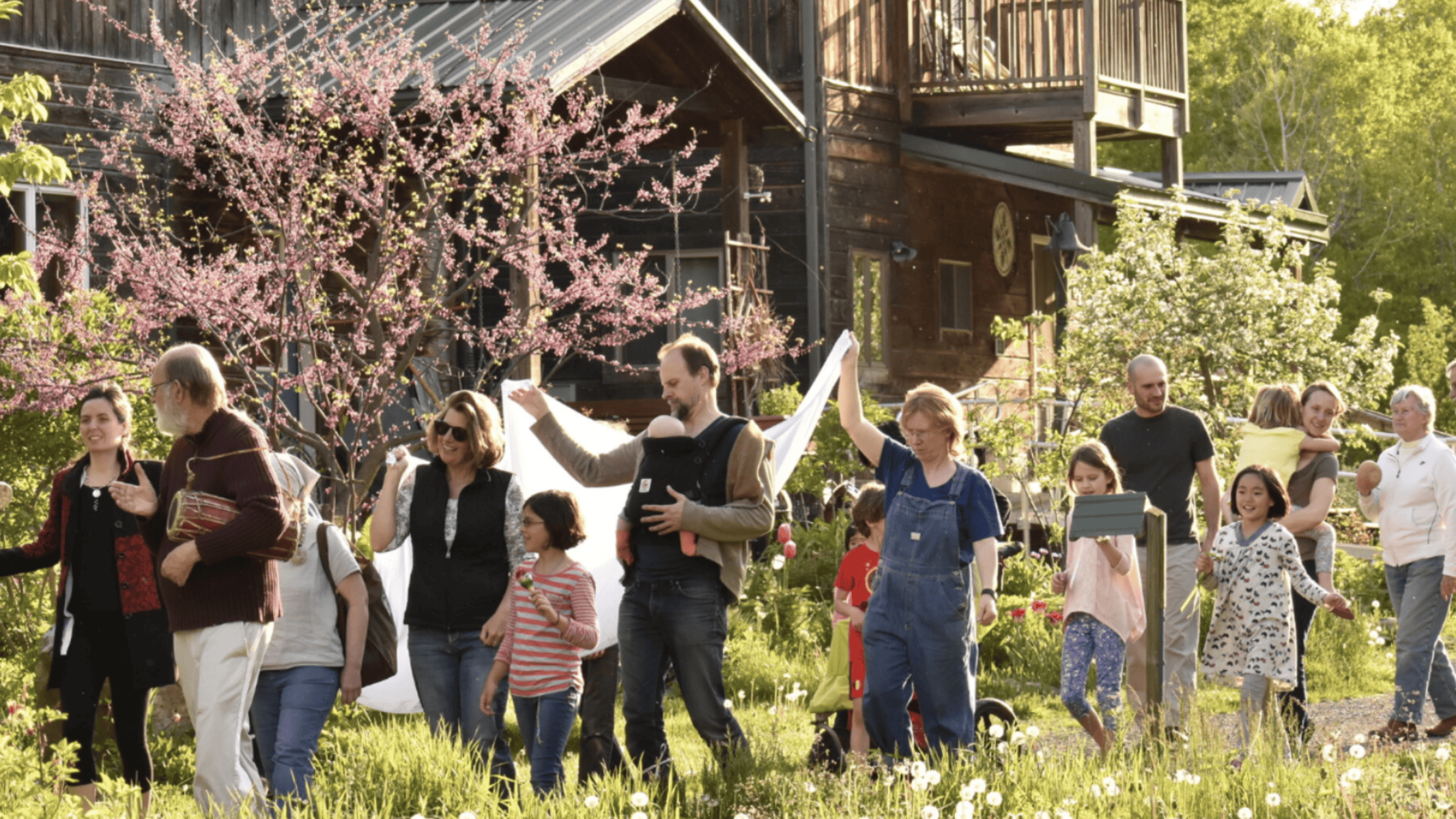
Community gathering outdoors with children and adults in a lush garden setting.

Intentional Communities Timeline

This is not in any way intended to be a definitive statement but rather a pointer to some of the more significant developments in the theory and practice of community.

6th Century BCE through the 1900s

  • 6th Century BCE: Pythagoras founds Homakoeion, a vegetarian commune based on intellectualism, mysticism and equality of the sexes. Also, followers of Buddha in India join together in ashrams to live in a productive, spiritual manner.
  • 2nd Century CE: Essenes communes, based on the morality of the Hebrew Bible, flourish in the area of the Dead Sea.
  • 4th Century CE: The first Christian monasterial communities are established.
  • 12th Century CE: The heretical Waldense sect founds many communes in France.
  • Middle Ages: The Brethren of the Free Spirit and others attempt to create secular communes in various parts of Europe.
  • 1527: The foundation of the Hutterian Brethren by the Anabaptist movement leads to the establish-ment of numerous spiritual communes, from which the modern-day Hutterites and Bruderhof communes are derived.
  • 1530s: The entire German city of Munster becomes an Anabaptist commune, sharing wealth, housing and even spouses.
  • 1540s: The Mennonites, a radical Anabaptist sect, begin living in communities based solely on the Bible.
  • 1649: The Diggers rebel against the aristocracy and live communally on crown land.
  • 1698: The Amish create communities based on a strict interpretation of Mennonite principles.
  • 1727: Herrnhut, a Moravian-Pietist commune is established in Saxony. (Australia’s first successful commune, also called Herrnhut, was founded by a German Moravian-Pietist in 1852.)
  • 1774: The Shakers found communal groups, pursuing spirituality, dancing and singing, inventions, handicrafts and celibacy.
  • 1794: The Shaker commune Sabbathday Lake, the oldest communal group still in existence, is founded.
  • 1825: New Harmony is established in the US by Robert Owen to show that modern technology can support humane social life through non-religious communal living.
  • 1841: Brook Farm is started in Massachusetts as “an experiment in humane living to be achieved through education and discussion”.
  • 1848: Oneida is founded by J H Noyes in New York as a commune based on the practice of “complex marriage”.
  • 1855: Amana Colonies are established in Iowa by German Protestants seeking Christian community.
  • 1874: Bon Homme, the Hutterite commune that remains in existence to this day, is founded.
  • 1889: Hull House is established in Chicago by Jane Addams as a “human community offering protection against the anonymous city”.
  • 1910: Deganya, the first kibbutz, is founded near the Sea of Galilee. It is still going strong today.
  • 1913: Gould Farm is established as a “community environment” for the treatment and rehabilitation of emotionally disturbed people.
  • 1920: The first Bruderhof community, Darvell, is founded. Darvell is based on a life of Christian brotherhood and is still in existence.
  • 1920s: Following the Communist Revolution in Russia, thousands of communes spring up, only to be suppressed later by Stalin.
  • 1937: The first co-op house is started in Michigan. The co-op was a fore-runner of the Inter-Cooperative Council, which is a network of student housing co-ops.
  • 1940: The Camphill Movement of therapeutic communities is founded.
  • 1948: The Fellowship for Intentional Community, originally named the Fellowship of Intentional Communities, is founded.
  • 1950s: More than twenty thousand communes are set up by the Communist Party of China, none of which are still in existence.
  • 1958: Yamagishism Life, a movement of some thirty agricultural communes mainly located in Japan, is founded.
  • 1960s: Hippies found several thousand communes, mostly short-lived.
  • 1964: The first L’Arche community for the developmentally disabled is founded.
  • 1968: The Catholic commune movement Integrierte Gemeinde is founded in Germany.
  • 1972: Co-housing, a new form of urban community living, is conceived in Denmark.
  • 1992: The first eco-villages are founded in the US and Russia.

Based on the timeline “Milestones in the History of Communal Living” from http://www.communa.org.il/ milestones.htm, the timeline “Intentional Communities Through the Ages” by Geoph Kozeny in Communities Directory 2000, and lectures by Dr Bill Metcalf and Professor Yaakov Oved of the International Communal Studies Association.

You can continue learning about the history of Intentional Communities and of the Foundation for Intentional Community in our article A History of Intentional Communities and the FIC.

This article was originally published by Peace News and author Lauren Kelley. Search for communities in our directory.

Comments

Featured Blogs

Keep the conversation going with these pieces

Codicts Team
Mon Jun 2013
  • Sustainability
Permaculture: the science and art of thriving with nature. For more info check out our friends’ magazine and free resources: http://www.permaculture.co.uk/
Codicts Team
Mon Jun 2010
  • New to community
  • Sustainability
A permaculture teachers hits upon a gold mine of effective methods for enlivening her teaching—by drawing from the principles of permaculture itself.
Codicts Team
Sat Mar 2015
  • Living in community
  • Relationships
As intentional communities model new approaches to elder care, baby boomers can lead the way in transforming how we age in our society.
Codicts Team
Mon Jun 2010
  • New to community
Harvard Magazine has a nice feature on Nubanusit Farm and Neighborhood, a cohousing community in New Hampshire. They tore up the parking lot and put up a communal paradise. Or so Joni Mitchell could sing about what’s happened on 113 acres of idyllic farmland just outside Peterborough, New Hampshire.…
Codicts Team
Wed Dec 2011
  • New to community
  • Sustainability
Degraded slopes, crumbling logs, plenty of trench-digging, seven blueberry plants, and an unanticipated drought combine to teach some important lessons.
Codicts Team
Fri Dec 2017
  • Living in community
  • Relationships
While time has brought increased gentrification, a faith-based community’s fight for social justice in DC is far from over.
Codicts Team
Fri Jul 2018
  • New to community
  • Sustainability
What makes Maitreya Mountain Village’s multi-functional Hobbit Hole so eco-friendly is that it’s constructed of concrete. Yes, you read that right.
Codicts Team
Thu May 2008
  • New to community
  • Sustainability
Katie McCamant & Chuck Durrett won a Silver Award for Best of of Senior Living from the National Association of Home Builders on Tuesday according to various articles and a press release. Nevada City architects, McCamant and Durrett’s design for Silver Sage Village, a senior cohousing project in…
Kim Kanney
Mon Jun 2019
  • Living in community
  • Relationships
Announcing a new digital book to the Community Bookstore By Graham Ellis Juggling Fire in the Jungle chronicles the first thirty years of Bellyacres: an unintentional community of bohemian jugglers who homestead a remote jungle oasis on the Big Island of Hawai’i. The author, Graham …
Codicts Team
Mon Oct 2018
  • Economics & Law
Stacking Benefits of Gardens When you plant a garden, you are doing more than practicing a resilient skill, and cultivating mouth watering beefsteak tomatoes. You are reducing food miles by creating sustenance locally, without the need for costly and dirty energy inputs. You can skip the app…

Insights & Stories from the Communities Movement

Subscribe to our newsletter for fresh stories and community updates delivered to your inbox.

Join the Communiversity Community

Get unlimited access to courses, exclusive member events, and a supportive network of community builders

Unlimited Learning

Access all courses, books, and premium content

Community Network

Member-only workshops and community builders

Exclusive Events

Member-only workshops and gatherings

Update to a Public Profile

  • Log in
  • Go to your profile page
  • Toggle on the "Add my profile to the directory"
  • Save your profile

Information

Communities

A residential project: people live here as their primary home.

Organizations

An institution, business, network, or project that isn’t a residence (e.g. a learning center, farm, or network with no one living there full-time).

Plus Community Membership

  • Find people with Profile Match
  • Access to your community listing statistics
  • Create Discussion Groups
  • Access to our affiliate program
  • Member badge on your community profile
I am an official member of this community
Disclaimer
I affirm that my information is accurate and I am authorized to manage this listing
Foundation for Intentional Community FIC Member badge logo.

Free Plan

Free Membership
Free

Intentional Advertising

  • Subtotal

    {{ currencyFormat( pricing_summary.total_amount ) }}

Icon representing community connections and collaboration for intentional communities.

Plus Membership

We’re introducing new Plus features — including community reviews, Profile Match, and unlimited Needs & Offers posts — while keeping most of FIC free for everyone. Membership costs less than two coffees a month. 

  • Find communities with Profile Match
  • View detailed reviews about communities
  • Create free listings in Needs & Offers
  • Plus Member resources in CommUniversity
  • View communities detailed reviews
  • Plus Member badge on your profile