

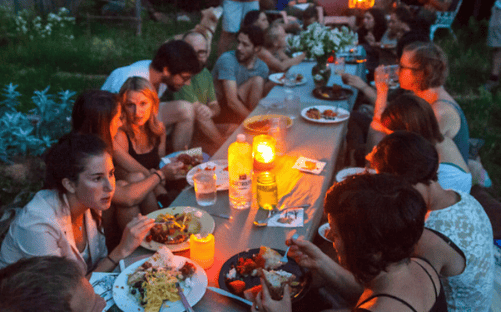
“Do you want a Picklebric next to you?” asked an alarmed op-ed in the Daily Camera last summer. Residents of a Boulder, Colorado, neighborhood were clashing with members of the Picklebric co-op over the city’s occupancy laws.
As of January, the answer is “Yes.” The Boulder City Council voted 7-2 to pass an ordinance that will allow up to 10 co-ops to register with the city each year. Occupancy will be capped at 12 – an increase from the current maximum of three – with a requirement of at least 200 square feet per resident.
For many co-op residents, the vote was a welcome conclusion to months of advocacy and outreach. For others, it came too late: residents of Pickelbric had to pack up and move out after complaints from a neighbor spurred their landlord into enforcing occupancy limits.
According to Slate, Pickelbric is just one of many co-ops that Boulder residents have been turning to in the face of rising housing costs:
“For years, [Pickelbric] served as a kind of local model for how a group of young people could adapt a single-family home into a respectable cooperative—and, more broadly, a paragon of how a generation struggling with high rents and student debt could adapt to inhabit America’s ubiquitous, unchanging architecture of single-family neighborhoods.”
Many co-ops choose to fly under the radar, hoping landlords won’t object to higher occupancy so long as they don’t annoy the neighbors. But Pickelbric wanted to change that, and bring intentional communities out of the shadows. With encouragement from city council members, Pickelbric residents introduced themselves to their neighbors and attended local meetings.
That wasn’t enough for some skeptics, who argued that the co-op’s lifestyle was “simply incompatible with single-family residential neighborhoods…. The problem is the number of people per square yard, the temporary nature of most of the occupants, and the hostel/airbnb-like operation, that is most troubling.”
Neighbors cited lack of yard maintenance, dumpster-diving, and alcohol consumption as reasons behind their concern, attacks that advocates say amount to “classist pressure” to keep neighborhoods looking and acting a certain way.
Fortunately for co-ops in Boulder and elsewhere, public opinion seems to be shifting in their favor. A similar ordinance lifting occupancy limits passed in Minneapolis earlier this year.
As Nathan Schneider writes in America Magazine, “A family of two grandparents, two parents and six grandkids could, by right of law, share a house that ten people unconnected by blood could not—even if they considered their housemates their family, even if their biological families turned them out.”
Now, intentional communities and other unrelated families in Boulder have a little more protection under the law.
****
Learn more about Picklebric on their website, Facebook page, or Twitter account. Check out the Boulder Community Housing Association (BoCHA) for ideas on how to legalize co-operative living in your city.
Photo via Pickelbric Facebook page.
Keep the conversation going with these pieces
Cob House at Dancing Rabbit on the cover of Yes! Magazine
There are no available blogs
Subscribe to our newsletter for fresh stories and community updates delivered to your inbox.
Get unlimited access to courses, exclusive member events, and a supportive network of community builders
Access all courses, books, and premium content
Member-only workshops and community builders
Member-only workshops and gatherings
We use cookies to improve your experience on our site. By using our site, you consent to cookies.
Manage your cookie preferences below:
Essential cookies enable basic functions and are necessary for the proper function of the website.
These cookies are needed for adding comments on this website.
Statistics cookies collect information anonymously. This information helps us understand how visitors use our website.
Service URL: policies.google.com (opens in a new window)
A residential project: people live here as their primary home.
An institution, business, network, or project that isn’t a residence (e.g. a learning center, farm, or network with no one living there full-time).

{{ item.label }}
{{ item.value ? item.value : currencyFormat( item.amount ) }}
Subtotal
{{ currencyFormat( pricing_summary.total_amount ) }}
There are no results matching your search