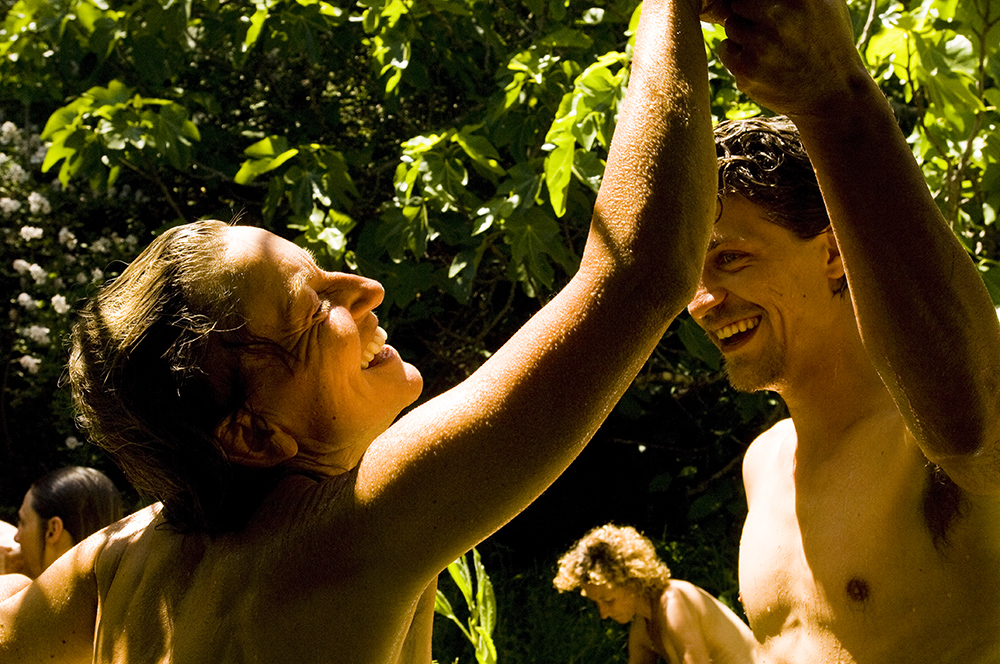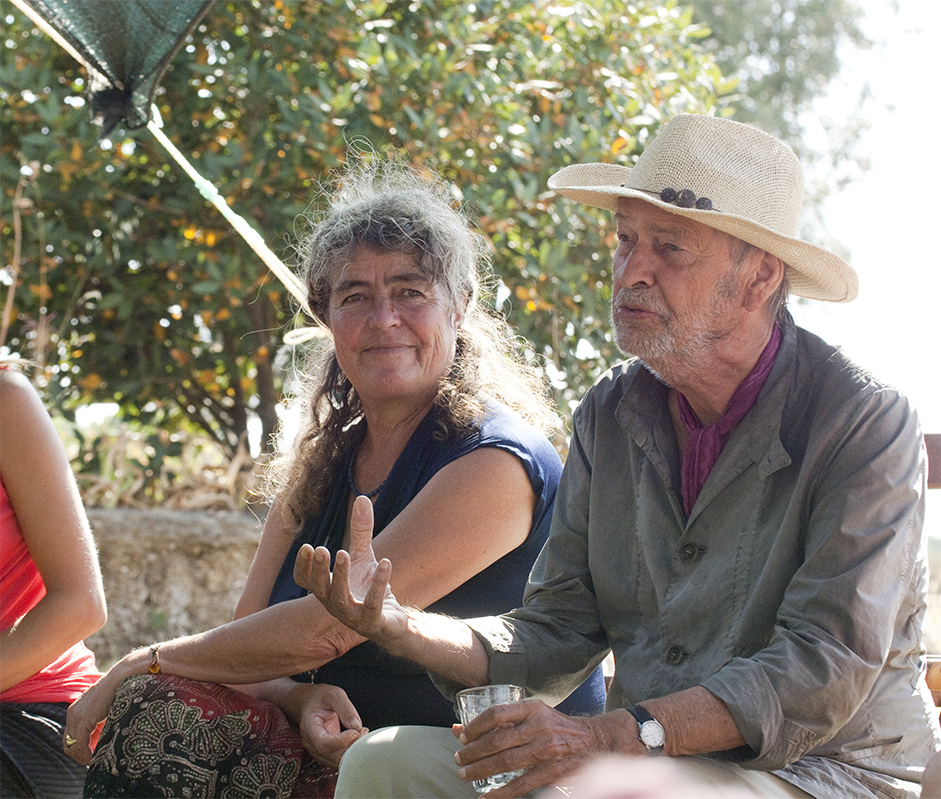
Tamera is a Peace Research & Education Center, a model for a peace civilization and a research station for a realistic utopia.
The project was founded in Germany in 1978 by Dieter Duhm, Sabine Lichtenfels and Charly Rainer Ehrenpreis. In 1995 it moved to Portugal. Today 180 people live and work on a property of 330 acres.
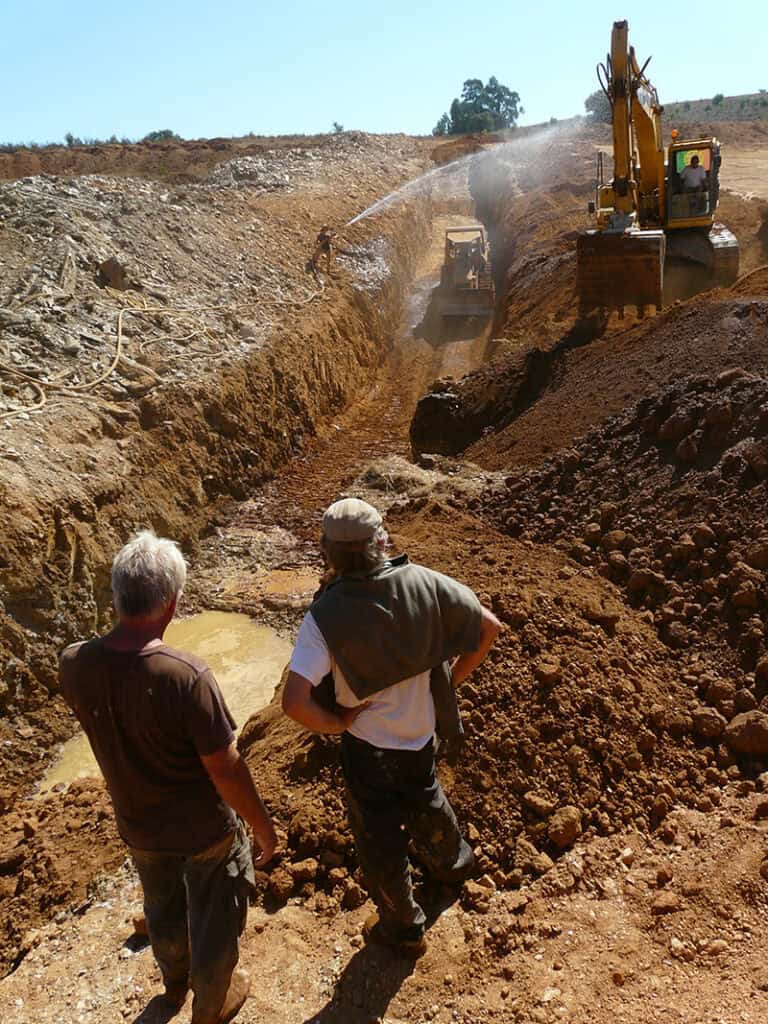
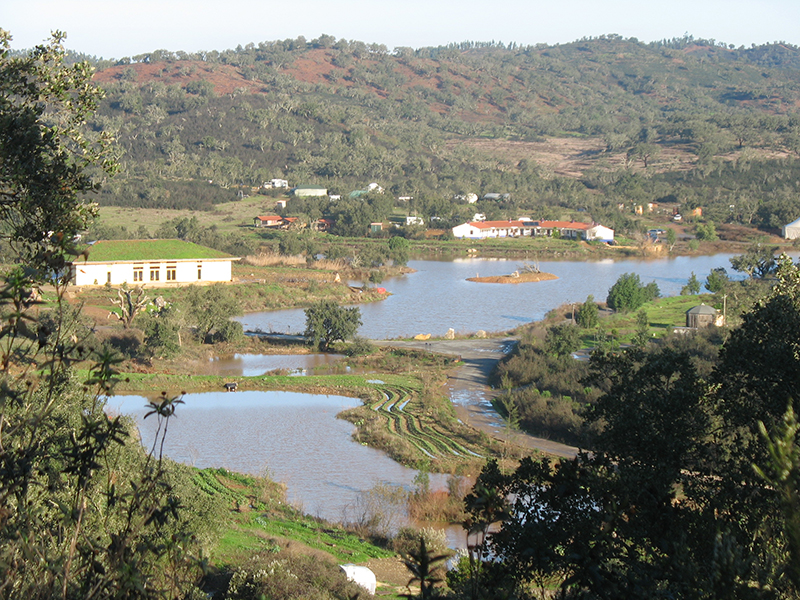
The founding thought was to develop a non-violent life model for cooperation between human being, animal and nature. Soon it became clear that the healing of love and of human community had to be placed at the center of this work. Sexuality, love and partnership need to be freed from lying and fear, for there can be no peace on Earth as long as there is war in love. The ecological and technological research of Tamera includes the implementation of a retention landscape for the healing of water and nature, as well as a model for regional autonomy in energy and food. Through the Global Campus and the Defend the Sacred Alliance we are working within a global network on the social, ecological and ethical foundations for a new Earth – Terra Nova.
The Healing Biotope I Tamera is a peace research center with the goal to create the model for a future society that is free from hatred, lies, violence and fear. Tamera should become an acupuncture point of peace, a greenhouse of trust, a prototype for an existence free of fear on this planet, a post-capitalist societal model and a place where the human and spiritual realm of life come together.
Our mission and wish is, to empower people around the world to build a regenerative, nonviolent culture by
researching the ethical, social, sexual, ecological, technological and economic foundations, and creating a replicable model. Tamera offers training and education for those committed to build communities, that follow the idea of a Healing Biotope. Through our global networking we are building a planetary community and sharing our vision of Terra Nova.
We are currently not able to receive more co-workers.
Please find on our website the seminar and event calendar to register. Once a month during the guest season we offer guided tours as day visit. You find the dates on the event calendar!
The Guest Center of Tamera is meeting place, home and study space for a growing international community of people. We warmly welcome you to get to know Tamera, its specific projects and people, and especially the vision of a new Earth.
You visit an emerging new culture that rattles conventional thinking and behavioral patterns. In the following, we want to give an introduction as to what you can expect in such an unconventional environment:
We are working to take all areas of life back to our own responsibility. This also concerns the material supply of food, energy and water. We learn from the cooperation with nature what it means to live again in wealth and real abundance and receive nature’s gifts with gratitude. We meet all creatures, even the smallest, with mindfulness and respect. They, just as we humans, belong to the great family of life.
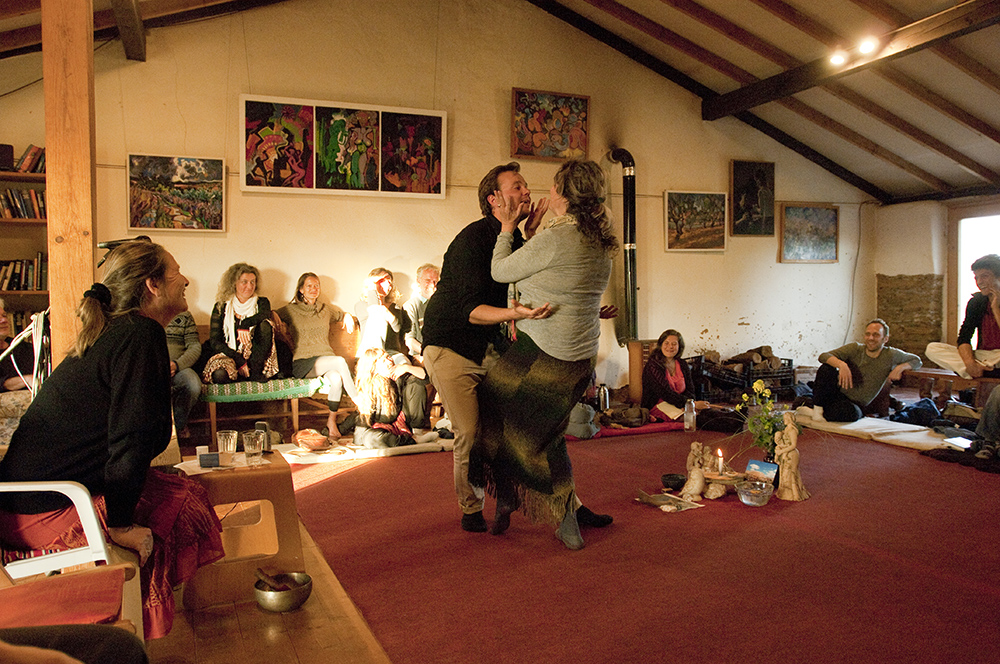
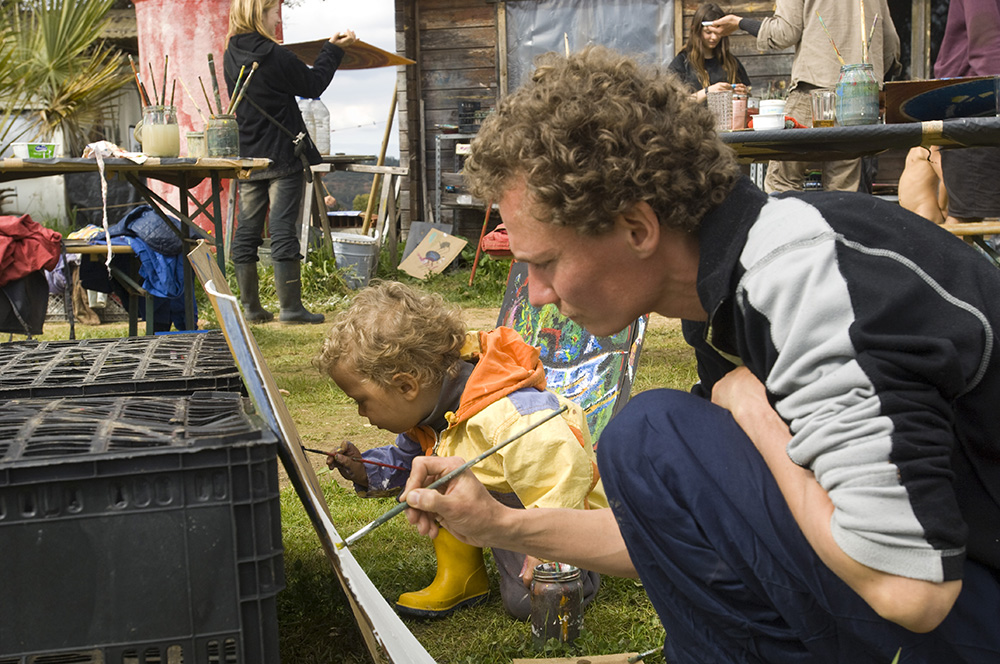
We invite all our guests to get involved in a simple life in community during the period of your stay. You will get to know a communitarian lifestyle, meeting over meals, working together and sleeping in dormitories. Our kitchens serve vegan meals from predominantly regionally produced and organic food. The night lights up with a sea of stars, but there are no street lights.
A few people (not elected by the broader community) make the major decisions.
Generally seek agreement, but have backup methods when consensus isn’t reached.
Power and responsibility are shared relatively equally among members.
The responsible persons of the projects form a co-holding group. This group and different working groups prepare decisions. Those decisions are being approved by the plenary by modified consensus, not in a formal way, based on trust and solidarity and encouraging the best future ideas.
Members contribute a percentage of income to community funds.
Labor: Yes (28 hrs/week)
Tamera is based on a community of trust. This is also reflected in its economic structure. Money is, like everything in a community of trust, subject to the communitarian ethics: transparency, mutual support and responsible participation.
The community is regularly informed about all cash flow, economic projects and investments. All decisions are transparent; all community members are invited to the relevant councils. Tamera itself, with all its buildings and purchases belongs to “the community” – the legal figure is listed below.
Trust is not the result of paragraphs and articles. It is a human quality. The deeper the trust is among each other and the more one has embraced the political objectives of Tamera, the more he or she will take responsibility for the whole and move away from his previously private existence into a communitarian way of life. This also includes a responsible way of dealing with the subject of money. It is a challenging research topic to invent a monetary system that promotes trust and community and reduces competitive thoughts. We are currently navigating through a mixture of both communal and private property with the increasing orientation towards a communitarian economy.
The Legal Figure of the Tamera Economy
If we wanted to describe Tamera in entrepreneurial terms, we could say its product consists in building a global model of peace and information fields for healing; its profit consists of the knowledge that is passed to the world as help, its shareholders are all the people who want to invest their money, their knowledge, their labor.
Tamera is a communitarian undertaking. In the existing legal system, there is so far no elaborate legal form, which really captures the complex structure of a community. We have therefore developed a structure combining the form of companies and associations for our communitarian framework.
The property of Tamera and its infrastructure is owned by the company Ilos, Peace Research Center, Lda. The shareholders of Ilos are the registered associations “G.R.A.C.E.” and “Associação para um Mundo Humanitario” (AMH). The active members of the associations are the community members of Tamera.
The Associação para um Mundo Humanitario (AMH) is responsible for the environmental and technological research projects of Tamera: the Solar Village Test Field, the Water Retention Landscape, ecological landscape healing, the reforestation project, building alimentary biotopes and for establishing the regional network.
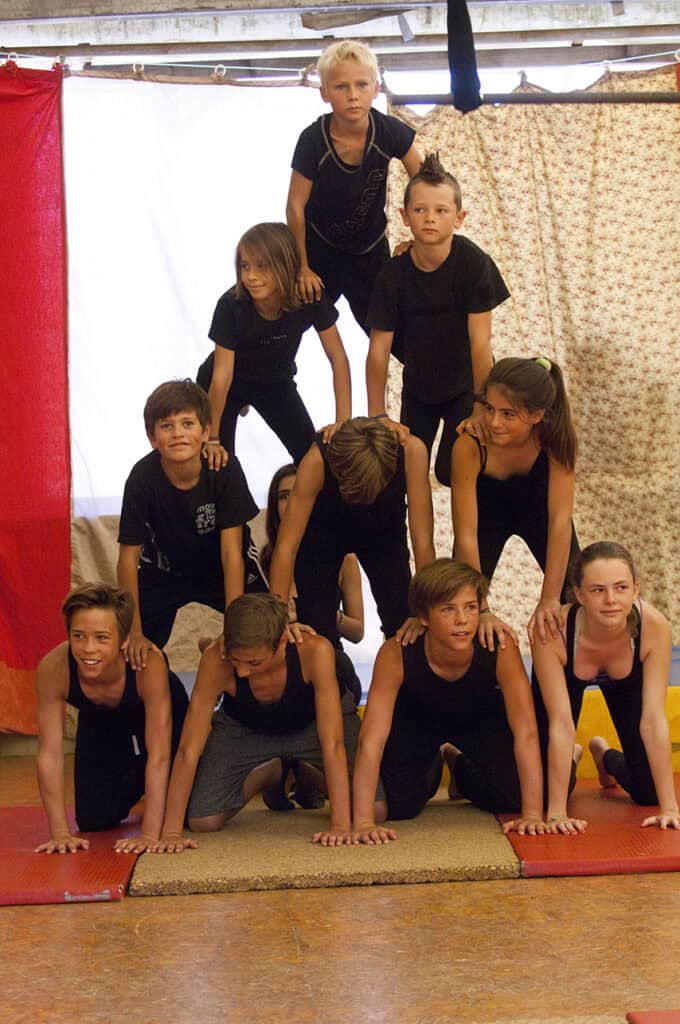
The G.R.A.C.E Association is responsible for the field of peace education, including the Global Campus, the youth school for global education, Place of the Children, as well as internal education and global peace actions. The Association also has a special training and scholarship fund for student peace workers from more impoverished countries. It is possible to sponsor students.
This structure is made up of a business, which is allowed to make profit, and a charitable non-profit sector, which finances its activities through donations and grants. Profits from ILOS are equally shared between the two associations.
Tamera has three monetary circuits:
1. Basic Household
This is the heart of the communitarian economy of Tamera. It covers all basic costs of the place and the people including services, repairs, maintenance, and supply. The Basic Household is funded by guests and the revenue from seminars, and from the Book Shop, the Support Circle and direct donations, as well as by the community itself. Considering the size of the project, this Basic Household is relatively low. It makes it possible that within the community there are no wages and labor costs. All co-workers work for room and board and receive a small monthly stipend.
The co-workers of Tamera take the responsibility for any financial deficits. They are therefore required to attract money outside of Tamera to compensate for any shortage in the Basic Household.
2. Loan Budget
The purchase of Tamera’s land and the initial investment were financed in part with loans. For several years we decided to stop using loans for investments, for political reasons. The Loan Household can be repaid with the help of interest-free exchange loans so that private loans that are due can be paid back.
3. Investment Budget
Funds donated here will go towards the individual project groups. Donations from the Investment Budget are used for building projects, the Solar Village Test Field, the further expansion of the Water Retention Landscape, food autonomy, landscaping, the creation of the International School “Escola da Esperança”, political actions, networking journeys, etc.
The “silent” costs incurred for each new investment – operating costs, costs for maintenance, spending on infrastructure, cooperation, planning and preparing projects – are not charged extra each time but are set at 30% of the incoming donations. This 30% is redirected to the Basic Household, which carries these silent costs.
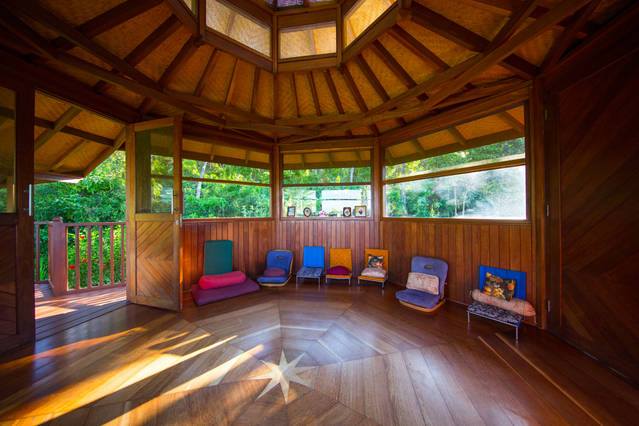
Common House, Garden(s), Greenhouse(s), Vehicle Share, Library, Workshop, Outbuilding(s), Swimming pond or pool, Outdoor Kitchen, Large Scale Kitchen, Tractor & Farm Equipment, Stage or Auditorium, Fire pit, Swingsets & play areas, Recreational vehicles, Gym or sports area, Internet
Countryside locations with significant distance from urban centers.
Connecting people and communities through an intentional online marketplace
There are no needs and offers
We use cookies to improve your experience on our site. By using our site, you consent to cookies.
Manage your cookie preferences below:
Essential cookies enable basic functions and are necessary for the proper function of the website.
These cookies are needed for adding comments on this website.
Statistics cookies collect information anonymously. This information helps us understand how visitors use our website.
Service URL: policies.google.com (opens in a new window)
A residential project: people live here as their primary home.
An institution, business, network, or project that isn’t a residence (e.g. a learning center, farm, or network with no one living there full-time).

{{ item.label }}
{{ item.value ? item.value : currencyFormat( item.amount ) }}
Subtotal
{{ currencyFormat( pricing_summary.total_amount ) }}
There are no results matching your search