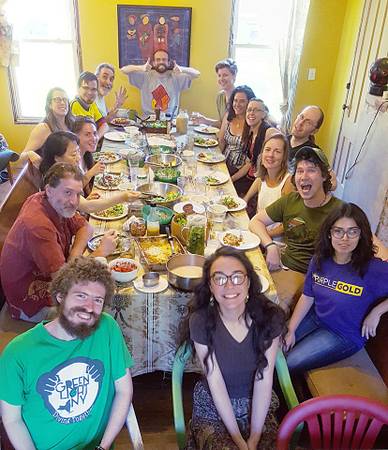
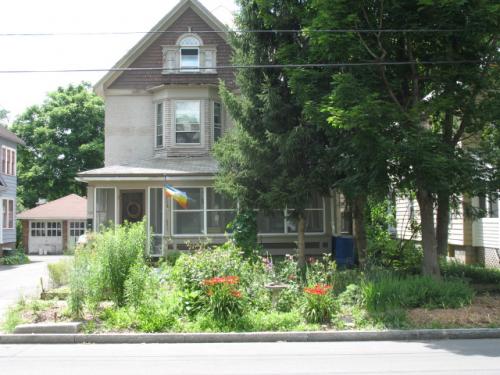
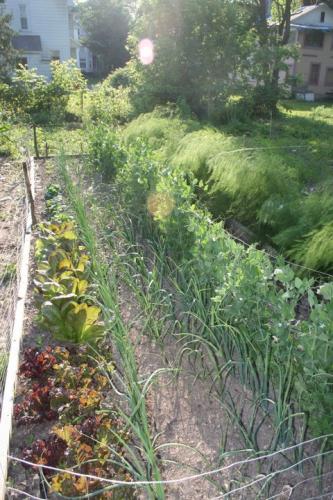
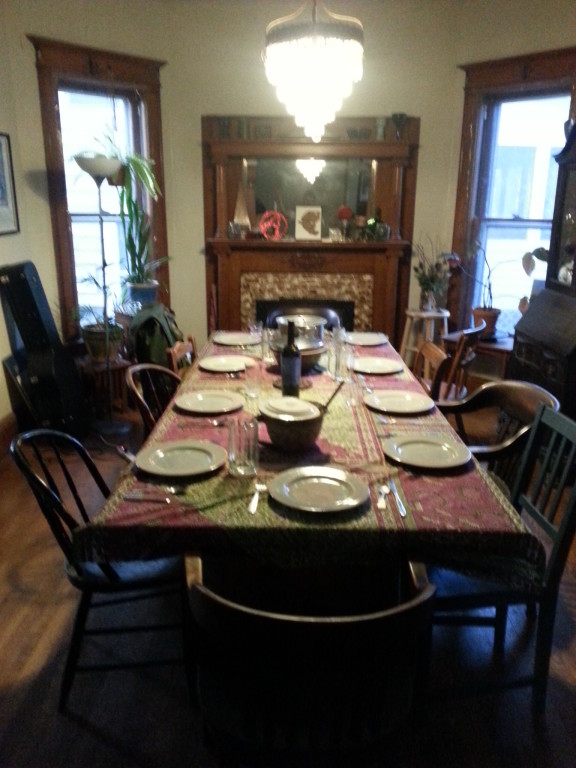
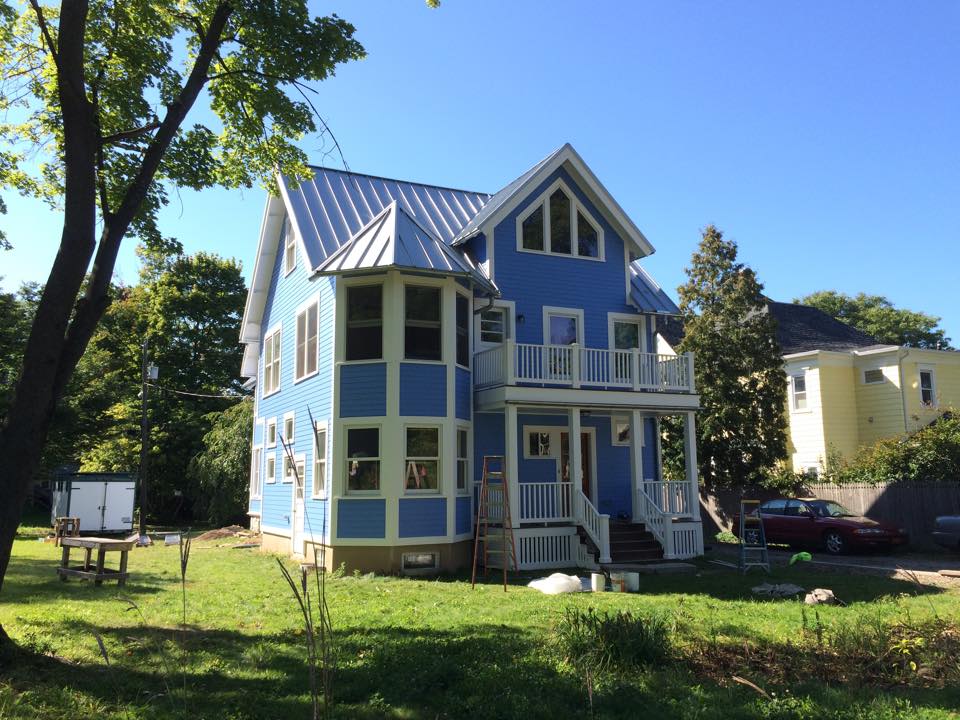
The Bread and Roses Collective provides a model of cooperative living, ecological sustainability, and affordable housing in the heart of the city. We have two houses linked by a half acre of land in the progressive Westcott neighborhood of Syracuse, NY, close to Syracuse University and the State University of NY College of Environmental Science and Forestry. One house is a beautiful 150 year-old historical house on a quiet residential street in Syracuse, NY. The other is over 120 years old, newly renovated with a kitchen designed for a collective, and on the main thoroughfare of the neighborhood, Westcott St, with a bus stop right in front of the house. We practice the idea of “Food, not Lawns” with much of our yard converted to intensive vegetable gardens and edible landscaping, a bathtub salad garden on our driveway, and backyard raised bed production over approximately 2500 square feet. We have a six-bin compost system, apple and pawpaw trees, berry bushes, a growing native plant population, and many storm water retention features. We grow most of our own vegetables June-October, and preserve many foods for the winter such as jams, ketchup, salsas, pickles, and tomatoes.
We have a strong commitment to social justice and community participation, with a number of our members involved with local community benefit organizations and initiatives such as Food Not Bombs, the Syracuse Peace Council, The Alchemical Nursery, ArtRage Gallery, the Neighbors of the Onondaga Nation and more. We have organized and led workshops on consensus process and democratic decision making, food preservation, composting, bike fixing, making salves and lotion, natural dyes, and more; and we’ve hosted a number of traveling activists, musicians, and culturally creative persons passing through, or stopping in, Syracuse! We also host an annual Plant Sale in the spring with Alchemical Nursery focused on edibles and natives, and a garden harvest dinner in the fall.
Activist sustainable housing
We have a 3 step process that involves a written application, an informal visit and tour, and a more formal meeting with all current members. We ask prospective members to begin with either the informal visit or by filling out our short written application describing their interests, experience, and expectations (available on our website). These steps help us to identify any potential issues and give prospectives a clearer sense of the commitments and expectations of living in our community. If our community seems like a good fit after the application and the first visit, we will set up a second visit (preferably in person, but possible to do via video call) with all current members to discuss our values, vision and day-to-day expectations and to learn more about the interested person. We generally do not schedule interviews unless we have a current or imminent vacancy. On average it can take 4-8 weeks from the time of your first visit until we are able to have a final decision.d
Send us an email; we can schedule a time for you to visit and see the house. Sunday evenings for potluck are best, but we also welcome overnight guests and other arrangements. We have a guest room and will try to make a bed available if possible.
The whole membership decides collectively.
Everyone must agree before moving forward.
Power and responsibility are shared relatively equally among members.
All community members are part of our coordinating committee and participate fully in decision making about the community. We have committees that coordinate various aspects of the community (renovations, gardening, finances, etc.), and we ask that each member participate actively in at least one committee.
Members maintain separate personal finances with minimal sharing.
Regular fees: $510
Labor: Yes (6 hrs/week)
Members with pre-existing debt: allowed
We purchase all food and household items collectively and share all utilities.
Expected labor contribution estimated to be 4-6 hours/week, including: a routine house chore, Sunday cooking rotation, grocery shopping rotation, garden/landscape projects, maintenance projects, community workshops, a monthly collective meeting, and serving on at least one committee.
Common House, Garden(s), Workshop, Fire pit, Internet
Within city limits with access to urban amenities and infrastructure.
Shared living spaces with private bedrooms/bathrooms and communal
kitchens, dining, and social areas.
Connecting people and communities through an intentional online marketplace
There are no needs and offers
We use cookies to improve your experience on our site. By using our site, you consent to cookies.
Manage your cookie preferences below:
Essential cookies enable basic functions and are necessary for the proper function of the website.
These cookies are needed for adding comments on this website.
Statistics cookies collect information anonymously. This information helps us understand how visitors use our website.
Service URL: policies.google.com (opens in a new window)
A residential project: people live here as their primary home.
An institution, business, network, or project that isn’t a residence (e.g. a learning center, farm, or network with no one living there full-time).

{{ item.label }}
{{ item.value ? item.value : currencyFormat( item.amount ) }}
Subtotal
{{ currencyFormat( pricing_summary.total_amount ) }}
There are no results matching your search