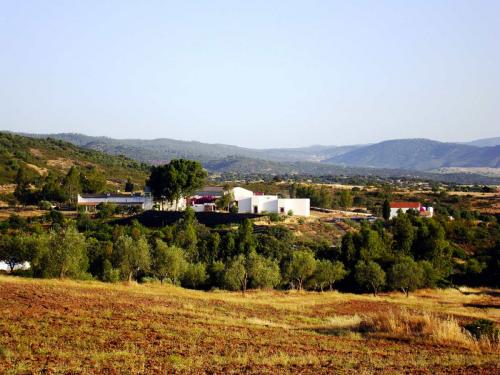
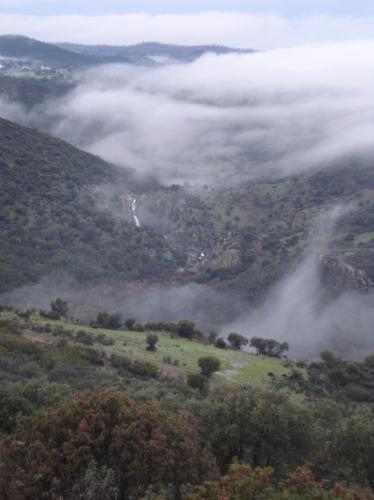
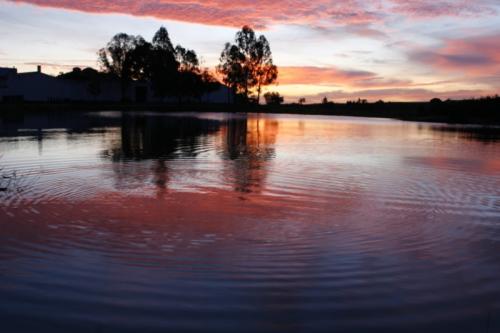
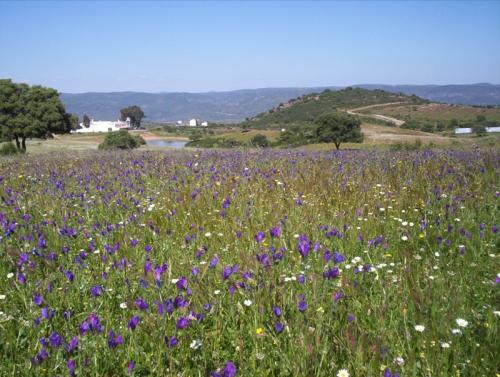
Los Portales, a place to create consciousness; to learn, grow and care for the human spirit and the planet.
Los Portales is an intentional community that practices innovative ways of life in different areas including organic agriculture, holistic education, deep psychology, empowering and power sharing systems of governance, conflict resolution, natural medicines, art, clean energies, an economy based on sharing, and above all, the empowerment of each individual, continually advancing towards greater sustainability and self-sufficiency.
Founded in Andalucía in 1984 (although born in 1978 in Brussels), the inspiration of the founders was nurtured by Jungian psychology and dreamwork as a way to know and transform our fears and pains into power, and to access our hidden talents.
We have a firm commitment to personal and global development and harmony through respect for oneself, each other and our environment. We conceive the community not as an end in itself, but as a means of creation and a path of transformation. Our mission is constantly evolving to respond to the global need for change at this very special time in the history of humanity.
After 33 years of existence, Los Portales is a well-established, stable and broad project that has developed in many directions and integrated the main dimensions of sustainability.
Ecological
Our ecological consciousness developed gradually, from the inside out, through dreamwork, by listening to our deepest needs and longings and through our connection to our natural environment.
Today we are 75% self-sufficient in food. We organically produce vegetables, seasonal fruit, grains, goat cheese, olive oil, medicinal herbs, spices, herbal teas and remedies, preserves and natural cosmetics. We also use local edible plants in our kitchen. We have taken measures not only to prevent erosion and desertification but also to regenerate the land and landscape (ongoing reforestation, water retention landscape and holistic management projects). We are totally off-grid, and water and power sovereign (we use solar panels, home-made wind turbines and a hydraulic turbine).
Social
The community is a dynamic, diverse and multi-generational group and is organised in a sociocratic structure, which is used for decision-making.
We use dreamwork as well as Process Work, Forum tools, family and systemic constellations, among others, to practice deep democracy, transform relational difficulties and global conflicts.
Each member is responsible for their own inner work and makes a commitment to the community to work on their own conflicts.
Cultural
We have developed our own culture and rituals as ways to celebrate our achievements and nourish our connection with the essence and meaning of our project. We value beauty, art, music, singing, dance, gastronomy, group meditation, as ways to give cohesion to the group.
We believe that the spiritual dimension of the human being does not develop on the basis of adherence to a school, church or belief system, but spirituality comes when our hearts are open, light and available, and when our interpersonal relationships become creative, based in trust, respect and collaboration.
Economic
Our community was founded on a gift economy system; the principle that each contributes according to their possibilities and obtains from the group according to their needs, within a collectively agreed framework. This has developed over time into mixed economy incorporating community enterprises and individual income sources.
We have achieved economic sustainability through producing a large portion of our own food, and creating income streams through our artisanal bread business, hosting workshops, visitors and giving courses.
Holistic
We find inspiration from the foundations of ecology and permaculture and apply them in the social and psychological dimensions of our lives. For example, we value diversity as a way of enriching our human and natural “ecosystem”, and we observe and honour the group as a living system, where each person’s role is valued. We explore the correspondence between the inside and the outside; we try to minimize the waste produced by our activities, starting with our “emotional waste”, which is often the most difficult to recycle, and we learn to support the self-regulating aspects of the group and its collective intelligence.
Building Community In the Wider Environment
We are active in our local environment through our links to the local authorities, schools and universities and a variety of local and regional networks. We also make our knowledge, experiences and practices accessible to the wider community through free regular guided visits, workshops, trainings, visits and retreats, participation in WWOOFING, conferences, and our temporary membership scheme.
There is an urban extension of Los Portales in Madrid, Crealliance whose aim is to promote the creation of alliances between different areas of expertise and to build bridges between people from different backgrounds through sharing information, training and networking.
human & spiritual development
Important: You must contact us if you want to visit our community. We organize experience weeks and specific visit days. Thanks
A few people (not elected by the broader community) make the major decisions.
Decisions proceed unless someone has a reasoned objection.
Organized in circles or domains with distributed authority.
we are now working with a sociocratic structure
Members contribute a percentage of income to community funds.
Join fee: Yes
Regular fees: Yes
Labor: Yes
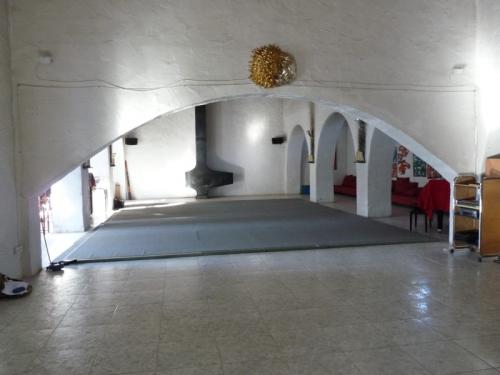
Common House, Garden(s), Greenhouse(s), Vehicle Share, Library, Workshop, Swimming pond or pool, Outdoor Kitchen, Large Scale Kitchen, Tractor & Farm Equipment, Stage or Auditorium, Fire pit, Swingsets & play areas, Internet
Countryside locations with significant distance from urban centers.
Integrated communities designed around ecological principles with sustainable living practices.
Communal living with shared resources, property, and often income or work responsibilities
Connecting people and communities through an intentional online marketplace
There are no needs and offers
We use cookies to improve your experience on our site. By using our site, you consent to cookies.
Manage your cookie preferences below:
Essential cookies enable basic functions and are necessary for the proper function of the website.
These cookies are needed for adding comments on this website.
Statistics cookies collect information anonymously. This information helps us understand how visitors use our website.
Service URL: policies.google.com (opens in a new window)
A residential project: people live here as their primary home.
An institution, business, network, or project that isn’t a residence (e.g. a learning center, farm, or network with no one living there full-time).

{{ item.label }}
{{ item.value ? item.value : currencyFormat( item.amount ) }}
Subtotal
{{ currencyFormat( pricing_summary.total_amount ) }}
There are no results matching your search

We’re introducing new Plus features — including community reviews, Profile Match, and unlimited Needs & Offers posts — while keeping most of FIC free for everyone. Membership costs less than two coffees a month.