
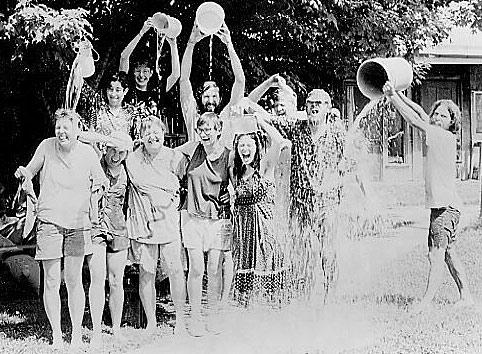
Group of children playing with water in a community setting at Twin Oaks.

Twin Oaks Intentional Community

  • Communities

About the Communities

  • Established
  • English
  • Social
  • Rural

Founding year

  • 1967

What we do

Twin Oaks is an income-sharing community of 100 people living on 485 acres of farm and forestland in Virginia. We were founded in 1967, and our lifestyle reflects our values of egalitarianism, ecology, and nonviolence. We welcome scheduled visitors throughout the year. We are economically self-sufficient.
Members work full-time in our community businesses–growing, packing, and shipping organic heirloom seeds, indexing books, making tofu and other work. These businesses provide about one-third of our work; the rest goes into the tasks needed to support a rural village of 100 people–organic gardening, milking cows, equipment and building maintenance, cooking, office work, and more. Our work schedules of 40 hours each week are very flexible. In return for member’s labor, the community provides all basic needs, including housing, food, clothing, etc. Twin Oaks has an intricate community culture.
Our everyday lives include many recreational activities–social and support groups, performances, music, games, dance, and art. Our culture values inclusivity and sustainable living. We share our vehicles, we build our own buildings, and we share houses of 10-20 people. Some of us do sustainability activism and work for economic, racial and gender justice. Each summer we host a Communities Conference, Women’s Gathering and Queer Gathering ; see our website for details.
We offer a two-hour tour on many Saturday afternoons; please email or call during business hours to reserve a place. Our Three-Week Visitor Program is a prerequisite for membership and must be arranged well in advance of the proposed stay. Information about visiting is available on our website.

Our Mission

egalitarianism, income-sharing

  • Purpose
  • Social
  • Languages
  • English
  • Community type
  • Ecovillage
  • Commune
  • Sustainability practices
  • Renewable energy systems
  • Transportation
  • Waste reduction / composting
  • Regenerative agriculture or permaculture
  • Activities
  • Farming
  • Experiences
  • Ecosystem
  • Temperate Forest

Commemorative dates

  • January 1, 1967
  • Started planning
  • January 1, 1967
  • Started living together

Video

  • 100 Total members
  • Open to new members
  • Open to visitors
Total
115

Basic expectations or agreements for members

Read our website visiting section and then correspond with us to arrange a Saturday tour and/or a three-week visit. Arrangements must be made well ahead of any visit.

Decision-making process

  • Others

Governance structure

  • Sociocratic/Circle-Based

Organized in circles or domains with distributed authority.

Economic model

  • Complete Income-Sharing

All member income goes into common pool for community use.

Economic scenarios for this community

  • There is a labor obligation

Additional economic information

Labor: Yes (40 hrs/week)
Members with pre-existing debt: allowed

Vehicle accessibility

  • It would be easy / doable to live in this community without a car
  • There are one or more community vehicles
  • There are restrictions on personal vehicles being owned or kept on the property

Shared resources and amenities that are accessible to everyone in the community

Common House, Garden(s), Greenhouse(s), Vehicle Share, Library, Workshop, Outbuilding(s), Swimming pond or pool, Large Scale Kitchen, Tractor & Farm Equipment, Swingsets & play areas, Internet

Frequency of communal meals

  • Approximately all meals

Significant food acquisition practices

  • Growing our own
  • Livestock / Animal Husbandry

Dietary restriction

  • People can cook and eat what they want in their own residence

Nature of social activity

  • Social events are common

Community activities and engagement

  • Casual hangouts and social events
  • Personal projects such as crafts, music, etc.
  • Some members engage in activism
  • Meditation/Yoga/spiritual pursuits
  • Groups around shared interests (change over time)

Local connectedness

  • We try to engage with our local community

Friendliness of people and local government

  • It’s a mix

Pet policy

  • Pets are allowed, with special approval or according to policy

Limited number of dogs and cats, people must wait until space on the Waiting List opens

Substance use culture

  • Substance use occurs in peripheral / discrete / only in personal or private spaces

Practiced relationship models

  • Monogamy
  • Polyamory / Open relationships / Ethical Non-Monogamy (ENM)
  • Celibacy

Member support features

  • Onsite or nearby medical facilities

DEI and anti-oppression training

  • Yes, some individuals

Me and White Supremacy, other personal study

Level of LGBTQIA+ inclusion

  • Very inclusive - significant LGBTQIA+ representation

Gender composition

  • Roughly balanced (no group over 60%)

Age demographics

  • Mixed adults (few or no children)

Racial / ethnic demographics

  • Some diversity (2-3 different backgrounds)

Socioeconomic and wealth composition

  • Moderately diverse (some economic variety)

Property status

  • Privately owned

Property owner

  • By a Land Trust, Home Owners Association, or corporation

Ecosystem

  • Temperate Forest

Moderate climate with distinct seasonal changes
Includes deciduous and mixed forest types
Examples: Eastern North American Forests, European Broadleaf Forests

Setting

  • Rural

Countryside locations with significant distance from urban centers.

Community type

  • Ecovillage

    Integrated communities designed around ecological principles with sustainable living practices.

  • Commune

    Communal living with shared resources, property, and often income or work responsibilities

Community type

  • Built or remodeled using passive solar design
  • Super-insulated to reduce energy usage
  • Built or remodeled using passive house design

Sustainability approach

  • Renewable energy systems
  • Transportation
  • Waste reduction / composting
  • Regenerative agriculture or permaculture

Community type

  • Built or remodeled using passive solar design
  • Super-insulated to reduce energy usage
  • Built or remodeled using passive house design

Some or all of the buildings are...

  • Built or remodeled using passive solar design
  • Super-insulated to reduce energy usage
  • Built or remodeled using passive house design

Self-produced energy

  • Up to 33%

Energy production methods

Solar

Energy sources used

  • Photovoltaic Solar

Self-produced food

  • 33 - 66%

Food production methods

3 acre organic garden, dairy and beef cows, chickens, fruit orchards, herb garden

Local, organic, or fair trade food

  • 33 - 66%

Food systems

  • Community garden
  • Greenhouse / aquaponics
  • Livestock / poultry
  • Seed saving / exchange
  • Shared kitchen or food co-op

Source of water

  • Well water

Waste management practices

  • Composting
  • Recycling program
  • Reuse or repair systems
  • Land area size
    485 acres
  • Land allocated for food production
    65
  • Land used for biodiversity enhancement
    400
  • Land used for tree planting
    400

Guest Book

Written reviews are available for plus members. Click here to upgrade.

Location

  • Virginia, United States

Twin Oaks Intentional Community

Needs and Offers

Connecting people and communities through an intentional online marketplace

  • Promoted
  • Events
2 weeks ago

Coastal Regeneration Immersion: Permaculture Design Certification in Jalisco, Mexico

Tropical Dry Forest Permaculture Design & Regenerative Stewardship Certification (PDC)12-Day Intensive | 120 Hours | Costalegre, Jalisco, Mexico APPLY AT XOCHIRAIZ.COM Join us for an immersive Permaculture Design Certificate course set in the tropical dry forest bioregion of coastal Jalisco. This 120-hour intensive blends internationally recognized PDC curriculum with hands-on regenerative practice — combining ecological design, agroforestry, natural building, and community stewardship into one integrated learning experience. Lead Faculty Jorge Luis Gtz. Olarte (Arborescencia RedGenerativa) – Regenerative Design, Soil Biology & Agroforestry Ozzy Lusth (Survior & Xochiraíz) – Wilderness Resilience & Survival Skills Dave Collins (Capacha Coastal Conservation Center) – Bioarchitecture & Ecological Development What You’ll LearnThe course moves through six progressive phases: Permaculture & Ecological Literacy – ethics, principles, and reading the tropical dry forest landscape Water & Soil Systems – keyline design, water harvesting, living soils, and compost systems Horticulture – food garden design, propagation, and biological pest control Regenerative Food Systems – tropical agroforestry, food forest design, and guild planting Ecological Infrastructure – bamboo bioarchitecture, bioclimatic farm design, compost toilets, greywater, and rocket stoves Integrated Design Studio – team-based final design projects covering watershed strategy, agroforestry, food forest layout, infrastructure, and phased implementation Daily RhythmMornings begin with optional surf/yoga and journaling, followed by field practicums and hands-on workshops. Afternoons include design studio and construction lab work, with reflection circles, communal dinners, and evening talks, films, or campfire discussions rounding out the day. Final ProjectParticipants work in teams to produce a full regenerative design package — landscape analysis, water plan, agroforestry design, food forest plan, ecological infrastructure, and bioclimatic farm plan — presented to a faculty review panel on the final day, followed by a closing ceremony, certificate delivery, and community feast. CertificationGraduates receive the Tropical Dry Forest Permaculture Design & Regenerative Stewardship Certification (120 contact hours), hosted by Capacha Coastal Conservation Center and Tierralegre, A.C. Curriculum integrates international PDC standards with tropical ecology, agroforestry, ecological restoration, bamboo bioarchitecture, bioclimatic design, GIS/photogrammetry, and regenerative leadership. Highlights Hands-on bamboo construction (temazcal, bathhouses, sculpture) Tropical dry forest silviculture practicum Community mapping and design project for Ekoa Green Community Talent show and sea turtle release
January 10 – January 24
  • Promoted
Offer
  • Promoted
Offer
  • Professional Services
4 months ago

Community Matchmaking: Get Help Finding Your Community

Would you like to join an intentional community but don’t know how? Feel overwhelmed by the number of communities out there? Not sure if there is one that’s a fit for you? CommunityFinders is here to support you on your path to community living. You can find your community by: Taking the free Community Types Quiz to learn which of the most common types of community is a fit for you. Booking a 1:1 consultation with a Community Matchmaker to receive recommendations for communities that are a fit for you. Joining the Money and Community Mini-Course to find out which communities are within your budget. Reading the book Intentional Community to help you understand your options and decide whether community living is right for you. Our goal is to help community seekers become community finders — people with confidence that their community match is out there and they will find it. Looking forward to working with you to find your community! Please be in touch, Cynthia Tina Founder communityfinders.com What communitarians are saying: “Cynthia helped me clarify the intentional communities that fit me, better get to know them, and finally choose one that I’m now a member of. I have no doubt anyone on a community journey will find great value in her guidance.” – Alan Stillman “Out of potentially thousands of communities, Cynthia matched me with very similar values revealed on their websites. I am in the process of applying to visit the number one recommendation. I’m excited and thankful for Cynthia‘s skills. Beyond well worth.” – Tommy Teeple “Due to her extensive community experience, she could offer many insights, provide useful tips and present selected communities to me that she had visited herself.” – Antonia Von Hassell

Update to a Public Profile

  • Log in
  • Go to your profile page
  • Toggle on the "Add my profile to the directory"
  • Save your profile

Information

Communities

A residential project: people live here as their primary home.

Organizations

An institution, business, network, or project that isn’t a residence (e.g. a learning center, farm, or network with no one living there full-time).

Plus Community Membership

  • Find people with Profile Match
  • Access to your community listing statistics
  • Create Discussion Groups
  • Access to our affiliate program
  • Member badge on your community profile
I am an official member of this community
Disclaimer
I affirm that my information is accurate and I am authorized to manage this listing
Foundation for Intentional Community FIC Member badge logo.

Free Plan

Free Membership
Free

Intentional Advertising

  • Subtotal

    {{ currencyFormat( pricing_summary.total_amount ) }}

Icon representing community connections and collaboration for intentional communities.

Plus Membership

  • Find communities with Profile Match
  • View detailed reviews about communities
  • Create free listings in Needs & Offers
  • Plus Member resources in CommUniversity
  • View communities detailed reviews
  • Plus Member badge on your profile