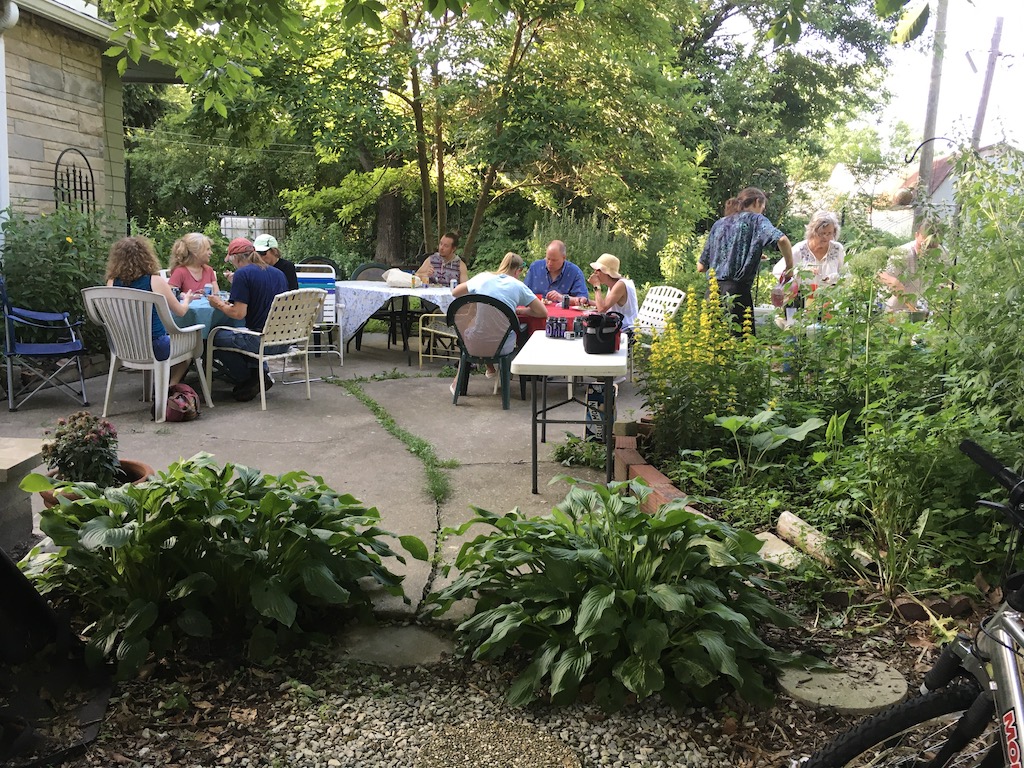
People gathered around tables in a lush garden setting for a community event.

Green Acres Permaculture Village

  • Communities

About the Communities

  • Established
  • Ecological
  • Suburban

Founding year

  • 2009

What we do

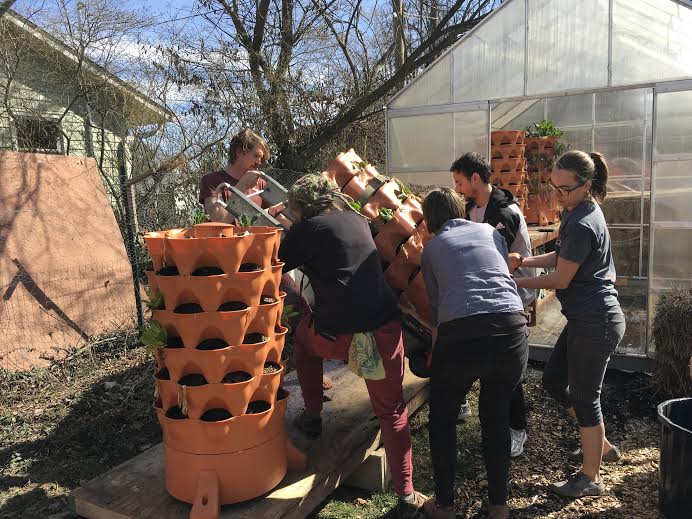
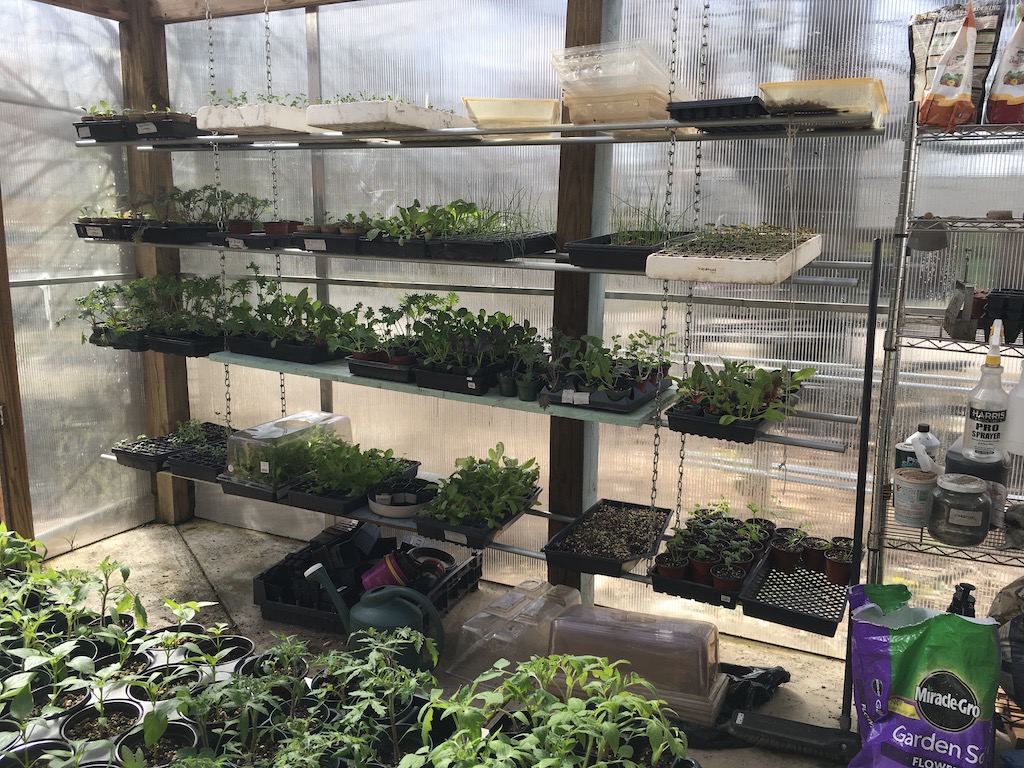
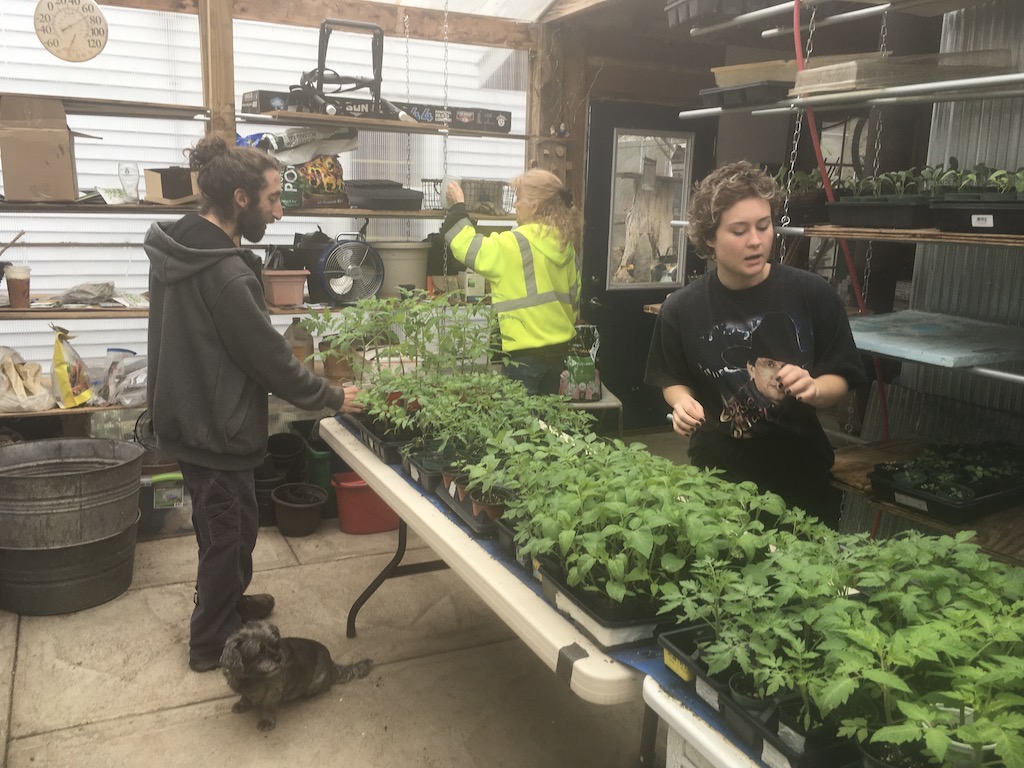
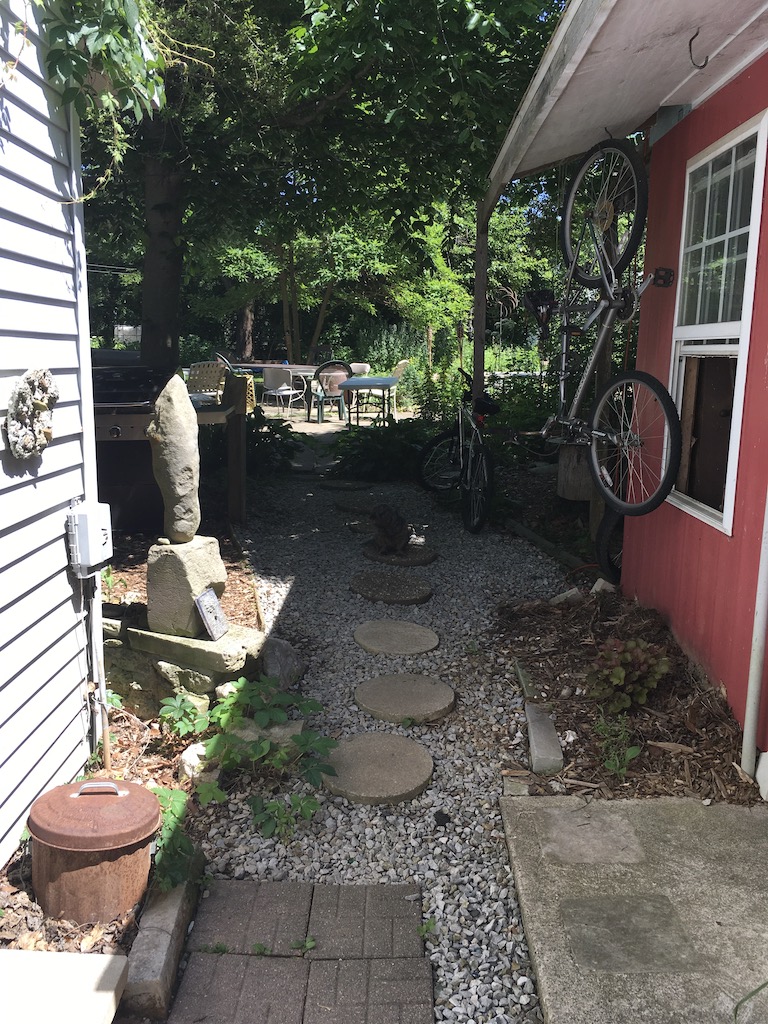
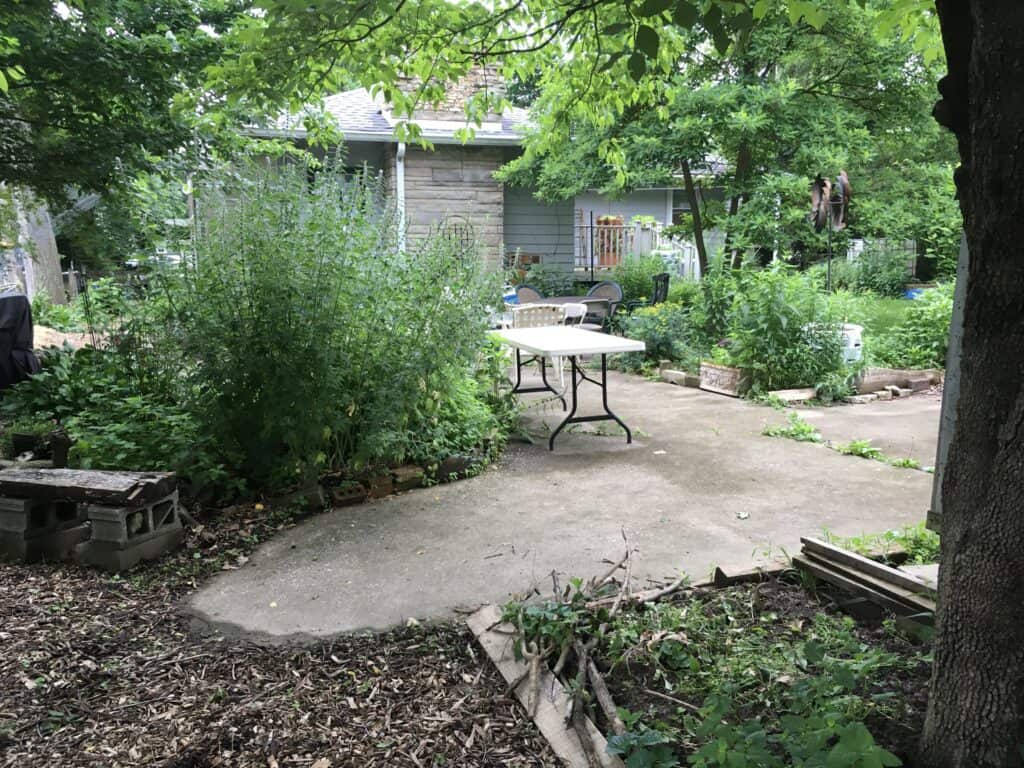
GREEN ACRES PERMACULTURE VILLAGE is a retrofit intergenerational intentional community carved from within an existing suburban neighborhood in a college town. The evolving Village, currently featuring three adjacent homes and permacultured grounds, with pathways and commons areas (one greenhouse, a workshop space, chicken house, shed, patio) offers itself as a template for transformation of suburban life.
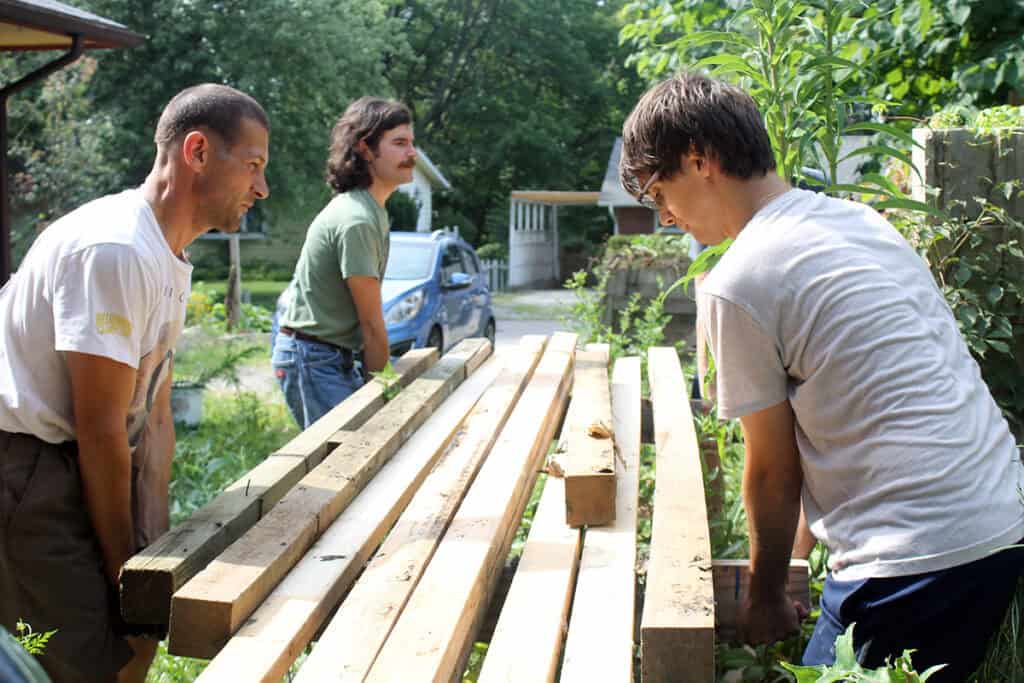
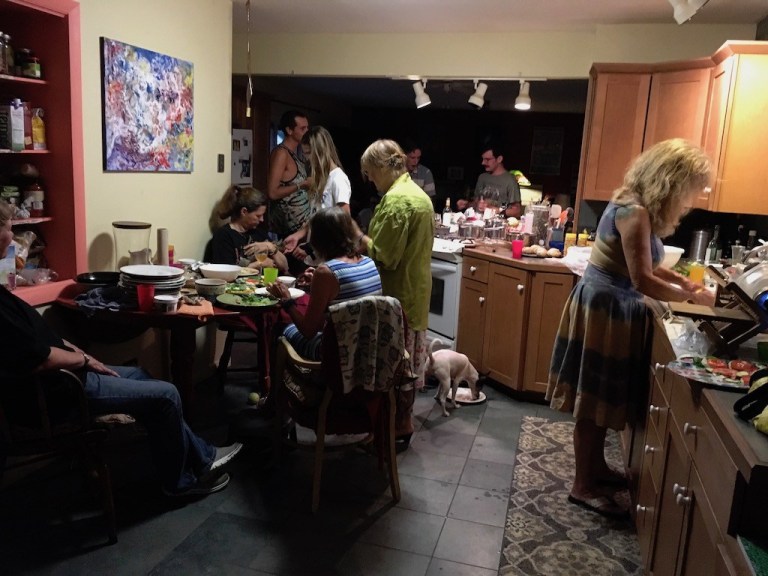
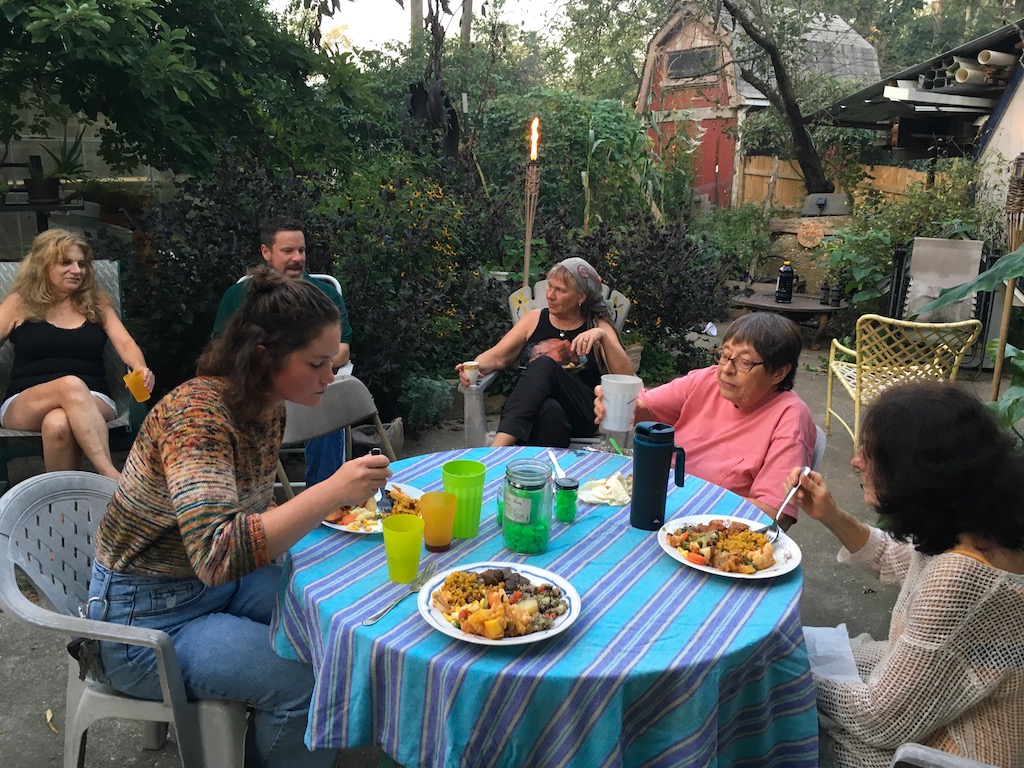
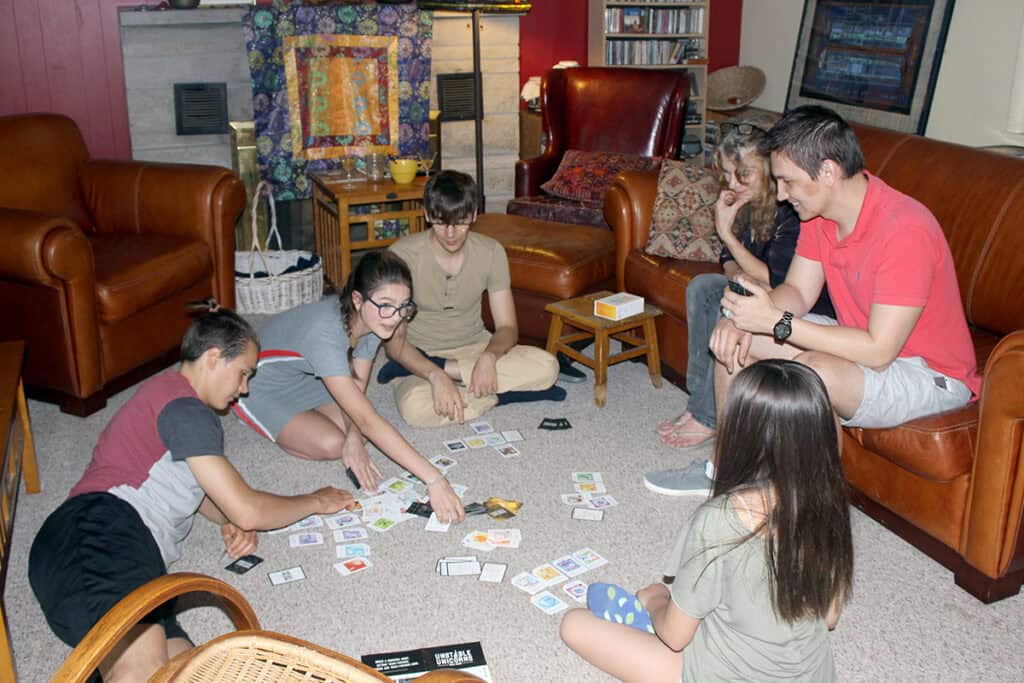
Village rhythms feature both work and play. Offering workshops, work days, weekly Community Dinners, and Seasonal Celebrations, we both integrate internally and promote outreach to the larger community. To this end, we offer tours, plus sponsor and encourage WWOOFers, including Indiana University Interns and Sustainability Classes, to demonstrate and promote values that lie below money as far as possible. To this end we keep rents low, work together on projects, encourage each other’s self-expression and entrepreneurial skills, honor our communion with the living Earth, and aim to live and work in place inside a sharing economy that values both individual expression and community cooperation.
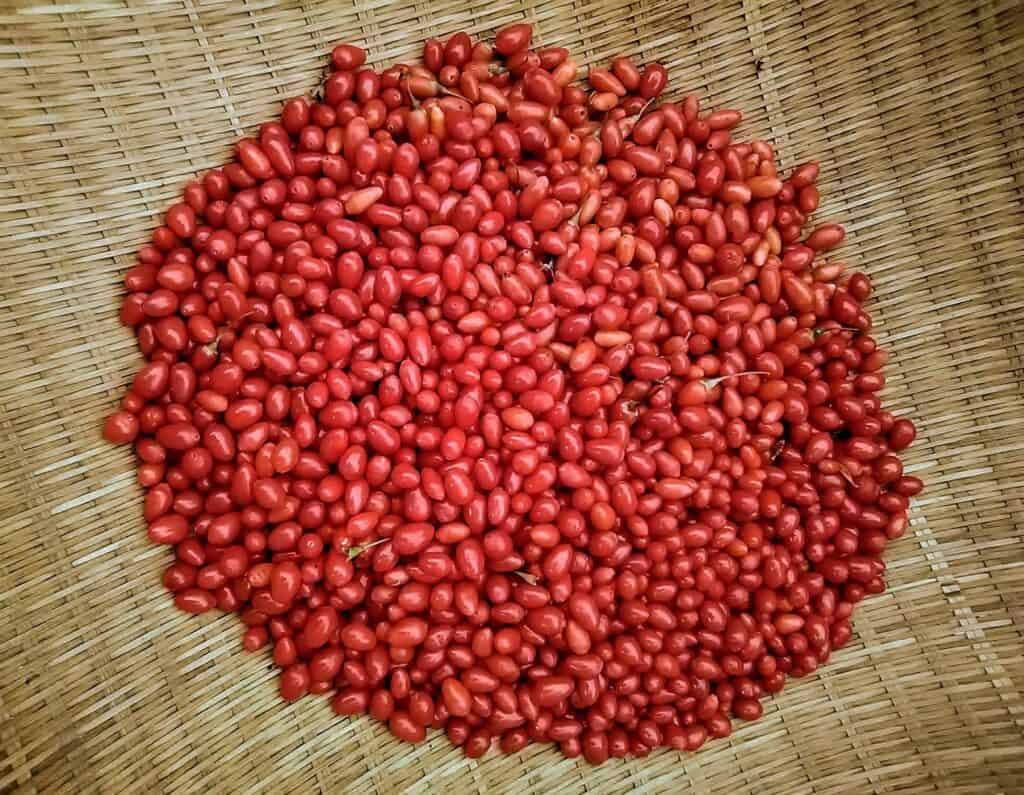
Established in 2009 by founder Ann Kreilkamp who began by dedicating her own yard for a Green Acres Neighborhood Garden, both our sense of community and our capacity for growing, preserving, and selling or donating food have evolved organically over time.
Green Acres Permaculture Village is networked with the Green Acres Neighborhood Association, Dandelion Village, Bloomington Co-operative Living, Bloomington Council of Neighborhood Associations, and the Fellowship of Intentional Communities.

Our Mission

GREEN ACRES PERMACULTURE VILLAGE is a small, retrofit, intergenerational, intentional community in a core suburban college town. A neighborhood that integrates self-knowledge and expression with a shared culture among humans and the living Earth to encourage abundance on every level.

  • Purpose
  • Ecological
  • Community type
  • Coliving
  • Ecovillage
  • Intentional Neighborhoods
  • Sustainability practices
  • Regenerative agriculture or permaculture
  • Permaculture design
  • Activities
  • Property management
  • Farming
  • Experiences

Commemorative dates

  • January 1, 2009
  • Started planning
  • January 1, 2014
  • Started living together

Video

  • 9 Total members
  • Open to new members
  • Open to visitors
Total
10

How to join

Come to our community dinner to meet everyone. If you like us and we like you, we’ll ask you to do a background check on yourself for us. Assuming the background check is okay, then we’ll ask if you’d like to stay one month to see if the arrangement works for everyone, including yourself! At this point we will ask you to sign a lease for 6, 9, or 12 months. We have a short Q&A for those who can’t meet us in person, w/questions about allergies, willingness to work 4 hours a week, etc. Everyone is welcome to fill out the Q&A and be added to the waitlist! https://tinyurl.com/GreenAcresPermacultureVillage.
October 9, 2022: One room is available.

Basic expectations or agreements for members

Email us at gr********************@***il.com and/or add your email address to the list of those invited to our weekly community dinners, Thursday at 7pm! After a three month hiatus, the Community Dinners began again on March 24th 2022.

Decision-making process

  • Modified Consensus

Generally seek agreement, but have backup methods when consensus isn’t reached.

Governance structure

  • Collaborative/Horizontal

Power and responsibility are shared relatively equally among members.

Conflict resolution approach

One identified leader, in the sense that one person who lives here owns all three properties and receives all the rents, which are low in today’s market, and differ depending on size of the room. Modified Consensus in this case means that the owner can veto any decision made by the group.
Another identified leader, the person who serves as farm manager in exchange for partial rent reduction.

Economic model

  • Partial Income-Sharing

Members contribute a percentage of income to community funds.

Economic scenarios for this community

  • There is a labor obligation

Additional economic information

Labor: Yes (4 hrs/week)
Members with pre-existing debt: allowed
The owner is the one person who “partially shares income,” in that ALL funds received from (lower than market) rents go back into the place itself (maintenance, farm costs, property taxes, mortgages, insurance).

Vehicle accessibility

  • There are one or more community vehicles

Shared resources and amenities that are accessible to everyone in the community

Common House, Garden(s), Greenhouse(s), Library, Workshop, Outbuilding(s), Tractor & Farm Equipment, Fire pit, Internet

Frequency of communal meals

  • About once a week

Significant food acquisition practices

  • Locally sourced

Dietary type

  • Vegetarian Only

Dietary restriction

  • People can cook and eat what they want in their own residence

Community activities and engagement

  • Volunteer, Internship, or Apprenticeship, or WWOOF’ing
  • Neighborhood, Community Housing, or Homeowner's Association
  • WWOOF'ing, Guest Farming
  • Festivals, Conferences, Events

Substance use culture

  • Substance use appears in public spaces but no pressure

Gender composition

  • Roughly balanced (no group over 60%)

Age demographics

  • Multi-generational (all ages well represented)

Property status

  • Privately owned

Property owner

  • By a single individual, couple, or Family Trust

Setting

  • Suburban

Residential areas outside city centers but within metropolitan regions.

Community type

  • Coliving

    Shared living spaces with private bedrooms/bathrooms and communal
    kitchens, dining, and social areas.

  • Ecovillage

    Integrated communities designed around ecological principles with sustainable living practices.

  • Intentional Neighborhoods

    Geographically close groups of independently-owned homes whose residents actively cultivate community relationships and shared values.

Sustainability approach

  • Regenerative agriculture or permaculture
  • Permaculture design

Land practices in our community

  • The community practices permaculture

Self-produced energy

  • 33 - 66%

Energy sources used

  • Photovoltaic Solar

Self-produced food

  • 33 - 66%

Local, organic, or fair trade food

  • Over 66%

Food systems

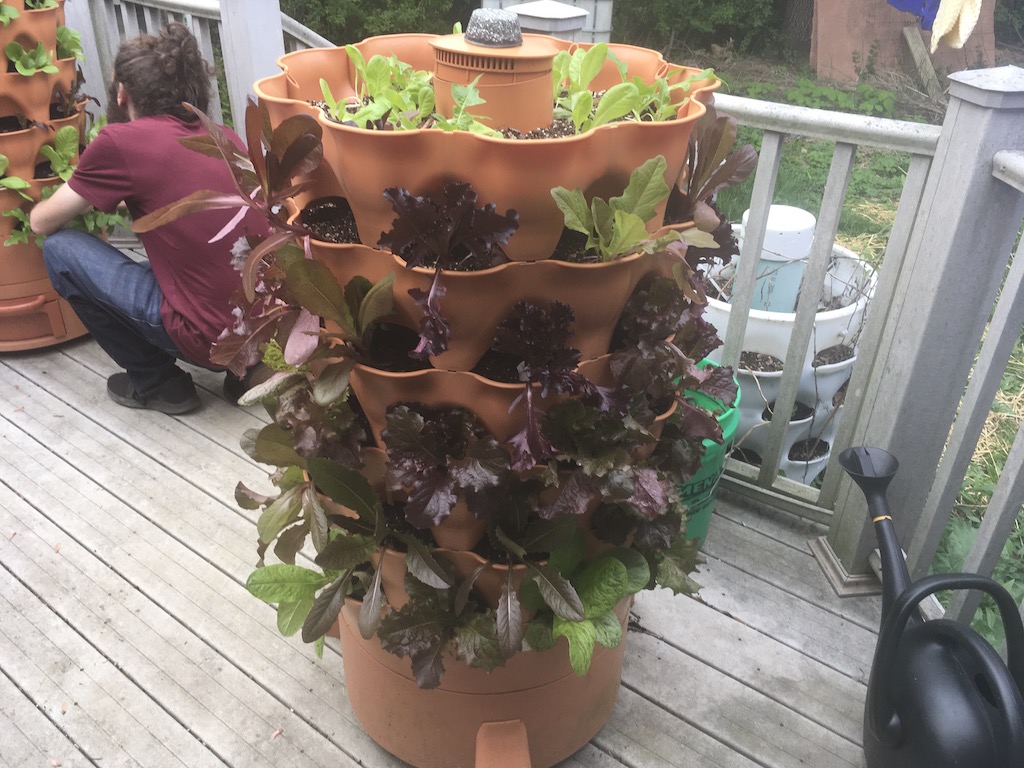
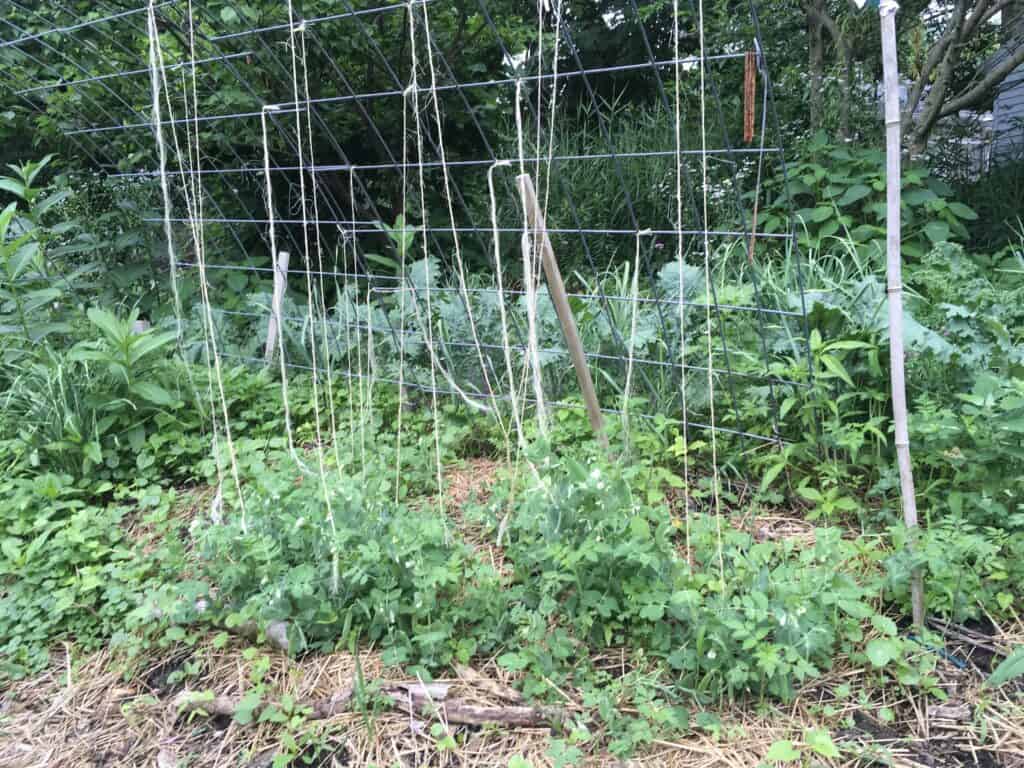
  • Community garden
  • Greenhouse / aquaponics
  • Land area size
    .6 acres

Guest Book

Written reviews are available for plus members. Click here to upgrade.

Location

  • Indiana, United States

Needs and Offers

Connecting people and communities through an intentional online marketplace

  • Promoted
Offer
  • Real Estate For Sale
1 month ago

3000sf House+Apartment, Rosewind Cohousing, Port Townsend WA

We are a retired couple who are downsizing, still living within the community. We are selling our large, flexible, comfortably rustic house, perfect for a multigenerational household, a family with kids or for 2 separate households. It’s 3000 square feet on 3 levels. The house is on a slope, with 2 main entrances. At one time it housed a large blended family. The current setup is a 2250 square foot, 2 bath main house with a 700 square foot rental apartment, also called an auxiliary dwelling unit (ADU). There is a staircase between the main and lower floor, with a lockable door. If desired, the ADU kitchen can be removed. The main floor has a very large kitchen/dining area, large living room, two small bedrooms, a bathroom with 2 sinks and a shower, a laundry room and a large mudroom. The non-bearing wall between the 2 bedrooms can be removed to turn it back to a single primary bedroom. The top floor has two bedrooms, one of which is primary with a large bright sitting area, and a large open middle area between them (game room, TV room, kids sleeping area, etc.). There is a bathroom with a claw-foot tub, no shower. The lower floor is the ADU, a finished storage area and a stand-up “crawl space“ which is used as a second pantry and storage.Attached to the house there is also a 150 sq ft wood paneled office/hobby space with its own electric and propane lines. Features: – straw bale construction, which is energy-efficient, great sound insulation, and provides a warm, soft, feeling. -very large functional kitchen with a long granite countertop. The dining area fits 10 people. -natural construction, with solid maple floors in the middle and upper level, marmoleum floor in kitchen and oak floor in the lower level. The two small bedrooms have painted wood floors. The doors are all solid wood. -large, functional, low maintenance patio area. Room for a table for eight and an additional sitting area. Propane hook ups for grills and smokers.
  • Promoted
Offer
  • Promoted
  • Promoted
Offer
  • Promoted
Offer
  • Promoted
Offer
  • Communities with Openings
7 months ago

Worktrade Opportunities on Big Island Hawaii

We are continuing our work-trade program at Bridge Hawaii for the right people on this beautiful 86-acre land located along the Hāmākua Coast. Ideally, we want to host those individuals who can help with the garden and who can support with build projects for up to a 3 month stay. This work-trade would include lodging, food staples, community kitchen, running hot water showers, off-grid electricity, and laundry. There is access to high speed wi-fi. We often have a car that can be reserved. We also have full bar signal strength with Verizon cellphone service. We have about 2 acres of permaculture garden that needs to be cared for including; weeding, planting, picking up mulch, some tree trimming, ect. We are currently in a building stage on the land. We have a few current grant projects we are working on and some build projects that are underway. We are an intentional community with about 8 permanent residents. There are rescue dairy cows, mini cows, mini donkeys, horses, a donkey, cats, dogs, and active bee hives. We are a drug and alcohol “free” space. A glass of wine or beer with dinner is fine, but absolutely no day drinking or parties. We have a meditation temple and many waterfall pools that are wonderful for swimming. Close to some of the nicest beaches on island. We have snorkeling gear and a kayak. Since this is an animal sanctuary, we limit the consumption of meat on the land. Fish, eggs, honey, and dairy are fine. Let me know if you’re interested by sending an email or text for our application. Maomi (801) 623-0738 ma***@*****************ii.com

Information

Communities

A residential project: people live here as their primary home.

Organizations

An institution, business, network, or project that isn’t a residence (e.g. a learning center, farm, or network with no one living there full-time).

Plus Community Memberhsip

  • Find people with Profile Match
  • Access to your community listing statistics
  • Create Discussion Groups
  • 50% commission when your members purchase a Plus Membership
  • Access to our affiliate program
  • Member badge on your community profile
I am an official member of this community
Disclaimer
I affirm that my information is accurate and I am authorized to manage this listing
Foundation for Intentional Community FIC Member badge logo.

Free Plan

Free Membership
Free

Intentional Advertising

  • Subtotal

    {{ currencyFormat( pricing_summary.total_amount ) }}

Icon representing community connections and collaboration for intentional communities.

Plus Membership

We’re introducing new Plus features — including community reviews, Profile Match, and unlimited Needs & Offers posts — while keeping most of FIC free for everyone. Membership costs less than two coffees a month. 

  • Find communities with Profile Match
  • View detailed reviews about communities
  • Direct message and view contact information
  • Create free listings in Needs & Offers
  • Plus Member resources in CommUniversity
  • Plus Member badge on your profile