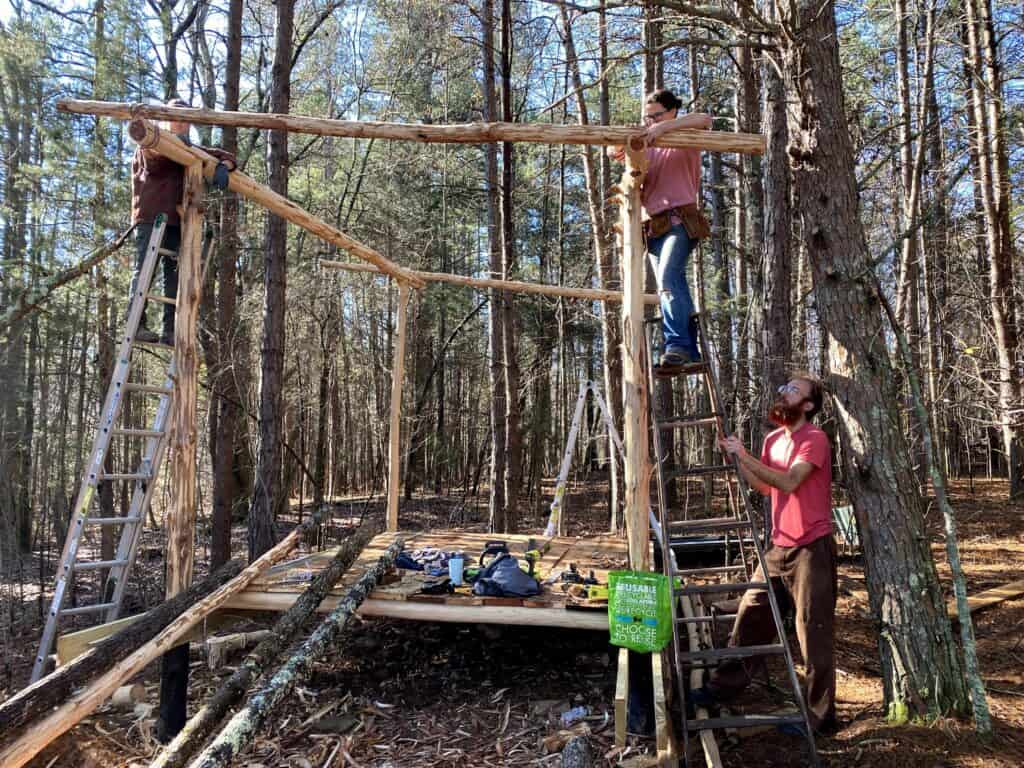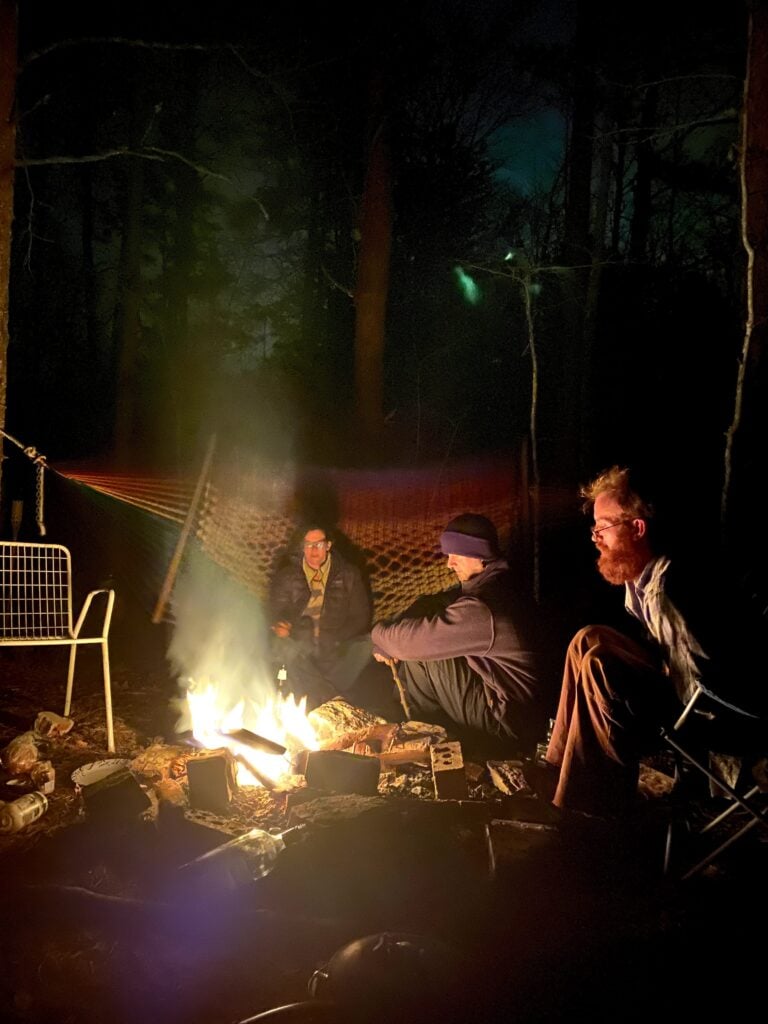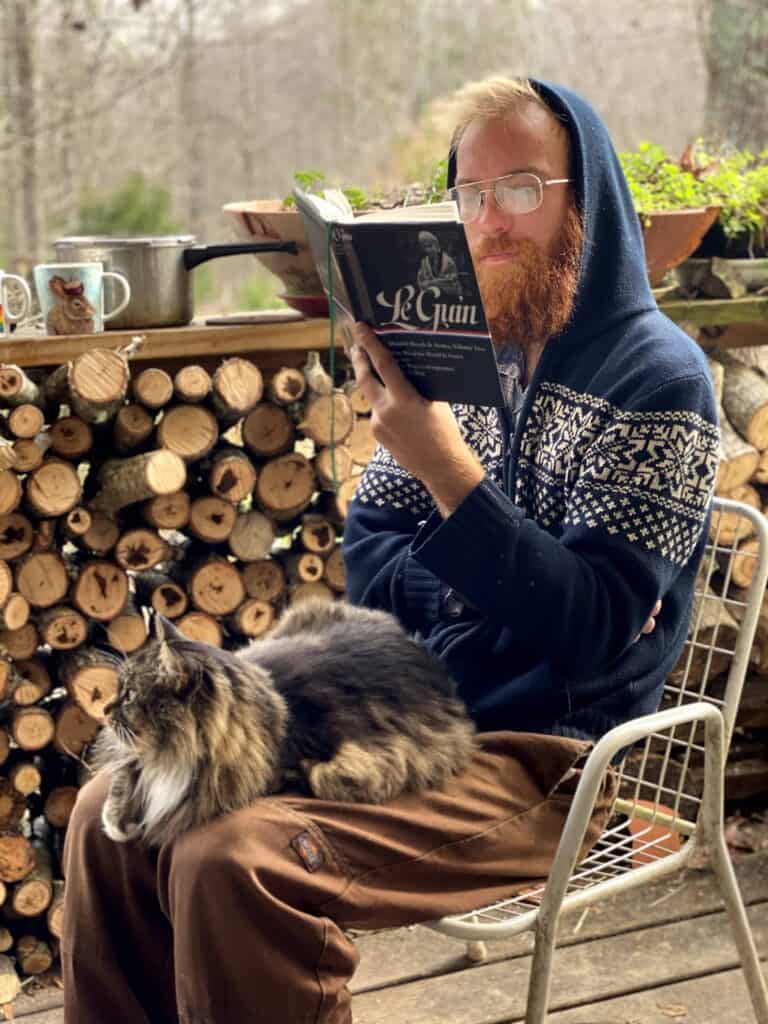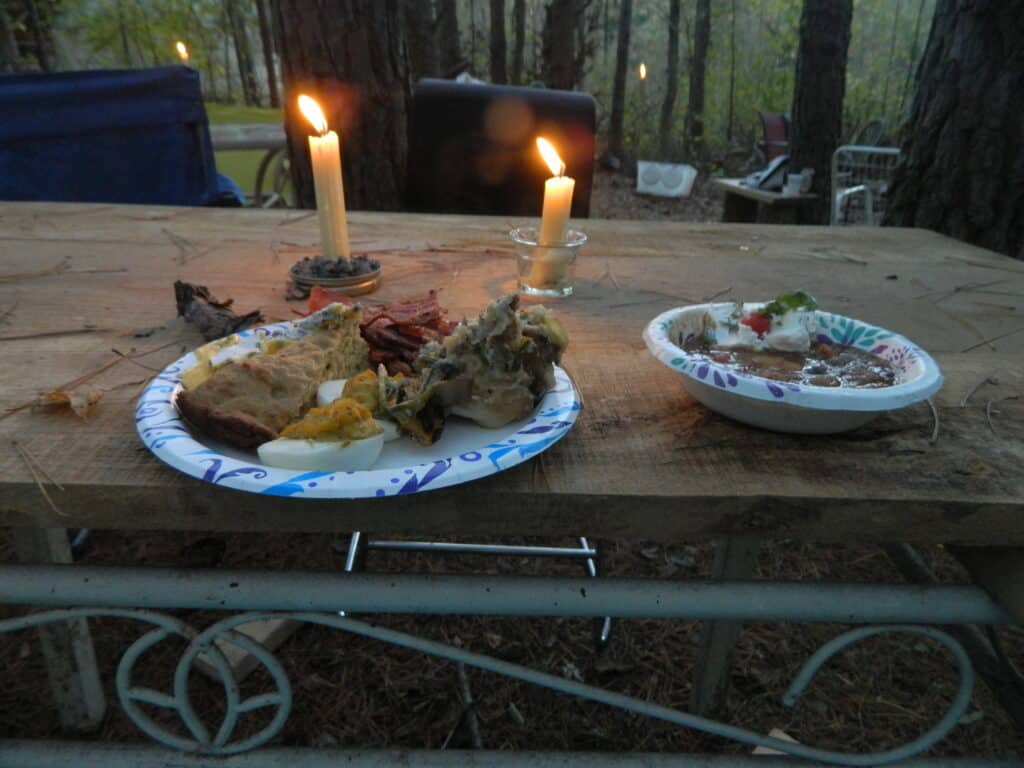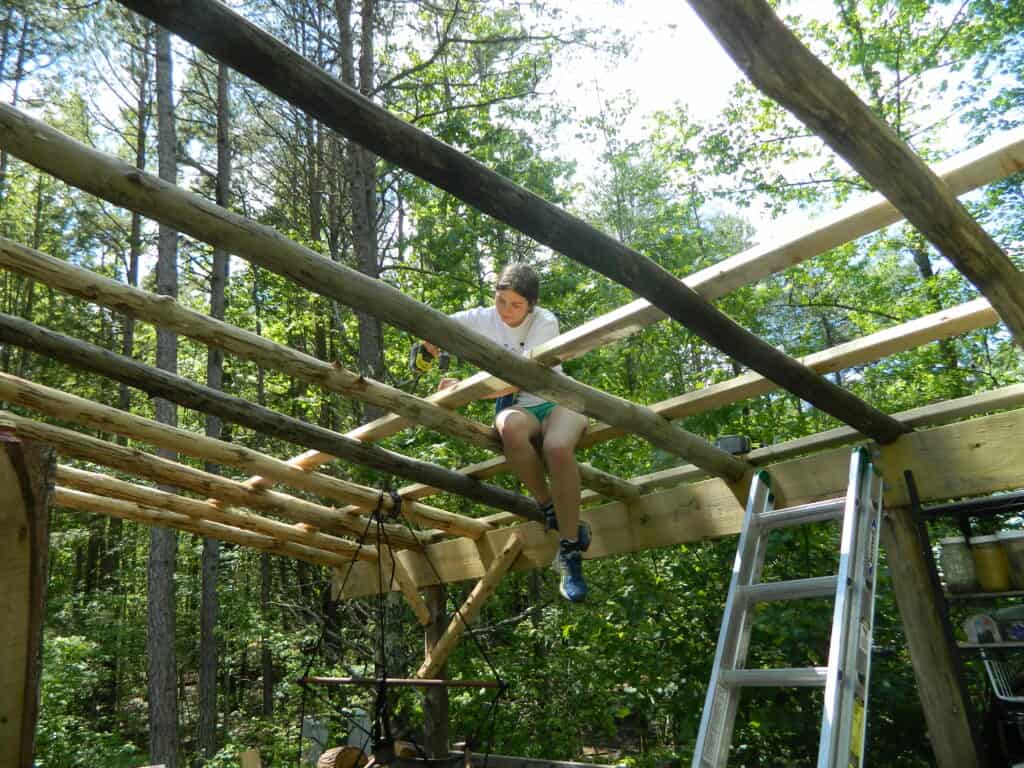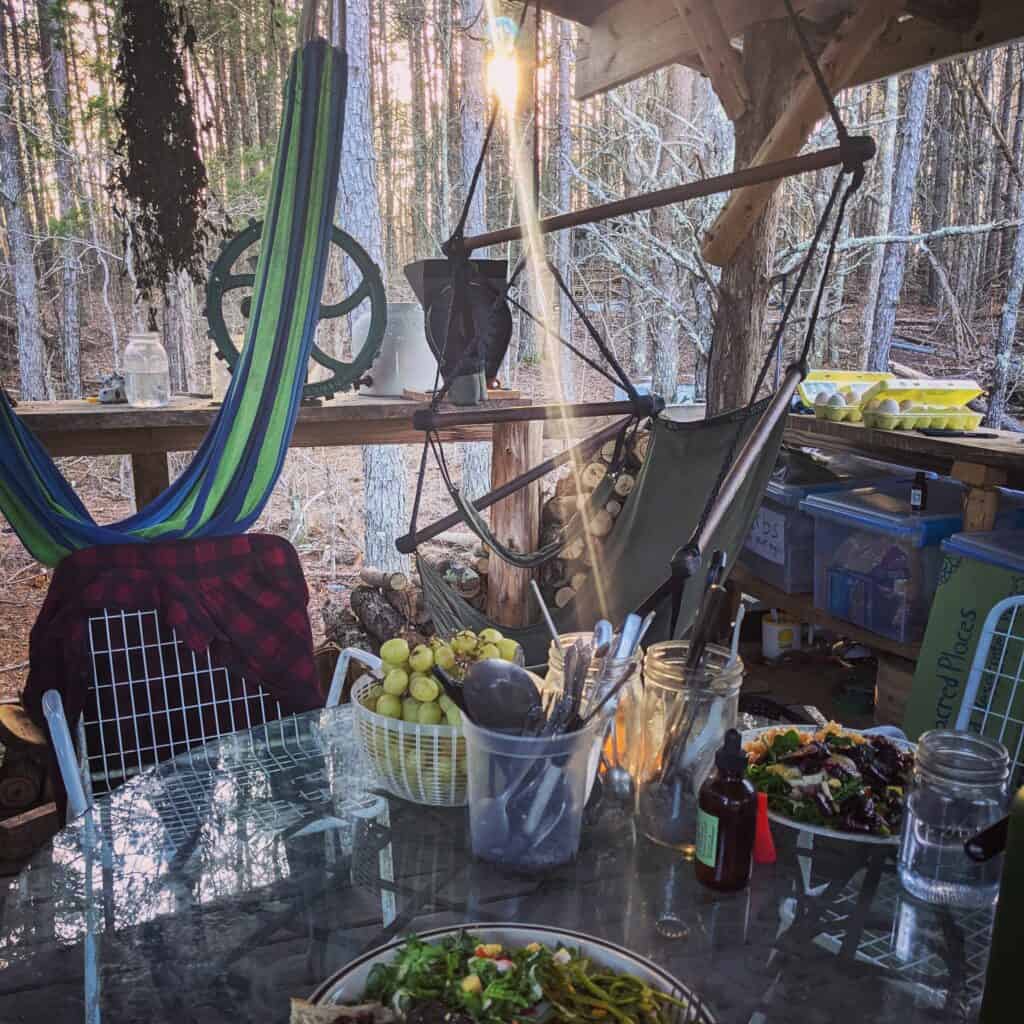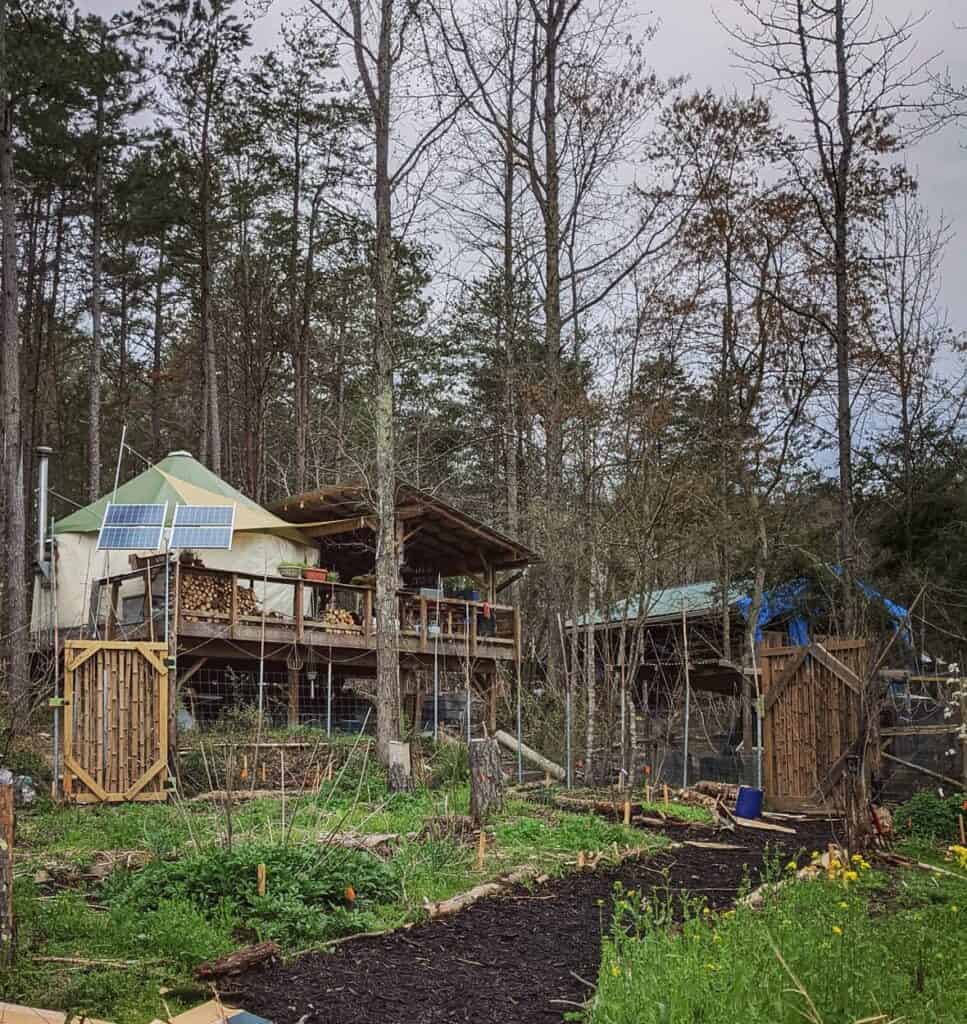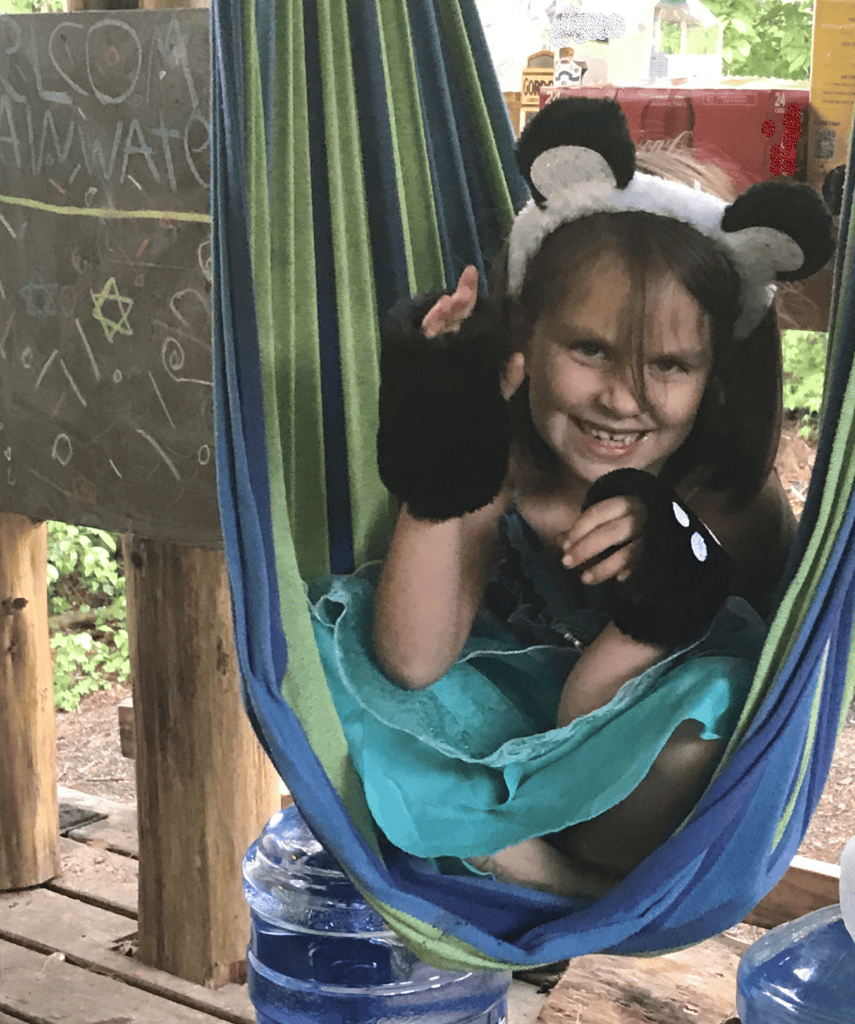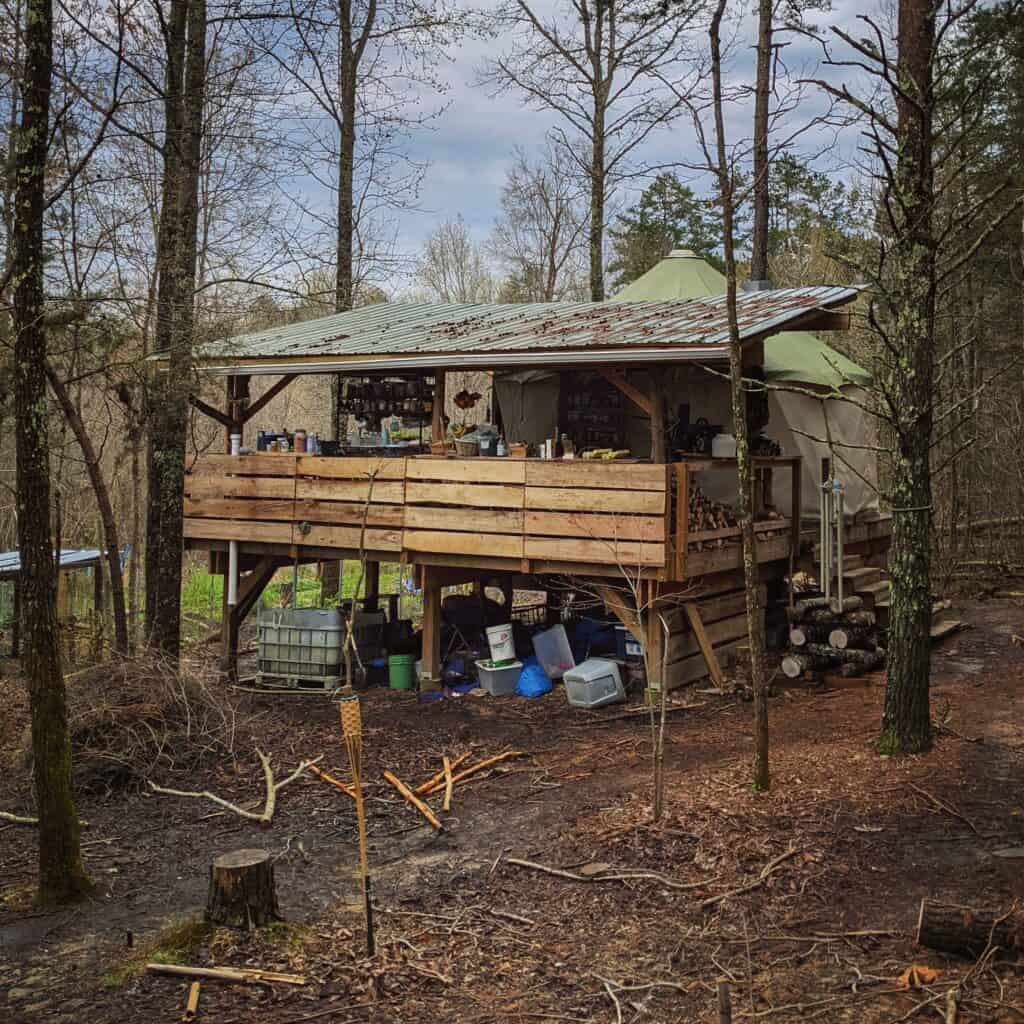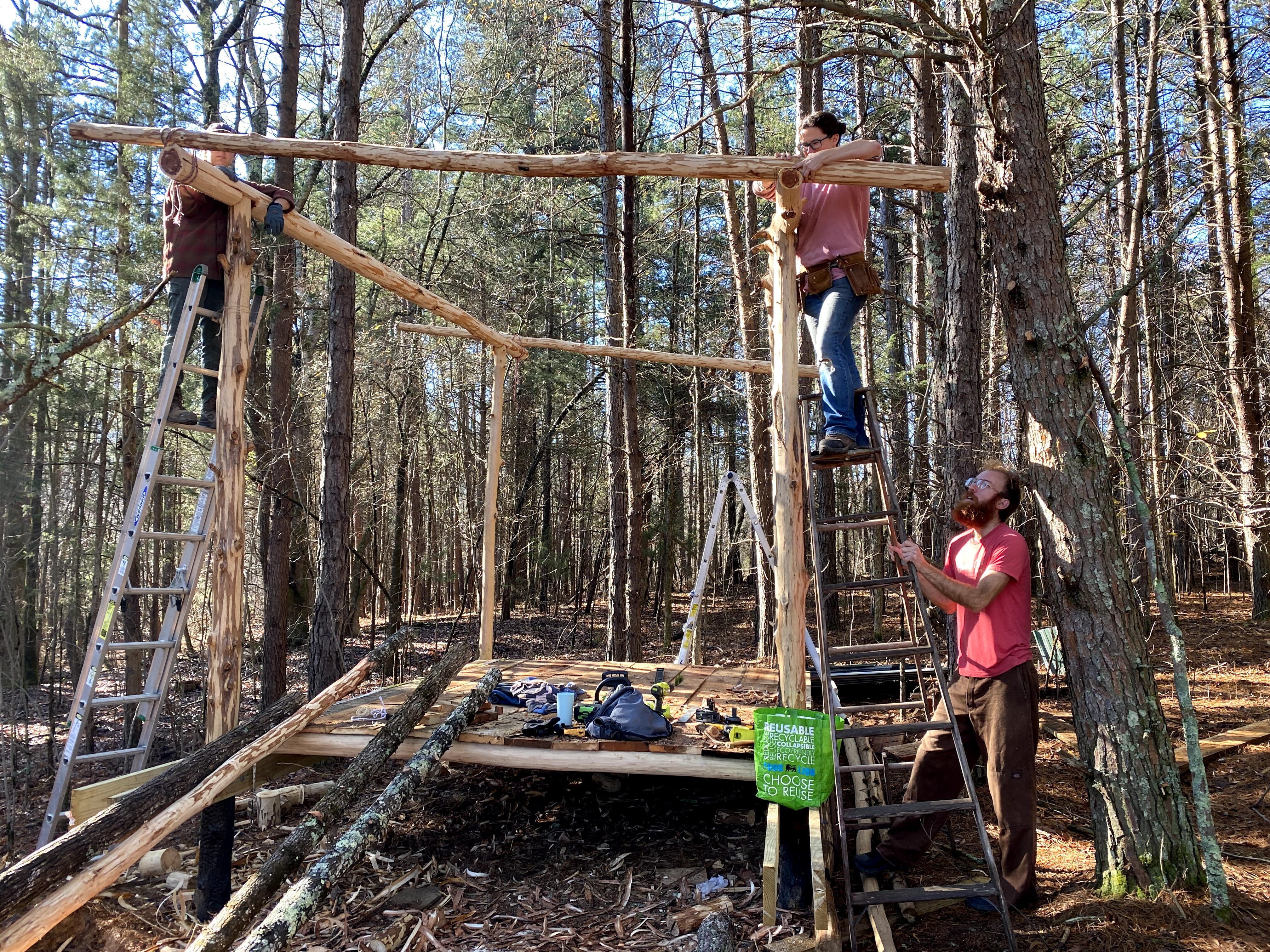
The dream of the Rainwater Collective is a regionally appropriate, regenerative lifeway that improves the soil, removes carbon from the atmosphere, puts water back in the aquifers, reconnects us with each other and the Earth and builds cooperative culture and a network of resilience among our friends and neighbors. We are deeply committed to permaculture, appropriate technology, antiracism and antioppression work, compassionate and skillful communication (including conflict transformation and restorative justice), and nonviolence. We’ll have a high level of interdependence and resource sharing- community kitchen with shared meals every day, shared community garden, barn, sauna/bath-house and small individual or family dwellings. The community is entirely off-grid, with a small solar system, and we rely on rainwater rather than a dug well.
Rainwater is an aspiring “ecohamlet”- the goal is 10-15 people stewarding 17 acres, in collaboration with a network of other small communities and permaculture homesteads in the Piedmont bioregion.
Founder’s statement:
Rainwater occupies the ancestral land of Occaneechi, Saponi, Eno, Tutelo, and Shakori native peoples, farmed and stewarded by several subsequent generation of Black farmers whose access to land was then systematically undermined (90% loss) in the last century. My (Rachel’s) ability to originally purchase the land and access to the resources to found the community is inseparable from the many advantages conferred on me by white supremacy. As a community currently founded by two white people, we aspire to participate in multiracial, multigenerational efforts to address these traumas by engaging openly and vulnerably in conversations about race, class and power within the community, by exploring opportunities to participate in material steps towards decolonization in conversation with Occanneechi stakeholders, and by weaving a reparational lens through our relationships with the wider community. In particular, we are committed to a model in which community members who benefit from whiteness return a portion of their time and energy towards local BIPOC-led projects.
Key values: ⦁ Spreading hope through lived possibility ⦁ Designing for resilience ⦁ Gratitude and gift economy ⦁ Nurturing relationships ⦁ Dismantling systems of oppression ⦁ Nonviolence and right use of power
We envision a world in which humans live regeneratively in cooperation with the ecosystems of which they are a part, in which culture supports our connection to each other and to the land, and in which a web of community and ecological resilience grows stronger even as the “old story” of global industrial capitalism is crumbling down around us.
Step 0: Reach out and introduce yourself by email, then by phone
Step 1: Visit, wwoof, get to know existing members
Step 2: Provisional membership (all rights of full member except can’t block or own land)
Step 3: Associate membership (all rights of full member except don’t co-own land)
Step 4: Full membership, full participation in decisionmaking and co-own land
Please contact us by email to introduce yourself and let us know a) what your interest is in Rainwater (membership vs. woofing, see below) and b) what your past experiences in community have been, if any. We will exchange a few emails with information and then we would like to talk on the phone and get to know you.
We are interested in getting to know folks who might join the community, in a role somewhere in between co-founder and joining member. We also enjoy hosting visitors who are not necessarily looking to join the community, but would like to learn about living off-grid. Wwoofing is a great option for folks who are curious about intentional community, want to learn about some of things we are doing on the land, or just want to have an interesting adventure! You can learn more about our wwoofing program here: https://wwoofusa.org/user/930826. We welcome wwoofers of all ages, backgrounds, and ability levels, with a particular emphasis on those who are interested in longer-term stays. Wwoofers live at Rainwater, participate in day-to-day decision-making, and work 20 hours/week in exchange for lodging and food.
In terms of eventually adding long-term members to the community, we are most interested in considering folks who have lived in community before or who have substantial experience with consensus governance in the context of activism or other collaborative projects, or who grew up in a strongly interdependent/collectivist cultural context (e.g. many BIPOC individuals).
The whole membership decides collectively.
Everyone must agree before moving forward.
Power and responsibility are shared relatively equally among members.
Influences include Yana Ludwig, Laird Schaub, and tree bressen. Our membership process includes trainings in consensus, NVC, antiracism, and permaculture.
All member income goes into common pool for community use.
Regular fees: Yes
Labor: Yes (40 hrs/week)
Members with pre-existing debt: allowed
The community is mostly income-sharing: members contribute a fixed amount weekly (40 hours?) that includes both paid work and community labor. A small allowance is provided by the community, and members can do additional paid work if they have money needs not met by the community. Shared by the community: gardens, tools, shared kitchen and almost all food, barn, bath house, out house, most dwellings, cars, healthcare. Typical member will work part-time, keep both income and expenses low, have a meaningful and fulfilled life outside the money economy.
Common House, Garden(s), Vehicle Share, Library, Workshop, Outbuilding(s), Hot tub or hot springs, Outdoor Kitchen, Large Scale Kitchen, Fire pit, Swingsets & play areas
Countryside locations with significant distance from urban centers.
Integrated communities designed around ecological principles with sustainable living practices.
Communal living with shared resources, property, and often income or work responsibilities
Connecting people and communities through an intentional online marketplace
There are no needs and offers
We use cookies to improve your experience on our site. By using our site, you consent to cookies.
Manage your cookie preferences below:
Essential cookies enable basic functions and are necessary for the proper function of the website.
These cookies are needed for adding comments on this website.
Statistics cookies collect information anonymously. This information helps us understand how visitors use our website.
Service URL: policies.google.com (opens in a new window)
A residential project: people live here as their primary home.
An institution, business, network, or project that isn’t a residence (e.g. a learning center, farm, or network with no one living there full-time).

{{ item.label }}
{{ item.value ? item.value : currencyFormat( item.amount ) }}
Subtotal
{{ currencyFormat( pricing_summary.total_amount ) }}
There are no results matching your search

We’re introducing new Plus features — including community reviews, Profile Match, and unlimited Needs & Offers posts — while keeping most of FIC free for everyone. Membership costs less than two coffees a month.