
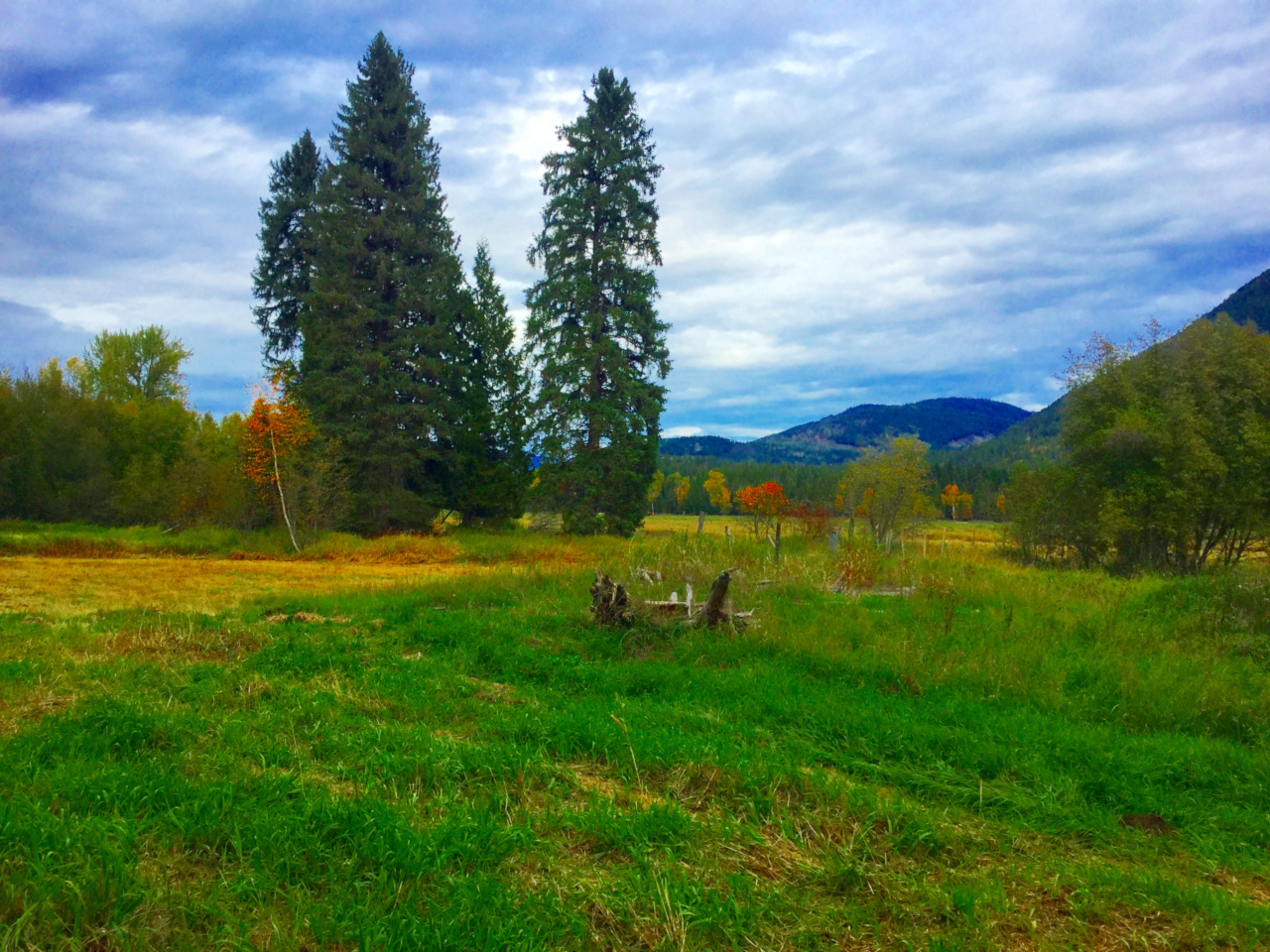
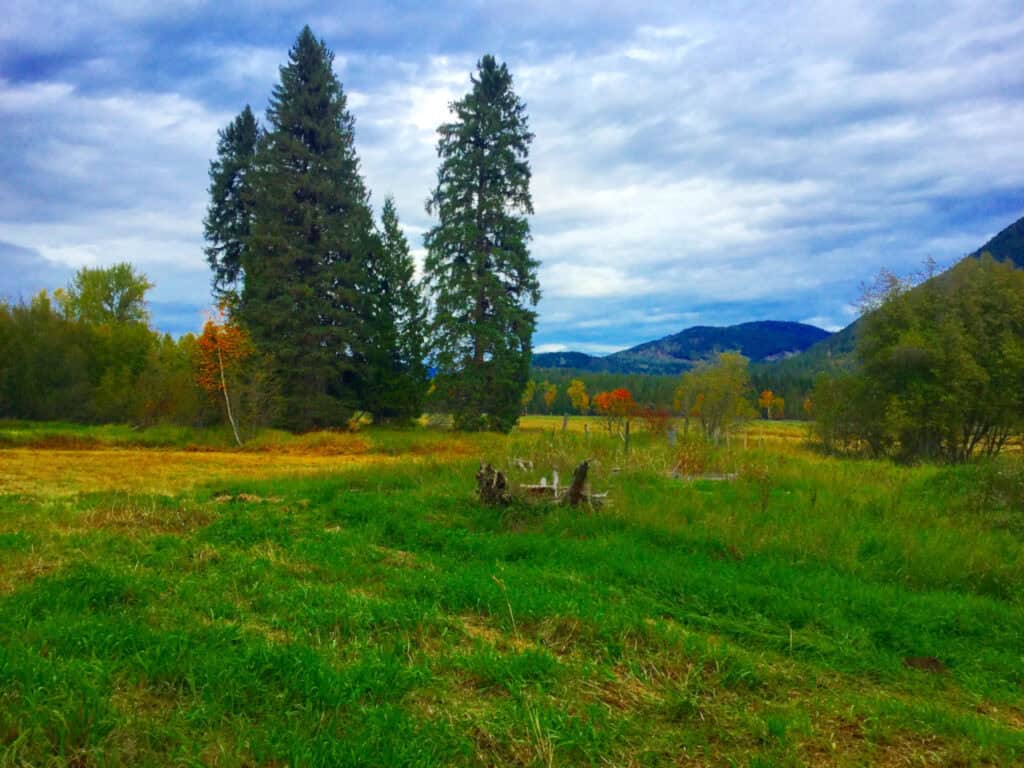
The Bezaleel Israel Eco-Village in far northeast Washington is named after the landowner, affectionately known as “BZ,” who has put more than 30 years of effort into developing these 20 acres to support a self-sufficient Permaculture Community Land Trust.
This could be your new home!
Don’t let the funny name put you off. We’re honoring the 30 years of work that the landowner accomplished in creating this permaculture homestead. BZ adopted the name Bezaleel Israel when he joined the Love Family commune more than 50 years ago. A good number of former Love Family members continue to use their communal surname Israel long after the commune disbanded. We do not condone the genocide perpetrated by the nation of Israel against the Palestinian People.
A regular at Rainbow Gatherings, Barter Fairs and Healing Gatherings over many years, BZ is an original and truly a “Jack of All Trades.” All he wants in life is to help young people to learn how to survive in these times when our survival is at risk. Creating the Eco-village here is a big part of that.
The land is in the process of becoming a permaculture community land trust to be preserved as a peopled conservancy for generations to come.
It’s a small village right now, but we are linked with a growing network in our local region including the Inland Northwest Permaculture Guild, the Northeast Washington Permaculture Guild, the Huckleberry Range Community Collective, Uhuru, Earth Rising Sanctuary, Friends of the Trees Society, the Permaculture Conservation Trust, Northwest Permaculture Convergence, Spokane Permaculture, our volunteers, our customers and our friends.
We are seeking apprentice members. Apprentices may qualify for full and equal authority within our horizontal, power-sharing organizational structure. Permanent residency is also possible.
The kinds of work we do involve growing food and raising livestock using permaculture and regenerative agriculture methods, water conservation, sustainable woodlot management, tree felling, bark stripping, pole construction, framing, green building, timber milling, fencing, off-grid energy production, equipment use and maintenance, earth restoration, plant and tree propagation, food forest development, haying, direct marketing, firewood gathering, biochar production, etc.. We operate the BZ Permaculture Farm Collective, a Washington State non-profit mutual benefit society– a non-profit farm.
The property is divided into four main sections. About 4.5 arable acres on the east end of the property is on the valley floor which is part of one of the largest peat bogs in Washington. The century-old drainage ditches have been regularly maintained making cultivation possible. Reed canary grass is the predominant species of grass there. A lower bench west of the bottom land at a slightly raised elevation consists of about 3 arable acres with some of it deer-fenced for market gardens. Hay and mulch is harvested from the bottom land and the lower bench. The upper bench (approx. 1 acre arable) consists of a small dwelling (that can be enlarged) with attached year-round greenhouse, solar power and wood/solar hot water, a 2000 sq. ft. shop, a 22′ x 54′ hoophouse, a duck pond, a swimming hole, an orchard (3000 lbs. yield) and two market gardens of about 1/3 acre each. There is a flock of Ancona ducks and two Nubian goat doelings joined us in April 2024. The land has extensive gravity and solar-pumped irrigation infrastructure with adequate water for large plantings and is well suited for small numbers of livestock to be raised for sale and sustenance.
The farm is off-grid and has power provided by solar panels to charge the battery banks and, when needed, gasoline generators. As we increase our solar capacity, or construct a wood-gassifier, we can decrease our fossil fuel use.
We are looking for mature, responsible, non-violent, communicative, compassionate, debt-free folks who have experience in regenerative agriculture, natural construction or mechanics and have a firm grasp of permaculture principles and practices, experience in collaborative group living and a love of voluntary simplicity and Earth care. Anyone with those qualifications, or wishing fervently to be able to develop these qualifications, can apply for temporary or permanent residency. We highly encourage interested young people to apply. We value the cultivation of permaculture values in our lives and livelihoods and try to illustrate by example their benefits to the greater society.
Potential residents should have had experience with or eagerness to try simple, rural, outdoor-oriented living and the work ethic that goes along with it and be prepared to provide your own shelter in a place where the climate can range from below freezing in winter to summer temperatures over one-hundred degrees for days at a time (RV, travel trailer, yurt, mobile tiny house or fully equipped outdoor camp). Various potential income sources exist.
You must have faith in, commitment to and experience with living in intentional community. Intentional community experience could include shared living spaces like shared houses or apartments, co-housing, communes, cooperatives, collectives, organized houseless encampments and squats, etc. It would be very helpful if you have faith in, commitment to and experience with the consensus decision-making process. Please visit bzfarm .org for details.
A non-violent, communicative, compassionate community engaged in establishing an eco-village with one area of focus being regenerative agriculture following permaculture principles and practices. Collaborative group living with a love of voluntary simplicity. Earth care, people care, fair share. We align closely with the principles of the International Peasants’ Movement (viacampesina.org).
Interested folks can fill out a two-question pre-application online. If an application sounds interesting, we will schedule a phone call with the applicant to have a conversation about the details and everyone can ask questions. If we accept an applicant as an apprentice candidate, we invite them to join us on the farm. After a successful 60-day trial, apprentice candidates will become a Level 1 Apprentice and a voting member of the Village Collective until the end of the year (Dec. 31). A Level 1 apprentice who has spent at least seven months with us may apply to the Village Collective for a Level 2 apprenticeship which includes the potential for long-term membership and residency. At the conclusion of a five-year Level 2 apprenticeship, the apprentice could be eligible to request permanent residency—a 99-year non-transferrable lease issued by the Land Trust once it’s established.
Visitors can answer a two-question application online (https://permacultureconservationtrust.org/content/permaculture-apprenticeship-opportunity-pre-application). If an application sounds interesting, we will schedule a phone call with the applicant to have a conversation about the details and so everyone can ask questions. If that goes well, we might invite them to come and stay a while.
A few people (not elected by the broader community) make the major decisions.
Generally seek agreement, but have backup methods when consensus isn’t reached.
Power and responsibility are shared relatively equally among members.
Members contribute a percentage of income to community funds.
Regular fees: $0
Labor: Yes (20 hrs/week)
Apprentices, Journeypersons, Resident Stewards and Regular Volunteers who contribute labor to the BZ Permaculture Farm Collective are all eligible to receive an equal rate of remuneration in the form of “Patronage Refunds” or in the case of volunteers, a stipend. The farm enterprise operates on a “cash basis,” meaning that gross receipts are made up of the cash that the Farm Collective actually receives and do not include any accounts receivable (money owed but not yet paid). Of the gross receipts collected in the Collective Farm Account each month, a percentage that is set from time to time by the Farming Collective accrues to those who contributed labor that month and is distributed monthly on the basis the percentage of hours each member contributed to the whole during the current growing season. The remainder of the funds in the Farm Collective’s account are used to pay for farm operating expenses– tools, equipment, supplies, repairs, infrastructure, utilities etc. Members of the BZ Permaculture Farm Collective decide what funds are used for operating expenses. Funds from the Farm Collective’s account can be distributed on the basis of patronage to Eco-Village Collective Members who contribute labor to the farming operation as year-end dividends under certain conditions. Dividends may be distributed to current and former Farm Collective Members proportional to their individual contributions to the total number of hours worked (the Whole) carried over year to year. Using this model, workers begin to build limited equity in the farm enterprise which they retain even in the event they leave the Farm Collective.
Garden(s), Greenhouse(s), Library, Workshop, Swimming pond or pool, Outdoor Kitchen, Tractor & Farm Equipment, Internet
Countryside locations with significant distance from urban centers.
Integrated communities designed around ecological principles with sustainable living practices.
Geographically close groups of independently-owned homes whose residents actively cultivate community relationships and shared values.
Connecting people and communities through an intentional online marketplace
There are no needs and offers
We use cookies to improve your experience on our site. By using our site, you consent to cookies.
Manage your cookie preferences below:
Essential cookies enable basic functions and are necessary for the proper function of the website.
These cookies are needed for adding comments on this website.
Statistics cookies collect information anonymously. This information helps us understand how visitors use our website.
Service URL: policies.google.com (opens in a new window)
A residential project: people live here as their primary home.
An institution, business, network, or project that isn’t a residence (e.g. a learning center, farm, or network with no one living there full-time).

{{ item.label }}
{{ item.value ? item.value : currencyFormat( item.amount ) }}
Subtotal
{{ currencyFormat( pricing_summary.total_amount ) }}
There are no results matching your search

We’re introducing new Plus features — including community reviews, Profile Match, and unlimited Needs & Offers posts — while keeping most of FIC free for everyone. Membership costs less than two coffees a month.