
Pilgrim Place

  • Communities

About the Communities

  • Established
  • Social
  • Urban

Founding year

  • 1915

What we do

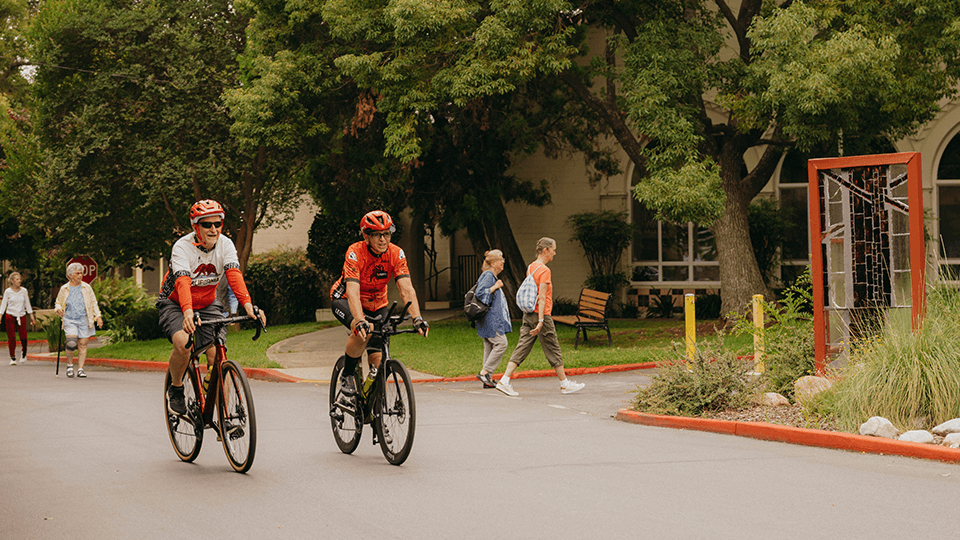
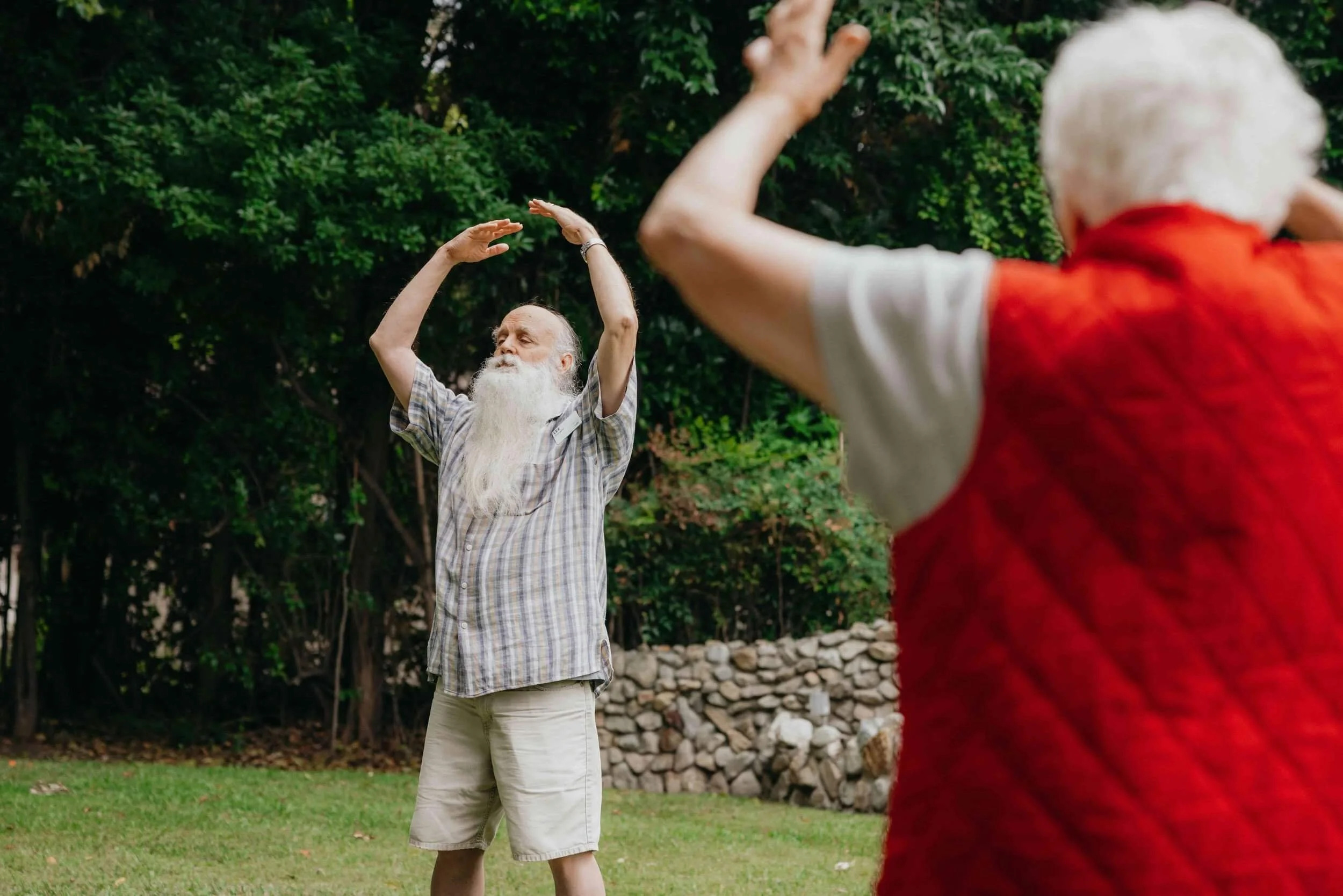
Pilgrim Place is a values-driven intentional senior community in Claremont, California — founded in 1915 and built around a shared mission of service, justice, peace, and care of the Earth. We are one of the oldest intentional senior communities in the United States, and the culture today reflects the residents who built it: people who came not to retire from purpose, but to keep contributing to it alongside neighbors who share their commitments.
Many of our 350 adult members spent careers as ministers, missionaries, educators, social workers, scholars, scientists, organizers, and humanitarians, arriving from international and domestic posts. What binds them isn’t a single faith, profession, or tradition — it’s a habit of engagement with the world that doesn’t end at retirement.
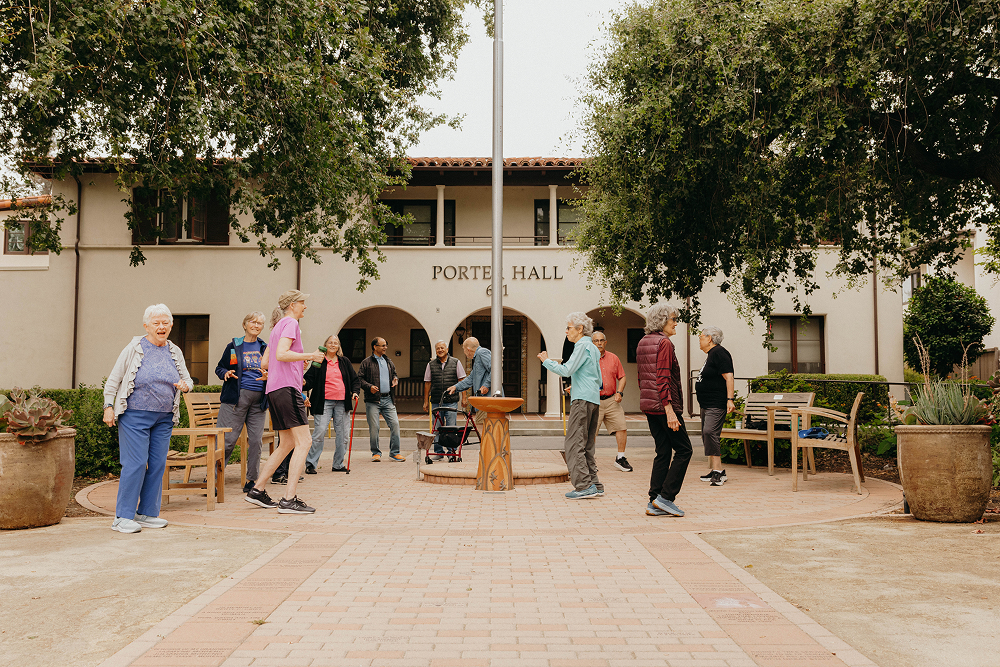
The community is governed by residents through Town Meeting, our quarterly assembly that plans communal activities, advises the administration, and represents resident voice on matters of community life. Decision-making structures include resident task forces, councils, and committees that shape programming, environmental stewardship, mutual support, and safety. Our common life is anchored by shared dinners in Abernethy Dining Hall (Independent Living) and Napier Dining Hall (Assisted Living), and by the Residential Health and Support Program — a resident-funded mutual aid system that allows community members to remain in their homes and live with dignity regardless of changing financial or medical circumstances.
Care of the Earth is one of our core commitments. Our 32-acre campus runs on 100% renewable energy, and two resident-tended community gardens with a greenhouse produce up to 25% of the food residents consume, with community compost systems closing the loop.
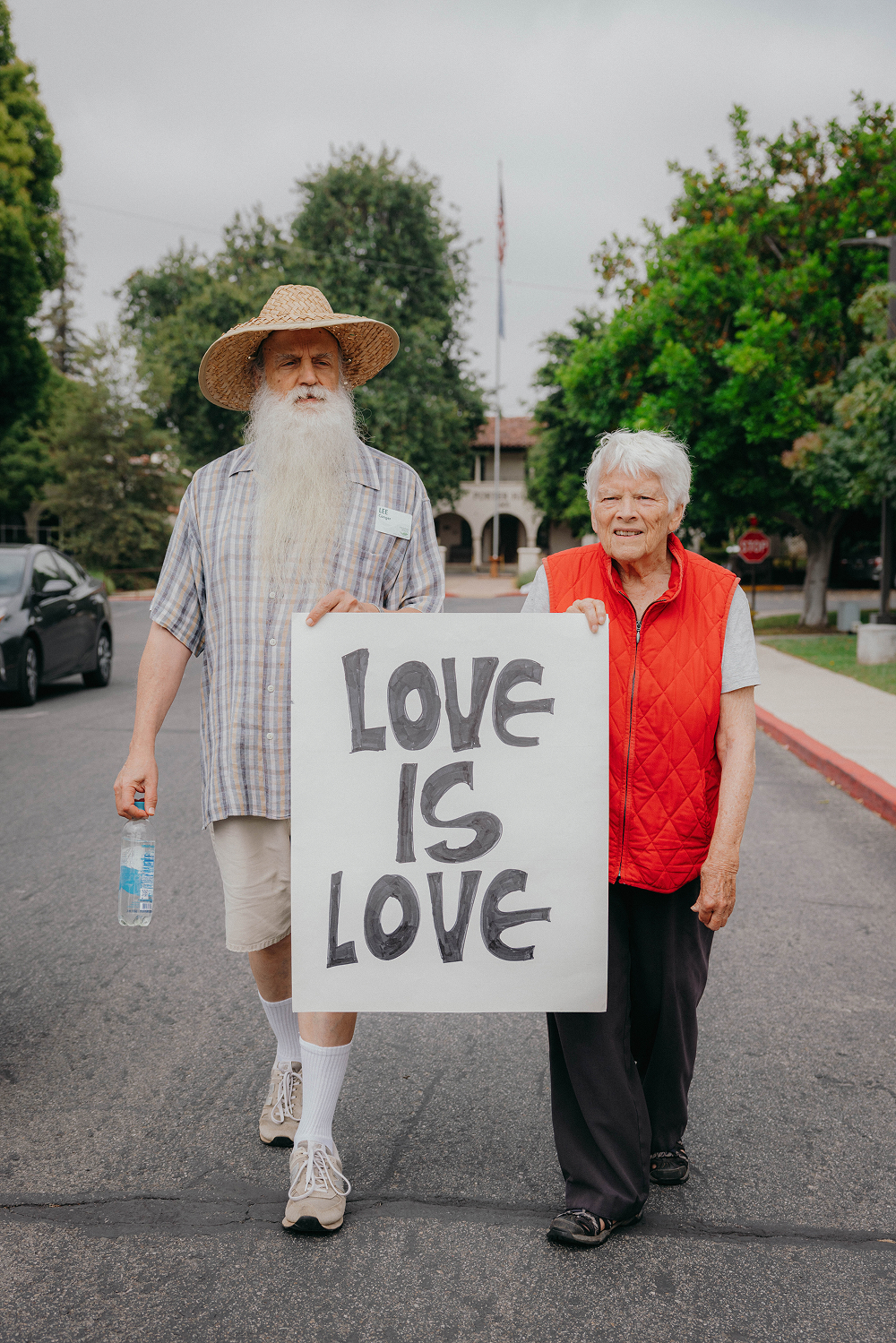
Inclusion is part of our daily practice. Pilgrim Place is an ecumenical community welcoming residents of every faith tradition and none, and is openly inclusive of LGBTQ+ residents and residents across racial, ethnic, and educational backgrounds.
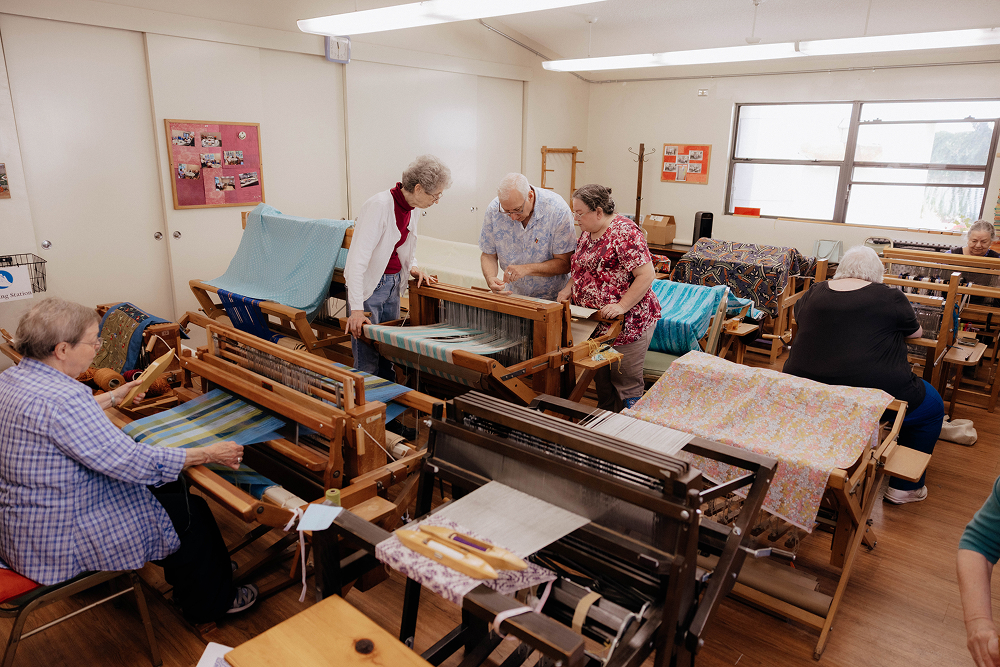
Distinctive resident-led programming includes Pilgrim Tours (monthly resident-led excursions across Southern California), the Current Affairs Forum (alternating Wednesdays with members of Congress, advocates, and academic experts), the Napier Initiative (intergenerational partnership with the Claremont Colleges), Chorale & Bands, the Pendleton Arts & Crafts Center, and our annual two-day Festival each November — open to the public, in its 78th year in 2026, with proceeds supporting the Residential Health and Support Program.
As a Continuing Care Retirement Community, Pilgrim Place offers a full continuum of care on a single campus — Independent Living, Assisted Living, Memory Care, and Skilled Nursing — so residents can stay in the community they’ve built as their needs evolve. Our campus includes 185 Independent Living residences (ranging from 600 to 1,800 square feet), 57 Assisted Living apartments, 12 Memory Care beds, and 62 Skilled Nursing beds with short-term rehabilitation, all on the same campus.
Pilgrim Place was founded in 1915 by the Congregational Church as the Claremont Missionary Home, originally located on what is now the Scripps College campus. In 1924, we moved to our present location, where residents continue shaping a community defined by inclusion, lifelong learning, and a lived commitment to service.

Our Mission

Fostering a vibrant and inclusive senior community committed to justice, peace, and care of the Earth.
Pilgrim Place is an intentional, caring multi-level senior living community striving to be socially responsible; environmentally responsible; diverse in race, ethnicity, gender, sexual orientation, and religion; and committed to excellence in health care and developing services that foster meaningful growth and dignity for all who live, work, and volunteer here.

  • Purpose
  • Social
  • Sustainability practices
  • Renewable energy systems
  • Activities
  • Property management
  • Experiences
  • Networking

Commemorative dates

  • January 1, 1915
  • Started planning
  • January 1, 1915
  • Started living together

Video

  • 350 Total members
  • Open to new members
  • Open to visitors
Total
350

How to join

Contact Admissions at (909) 399-5504.

Basic expectations or agreements for members

Contact Admissions at (909) 399-5504.

Primary decision-making authority

  • Small Leadership Group

A few people (not elected by the broader community) make the major decisions.

Decision-making process

  • Majority Vote

More than 50% agreement needed.

Governance structure

  • Representative/Democratic

Members elect leaders who make decisions within defined roles.

Economic model

  • Independent Finances

Members maintain separate personal finances with minimal sharing.

Economic scenarios for this community

  • There is a one-time fee, investment, or share purchase to join the community separate from accessing housing
  • Members need to pay fees, dues, or similar to live there on a per month or per year basis
  • There is a labor obligation
  • Members typically need to have their own job or other personal source of income to cover their expenses while living in the community?

Additional economic information

Join fee: Yes
Regular fees: Yes
Labor: Encouraged or suggested
Pilgrim Place entrance fees and monthly fees for Independent Living are posted at https://www.pilgrimplace.org/fees.

Shared resources and amenities that are accessible to everyone in the community

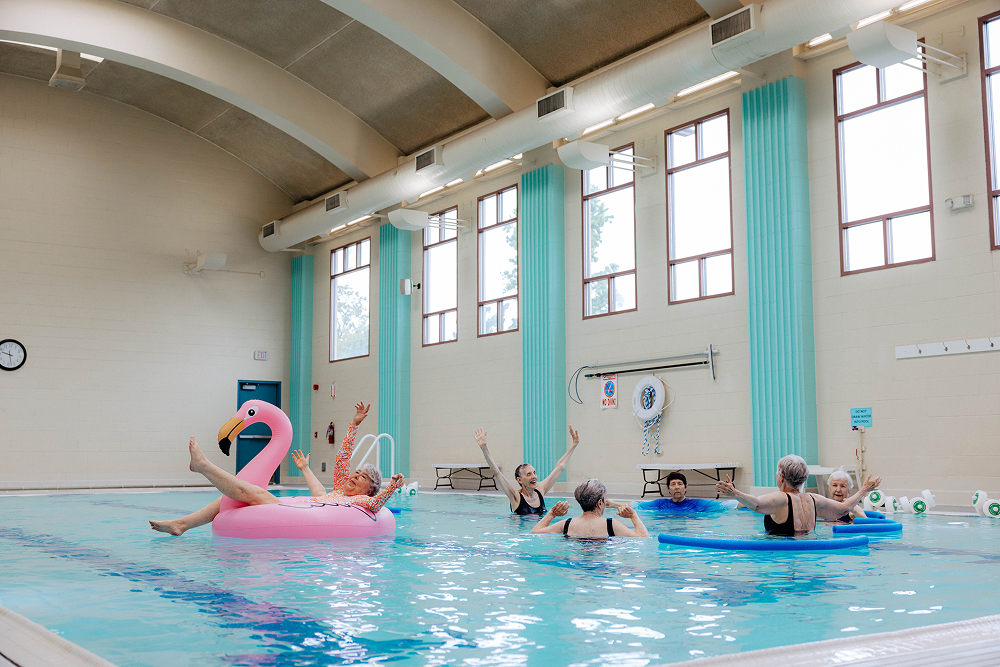
Common House, Garden(s), Greenhouse(s), Vehicle Share, Library, Workshop, Outbuilding(s), Swimming pond or pool, Hot tub or hot springs, Large Scale Kitchen, Stage or Auditorium, Gym or sports area, Internet

Frequency of communal meals

  • Approximately 1 meal per day

Significant food acquisition practices

  • Locally sourced

Community activities and engagement

  • Neighborhood, Community Housing, or Homeowner's Association
  • Organization, Resource, or Network
  • Festivals, Conferences, Events

Substance use culture

  • Substance use appears in public spaces but no pressure

Gender composition

  • Majority cis (over 60%)

Age demographics

  • Mixed adults (few or no children)

Property status

  • Privately owned

Property owner

  • By a Land Trust, Home Owners Association, or corporation

Setting

  • Urban

Within city limits with access to urban amenities and infrastructure.

Sustainability approach

  • Renewable energy systems

Self-produced energy

  • Over 66%

Energy sources used

Self-produced food

  • Up to 33%

Local, organic, or fair trade food

  • Up to 33%

Food systems

  • Community garden
  • Greenhouse / aquaponics
  • Land area size
    32 acres

Guest Book

Written reviews are available for plus members. Click here to upgrade.

Location

  • California, United States

Pilgrim Place

Needs and Offers

Connecting people and communities through an intentional online marketplace

  • Promoted
  • Events
7 days ago

Coastal Regeneration Immersion: Permaculture Design Certification in Jalisco, Mexico

Tropical Dry Forest Permaculture Design & Regenerative Stewardship Certification (PDC)12-Day Intensive | 120 Hours | Costalegre, Jalisco, Mexico APPLY AT XOCHIRAIZ.COM Join us for an immersive Permaculture Design Certificate course set in the tropical dry forest bioregion of coastal Jalisco. This 120-hour intensive blends internationally recognized PDC curriculum with hands-on regenerative practice — combining ecological design, agroforestry, natural building, and community stewardship into one integrated learning experience. Lead Faculty Jorge Luis Gtz. Olarte (Arborescencia RedGenerativa) – Regenerative Design, Soil Biology & Agroforestry Ozzy Lusth (Survior & Xochiraíz) – Wilderness Resilience & Survival Skills Dave Collins (Capacha Coastal Conservation Center) – Bioarchitecture & Ecological Development What You’ll LearnThe course moves through six progressive phases: Permaculture & Ecological Literacy – ethics, principles, and reading the tropical dry forest landscape Water & Soil Systems – keyline design, water harvesting, living soils, and compost systems Horticulture – food garden design, propagation, and biological pest control Regenerative Food Systems – tropical agroforestry, food forest design, and guild planting Ecological Infrastructure – bamboo bioarchitecture, bioclimatic farm design, compost toilets, greywater, and rocket stoves Integrated Design Studio – team-based final design projects covering watershed strategy, agroforestry, food forest layout, infrastructure, and phased implementation Daily RhythmMornings begin with optional surf/yoga and journaling, followed by field practicums and hands-on workshops. Afternoons include design studio and construction lab work, with reflection circles, communal dinners, and evening talks, films, or campfire discussions rounding out the day. Final ProjectParticipants work in teams to produce a full regenerative design package — landscape analysis, water plan, agroforestry design, food forest plan, ecological infrastructure, and bioclimatic farm plan — presented to a faculty review panel on the final day, followed by a closing ceremony, certificate delivery, and community feast. CertificationGraduates receive the Tropical Dry Forest Permaculture Design & Regenerative Stewardship Certification (120 contact hours), hosted by Capacha Coastal Conservation Center and Tierralegre, A.C. Curriculum integrates international PDC standards with tropical ecology, agroforestry, ecological restoration, bamboo bioarchitecture, bioclimatic design, GIS/photogrammetry, and regenerative leadership. Highlights Hands-on bamboo construction (temazcal, bathhouses, sculpture) Tropical dry forest silviculture practicum Community mapping and design project for Ekoa Green Community Talent show and sea turtle release
January 10 – January 24
  • Promoted
Offer
  • Promoted
Offer
  • Promoted
Offer
  • Professional Services
3 months ago

Community Matchmaking: Get Help Finding Your Community

Would you like to join an intentional community but don’t know how? Feel overwhelmed by the number of communities out there? Not sure if there is one that’s a fit for you? CommunityFinders is here to support you on your path to community living. You can find your community by: Taking the free Community Types Quiz to learn which of the most common types of community is a fit for you. Booking a 1:1 consultation with a Community Matchmaker to receive recommendations for communities that are a fit for you. Joining the Money and Community Mini-Course to find out which communities are within your budget. Reading the book Intentional Community to help you understand your options and decide whether community living is right for you. Our goal is to help community seekers become community finders — people with confidence that their community match is out there and they will find it. Looking forward to working with you to find your community! Please be in touch, Cynthia Tina Founder communityfinders.com What communitarians are saying: “Cynthia helped me clarify the intentional communities that fit me, better get to know them, and finally choose one that I’m now a member of. I have no doubt anyone on a community journey will find great value in her guidance.” – Alan Stillman “Out of potentially thousands of communities, Cynthia matched me with very similar values revealed on their websites. I am in the process of applying to visit the number one recommendation. I’m excited and thankful for Cynthia‘s skills. Beyond well worth.” – Tommy Teeple “Due to her extensive community experience, she could offer many insights, provide useful tips and present selected communities to me that she had visited herself.” – Antonia Von Hassell
Offer

Update to a Public Profile

  • Log in
  • Go to your profile page
  • Toggle on the "Add my profile to the directory"
  • Save your profile

Information

Communities

A residential project: people live here as their primary home.

Organizations

An institution, business, network, or project that isn’t a residence (e.g. a learning center, farm, or network with no one living there full-time).

Plus Community Membership

  • Find people with Profile Match
  • Access to your community listing statistics
  • Create Discussion Groups
  • Access to our affiliate program
  • Member badge on your community profile
I am an official member of this community
Disclaimer
I affirm that my information is accurate and I am authorized to manage this listing
Foundation for Intentional Community FIC Member badge logo.

Free Plan

Free Membership
Free

Intentional Advertising

  • Subtotal

    {{ currencyFormat( pricing_summary.total_amount ) }}

Icon representing community connections and collaboration for intentional communities.

Plus Membership

  • Find communities with Profile Match
  • View detailed reviews about communities
  • Create free listings in Needs & Offers
  • Plus Member resources in CommUniversity
  • View communities detailed reviews
  • Plus Member badge on your profile