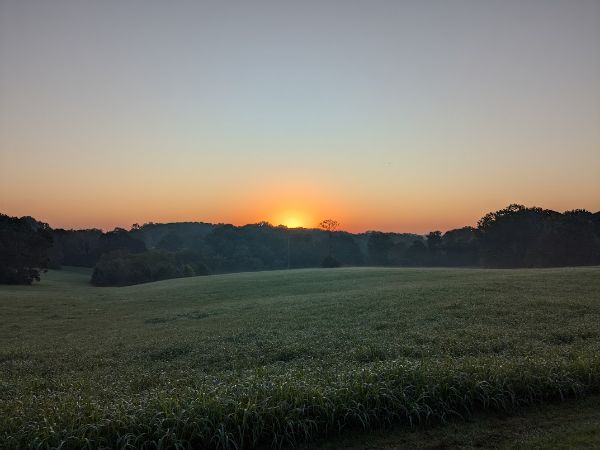
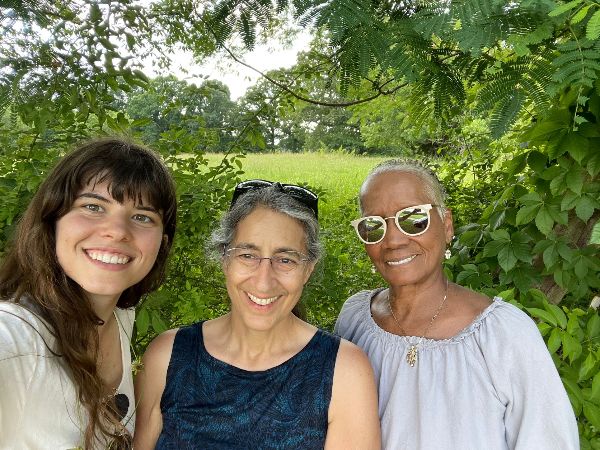
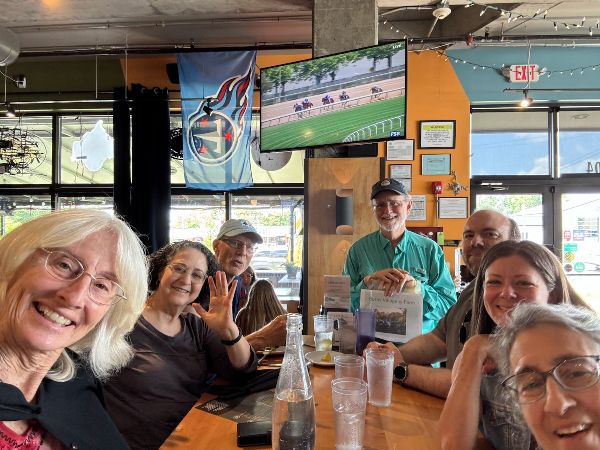
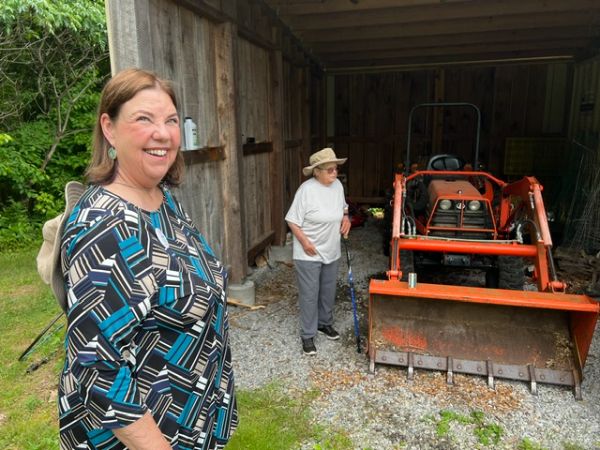
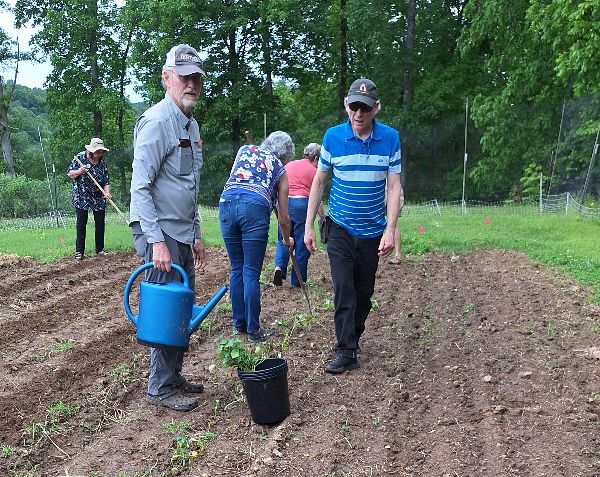
We are building a cohousing community and agrihood in Burns, TN! We have a contract on a 17-acre site about 30 miles west of Nashville, TN. The site includes frontage on a small year-round stream and a number of large old oak trees. We are planning for 36 homes and a 4-acre farm, with five wooded acres to be undeveloped. The community will support a professional farmer and benefit from access to farm produce on site. Currently we use modified consensus for decision-making about our community, and we are learning more about sociocracy as an approach we might integrate as well. We know that ongoing education and skill-building for enhancing the quality of our relationships and decision-making is important for developing and sustaining the kind of neighborhood we want.
The site is part of a 150-acre farm which has been owned by one family for four generations. They support our plans for this community as part of their goal to conserve agricultural land. A mix of shared wall and stacked flat units will be clustered around shared spaces and designed to encourage interaction and social cohesion. We completed the site schematic design in July 2023, our common house (clubhouse) schematic in January, 2024, and the design elements of four styles of living units in April, 2024. These range from 2 bedroom, 2 bath to 3 bedroom 2.5 baths units. We offer more information on our website, as well as opportunities to register for site visits and zoom meetings with Members.
Our vision for Burns Village and Farm is a multigenerational neighborhood where residents enjoy privacy in their own homes alongside warm, supportive relationships with the people next door.
At the heart of the community is a small, sustainable farm run by a professional farmer who provides fresh produce to residents. Along the way, members are learning and practicing skills like consensus decision-making, respectful communication, and sustainable living that protects the land for the long term.
We seek to develop and maintain interpersonal relationships that reflect caring, honesty, and collaboration in managing our community and contributing to the well-being of our neighbors. We welcome people of all ages and abilities with diverse religious, racial/ethnic. sexual orientation, and cultural backgrounds. We act to protect the quality of the soil, water, and air in our community, aiming to provide ourselves and our non-human neighbors now and in the future with a health environment.
We ask people to participate in a virtual or in-person gathering, or a site visit, and to ask questions. Explorers pay a $150 non-refundable fee for up to 90 days of curated documents and video sessions to help them decide if they want to join.
Members are expected to purchase and live in a home in the community. Bylaws and agreements are discussed during the Explorer Journey. Members will continue to be involved in developing agreements when we begin building and moving into homes.
A few people (not elected by the broader community) make the major decisions.
Generally seek agreement, but have backup methods when consensus isn’t reached.
Power and responsibility are shared relatively equally among members.
We are considering integrating principles of sociocracy into our governance process.
Members maintain separate personal finances with minimal sharing.
Join fee: $500
Labor: Encouraged or suggested
Members with pre-existing debt: allowed
We have not made decisions about some of these questions, such as the amount of HOA dues. Regarding sustainability practices, this is a priority for our community. Currently we plan for homes to be solar-ready and to have electric car charging stations. We aspire to produce food for our community and surrounding neighborhoods as well.
Common House, Garden(s)
Countryside locations with significant distance from urban centers.
Connecting people and communities through an intentional online marketplace
There are no needs and offers
We use cookies to improve your experience on our site. By using our site, you consent to cookies.
Manage your cookie preferences below:
Essential cookies enable basic functions and are necessary for the proper function of the website.
These cookies are needed for adding comments on this website.
Statistics cookies collect information anonymously. This information helps us understand how visitors use our website.
Service URL: policies.google.com (opens in a new window)
A residential project: people live here as their primary home.
An institution, business, network, or project that isn’t a residence (e.g. a learning center, farm, or network with no one living there full-time).

{{ item.label }}
{{ item.value ? item.value : currencyFormat( item.amount ) }}
Subtotal
{{ currencyFormat( pricing_summary.total_amount ) }}
There are no results matching your search

We’re introducing new Plus features — including community reviews, Profile Match, and unlimited Needs & Offers posts — while keeping most of FIC free for everyone. Membership costs less than two coffees a month.