

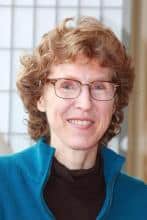
This is an interview with Alice Alexander, Executive Director of the Cohousing Association of the United States and co-founder of the Durham Central Park Cohousing Community in North Carolina. She took some time to answer our questions about the National Cohousing Conference in Nashville May 19-21, which the Foundation for Intentional Community is co-sponsoring. Check out our overview of the event to learn more, and be sure to visit our bookstore if you attend #Coho2017 in person!
****
FIC: What is your role in the conference and what are you most looking forward to this year?
Alice: As Executive Director of Coho/US, I take a lead in producing the conference and recruiting volunteers. Our success depends on the contributions of many volunteers, including those who are sharing their wisdom as presenters. I most enjoy connecting participants to the people, professionals and resources at the conference to support their efforts – be it starting a new community, or seeking better practices for living in community. Also, to be among almost 500 folks for whom living collaboratively is the norm, not the exception, is so satisfying.
One session in particular I am keen on is David Wann’s discussion, Cohousing’s Role in the New Normal. I’ve been a big fan of David’s and recently re-read his 2010 book, The New Normal, which is relevant today more than ever!
This year’s conference theme of building resilient, sustainable communities is more important than ever, given our current political environment and social unease. As Sarah van Gelder, our keynote speaker as aptly recognized, “We’re going to need to turn to one another and not on one another.”
FIC: What should people expect their first time attending the conference? How can attendees prepare to make the most out of the event?
Alice: I can almost guarantee everyone will enjoy the conference! Our survey results consistently profile appreciation for the experience from participants, with many sharing transformational learnings. Several folks credit the national conference as a catalyst for creating new communities, and transforming current practices within community.
Cohousers are generous in sharing their wisdom with others, so newcomers to the conference can expect their inquiries to be met with patient and enthusiastic answers. From attending sessions, to visiting with our exhibiting professionals and communities, to conversations in the hall, everyone should expect a robust and productive experience.
FIC: This year’s workshops include “Senior Cohousing: Aging-in-Community Toolkit” and “A Natural Fit: Millennials in Community“. Why does cohousing appeal to such different demographics and how do you make room for both of them in the cohousing community?
Most cohousing communities are multi-generational, which underscores that this is a natural way to live in community. As [FIC Executive Director] Sky Blue has poignantly written:
“One of the great tragedies of our hyper-individualized society is the separation of the generations. There is so much love and wisdom lost, and so much needless suffering endured as a result of the isolation between elders, single adults, and children. This separation has been enacted so effectively that it is now seen as preferential by most people, even if they recognize the negative social consequences.”
There has been a surge in recent years in the creation of senior cohousing communities, focused on senior needs, which may be a great choice for some.
FIC: The conference is open to “architects, developers and city planners” in addition to co-housing residents. Are you worried about commercial developers cashing in on the cohousing trend, or do you see projects like these (such as coliving for millennials) as part of the CoHo umbrella?
We hope to attract commercial developers to the conference so they can embrace our model! Given that financing and planning [for cohousing] in many cities often requires the involvement of commercial developers – as well as the challenges of self-developing communities – it behooves us to partner.
Cohousing isn’t a legal term we can enforce. Occasionally you will see the term cohousing included in a commercial development that only offers common amenities, with no shared governance or intentional community. Rather than sinking effort into countering those developments, we put our energy into educating the public about what cohousing can offer in creating a culture of caring and sharing, and building resilient, sustainable communities.
Coho/US launched a “more than cohousing” initiative this past year support the creation of cohousing or cohousing-like models with an additional social-economic mission, as well as cohousing-like models that encourage human interaction, but may not have cohousing type self governance and/or design participation. I encourage conference participants to enjoy one of these offerings: More than Cohousing and Is it Cohousing ? – Group Participation Game – Voice your Opinion.
FIC: Cohousing is no longer a “European thing.” There are cohousing projects in many major cities and in all regions of the country. Do you think that interest in cohousing will keep growing in the U.S.?
Oh yes! Cohousing communities are part of the new sharing economy and we are experiencing an exponential increase in interest as individuals and families seek to live more sustainably, and in community with neighbors. Also, changing demographics are forcing us to find innovative ways to address the roles traditionally played by extended families. Interest in cohousing has surged in recent years, a trend driven by baby boomers seeking a downsized, community-oriented and environmentally-friendly lifestyle. Cohousing is also gaining traction among millennials as they search for contemporary neighborhoods more conducive to raising children while holding two jobs outside the home.
Another indication of interest is participation in the National Cohousing Conference. We enjoyed record attendance in 2015, selling out completely with 457 folks. This 2017 conference we are planning for 500, and what a great problem it will be if we have to get creative to expand beyond that!
****
Learn more at Cohousing.org/2017 and get your tickets today! Discounted rates are available for groups and low-income attendees.
Keep the conversation going with these pieces
There are no available blogs
Subscribe to our newsletter for fresh stories and community updates delivered to your inbox.
Get unlimited access to courses, exclusive member events, and a supportive network of community builders
Access all courses, books, and premium content
Member-only workshops and community builders
Member-only workshops and gatherings
We use cookies to improve your experience on our site. By using our site, you consent to cookies.
Manage your cookie preferences below:
Essential cookies enable basic functions and are necessary for the proper function of the website.
These cookies are needed for adding comments on this website.
Statistics cookies collect information anonymously. This information helps us understand how visitors use our website.
Service URL: policies.google.com (opens in a new window)
A residential project: people live here as their primary home.
An institution, business, network, or project that isn’t a residence (e.g. a learning center, farm, or network with no one living there full-time).

{{ item.label }}
{{ item.value ? item.value : currencyFormat( item.amount ) }}
Subtotal
{{ currencyFormat( pricing_summary.total_amount ) }}
There are no results matching your search