

The Placemaking Movement is Turning Cities into Communities

Placeholder image for Foundation for Intentional Community website.
Codicts Team
  • July 8, 2016
  • Economics & Law
  • Sustainability
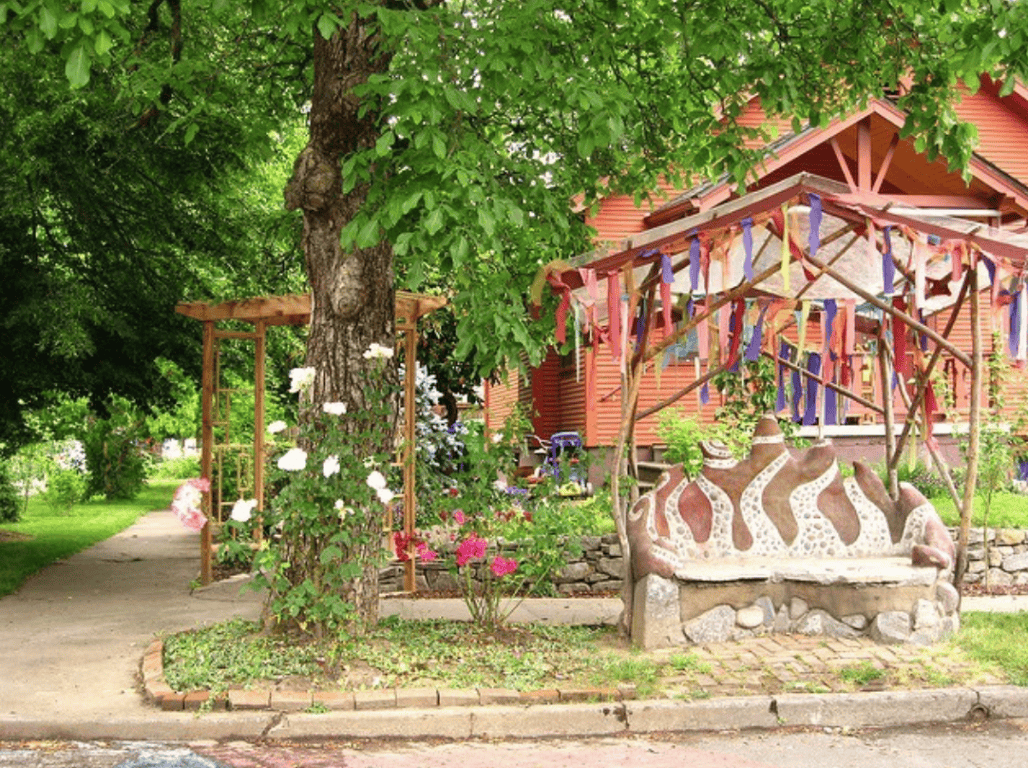
Colorful community art installation in a lush green garden setting.

Over 15 years ago, a group of natural builders organized the first Village Building Convergence in Portland, OR. It’s partly the reason why the city is now dotted with colorful intersections, cob benches, and unconventional living spaces.

According to the organizers, “We recognized that modern life and the structure of our cities often don’t create opportunities to connect with our neighbors. In response, we created an annual event bringing people together to build elements of the village.”

Now, the convergence has become a regular summertime activity, with over 40 workshops and events taking place over 10 days and drawing participants from other cities in the region. It’s a great way to for people improve the quality of life in a neighborhood, while gaining hands-on natural building experience in the process.

And the event is growing beyond Portland. This year, Sepastopol, CA, hosted its second Village Building Convergence and last year Port Townsend, WA, hosted its first.

Principles of Placemaking

The concept of “placemaking” has an even longer history. In the 1960s, writer Jane Jacobs became a controversial figure for standing up against the creation of expressways in East Coast cities. She argued that cities should be designed for the benefit of people, not cars.

These days, groups like the Project for Public Spaces carry on that vision. Placemaking Chicago describes the 11 major principles of placemaking, including “The community is the expert. People who use a public space regularly provide the most valuable perspective and insights into how the area functions.”

Neighborhood activists all over the U.S. are catching on to these ideas. From advocating for new bike lanes to planting community gardens, residents are realizing that if they want a say in the direction of future development, they’ll have to play an active role in designing it.

In Moab, UT, residents are putting together a CommuniTea garden where neighbors can gather for peace and quiet or for socializing. The owner of the property says he doesn’t want to see the whole city become overrun with buildings and parking lots. Placemaking projects like this one are one way to ensure they never do.

Get Involved!

Want to get more involved in placemaking in your city or neighborhood? See if your region has placemaking event like the VBC, or check out the events at the Project for Public Spaces or on FIC’s event page. Placemaking Week will take in September in Vancouver, B.C.

Comments

Featured Blogs

Keep the conversation going with these pieces

Codicts Team
Mon Oct 2018
  • Economics & Law
Stacking Benefits of Gardens When you plant a garden, you are doing more than practicing a resilient skill, and cultivating mouth watering beefsteak tomatoes. You are reducing food miles by creating sustenance locally, without the need for costly and dirty energy inputs. You can skip the app…
Codicts Team
Tue Jan 2014
  • New to community
  • Sustainability
Intentional communities are in a unique position to respond to climate change.
Codicts Team
Thu Jul 2016
  • Governance
A new movie called “The Commune” follows Erik and Anna, a Danish couple living in Copenhagen in the 1970s, as they invite an assortment of friends and acquaintances to move into a home they inherited: “We should live with fantastic people, shouldn’t …
Codicts Team
Sat Aug 2014
  • New to community
Are People Happier Living in Community? The FIC Wants to Find Out Laird Schaub FIC Executive Secretary Bjorn Grinde (top, left) visiting at Findhorn Community, Scotland. The FIC is teaming up with researchers to try to answer this question. The FIC is teaming up with researchers Bjo…
Codicts Team
Thu May 2013
  • Life Transitions
“By the sounds of it, it’s typical among human beings to feel like something huge is missing. The other thing is that they tend to be one of the same few problems: lack of human connection, lack of personal freedom (due to money or family situations), lack of confidence or self-esteem, or lack of…
Codicts Team
Wed Aug 2013
  • New to community
  • Sustainability
The energy that falls on the U.S. in one hour of noon summer sun is almost equal to total annual U.S. electricity demand: http://huff.to/148bu39
Codicts Team
Mon Oct 2009
  • New to community
Dancing Rabbit Ecovillage is profiled in the St. Louis Post-Dispatch! Residents of Missouri’s Dancing Rabbit test the limits of green living Missouri is home to more than 50 “intentional communities,” a broad term that includes communes, co-housing, and student co-ops. Ecovillages also fall unde…
Codicts Team
Tue Nov 2014
  • New to community
  • Membership Process
Community Bookstore Special Best of Communities ― The Cream of Our Crop Intentional Community Overview And Starting A Community by June, Community Bookstore Manager Best of Communities Vol. I Intentional Community Overview plus Starting A Community Digital downloadable compilation PDF …
Codicts Team
Wed Sep 2011
  • New to community
  • Economics & Law
In Brixton, South London, and Edinburgh, Scotland, right livelihood finds a home in innovative, resource-conserving, grassroots projects.
Christopher Roth
Fri Dec 2012
  • Living in community
  • Relationships
Endings and beginnings grow from one another and make personal and group renewal possible.

Insights & Stories from the Communities Movement

Subscribe to our newsletter for fresh stories and community updates delivered to your inbox.

Join the Communiversity Community

Get unlimited access to courses, exclusive member events, and a supportive network of community builders

Unlimited Learning

Access all courses, books, and premium content

Community Network

Member-only workshops and community builders

Exclusive Events

Member-only workshops and gatherings

Update to a Public Profile

  • Log in
  • Go to your profile page
  • Toggle on the "Add my profile to the directory"
  • Save your profile

Information

Communities

A residential project: people live here as their primary home.

Organizations

An institution, business, network, or project that isn’t a residence (e.g. a learning center, farm, or network with no one living there full-time).

Plus Community Membership

  • Find people with Profile Match
  • Access to your community listing statistics
  • Create Discussion Groups
  • Access to our affiliate program
  • Member badge on your community profile
I am an official member of this community
Disclaimer
I affirm that my information is accurate and I am authorized to manage this listing
Foundation for Intentional Community FIC Member badge logo.

Free Plan

Free Membership
Free

Intentional Advertising

  • Subtotal

    {{ currencyFormat( pricing_summary.total_amount ) }}

Icon representing community connections and collaboration for intentional communities.

Plus Membership

We’re introducing new Plus features — including community reviews, Profile Match, and unlimited Needs & Offers posts — while keeping most of FIC free for everyone. Membership costs less than two coffees a month. 

  • Find communities with Profile Match
  • View detailed reviews about communities
  • Create free listings in Needs & Offers
  • Plus Member resources in CommUniversity
  • View communities detailed reviews
  • Plus Member badge on your profile
