

In 2009, I (Joshua) wrote the following in a Communities article entitled “Seeing the Good in the World: Connecting Communities and Students for Sustainability Education and Transformation”:
“As an anthropologist and environmental studies teacher, I believe that providing students opportunities to experience intentional communities is an excellent way to explore the nuts and bolts of sustainability and participate in positive social transformation…. Moving toward sustainability will require broad cultural transformations that can be brought about only as people reengage with each other intentionally in local communities.” (Communities #147, pp. 31, 75)
Since that time, I’ve had the opportunity to involve my students in an in-depth research project at Dancing Rabbit Ecovillage, a 70 person community on 280 acres of rolling prairie in northeastern Missouri. Through this collaborative project, we are helping the members of the community assess their progress toward their goals of living more ecologically sustainable and socially rewarding lives. The project involves several students spending between four weeks and three months in the community participating, observing, and collecting data on a variety of different themes related to community goals—energy use, food sourcing, and perceived well-being, among other things.
In the following, Morgan Middlebrooks, one of my students at Arkansas Tech University, reflects on the life-changing effects of this experience.
● ● ●
Waking up at Dancing Rabbit Ecovillage (DR) to the sound of birds singing and children shouting outside of my window had to be the most surreal morning I have ever experienced. I had only been at the village for one day and I could already feel the effects of community sinking in. As a senior at Arkansas Tech University I had not yet had a real transformative learning experience and helping with summer research at DR was just the thing to open my eyes to the possibilities for positive cultural and environmental change in the world.
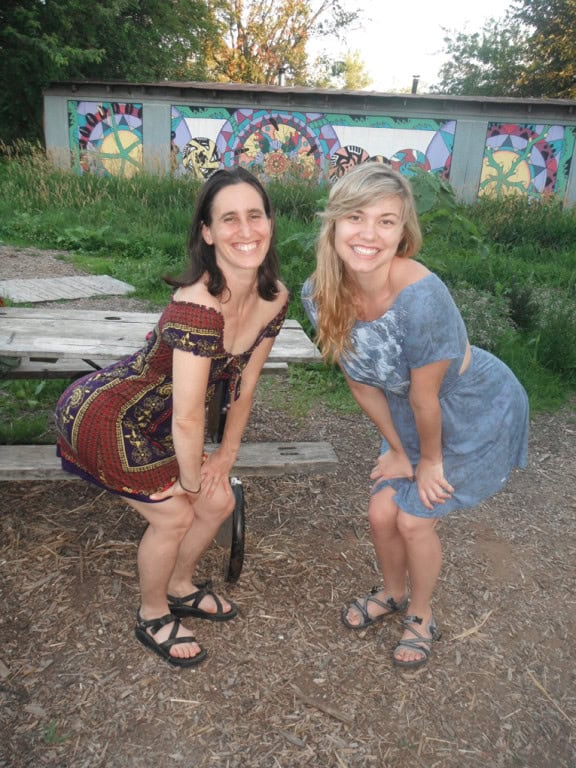
Brooke, an applied anthropology master’s degree student from the University of North Texas, and I would be spending the next month together at DR as part of a community-based research project. The goal of our research was to help the community put their progress toward their goals of living ecologically sustainable and socially rewarding lives into numbers and make it easier for them to establish measurable goals that they could strive to reach. While I expected to help impact the lives of some of the people living at DR, I did not expect the impact that DR had on me.
Doing research at DR was a frustrating yet rewarding process. One of the first things that Brooke and I did together was collect trash and recycling from village residents so that we could compare the village’s consumption patterns against the national average to make a point about the consequences of changing your lifestyle with the aim of decreasing your environmental impact. Carrying around the weight of DR’s trash was frustrating; it was hot, heavy work. However, I realized that carrying the weight of my own household’s trash would have been almost impossible. In one week my family produced close to the same amount of trash that the whole village produced in a week. The data collection allowed me to see how the waste I created was obviously making a huge impact on the planet. It also allowed me to see how quickly I could change my habits. In the one month that I spent at DR I was able to reduce my waste to two small bags of trash total.
Though the data collection and research that Brooke and I did made a huge difference in the way I viewed trash, eating in a co-op was definitely the most impactful part of my experience at DR. I ate in Bobolink, one of several food co-ops at DR that bring together small groups of like-minded individuals who eat, cook, and share foodways with each other based on commonly held values. Bobolink actively tries to be as eco-friendly as possible in their food choices, pursuing vegan, local, organic, and seasonal food choices to achieve that shared goal.
Being part of Bobolink was a tough transition for the first week that I was there because it was so different from my normal eating patterns. I had to think harder about what I was going to cook and I had to learn to cook for large groups of people. It also forced me to eat outside of my southern foodways. I had no idea what it would be like to eat in an environmentally responsible manner, and I had no idea that I was so far off the mark at home.
However with the help of fellow co-op members like Rae I became familiar with the kitchen, the rules of composting, and tricks to make things taste better without losing nutritional value. Seeing Tony listening to music and enjoying cooking allowed me to let my cook shifts be more fun. Watching Rachel experiment made me feel braver, even if I did once come close to salt poisoning. Nathan, another member of Bobolink, consistently tried to help me adjust to my stay at DR. What I didn’t realize at the time was that I was becoming a part of a community. Our lunch and dinner talks became my favorite part of the day. Each member of Bobolink was unique and contributed something special to the changing way that I viewed my life. In less than a week, a group of strangers had become my family. We ate together and we laughed together. I had no idea that food could unite people from different backgrounds so effectively.
Eating in a co-op immediately affected the way I looked at foodways and socializing at dinner. I realize now that many foods I eat are not only out of season, but they don’t grow anywhere near where I live, thus requiring large amounts of fossil fuels to reach my plate. The way that I eat impacts the environment and I found that alternative ways of eating not only reduced my impact, but promoted community. Since coming home I’ve tried to carry over some of the things that I learned. I haven’t stuck to the vegan diet, but I have eliminated meat from my diet that isn’t locally produced. I have started to buy more organic and fair trade products. I’ve also dedicated more time to preparing my meals. I realize that convenience foods are a big part of my environmental impact and are totally unnecessary if a little more time is allotted to cooking and a little less time is spent on things like watching TV or playing around on the computer.
While at DR I was also able to experience the way that the community governs itself and deals with internal problems. Every Sunday the whole community was invited to the Week in Preview (or the WIP) where they all got together and talked about what was happening at the village in the week to come. The WIP gave the people of DR an open forum to talk about problems that had been going on in the village and allowed people to organize ride shares, work parties, and other ways to help each other out. This was distinctly different from the way that my life at home is. It seemed that the people at DR were interested in working for the collective good rather than just pursuing their individual interests. Seeing how people organized their week collectively and for the benefit of the community made me realize how few opportunities I could find at home to work with my neighbors. The WIP allowed people to talk about their problems with people openly and honestly. This important characteristic of communication seemed missing from my own life.
Since coming back to Arkansas I’ve had the opportunity to pursue more healthy social interaction. I’ve committed more time towards helping a community- and student-run local farmers’ market. Russellville Community Market has grown and provides more local, sustainable food choices to consumers in Russellville, Atkansas. I’ve been given the opportunity to help manage the market. The experience is reminiscent of my time at DR in terms of the feelings of community a locally-run nonprofit business can bring.
My time at DR was a transformative experience. Helping the community build a sustainability index allowed me to help address the lack of data the community had to communicate their mission to the wider world. Being part of their mission to educate people about the different styles of sustainability helped me to be a more experienced researcher and it helped me reevaluate the parts of my life that I had not previously considered much. The research experience required me to participate in a culture that was much different from my own. I ate new foods, I lived without air conditioner during the summer, and participated in countless activities that pushed me way out of my comfort zone. Most importantly I got to experience community on a level that I had never even seen before.
Coming home has proven to be stranger than I ever could have expected. I’ve changed my diet drastically and I’ve also changed the way I communicate with other people. DR opened my eyes to the potential for a positive environmental change at the community level specifically. Being in an intentional community gave me a new perspective and has helped me recognize the importance of that kind of change. Though I’m back to a more “normal life” of going to school and work, the impression that DR made will stay with me for life.
● ● ●
Clearly, experiencing the sustainable lifestyle being created by the members of Dancing Rabbit Ecovillage was a profound learning experience for Morgan, one that has carried over into her daily life back home and is having ripple effects in her unintentional community. If higher education is to more effectively contribute to the transition to a more sustainable culture, these kinds of out-of-the-classroom experiences are essential. By expanding my collaborative research relationships with Dancing Rabbit and other intentional communities, I aim to provide more such opportunities to my students. In turn, I relish observing those students further these essential transitions by creating positive changes in the campus and communities that we share.
Morgan “Ekho” Middlebrooks, a native of Arkansas, graduated from Arkansas Tech University in May 2014. She plans to pursue a master’s degree in a social work field.
Joshua Lockyer teaches Anthropology and Ozark-Ouachita Studies at Arkansas Tech University and seeks to provide transformative learning experiences for his students outside the classroom. He can be reached at jlockyer [AT] atu.edu.
Keep the conversation going with these pieces
There are no available blogs
Subscribe to our newsletter for fresh stories and community updates delivered to your inbox.
Get unlimited access to courses, exclusive member events, and a supportive network of community builders
Access all courses, books, and premium content
Member-only workshops and community builders
Member-only workshops and gatherings
We use cookies to improve your experience on our site. By using our site, you consent to cookies.
Manage your cookie preferences below:
Essential cookies enable basic functions and are necessary for the proper function of the website.
These cookies are needed for adding comments on this website.
Statistics cookies collect information anonymously. This information helps us understand how visitors use our website.
Service URL: policies.google.com (opens in a new window)
A residential project: people live here as their primary home.
An institution, business, network, or project that isn’t a residence (e.g. a learning center, farm, or network with no one living there full-time).

{{ item.label }}
{{ item.value ? item.value : currencyFormat( item.amount ) }}
Subtotal
{{ currencyFormat( pricing_summary.total_amount ) }}
There are no results matching your search